
Choosing among the best dollhouses for toddlers takes more care than picking the prettiest design. A toddler’s dollhouse needs to suit small hands, energetic play, and frequent mouthing while avoiding loose parts, sharp edges, unstable construction, and questionable finishes. Size matters, too: a large wooden model may be attractive but difficult to supervise, move, or store.
The safest choice depends on the child’s age, play habits, available space, and the manufacturer’s material and safety information. This guide explains which materials tend to work well, what features deserve scrutiny, where common drawbacks appear, and when a simpler open-ended toy may be a better buy.
What a Toddler Dollhouse Is Designed to Do
A dollhouse is a small-scale home or room setting used for pretend play. Children can move figures, arrange furniture, act out daily routines, and create stories around familiar spaces such as kitchens, bedrooms, and living rooms. For toddlers, the most suitable versions are usually simpler than traditional collector-style dollhouses.
Toddler-friendly designs typically have larger components, fewer delicate accessories, rounded edges, and sturdy construction. Some are open-fronted wooden houses, while others are plastic playsets, portable cases, or single-room structures. The right format depends on whether the child needs a durable floor toy, a compact travel option, or a more detailed play environment for supervised use.
Buyers should also understand that an advertised age range is only a starting point. A dollhouse labelled for young children may still include small furniture, miniature figures, removable doors, or other pieces that are unsuitable for a child who still puts toys in their mouth. Always inspect the exact model, not just the product category.
Are Dollhouses Worth Buying for Toddlers?
A well-designed dollhouse can be a worthwhile toy for children who enjoy imitation and storytelling. Pretend play may encourage language, sequencing, social interaction, and fine-motor practice as children place objects, open doors, and move figures. Those benefits depend less on the number of accessories than on whether the toy is easy and inviting to use.
However, a dollhouse isn’t automatically a good choice for every toddler. Some children prefer vehicles, building blocks, sensory toys, or large figures that can withstand rough handling. A detailed model with many tiny objects may create frustration rather than meaningful play, particularly for a two-year-old who is still developing careful hand control.
A Dollhouse Is Usually a Good Choice When:
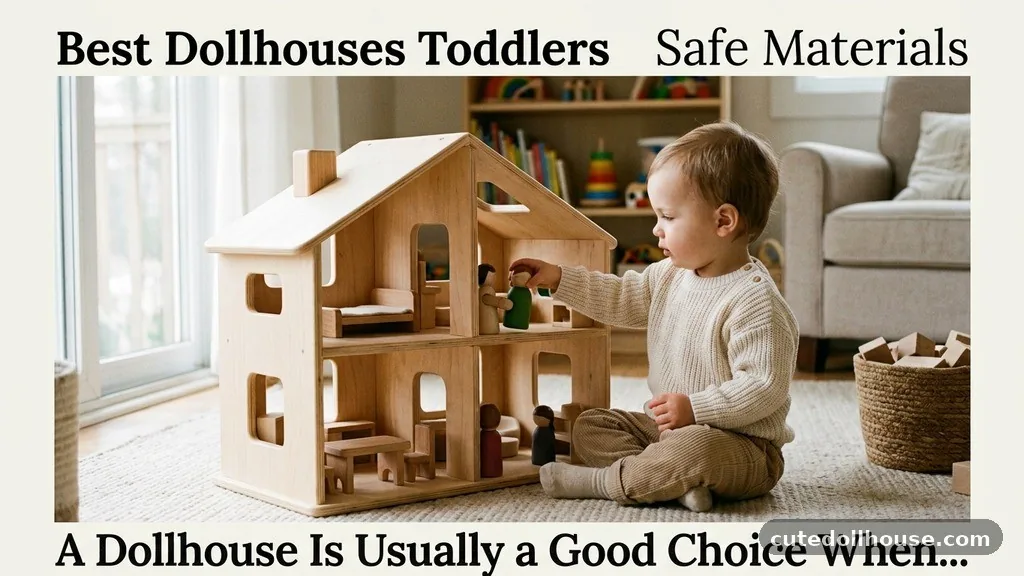
- The child enjoys pretend household routines or copying adult activities.
- The play area has enough room for the house and its accessories.
- An adult can check small components and supervise early play.
- The structure is stable, easy to clean, and made without accessible sharp edges.
- The design remains useful even if some accessories are stored away.
Another Toy May Be Better When:
- The child still regularly mouths small objects.
- There is limited storage space for a large, multi-level playset.
- The child tends to throw or step on toys rather than arrange them.
- The product relies heavily on fragile furniture or tiny figures.
- The available safety and material information is vague or incomplete.
Safe Materials for Toddler Dollhouses
There is no single material that makes a dollhouse safe by itself. Design, manufacturing quality, finish, construction, age guidance, and the size of included parts all matter. Still, certain material choices are easier to evaluate than others.
Solid Wood
Solid wood can provide a substantial, stable feel and may tolerate repeated play well. It is often appealing to buyers who want a long-lasting toy with a natural appearance. The important checks are smooth sanding, secure joints, rounded corners, and a finish that is intact rather than cracked or flaking.
Wood is not automatically safer than plastic. A poorly finished wooden house may have splinters, exposed fasteners, rough cutouts, or heavy panels that can tip if a child pulls on them. Ask whether the manufacturer identifies the wood type and finish, but don’t treat a vague “natural wood” description as a complete safety statement.
Plywood and Engineered Wood
Plywood and engineered wood products can keep a dollhouse lighter or more affordable than thick solid timber. They may also allow broader panels and creative shapes. Quality varies, however, so buyers should look for sealed edges, smooth surfaces, and panels that remain firm after assembly.
Information about adhesives, coatings, and formaldehyde emissions may not be displayed consistently across sellers or regions. If a child is sensitive to smells or finishes, allow a newly assembled item to air out in a well-ventilated area and follow the manufacturer’s instructions. If the product listing doesn’t explain the material clearly, contact the seller before buying.
Plastic
Plastic dollhouses are often lighter, easier to wipe clean, and less vulnerable to splinters. They can be practical for younger children or messy play. Molded plastic also permits rounded edges and integrated doors or furniture.
The drawbacks include brittle parts, thin panels, and pieces that can snap after rough use. Plastic can also become marked or discolored over time, especially if stored in direct sunlight. Look for a clear material description and inspect hinges, handles, roof sections, and removable components before giving the toy to a child.
Paints, Coatings, and Finishes
Marketing language such as “non-toxic,” “child-safe,” or “water-based” can be useful, but it should not replace a full inspection. Those phrases may describe the intended finish without explaining how the product was tested, and listings can differ between sellers.
Choose a model with a smooth, intact finish and no strong persistent odor. Avoid any item with peeling paint, powdery surfaces, exposed substrate, or damaged edges. If a coating becomes chipped during play, remove the affected piece and check the manufacturer’s guidance rather than repainting it with an unverified household product.
For general toy-safety guidance, parents can consult the U.S. Consumer Product Safety Commission’s toy safety information. Requirements and labeling can vary by country, so local guidance may also apply.
Key Buying Criteria
1. Age Guidance and Small Parts
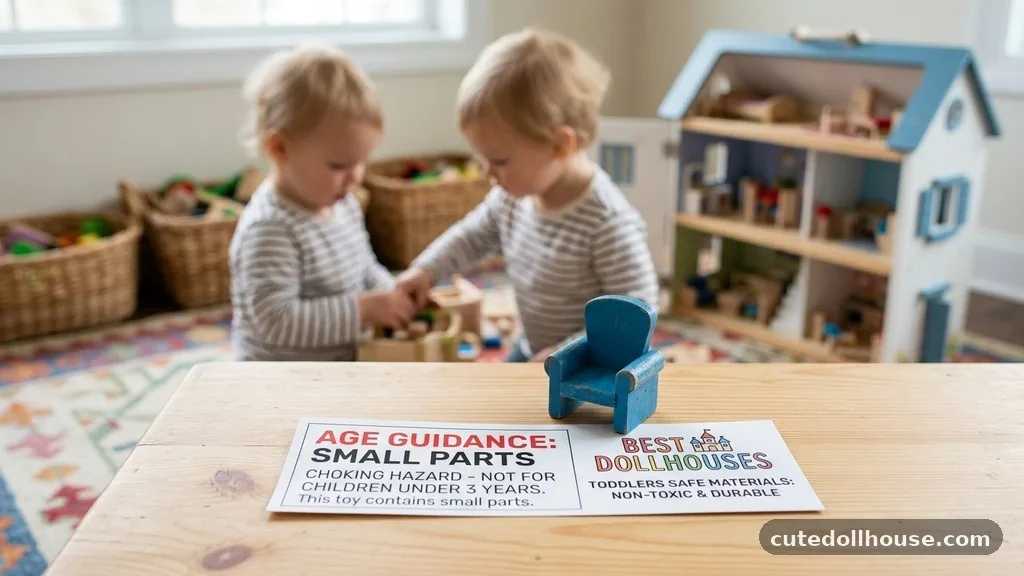
Age guidance should be treated as a safety and usability signal, not just a marketing label. Check every included item: furniture, dolls, utensils, animals, bedding, detachable windows, and decorative pieces can all create a hazard for a young child.
A house with large integrated features may be more appropriate for an early toddler than one supplied with a complete miniature furniture set. Parents can store small pieces until the child is ready, but only if the remaining structure is safe to use on its own.
2. Stability and Tip Resistance
Toddlers may lean on, pull, climb around, or carry their toys. A dollhouse should sit flat and resist movement during ordinary play. A tall, narrow structure may take up less floor space but can be less forgiving if it is bumped.
- Check the width of the base compared with the height of the house.
- Look for a solid back panel or stable lower section.
- Confirm that doors and moving parts don’t cause the unit to shift.
- Follow any wall-anchoring instructions supplied by the manufacturer.
- Keep the house away from stairs, raised surfaces, and unstable furniture.
3. Rounded Edges and Secure Hardware
Rounded external corners are preferable to sharp, exposed edges. Pay particular attention to roof peaks, balconies, window openings, door frames, and decorative trim. Screws should be recessed or covered where possible, and no hardware should wobble after assembly.
Parents should recheck the structure periodically. A toy can become less safe as joints loosen, panels split, or doors detach. A quick inspection takes little time and may reveal a problem before a child does.
4. Size and Play Height
The best dollhouses for toddlers are often low enough for a child to reach the main play areas without stretching or leaning heavily. A house that is too tall can make the upper levels decorative rather than functional.
Measure the intended floor space before ordering. Leave enough room for a child to sit or kneel in front of the house, and consider where accessories will be stored. Product dimensions may describe the assembled structure without including doors, balconies, handles, or the clearance needed to play comfortably.
5. Open Access Versus Enclosed Design
Open-front dollhouses make it easier to supervise and retrieve objects. They also allow several children to play from different sides. An enclosed or portable case can be useful for storage and travel, but tight compartments may be harder for small hands to use.
There is no universal winner. Open designs usually suit shared floor play, while compact cases may work better in bedrooms, small apartments, or homes where toys need to be packed away each day.
6. Accessories and Their Role
Accessories can make a dollhouse more engaging, but more pieces aren’t necessarily better. A few large, recognizable items may support richer play than a crowded collection of tiny decorations.
Before buying, check whether accessories are included, sold separately, or shown only for illustration. Verify their dimensions and age guidance. If the product’s main value depends on accessories that are easy to lose or break, its usefulness may decline quickly.
7. Cleaning and Maintenance
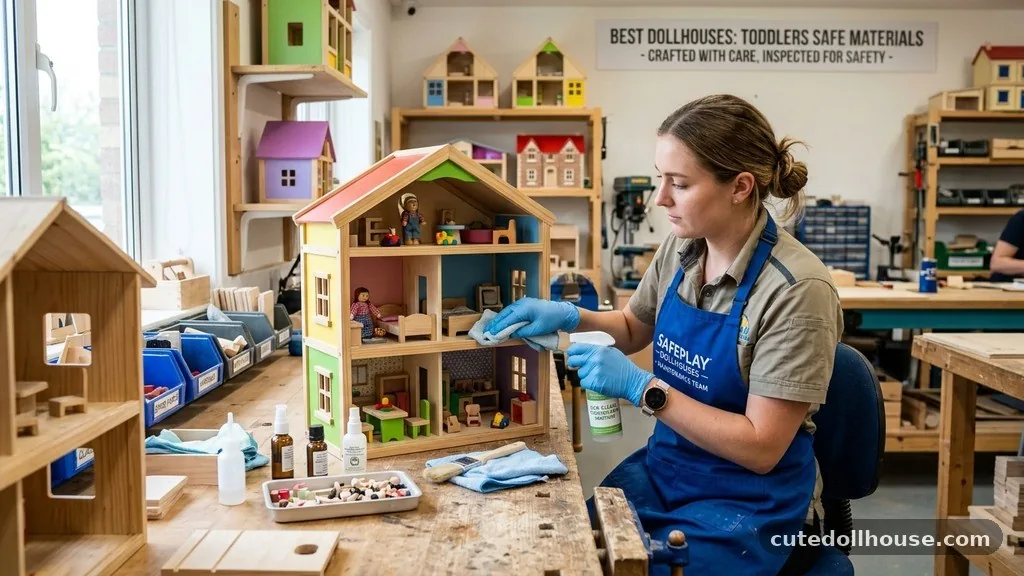
For toddlers, wipe-clean surfaces are a practical advantage. Smooth plastic is generally simple to clean, while unfinished or heavily textured wood may hold dust and be harder to wipe thoroughly. Follow the care instructions and avoid soaking wooden panels unless the manufacturer specifically allows it.
Fabric accessories may require separate washing instructions. Keep an eye on paint wear, loose handles, cracked panels, and damaged fasteners. Do not use harsh cleaning chemicals on surfaces that children may touch or mouth.
Comparison of Common Dollhouse Types
Because no specific products were supplied for this article, the table below compares broad dollhouse formats rather than ranking named models. Actual safety and quality can vary within each category.
| Dollhouse type | Best for | Typical difficulty | Main strength | Main drawback | Overall value consideration |
|---|---|---|---|---|---|
| Low open-front wooden house | Supervised floor play and pretend routines | Usually moderate assembly | Accessible play areas and a substantial structure | Can be heavy, bulky, or difficult to move | Good if the child will use the house regularly and space allows |
| Plastic playhouse | Younger children and easy cleaning | Often simple, but model-dependent | Wipe-clean surfaces and lighter weight | Some parts may feel thin or become brittle | Useful where durability means easy maintenance rather than premium materials |
| Portable dollhouse case | Small rooms, travel, and quick storage | Usually low | Compact footprint and contained accessories | Less room for larger hands and shared play | Strong fit when portability matters more than scale |
| Detailed multi-level house | Older preschoolers and extended pretend play | May require more assembly | More room for imaginative scenes | Small parts, higher reach, and greater storage needs | Better as the child grows than as a first toddler dollhouse |
| Single-room or modular set | First-time buyers and limited spaces | Often low to moderate | Simple layout and easier supervision | Less scope for multi-room storytelling | A sensible entry point if buyers are unsure about long-term interest |
Assembly and Ease of Use
Assembly quality can affect safety as much as the materials themselves. Before purchasing, check whether the house arrives fully assembled, partly assembled, or flat-packed. A product that looks suitable for toddlers may still require careful adult construction and a final hardware check.
What to Check During Assembly
- Read the complete instructions before attaching panels.
- Use the specified hardware rather than substituting screws or fasteners.
- Make sure panels sit flush and joints do not flex excessively.
- Check that doors, shutters, balconies, and roofs move or sit as intended.
- Remove packaging, protective film, and temporary ties before play.
- Inspect for rough edges, missing parts, cracks, or unexplained gaps.
A complicated assembly does not necessarily indicate poor quality, but it increases the chance of an unstable result if instructions are unclear. If the product listing does not provide assembly information, buyers should ask about the process before ordering.
Quality, Durability, and Customer Feedback
Durability depends on the structure, not simply on whether the house is wooden or plastic. Thick panels, secure joints, protected edges, and replaceable or well-supported components can matter more than the material name printed in a listing.
Customer reviews can reveal practical problems that product photographs don’t show. Look for repeated comments about missing hardware, confusing instructions, fragile accessories, unpleasant odors, paint damage, doors that detach, or a house that tips during play. One isolated complaint may reflect shipping damage, but a pattern deserves attention.
Feedback should still be read carefully. Sellers may change suppliers or production batches, and marketplace listings can combine reviews from different versions. Confirm that the reviews refer to the exact size, material, and model you plan to buy.
Questions to Ask Before Purchase
- Does the listing identify the primary materials and surface finish?
- Are the included figures and accessories appropriate for the child’s age?
- Are replacement parts available if a door, panel, or accessory breaks?
- Does the assembled size fit the planned play and storage area?
- Are seller photos consistent with the manufacturer’s specifications?
- Can the product be returned if it arrives damaged or differs from its description?
Who Should Consider Each Type?
For Toddlers New to Pretend Play
A low, open structure with large integrated features is usually easier to understand and use than a tall house filled with miniature objects. A small number of sturdy accessories can provide enough variety without overwhelming the child.
For Appearance-Focused Buyers
Wooden houses often provide a warmer, furniture-like appearance, but appearance should not outweigh stability and finish quality. Decorative details are worthwhile only if they are securely attached and don’t create unnecessary sharp points or fragile parts.
For Small Homes
A compact single-room set or portable case may be more practical than a large multi-level structure. Measure first, including the space needed for the child to sit in front of the toy. A dollhouse that must remain packed away may receive less use than a simpler model that is always accessible.
For Value-Focused Buyers
Value is not just the lowest purchase price. Consider how long the structure is likely to remain useful, how easily it can be cleaned, whether accessories are included, and whether replacement parts or compatible figures are available. A simpler house with fewer breakable pieces may offer better long-term value than a highly detailed set.
For Older Preschoolers
Children who have moved beyond mouthing objects may be ready for more furniture, figures, and levels, provided the design remains stable and age-appropriate. Buyers should still inspect small parts and avoid assuming that a preschool label makes every component suitable for every child.
Who May Want an Alternative?
Parents of children who still mouth toys should consider a large-format pretend-play set with minimal detachable parts, or postpone buying a conventional dollhouse. Large figures, fabric play environments, chunky wooden rooms, and simple role-play props may be safer starting points, depending on the child’s development and the manufacturer’s guidance.
An alternative may also make sense when the house is mainly being purchased for decoration. A display-style dollhouse with delicate trim, tiny furniture, glass-like components, or narrow stairways is better kept away from toddler play unless the maker explicitly designs it for young children.
Families with limited space might prefer a foldable or portable option, while children who dislike structured pretend play may get more use from open-ended blocks. The best toy is the one that fits the child’s interests and can be used safely without constant correction.
How to Inspect a Dollhouse After Delivery
Don’t hand the package straight to a toddler. Open and inspect it first, even if the product has a strong reputation or many positive reviews.
- Compare the contents with the listing and instructions.
- Look for cracks, chipped paint, rough edges, exposed staples, or loose hardware.
- Assemble the structure on a level surface and check for wobbling.
- Test doors, windows, balconies, and other moving sections gently.
- Separate small accessories until you decide they are suitable.
- Keep the packaging and purchase documentation until the product has been checked.
If a safety issue appears, stop using the item and contact the seller or manufacturer. Photographs can help document damage, but don’t attempt a permanent repair with glue, paint, or replacement hardware unless the manufacturer provides suitable instructions.
Frequently Asked Questions
What are the best dollhouses for toddlers?
The best choice is usually a stable, low-profile design with smooth edges, clearly described materials, age-appropriate components, and few detachable small parts. A simple open-front house may be more suitable than a detailed multi-level model for very young children.
What is the best dollhouse material for a young child?
Solid wood, plywood, engineered wood, and plastic can all work when the product is well made. Look beyond the material label and check the finish, edge quality, stability, hardware, cleaning instructions, and included accessories.
Is wood safer than plastic for a toddler dollhouse?
Not automatically. Wood can splinter or have rough edges, while plastic can crack or contain fragile components. Construction quality and the condition of the finished product matter more than choosing one material in isolation.
What should a two-year-old’s dollhouse include?
Large, easy-to-grip features and a sturdy structure are more important than a large accessory count. Avoid models with numerous miniature objects, detachable decorations, or delicate furniture unless those pieces can be stored safely for later use.
How can I tell whether a dollhouse is stable enough?
Assemble it on a level surface and apply gentle pressure to the sides and front. It should not wobble, slide easily, or tip during ordinary interaction. Follow any wall-anchoring instructions and keep the house on the floor rather than on a high table.
Should I buy a fully assembled dollhouse?
A fully assembled model can reduce construction errors, but it still needs inspection after delivery. Flat-packed products can be good choices when the instructions are clear and the finished joints are secure. The deciding factor is the quality and stability of the completed structure.
Final Verdict
The best dollhouses for toddlers are not necessarily the largest, most colourful, or most heavily accessorised. A worthwhile choice has a stable base, smooth and intact surfaces, clear material information, manageable dimensions, and components suited to the child’s developmental stage. Buyers should inspect the actual model, read feedback for repeated problems, and treat vague safety claims with caution.
For younger toddlers, a simple open-front wooden, plastic, or modular design with large features is often the practical starting point. Older preschoolers may benefit from more detailed layouts once small parts are no longer a concern.
Before buying, measure the space, verify the age guidance, and inspect the finished toy carefully. That approach will make it easier to choose a safe, durable dollhouse rather than simply the most attractive one.