The best dollhouses for kids should be fun to play with without turning setup into a weekend project. Families usually want a model that looks appealing, fits the available room, suits a child’s age, and can withstand regular imaginative play. That combination isn’t always easy to judge from a product listing, especially when assembly time, materials, scale, accessories, and safety details vary between models.
An easy-to-assemble dollhouse can be a smart choice for younger children, gift buyers, and anyone who wants play value without complicated construction. This guide explains what to check before buying, which design choices matter, where common drawbacks appear, and how to decide whether a particular dollhouse is suitable for your child. What Makes a Dollhouse Easy to Assemble? An easy-to-assemble dollhouse is designed so an adult can put the main structure together with relatively little difficulty.
That may mean fewer panels, pre-finished components, clear instructions, snap-fit parts, or a simpler open-sided design. It does not necessarily mean the product arrives ready for play straight out of the box.
Most dollhouses still require some adult assembly. Depending on the model, buyers may need to connect walls, attach floors, install a roof, secure a staircase, or add decorative pieces. The exact process can vary by seller, production batch, and model revision, so the product listing and instruction manual should be treated as the final authority.
Dollhouses are miniature play environments. Children use them to create stories, arrange furniture, move figures between rooms, and act out everyday routines. The house itself is only part of the experience; scale, access, stability, and available accessories can have as much impact on play as the exterior design.
Are Easy-to-Assemble Dollhouses Worth Buying?
For many families, yes. A straightforward design can reduce setup frustration and get the toy into use sooner. It may also be a better fit for grandparents, relatives, or gift buyers who don’t want to manage complicated construction.
The main trade-off is that simpler assembly often comes with a less elaborate structure. A basic dollhouse may have fewer rooms, less decorative detail, or limited customization compared with a larger wooden model.
That isn’t automatically a weakness. Younger children may benefit from a house with open access and fewer delicate parts.
An easy-build dollhouse is usually a good choice when:
- The buyer wants manageable adult assembly.
- The child enjoys pretend play more than detailed collecting.
- Available floor or shelf space is limited.
- The toy will be moved, stored, or shared between children.
- The family prefers a simpler design with fewer small accessories.
Another type may be better when a child wants a highly detailed miniature home, has a large collection of furniture and figures, or enjoys decorating and customizing every room. In those cases, a larger wooden or modular dollhouse may offer more long-term interest, although it can also require more assembly and maintenance.
What to Check Before Buying
Build and Material Quality
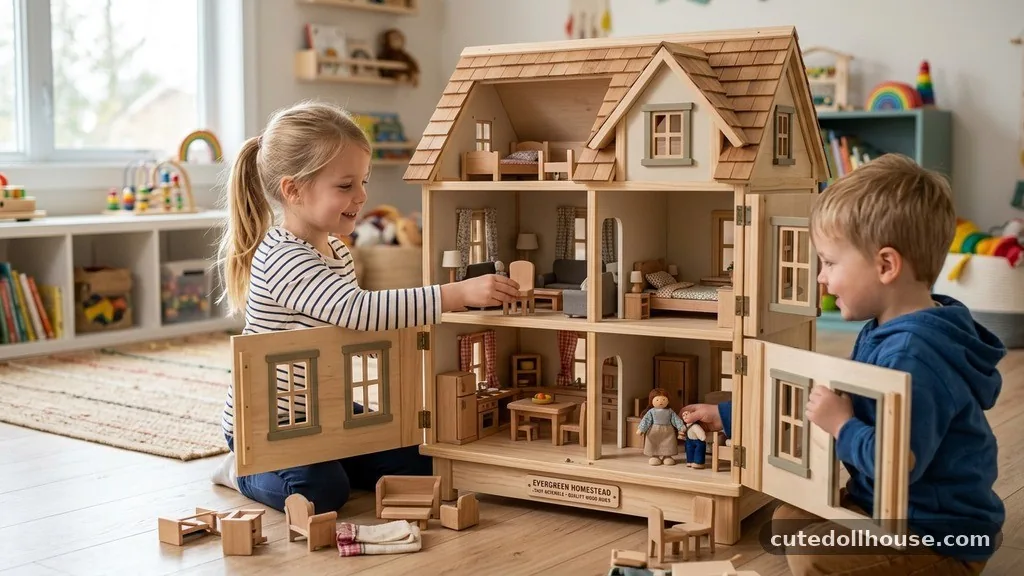
Material choice affects weight, stability, appearance, and longevity. Wooden dollhouses are often chosen for their substantial feel and traditional look, while engineered wood, plastic, and composite materials can make a design lighter or easier to clean. None of these materials is automatically right for every family.
Inspect the available specifications for the material used in the main structure, not just the finish or decorative details. Check whether the panels are described as solid wood, plywood, medium-density fibreboard, plastic, or another material. If the listing is vague, buyers should avoid assuming that a wood-look finish means the house is made from solid timber.
Useful quality indicators include:
- Panels that meet cleanly without large gaps.
- Edges that are smooth and suitable for children’s handling.
- A stable base that doesn’t wobble easily.
- Fasteners that remain secure after assembly.
- Paint or printed finishes that are consistent and resistant to light wear.
- Instructions that identify parts clearly.
Customer feedback can reveal recurring problems such as missing hardware, confusing instructions, weak staircases, or parts that don’t align correctly. One isolated complaint doesn’t establish a pattern, but repeated comments about the same issue deserve attention.
Design and Appearance
Appearance matters because a dollhouse often stays visible in a bedroom or playroom. Some designs resemble traditional homes, while others use bright colours, modern rooms, themed exteriors, or open-front layouts. The most attractive style depends on the child and the surrounding space.
Look beyond marketing photographs. Ask whether the rooms are open enough for small hands, whether the roof blocks access to upper floors, and whether the furniture shown is included. Images sometimes display accessories that must be purchased separately.
A visually detailed dollhouse can encourage imaginative play, but decoration shouldn’t come at the expense of access. A beautiful model with narrow rooms may be frustrating for a younger child who wants to move figures and furniture around frequently.
Size and Fit
Measure the intended location before ordering. Dollhouses can be taller, wider, or deeper than product photographs suggest, particularly when a child needs space to stand or play around all sides.
Check these measurements:
- Overall height, including the roof or chimney.
- Width and depth once fully assembled.
- Clearance needed in front of the house.
- Whether the house fits on a shelf, table, or floor.
- Storage space for furniture, figures, and loose accessories.
Scale is equally important. Furniture and figures from one brand may not fit properly in another brand’s rooms. If the child already owns miniature people or accessories, compare their approximate height with the dollhouse’s stated or illustrated scale before buying.
Features and Functionality
Some dollhouses focus on basic open-ended play. Others include features such as movable shutters, working doors, balconies, elevators, foldable sections, lighting, or sound effects. Extra features can make a house more engaging, but they may also add assembly steps, fragile components, or battery requirements.
Consider whether the feature supports the child’s play or simply increases the product’s visual appeal. A working door that gets used regularly may be worthwhile. A delicate decorative element that breaks easily may not add much value.
Before purchasing, verify:
- Which furniture and figures are included.
- Whether batteries are required and supplied.
- Whether doors, windows, or shutters actually move.
- Whether the design can be accessed from the front, back, or both sides.
- Whether the house can be expanded or rearranged later.
Age Suitability and Safety
Age guidance should be read carefully rather than treated as a suggestion. A dollhouse may be suitable for a child’s imaginative ability but inappropriate because of small furniture, tiny figures, cords, magnets, or detachable decorative parts.
Age labels vary by manufacturer and should be checked against the child’s supervision needs. A younger child may need a larger, simpler house with oversized accessories, while an older child may prefer detailed miniature items that require more careful handling.
For general toy-safety information, parents can consult the U.S. Consumer Product Safety Commission’s toy-safety guidance. Buyers outside the United States should also check the safety requirements and product labelling that apply in their own region.
Assembly Difficulty
“Easy assembly” is not a standard technical rating. One manufacturer may use the phrase for a few large panels, while another may describe a product with many small parts and several construction stages as easy because the instructions are illustrated.
Look for practical evidence in the listing and customer feedback. A useful description may mention the number of assembly steps, required tools, approximate adult setup time, or whether the structure uses pre-drilled holes. If that information is absent, buyers should assume some preparation will be necessary.
A sensible setup process usually includes:
- Checking the parts list before beginning.
- Separating hardware and identifying each panel.
- Reading the complete instructions first.
- Building on a clear, stable surface.
- Checking alignment before fully tightening fasteners.
- Inspecting the finished house for movement, sharp edges, or loose components.
Children should generally not be responsible for assembling the main structure unless the manufacturer specifically designs the product for supervised child participation.
Included Accessories
Accessories can change the value of a dollhouse significantly. A house with several rooms but no furniture may require additional purchases before it feels ready for play. Conversely, a smaller house with a modest set of furniture may provide a more complete first experience.
Read the inclusion list closely. Look for furniture, figures, kitchen items, beds, seating, lamps, pets, or outdoor pieces. Product photography should not be used as proof that every displayed item is included.
Also consider storage. Loose accessories are easy to misplace, and small pieces can create safety concerns for younger children. A dollhouse with fewer but more useful accessories may be preferable to one with a large quantity of tiny decorative items.
Durability and Maintenance
Dollhouses receive more handling than their decorative appearance might suggest. Children move furniture, reposition figures, open doors, and sometimes lift or push the structure. A model that looks attractive but has fragile trim may not suit energetic everyday play.
Maintenance is usually simple: dust surfaces, wipe appropriate materials with a lightly damp cloth, and keep electronic components dry. Follow the manufacturer’s cleaning instructions, especially for printed panels, fabric accessories, or battery-powered features.
Durability depends on more than material. A stable design, secure joints, replaceable accessories, and accessible customer support can matter just as much. Buyers should check whether replacement parts are available if the listing provides that information.
Comparison Checklist for Easy-to-Assemble Dollhouses
| Factor | What to Look For | Why It Matters |
|---|---|---|
| Structure | Stable base, aligned panels, secure joints | Helps the house remain steady during play |
| Materials | Clearly stated wood, composite, plastic, or mixed construction | Sets realistic expectations for weight, finish, and care |
| Assembly | Clear instructions, labelled parts, limited tools | Reduces setup time and avoidable frustration |
| Access | Open front, wide rooms, reachable upper floors | Makes it easier for children to arrange scenes |
| Scale | Room dimensions that suit the child’s existing figures | Prevents compatibility problems with accessories |
| Accessories | Clearly listed furniture, figures, and decorative pieces | Shows whether the set is ready for immediate play |
| Safety | Appropriate age guidance and secure small parts | Helps match the toy to the child’s ability and supervision needs |
| Maintenance | Wipe-clean surfaces and accessible replacement information | Makes long-term ownership easier |
Choosing a Dollhouse by Child’s Age
For Toddlers and Very Young Children
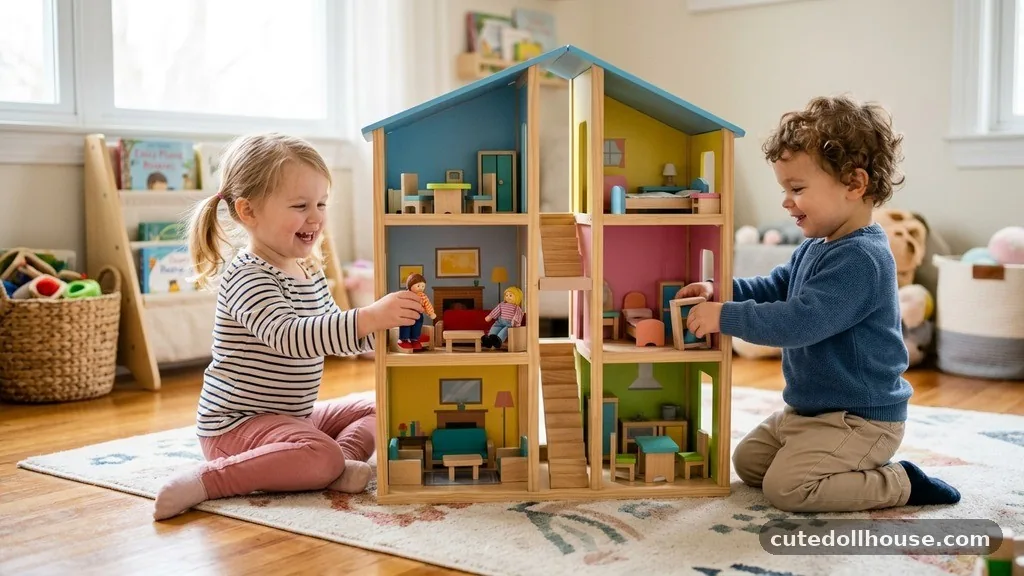
Young children usually need a simple, sturdy design with large components and easy access. Small decorative accessories may not be suitable, even if the structure itself is stable. A compact open-front house can be easier to supervise and less intimidating than a tall model with several narrow floors.
Prioritise age guidance, large furniture, rounded or smooth edges, and a design that doesn’t tip easily. A toddler may get more enjoyment from moving a few large figures through a basic house than from using a detailed miniature room.
For Preschoolers
Preschool children often enjoy role-play based on familiar routines: cooking, sleeping, cleaning, visiting, and caring for dolls. A house with accessible rooms and a small set of recognisable furniture can support this kind of play.
At this stage, easy assembly is useful for adults, but play access matters just as much. Look for wide openings and sturdy components. Small accessories should remain supervised according to the product’s age guidance.
For Children Around Five to Seven
Children in this range may want more detail and greater control over the layout. They might rearrange rooms, invent stories with several characters, or combine the dollhouse with other toys. A larger house can be rewarding if there is enough room to store it and its accessories.
Older children may also care more about appearance. A traditional wooden house, modern townhouse, or themed design could influence whether the toy remains interesting after the first few weeks. Ask what kind of play the child actually enjoys instead of choosing based only on the adult’s preferred style.
Common Problems to Watch For
No dollhouse category is free from compromises. Even products described as easy to assemble can present practical issues.
- Confusing instructions: Illustrations may not clearly distinguish similar panels or hardware.
- Missing or mismatched parts: Buyers should check the contents before beginning assembly.
- Limited access: Narrow rooms and high floors can make play difficult for smaller children.
- Unclear scale: Existing figures and furniture may not fit as expected.
- Decorative fragility: Trim, railings, and small ornaments may need gentle handling.
- Accessories sold separately: Photos may show a more furnished house than the base package provides.
- Large footprint: A tall or deep model may be difficult to store even if its width seems reasonable.
- Cleaning limitations: Painted, fabric, or electronic parts may require more care than plain plastic surfaces.
Reviews are most helpful when several customers describe the same problem in similar terms. They are less useful when they only say that a product was good or bad without explaining the assembly, materials, fit, or child’s age.
Recommendations by Buyer Type
Best for First-Time Dollhouse Buyers
Choose a compact model with clear age guidance, accessible rooms, and a modest accessory set. First-time buyers generally benefit from a complete, manageable setup rather than a large structure that requires many additional purchases.
Best for Buyers Who Prioritise Simple Assembly
Look for labelled components, illustrated instructions, pre-finished panels, and a construction design with fewer separate decorative parts. Avoid assuming that a lightweight product is automatically easier; a light structure can still have complicated connections.
Best for Appearance-Focused Buyers
Compare the finish, exterior details, and room layout with the intended display location. Check whether the visual design depends on furniture or accessories that are not included.
Best for Active Everyday Play
Prioritise stability, accessible rooms, secure doors, and fewer fragile decorations. A slightly simpler house may last longer than an ornate model that is difficult to handle.
Best for Children Who Already Own Miniature Accessories
Confirm scale and room dimensions before buying. Compatibility is more important than a product photograph, particularly when the child has a favourite set of figures or furniture.
Best for Limited Spaces
Measure the shelf or floor area, then allow additional room for children to stand or sit comfortably while playing. Foldable or compact designs may be useful, but verify that folding parts lock securely and don’t reduce access too much.
What Information Should Buyers Verify?
Product listings can change, and details may differ between sellers or regions. Before placing an order, verify the current listing for:
- Recommended age range.
- Finished dimensions and weight.
- Material of the main structure.
- Required tools and assembly instructions.
- Included accessories and batteries.
- Return terms and replacement-part support.
- Whether the pictured furniture and figures are included.
It’s also sensible to inspect the package promptly after delivery. Count the parts, check panels for damage, and resolve missing-item issues before beginning construction. Keep the instructions in case the dollhouse needs to be moved or repaired later.
Frequently Asked Questions
What is the easiest dollhouse to assemble?
The easiest option is usually a model with a simple open-front structure, fewer panels, labelled hardware, and clear illustrated instructions. Because assembly difficulty varies by product, check the current manual or listing rather than relying on the phrase “easy assembly” alone.
What is the best dollhouse for a five-year-old?
A five-year-old will often benefit from a stable dollhouse with accessible rooms, age-appropriate accessories, and enough space to move figures around. Check the manufacturer’s age recommendation and avoid small parts if the child still needs close supervision.
Are wooden dollhouses better than plastic ones?
Not necessarily. Wooden models may offer a traditional appearance and substantial construction, while plastic designs can be lighter and easier to wipe clean. The better choice depends on stability, finish quality, room access, intended use, and the child’s preferred style of play.
Do dollhouses usually include furniture?
Some do, and some do not. Product photographs may include accessories that are sold separately, so read the contents list carefully. If the information is unclear, contact the seller before purchasing.
How much assembly does an easy-build dollhouse require?
There is no universal standard. Some require only basic panel assembly, while others include several floors, roofs, staircases, or decorative elements. Look for the number of parts, required tools, and customer comments about the instructions.
Can accessories from different dollhouses be used together?
Sometimes, but compatibility depends on scale and room dimensions. Compare the approximate height of existing figures and the size of furniture with the new house before assuming they will fit.
Final Verdict
The best dollhouses for kids balance sturdy construction, usable room access, suitable scale, safe accessories, and assembly that an adult can manage without unnecessary hassle. A simpler house is often the wiser purchase for younger children, first-time buyers, and families with limited space. More elaborate designs make sense when the child enjoys detailed miniature play and the household can accommodate the extra size, setup, and care.
Before buying, verify the dimensions, age guidance, materials, included contents, and current customer feedback. If those details match the child’s play style and available space, an easy-to-assemble dollhouse can be a worthwhile long-term pretend-play investment.