
The best Wooden Dollhouse Furniture Sets make a small playroom, nursery, kitchen, or living room feel complete without relying on flimsy plastic pieces. They appeal to children building imaginative scenes, adults creating miniature displays, and collectors who care about scale, finish, and long-term durability. Choosing well isn’t always simple: furniture varies in size, wood quality, paint finish, accessory count, and compatibility with different dollhouses.
Some sets are designed for active play, while others suit careful display. This guide explains what to check before buying, which features matter most, where wooden furniture has limitations, and how to decide whether a particular set fits your dollhouse, budget, and intended use.
What Are Wooden Dollhouse Furniture Sets?
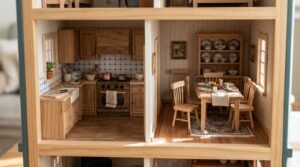
Wooden dollhouse furniture sets are miniature furnishings made primarily from wood or engineered wood. A set may represent one room, such as a kitchen or bedroom, or combine several pieces for a complete dollhouse interior. Typical items include beds, tables, chairs, sofas, cabinets, sinks, stoves, wardrobes, and small decorative accessories.
The furniture gives a dollhouse practical context. Instead of being an empty shell, the house becomes a kitchen where toy figures can “cook,” a bedroom for pretend bedtime routines, or a living room for family role play. For adult hobbyists, the same pieces can support a carefully arranged miniature scene.
Before purchasing, buyers should understand that “wooden” doesn’t always mean every component is solid wood. Some products use plywood, medium-density fibreboard, composite panels, painted surfaces, fabric, metal, or plastic accents. Product descriptions can also vary between sellers, so check the material list and photographs carefully.
Are Wooden Dollhouse Furniture Sets Worth Buying?
They can be a strong choice for buyers who prefer a warmer, more traditional appearance than brightly coloured plastic furniture. Wood often gives miniature pieces a substantial feel, and simple designs can blend into both children’s playrooms and adult displays. Sets with restrained colours and timeless shapes may also remain appealing as a child’s interests change.
The main question is how the furniture will be used. A set intended for a young child needs smooth edges, secure parts, and an age-appropriate design.
A collector may care more about scale accuracy, realistic details, and finish quality. A budget-conscious buyer might prefer a smaller room set rather than paying for accessories that will not be used.
Another material may be more suitable in some situations. Plastic furniture is often easier to wipe clean and may tolerate rough handling better, while cardboard or paper furniture can be inexpensive for short-term projects. Handmade or resin pieces may provide finer detail for display models, although they can be more fragile or costly.
Important Buying Criteria
Build and Material Quality
Inspect the construction before focusing on colour or accessory count. Solid wood can feel reassuring, but a well-made plywood or composite piece may also be perfectly suitable. The important factors are clean joins, stable legs, smooth edges, and a finish that doesn’t flake easily.
Look for product photographs that show the furniture from more than one angle. Close-up images can reveal whether chairs have neatly formed backs, whether cabinet doors are aligned, and whether decorative details are printed, painted, or physically attached.
- Check whether the listing identifies the type of wood or board used.
- Look for rounded or sanded edges, especially for children’s play furniture.
- Inspect joints and attachment points for visible gaps or loose components.
- Confirm that paint and coatings are described clearly by the seller or manufacturer.
- Be cautious of vague descriptions that only say “wood-style” or “wooden look.”
Design and Appearance
Style matters because furniture can dominate a small dollhouse room. Neutral wood tones, white finishes, and simple shapes tend to be easier to combine with other pieces. Highly themed furniture can be fun, but it may be harder to match if you later add items from a different range.
Consider whether the pieces are realistic, whimsical, modern, traditional, or designed around a particular character theme. Adults creating miniature scenes may prefer realistic proportions and subtle finishes. Children often benefit from furniture that is visually clear and easy to handle.
Size, Scale, and Fit
Scale is one of the easiest details to overlook. A beautiful sofa is not useful if it blocks a doorway, overwhelms the room, or leaves toy figures unable to sit properly. Dollhouses are not all built to the same scale, even when they appear similar in online photographs.
Measure the interior spaces before ordering. Record doorway widths, floor-to-ceiling height, room depth, and the available floor area. Also check the size of any dolls or figures that will use the furniture.
Ask the seller to clarify measurements if the listing provides only a general product size. Terms such as “dollhouse size” or “miniature furniture” are not precise enough on their own.
Features and Functionality
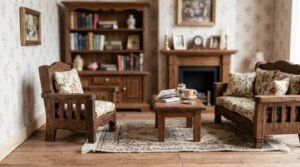
Some furniture is purely decorative. Other pieces include moving or opening elements, such as cabinet doors, drawers, lids, or hinged beds. Functional features can make pretend play more engaging, but they also introduce extra parts that may loosen or break.
Decide which features serve a genuine purpose. A working cabinet may be useful in a children’s playroom, while a tiny drawer may be more valuable to a collector who wants visual realism. Avoid paying extra for mechanisms that are too small or delicate for the intended user.
Included Accessories
Accessory counts should be read carefully. A set may include several substantial furniture pieces, or it may contain one large item surrounded by small decorative pieces. Both formats can be useful, but they suit different buyers.
Check whether cushions, bedding, cookware, lamps, plants, rugs, and other items are included or shown only for illustration. Product photographs can sometimes display additional pieces that must be purchased separately.
Ease of Use or Assembly
Many miniature furniture sets arrive ready to use, but some require minor assembly. Assembly may involve attaching legs, fitting a tabletop, installing handles, or joining larger panels. A product listing should explain the process, though the level of detail varies.
For children, ready-assembled furniture reduces frustration and limits the number of small parts. For adults and older children, simple assembly can be part of the hobby. If tools, glue, or paint are required, confirm that before buying.
Durability and Maintenance
Wooden miniatures need sensible care. Dust can usually be removed with a soft, dry cloth, while a slightly damp cloth may be appropriate for some sealed finishes. Avoid soaking unfinished wood, using harsh cleaners, or leaving fabric accessories damp.
Durability depends on construction, finish, and handling. A set used for daily imaginative play faces more knocks than one placed in a display cabinet. Small handles, chair legs, thin rails, and decorative attachments deserve particular attention because they may be vulnerable points.
Customer Feedback and Common Complaints
Customer reviews can reveal problems that product photos don’t show, but they should be read with context. Look for repeated comments about inaccurate measurements, chipped paint, loose parts, missing accessories, or a finish that differs from the photographs. A single complaint may reflect shipping damage or an isolated manufacturing issue; several similar reports deserve more weight.
Review dates also matter. Sellers sometimes change packaging, suppliers, or product versions. Confirm that reviews relate to the current model and not to a visually similar item listed under the same product page.
Comparison Checklist for Different Buyer Priorities
| Buyer priority | What to look for | Potential compromise |
|---|---|---|
| Young children | Smooth edges, sturdy construction, larger easy-to-handle pieces, and simple designs | Fewer delicate details or moving parts |
| Adult display | Accurate scale, refined finish, realistic proportions, and cohesive styling | More fragile construction and higher care requirements |
| Beginners | Ready-to-use pieces, clear dimensions, and a room-based starter set | Less flexibility than buying individual pieces |
| Value-focused buyers | Useful core furniture, transparent piece counts, and compatibility with existing items | Fewer decorative accessories |
| Appearance-focused buyers | Consistent colour, visible wood grain or clean paintwork, and matching designs | May cost more than basic play furniture |
| Frequent rearranging | Stable bases, durable finishes, and pieces without fragile attachments | Heavier or simpler designs may be less detailed |
Benefits of Wooden Dollhouse Furniture
- Warm visual appeal: Wood and wood-look finishes can create a more natural miniature interior.
- Open-ended play: Furniture supports role play, storytelling, room planning, and small-world scenes.
- Easy style matching: Simple wooden designs often work with traditional, modern, or Scandinavian-inspired dollhouses.
- Potential longevity: Well-constructed pieces can remain useful through multiple play stages when handled appropriately.
- Display suitability: Many designs appeal to adults who want a finished-looking miniature room.
- Room-by-room flexibility: Buyers can start with a bedroom, kitchen, or living room and expand later.
Potential Drawbacks to Consider
- Scale uncertainty: Furniture may not fit a dollhouse or figures that appear compatible in photographs.
- Fragile details: Thin legs, tiny handles, and decorative parts can be vulnerable to rough play.
- Finish variation: Paint colour, wood grain, and surface texture may differ between batches or sellers.
- Higher cost than basic plastic: Wooden construction and hand-finished details can increase the purchase price.
- Cleaning limitations: Unsealed wood and fabric accessories may not tolerate water or strong cleaning products.
- Incomplete sets: A product may include fewer substantial items than its photographs suggest.
How to Check Compatibility Before Buying
Start with measurements, not the product title. Measure the room where each item will go and leave enough clearance for doors, drawers, figures, and hands. A dining table needs space for chairs; a bed needs room beside it; and a kitchen unit should not prevent access to an adjoining room.
Next, compare scale. If the dollhouse manufacturer provides a recommended scale, use that as a starting point, but still check individual dimensions. A product described as suitable for a particular dollhouse may fit the building while looking oversized beside its figures.
- Measure the dollhouse room, doorway, and floor space.
- Measure the figures or dolls that will use the furniture.
- Compare those measurements with every major item in the product listing.
- Check whether doors, drawers, or hinged parts need additional clearance.
- Confirm which accessories are included in the package.
- Read the return policy in case the furniture is incompatible or arrives damaged.
Choosing Sets for Children
Children’s furniture should be selected for the way it will actually be handled. Pieces that look delicate in photographs may not be suitable for a child who enjoys frequent rearranging. Smooth surfaces, stable bases, and fewer detachable parts are generally more practical than highly intricate designs.
Age guidance should be treated as an important safety signal, not a suggestion to ignore. Tiny accessories can create choking hazards for younger children. Inspect the set after opening it and continue checking for loose parts as the furniture is used.
Colour and function also matter. A child may engage more readily with a clearly recognisable bed, table, or cooker than with an abstract decorative piece. Sets that support familiar routines can encourage storytelling without requiring a specific play script.
Choosing Sets for Adults and Collectors
Adult buyers often judge miniature furniture by proportion, finish, and visual consistency. A set that is perfectly adequate for play may appear basic in a display scene. Check close-up images for paint edges, wood texture, hardware, upholstery, and the relationship between furniture and figures.
Collectors should also consider the wider room. Matching one beautifully detailed chair with several very simple pieces can make the differences obvious. Buying from a consistent range may help, although mixing styles can work well when the scale and colour palette are compatible.
Storage is another practical issue. Small pieces are easy to misplace, especially if the set includes loose plates, books, bedding, or decorative items. A compartmented container or labelled storage box can protect the furniture and make room changes easier.
What to Verify on a Product Listing
Because specifications can vary by seller, model, region, and production batch, no buyer should rely on a product title alone. Before ordering, verify the following details directly on the current listing:
- Exact number of furniture pieces and accessories
- Measurements for each major item
- Materials used in the furniture and any fabric or plastic components
- Recommended age range and safety warnings
- Whether assembly, glue, paint, or tools are required
- Colour and finish options
- Current availability and delivery conditions
- Return, replacement, and damage-reporting procedures
If the listing leaves out a detail that affects compatibility or safety, contact the seller before buying. A clear answer is more useful than guessing from a staged photograph.
Who Should Buy Wooden Dollhouse Furniture?
Best for Beginners
Beginners usually benefit from a small room-based set. A bedroom or living room collection is easier to match and understand than a large mixed bundle with unclear dimensions. Ready-assembled pieces are also helpful for buyers who want to start playing or decorating immediately.
Best for Experienced Hobbyists
Experienced users may prefer individual pieces or coordinated collections that allow more control over scale and styling. They can make better use of detailed accessories and may be comfortable with light assembly, repainting, or customisation where appropriate.
Best for Appearance-Focused Buyers
Choose a set with consistent finishes, realistic proportions, and a restrained colour scheme. Close-up photographs are especially important here. A lower accessory count is not necessarily a disadvantage if the core pieces are well designed.
Best for Value-Focused Buyers
Value is not simply the number of pieces in the box. Compare the useful furniture included, the quality of construction, compatibility with the dollhouse, and the likelihood that every accessory will be used. A smaller, well-fitting set can offer better value than a larger collection with unusable extras.
Who May Prefer an Alternative?
Plastic may be a better fit for children who subject furniture to heavy daily handling or need surfaces that are simple to wipe clean. It can also be practical where bright colours and lightweight pieces matter more than a natural appearance.
Paper, cardboard, or craft-made furniture may suit temporary projects, school activities, or buyers who want to customise every detail. These options may not last as long, but they can make experimentation inexpensive.
For highly detailed adult displays, specialist miniature furniture may offer more realistic finishes than general-purpose wooden play sets. The trade-off is often greater fragility, a narrower audience, and potentially more demanding care.
Frequently Asked Questions
What is the best material for dollhouse furniture?
There isn’t one material that suits every buyer. Wood offers a traditional appearance and can feel substantial, while plastic is often easier to clean and may handle rough play well. The best option depends on the user’s age, the intended setting, and the desired level of realism.
How do I know whether wooden furniture will fit my dollhouse?
Measure the rooms, doorways, and floor space, then compare those figures with the dimensions of each furniture item. Also check the size of the dolls or figures. The phrase “dollhouse scale” alone is not precise enough to confirm compatibility.
Are wooden dollhouse furniture sets suitable for toddlers?
Only if the specific product is labelled as appropriate for the child’s age and does not contain small detachable parts that present a choking risk. Supervision may still be necessary. Always follow the manufacturer’s safety guidance.
Is solid wood better than plywood or composite wood?
Not automatically. Solid wood can provide a natural appearance, but well-constructed plywood or composite furniture may be stable and attractive. Inspect the edges, joints, finish, and overall construction rather than judging quality from the material label alone.
Can wooden dollhouse furniture be cleaned with water?
It depends on the finish. Sealed surfaces may tolerate careful wiping, but unfinished wood, painted details, and fabric parts can be damaged by moisture. Use the care instructions supplied with the product and avoid soaking miniature furniture.
Should I buy a complete set or individual pieces?
A complete set is convenient when furnishing an empty dollhouse or matching one room. Individual pieces offer more control over scale, style, and budget, especially when you already own compatible furniture. Compare the included items rather than assuming a larger set is automatically better value.
Final Verdict
The best Wooden Dollhouse Furniture Sets are worth buying when their scale, construction, and intended use line up with the dollhouse and the person using it. Prioritise accurate measurements, smooth and stable construction, transparent accessory lists, and a finish suited to the level of handling. For children, safety and durability should come before tiny decorative details; for adults, proportion and visual consistency may matter more.
Before purchasing, verify the current specifications with the seller because materials, included pieces, and finishes can vary. A thoughtfully chosen room set is often the safest starting point, while experienced hobbyists may prefer individual pieces or specialist miniatures. If you have used a particular wooden furniture range, sharing its scale and long-term performance can help other buyers make a more informed choice.