
The best dollhouses for kids ages 6 to 8 balance imaginative play with sturdy construction, manageable assembly, and enough room for small furniture or figures. At this age, children often want more than a brightly colored toy: they may enjoy arranging rooms, creating stories, and using the house with dolls, miniatures, or accessories they already own. Choosing well can be tricky because dollhouses vary widely in scale, footprint, materials, opening design, and recommended age.
Some are compact and simple, while others become substantial playroom furniture. The right choice depends on available space, how independently the child can play, and whether the priority is durability, appearance, portability, or expandability.
What Makes a Dollhouse Suitable for Ages 6 to 8?
A dollhouse is a miniature home designed for pretend play. Children can place figures inside, arrange furniture, invent family stories, and use different rooms as settings for open-ended play. Most models are either freestanding houses with open fronts, hinged panels, or multiple levels, although the exact layout differs by manufacturer.
For children between six and eight, a suitable dollhouse should be engaging without being unnecessarily complicated. The house needs enough visual detail to encourage imaginative play, but it should also be stable and accessible. A model that is too small may frustrate children who want to furnish it, while an oversized house may dominate a bedroom or playroom.
Age labels are useful, but they don’t tell the whole story. Check the manufacturer’s recommended age range, especially if the set includes miniature accessories or small parts.
The U.S. Consumer Product Safety Commission’s small-parts safety guidance can also help families understand why some accessories require closer supervision.
Are Dollhouses Worth Buying for This Age Group?
A dollhouse can be a worthwhile purchase for a child who enjoys role-play, storytelling, decorating, and arranging small objects. Unlike a toy with one fixed function, a well-designed house can support different games over time. Children may play independently, collaborate with siblings, or use the house as a setting for drawing and storytelling.
The purchase is less suitable if the child has little interest in miniature play, if floor space is limited, or if the house requires more assembly and upkeep than the family wants to manage. A portable dollhouse, foldable playset, doll room, or open-ended building toy may be a better fit in those situations.
- Good choice: children who enjoy imaginative stories, room layouts, figures, and pretend family life.
- Consider alternatives: families with limited storage, children who prefer vehicles or construction toys, or buyers seeking a toy that needs almost no assembly.
- Plan for accessories: many dollhouses are sold without all the furniture, dolls, or decorations shown in product images.
- Measure first: the house may fit in a room, but its open doors, balconies, or play access may require additional clearance.
Types of Dollhouses to Consider
There isn’t one universally best design. The strongest option depends on the child’s play habits and the space available.
| Dollhouse type | Best for | Main advantage | Potential drawback |
|---|---|---|---|
| Open-front multi-level house | Children who play with several rooms at once | Good visibility and access | Can require substantial floor or shelf space |
| Foldable or portable house | Smaller rooms and flexible storage | Easier to move or put away | May offer less room for furniture and figures |
| Wooden playhouse | Buyers prioritizing a furniture-like appearance | Often feels substantial and decorative | May be heavy or time-consuming to assemble |
| Plastic or molded playset | Frequent play and easier surface cleaning | Usually simple to wipe down | Appearance and rigidity vary by model |
| Room or single-story set | Beginners or homes with limited space | Smaller commitment and simpler play area | Less scope for multi-room storytelling |
What to Check Before Buying
Build and Material Quality
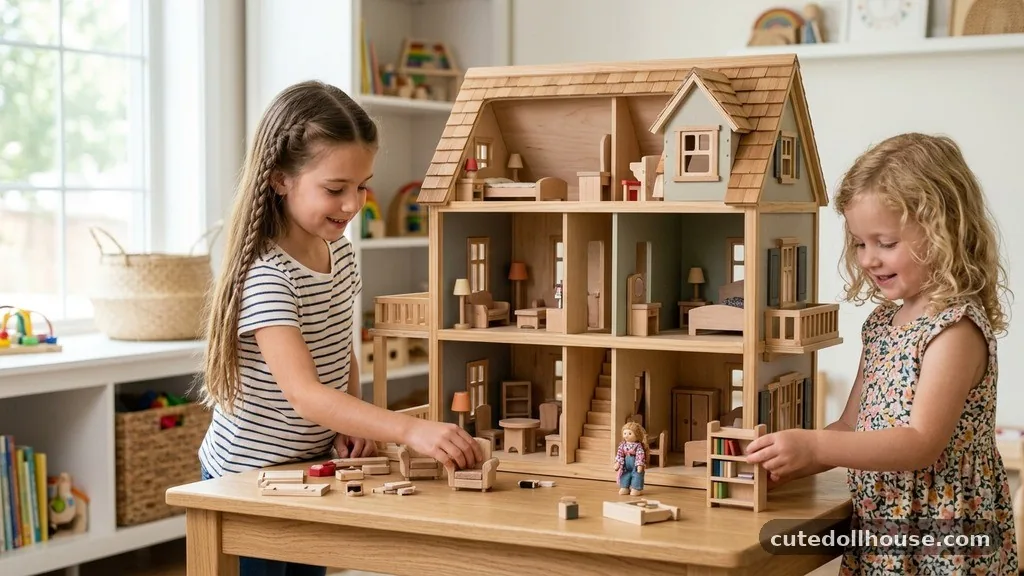
Material affects weight, appearance, maintenance, and how well the house may handle regular play. Wood can provide a solid, furniture-style look, but a wooden model is not automatically stronger than every plastic alternative. Look for cleanly finished edges, securely attached panels, stable supports, and doors or shutters that operate without excessive looseness.
For plastic houses, inspect the molding and connection points. Thin panels, poorly aligned sections, or flexible floors can make a structure feel less stable. Product photographs may not show these details, so the manufacturer’s specifications and clear customer photographs can be useful when available.
Design and Appearance
Appearance matters because the dollhouse may remain visible in a bedroom or playroom. Neutral colors and simple architecture may suit a shared space, while a bright, themed design may appeal more strongly to a particular child. Neither style is automatically better.
Focus on whether the design supports play. Large windows, open rooms, removable roofs, and wide entry points can make it easier for children to reach furniture and figures. Decorative details are attractive, but they should not come at the expense of access.
Size, Scale, and Fit
Size is one of the easiest specifications to overlook. Check the overall height, width, and depth, then measure the intended location. Remember to allow space for a child to sit or stand comfortably while playing.
Scale is equally important. Furniture and figures from one dollhouse system may not fit another. If a child already owns miniatures, compare their height and proportions with the product’s listed dimensions before assuming they will work together.
Product listings sometimes describe a house as large or spacious without explaining the usable interior dimensions. Treat those descriptions as marketing language and rely on measurements instead.
Features and Functionality
Useful features can include removable rooms, opening windows, staircases, balconies, elevators, lighting, and movable furniture. More features aren’t always better. A working elevator or electronic light may add interest, but it can also introduce batteries, small components, or additional points of failure.
For ages six to eight, accessibility usually matters more than complexity. Look for rooms that can be reached without forcing a child’s hand into narrow spaces. A house with fewer decorative elements but better play access may provide more satisfying use than a highly detailed model that is difficult to furnish.
Assembly and Ease of Use
Many full-sized dollhouses require adult assembly. Before buying, check whether the product arrives assembled, partially assembled, or as a flat-packed kit. The listing should ideally identify the tools needed, estimated assembly time, and whether two adults are recommended.
Assembly quality affects the finished experience. A slightly misaligned panel can make doors stick or floors sit unevenly. Keep the instructions and hardware together during construction, and don’t allow a child to use the house until all structural parts are secure.
Portable or single-room models are generally easier to set up, but buyers should still inspect hinges, handles, and folding sections. These areas often receive repeated handling.
Durability and Maintenance
Regular cleaning is usually straightforward: dust with a soft cloth and follow the manufacturer’s instructions for painted, laminated, or plastic surfaces. Avoid using harsh cleaners unless the manufacturer specifically permits them, since they may damage finishes or printed details.
Durability depends on both construction and play style. A child who carefully arranges miniatures places different demands on a house than children who move it frequently or use larger toys inside it. Stability, reinforced corners, and secure furniture are more important than decorative detail for rougher everyday use.
Included Accessories
Check exactly what comes in the box. Some listings show a fully furnished house but include only the structure. Others may include furniture, figures, lighting components, or decorative accessories.
Accessories can have a major effect on value. A less expensive house that needs a separate furniture collection may ultimately cost more than a house with fewer visual details but a useful starter set. At the same time, included pieces aren’t valuable if they are too small, fragile, or incompatible with the child’s existing toys.
Customer Feedback and Common Complaints
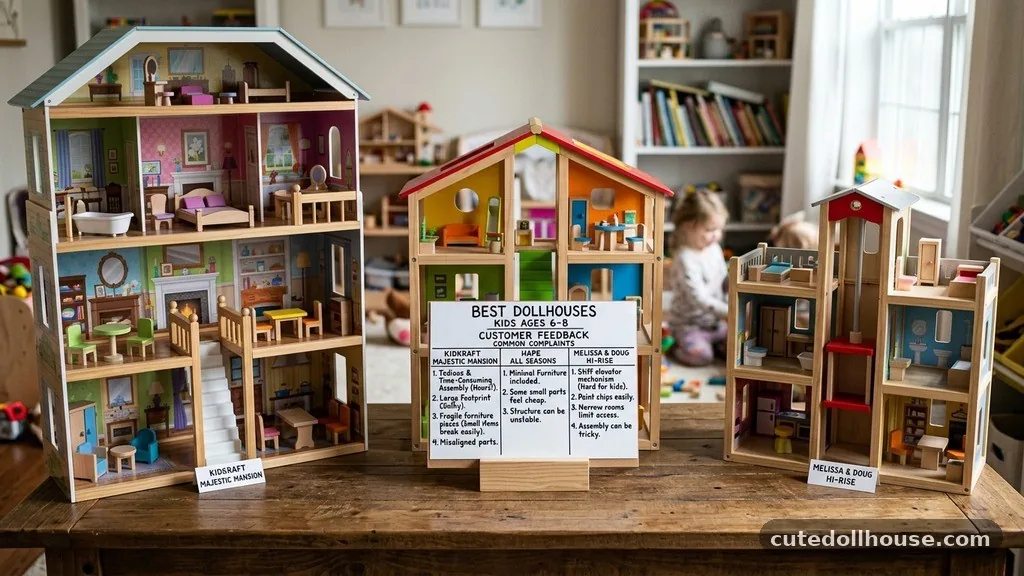
Customer reviews can reveal issues that product photography doesn’t show, such as confusing instructions, missing hardware, fragile decorative parts, or a smaller-than-expected interior. Read reviews for repeated patterns rather than relying on a single highly positive or negative comment.
Feedback can also vary by seller, production batch, shipping condition, and user expectations. A complaint about size may reflect a mismatch between advertised dimensions and the buyer’s assumptions rather than an inaccurate specification. Verify the measurements independently before purchasing.
How to Choose the Right Dollhouse
- Start with the play style. Decide whether the child prefers decorating, storytelling, moving figures, or simply arranging rooms.
- Measure the available space. Include room for opening panels and for the child to access the house comfortably.
- Match the scale. Compare the house’s dimensions with existing dolls, figures, furniture, and accessories.
- Check safety information. Review age guidance, small-parts warnings, materials, and assembly requirements.
- Assess the adult workload. A complicated build may be worthwhile for some families but frustrating for others.
- Calculate the complete cost. Include furniture, figures, batteries, storage, and possible replacement parts.
- Read recent feedback carefully. Look for comments about stability, missing parts, finish quality, and long-term use.
Recommendations by Buyer Type
For First-Time Dollhouse Buyers
A compact, open-access model with simple construction is usually the safest starting point. It reduces the risk of buying a large structure that the child rarely uses and makes it easier to understand whether miniature play is genuinely appealing.
For Children Who Already Own Figures
Prioritize scale compatibility and interior access. A house with fewer included accessories may be the better choice if it works with toys the child already enjoys. Measure before ordering.
For Small Bedrooms or Shared Spaces
Consider a foldable house, tabletop design, or single-room playset. These options may not offer the same number of rooms, but they are easier to store and can leave more space for other activities.
For Appearance-Focused Buyers
Look for a finish that suits the room, durable printed or painted details, and a structure that looks presentable even when accessories are stored away. A decorative house should still have practical access points for play.
For Families Prioritizing Durability
Choose stability over the highest accessory count. Strong joins, balanced construction, secure panels, and replaceable or uncomplicated parts are practical advantages for frequent use.
For Buyers Seeking Maximum Play Potential
A multi-room house with generous access may offer the most room for storytelling and furniture arrangement. Be prepared for a larger footprint and a greater need for storage, assembly, and organization.
Safety and Supervision Considerations
Children ages six to eight can often manage dollhouse play independently, but supervision may still be appropriate when the set includes small accessories, batteries, magnets, or fragile components. Follow the manufacturer’s age guidance rather than assuming that a child’s age alone determines suitability.
Place the house on a stable surface away from stairs, heaters, and areas where it could be pulled down. Tall models should receive particular attention because children may lean on upper sections while reaching for accessories. Inspect the structure occasionally for loose screws, cracked panels, sharp edges, or damaged hinges.
Frequently Asked Questions
What is the best dollhouse for a 6-year-old?
The best option is usually one with accessible rooms, stable construction, age-appropriate accessories, and a size that fits the available space. The child’s interest and existing figures matter more than choosing the largest model.
What should I look for in a dollhouse for a 7-year-old?
Look for durable materials, enough interior room for play, compatible scale, and features that encourage storytelling rather than simply adding decoration. Check assembly requirements and small-parts guidance as well.
Is a wooden or plastic dollhouse better?
Neither material is automatically superior. Wood may provide a more substantial, furniture-like appearance, while plastic can be easier to clean and may offer lighter or more molded designs. Construction quality matters more than the material label alone.
Do dollhouses usually include furniture and dolls?
Not always. Product images may show accessories that are sold separately, so read the package contents carefully. If the listing is unclear, verify what is included with the seller before buying.
How much space does a dollhouse need?
That depends on the model’s height, width, depth, and opening design. Measure the house itself and add clearance for doors, hinged panels, the child’s hands, and nearby storage.
Are dollhouses appropriate for children under six?
Some are, but suitability depends on the model and its accessories. Small parts, miniature furniture, magnets, and batteries can change the recommended age, so follow the manufacturer’s safety information.
Final Verdict
The best dollhouses for kids ages 6 to 8 are not necessarily the biggest or most elaborate. A worthwhile choice has stable construction, accessible rooms, compatible scale, manageable assembly, and enough flexibility to support the child’s preferred style of pretend play. Before buying, measure the space, confirm what is included, and compare the house with any figures or furniture already at home.
For most families, a well-sized open-access model is the strongest starting point, while compact or foldable designs make more sense where storage is limited. Take the manufacturer’s specifications seriously, read repeated customer feedback carefully, and treat accessories as part of the overall cost. With those checks in place, a dollhouse can be a durable and creative addition to a child’s play space rather than an oversized toy that quickly goes unused.