
Choosing the best dollhouse furniture for collectors is less about filling every room and more about finding pieces that suit a house’s scale, period, materials, and display purpose. A finely made chair or kitchen cabinet can change the character of an entire miniature interior, while an attractive piece in the wrong scale may look surprisingly out of place. Collectors also have to weigh craftsmanship, authenticity, condition, availability, and long-term value.
This guide explains what to check before buying dollhouse furniture for adults, including 1:12 scale pieces, vintage finds, handmade miniatures, and widely available modern sets. It also covers common problems, practical alternatives, and the situations in which paying more for better construction makes sense.
What Dollhouse Furniture Is and How Collectors Use It
Dollhouse furniture is miniature furniture made for scale-model homes and room boxes. It can include seating, beds, tables, cabinets, lighting, kitchen equipment, bathroom fixtures, decorative objects, and outdoor pieces. Some items are designed for children’s play, while others are made specifically for adult collectors, miniature artists, interior-display enthusiasts, and historical model builders.
The furniture doesn’t simply decorate a dollhouse. It establishes the period, lifestyle, and visual balance of the scene. A Victorian dining room requires different proportions and materials from a modern apartment, and a rustic cottage may look better with slightly irregular handmade pieces than with glossy factory-produced furniture.
Most collectors begin with scale. A common size is 1:12 scale, where one inch represents one foot in the full-size world. Other common scales include 1:24 and 1:48, along with manufacturers’ proprietary sizes.
Scale labels aren’t always enough, however. Seat height, table height, door width, and the relationship between furniture and room architecture should also be checked.
Before buying, measure the available space and compare it with the seller’s listed dimensions. A product described generally as “dollhouse furniture” may be intended for play, display, a particular branded house, or a scale other than the one you need.
Is Dollhouse Furniture Worth Buying for Collectors?
For serious collectors, well-chosen furniture is usually worth buying because it gives a miniature room context and personality. It can also make an unfinished house feel complete without requiring a full renovation. The value is primarily visual and personal, though rare, antique, or exceptionally crafted pieces may attract interest from specialist buyers.
That doesn’t mean every expensive miniature is a good purchase. A high price may reflect labor, materials, age, rarity, branding, or simply seller preference. Collectors should look for clear photographs, measurements, construction details, and condition information rather than assuming that a higher price guarantees better quality.
Furniture may be less suitable if the goal is rough-and-tumble play, frequent rearrangement, or furnishing a house quickly on a tight budget. In those cases, durable molded plastic sets or coordinated modern bundles may be more practical than delicate handmade or antique items.
Reasons Collectors Choose Dedicated Miniature Furniture
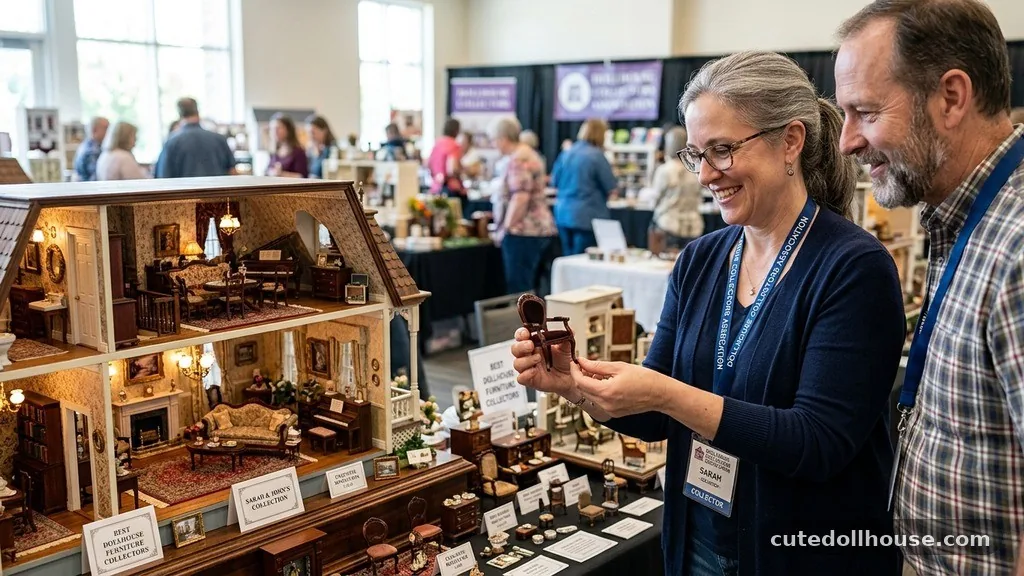
- It helps create a consistent historical or interior-design theme.
- It can be selected to match the exact scale and architecture of a dollhouse.
- Handmade pieces may offer details that mass-produced sets lack.
- Individual items allow collectors to build a room gradually.
- Vintage and antique examples can add age, character, and visual variation.
- Furniture can be used in dollhouses, room boxes, shadow boxes, and miniature displays.
Important Buying Criteria for Collectors
Scale and Physical Fit
Scale is the first filter, not an afterthought. A 1:12 scale dining chair may be technically attractive but unusable in a 1:24 room. Compare the item’s height and width with nearby architectural features, especially windows, doors, stairs, fireplaces, and counters.
Look beyond the advertised scale where possible. A seller should ideally provide measurements for the complete item, not just the packaging. For seating, check the seat height.
For beds, compare mattress length and width with the room. For cabinets, make sure doors can open without hitting walls or neighboring pieces.
Materials and Construction
Common materials include wood, resin, metal, ceramic, glass, plastic, fabric, and combinations of these. Materials influence both appearance and maintenance.
Wood can provide convincing grain and a traditional feel, while resin allows sharp decorative details. Plastic is often easier to clean and may withstand handling better, though the finish can vary.
Inspect photographs for thin or uneven parts, visible seams, loose joints, rough paint, and poorly aligned doors. For vintage items, some wear may be desirable, but structural damage should be described clearly. A chair with an intentionally aged finish is different from one with a broken leg that has been concealed in a photograph.
Design, Period, and Finish
A collection looks more intentional when furniture shares a design language. Decide whether the room represents a particular historical period, a modern home, a fantasy setting, or an eclectic miniature interior.
Color matters too. A brightly painted piece may suit a child-friendly or contemporary scene but clash with a restrained historical display. Collectors who plan to repaint should check whether the material accepts paint and whether sanding or priming will be needed.
For visual reference and inspiration, museums devoted to miniatures can help buyers compare period furniture, room layouts, and decorative styles. The Mini Time Machine Museum of Miniatures is one useful example of a public collection focused on miniature art and environments.
Features and Functionality
Miniature furniture may be purely decorative or may include working elements. Drawers, doors, lids, reclining mechanisms, hinges, and removable cushions can add realism, but moving parts also introduce more opportunities for breakage.
Decide which features genuinely matter for your display. A working drawer is useful if you enjoy arranging tiny accessories inside it.
It may be unnecessary if the piece will remain behind glass. Lighting requires particular care because wiring, batteries, heat, and access points can affect both safety and installation.
Included Accessories
Some sets include cushions, bedding, dishes, books, food, lampshades, or decorative objects. Others contain furniture only.
Read the listing carefully. Product photographs may show accessories that are sold separately, and a room scene may include items not included in the purchase.
Bundles can be convenient for beginners, but individual pieces often give experienced collectors more control over quality and style. Check whether accessories match the furniture’s scale and finish rather than assuming that every item in a set is proportionate.
Assembly and Difficulty
Furniture may arrive fully assembled, partially assembled, flat-packed, or as an unfinished kit. Assembly can range from attaching a few legs to constructing and painting a complete miniature cabinet.
Consider your tools, eyesight, patience, and experience before buying. Tiny hardware can be difficult to handle, and instructions may not always be detailed. If the listing doesn’t explain the assembly level, ask the seller before ordering.
Durability and Maintenance
Display furniture still needs protection from dust, sunlight, moisture, and accidental knocks. Direct sunlight can fade fabric and finishes. Dust can collect in carved details, while humidity may affect wood, paper, adhesives, and textiles.
Use a soft brush or gentle air blower for delicate pieces. Avoid applying liquid cleaners unless the material and finish are known to tolerate them. Store spare furniture in a dry, protected container with enough padding to prevent scratches and pressure damage.
Customer Feedback and Common Complaints
Reviews can reveal practical issues that product descriptions omit, but they should be read carefully. Look for repeated comments about scale accuracy, fragile parts, misleading photographs, poor packaging, color differences, or missing components. A single complaint may describe an unusual incident; a recurring pattern deserves attention.
Feedback can also vary by seller, production batch, and marketplace listing. If the item is handmade or vintage, no two examples may be identical. Confirm the exact item shown, especially when photos represent a broader style rather than a single piece.
Comparison: Which Type of Furniture Fits Your Collection?
| Furniture Type | Best For | Difficulty | Key Advantage | Main Drawback | Overall Value Consideration |
|---|---|---|---|---|---|
| Ready-made modern furniture | Quick room furnishing and beginners | Low | Usually ready to display | May look generic or lack scale detail | Practical when convenience matters most |
| Handmade wooden furniture | Collectors focused on craftsmanship | Low to medium | Natural materials and individual character | Finish, dimensions, and availability may vary | Can justify a higher cost when construction is clear |
| Vintage or antique miniatures | Period displays and historical collections | Medium | Age, character, and potential rarity | Condition and authenticity require careful checking | Value depends heavily on provenance and condition |
| Unfinished kits | Miniature makers and customization projects | Medium to high | Freedom to paint and modify | Requires tools, materials, and extra time | Good value for hands-on buyers, less so for display-only shoppers |
| Plastic play furniture | Frequent handling and children’s play | Low | Easy to clean and generally simple to use | Often less convincing in an adult collector display | Strong practical value when toughness matters |
Types of Dollhouse Furniture Worth Considering
1. Handmade Wooden Furniture
Handmade wooden pieces appeal to collectors who care about material texture, joinery, and a less uniform appearance. They can work especially well in traditional, farmhouse, cottage, and period interiors.
What to Look For
- Accurate measurements and a clearly stated scale.
- Even joints without excessive glue marks.
- A stable base and properly aligned legs or doors.
- A finish that matches the intended period or room style.
- Clear information about whether the item is sealed, painted, or unfinished.
What Could Be Better
Handmade furniture may show small variations, and that isn’t automatically a defect. However, uneven proportions, rough sanding, weak joints, or an inconsistent finish can limit its usefulness. Buyers should also understand that natural wood may differ from the color shown in a photograph.
2. Vintage and Antique Dollhouse Furniture
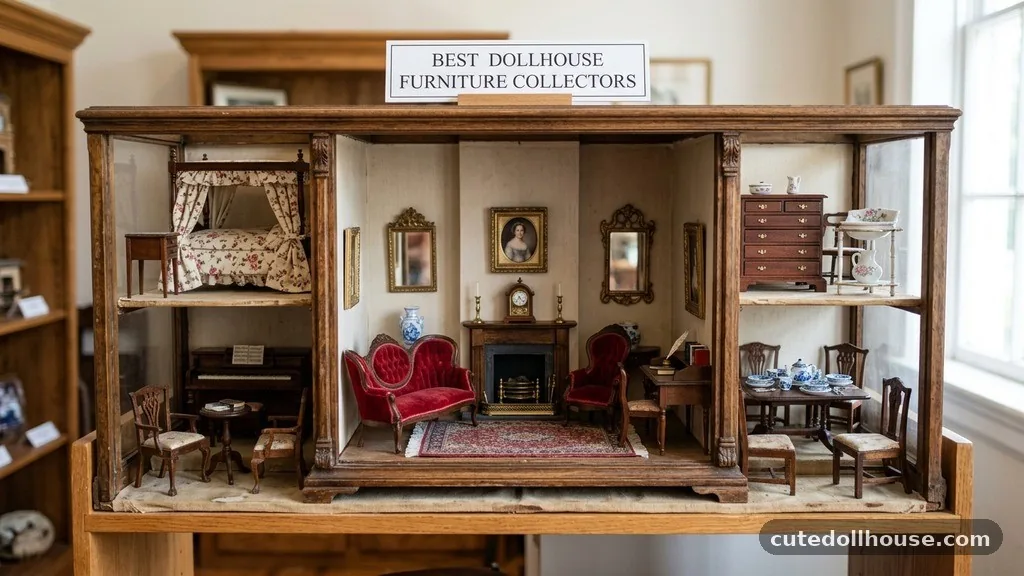
Older miniatures can bring a sense of history that new furniture cannot easily reproduce. They may be suitable for period rooms, inherited collections, or displays built around a particular era.
Condition is central. Look for repaired legs, missing handles, replaced fabric, faded finishes, corrosion, and signs of woodworm or water damage. A piece can still be attractive after restoration, but repair work should be reflected in the description and the buyer’s expectations.
Some vintage dollhouse furniture may be valuable, but age alone doesn’t establish a high price. Rarity, maker, provenance, craftsmanship, completeness, and demand all matter. Collectors should seek specialist advice before treating an item as an investment.
3. Modern Ready-Made Sets
Modern sets are useful when you want to furnish several rooms with coordinated pieces. They can provide a consistent color palette and reduce the effort involved in sourcing individual tables, chairs, beds, and cabinets.
The trade-off is individuality. Some sets rely on lightweight materials, printed details, or simplified forms. They may be perfectly suitable for a casual display, but collectors seeking realism should examine close-up photographs and compare dimensions before buying.
4. Unfinished Miniature Kits
Unfinished kits suit buyers who enjoy painting, staining, upholstering, and modifying miniature interiors. They also allow a collector to match furniture to an unusual room design rather than accepting a ready-made finish.
These kits aren’t automatically cheaper once paint, glue, tools, fabric, and time are included. Check the construction instructions and identify whether the kit includes hardware or requires additional supplies.
5. Specialist Room Pieces
Some collectors focus on one room rather than furnishing an entire house. Kitchen cabinets, four-poster beds, bathroom fixtures, nursery furniture, and office desks can become focal points in a carefully planned display.
Specialist pieces should be judged in relation to the surrounding architecture. A highly detailed kitchen may look impressive, but it will be less convincing if counters, appliances, doors, and accessories don’t share the same scale.
Common Problems Buyers Should Avoid
- Wrong scale: The most attractive item is still unsuitable if it doesn’t fit the room.
- Unclear dimensions: Avoid listings that provide only vague size descriptions.
- Decorative photographs: Confirm which items are included rather than relying on the full scene.
- Fragile construction: Thin legs, unsecured handles, and brittle decorations need careful handling.
- Unverified vintage claims: “Antique” or “rare” should be supported by useful details, not just wording.
- Inconsistent style: Mixing periods can work, but accidental mismatches often make a room look unfinished.
- Hidden restoration: Ask whether parts have been replaced, repainted, or repaired.
- Unexpected assembly: Check whether the piece arrives ready to display or requires construction.
Which Option Is Best for Different Buyers?
Best for Beginners
Beginners will usually benefit from ready-made furniture with clear dimensions, a stated scale, and few delicate moving parts. A coordinated starter set can make planning easier, although buying fewer, better-proportioned pieces is often preferable to filling a room with mismatched items.
Best for Experienced Collectors
Experienced collectors may prefer handmade furniture, specialist room pieces, or vintage examples that add character. These buyers are more likely to appreciate subtle differences in joinery, finish, upholstery, and historical style.
Best for Appearance-Focused Buyers
If visual realism matters most, prioritize materials, proportions, finish quality, and consistency with the architecture. Close-up photos are more useful than polished lifestyle images. Handmade or carefully finished wooden pieces may be a better fit than simplified play sets.
Best for Value-Focused Buyers
Value doesn’t always mean the lowest purchase price. Compare the number of useful pieces, material quality, assembly needs, and likely replacement costs. A smaller set that fits correctly may offer better value than a large bundle containing several unusable items.
Best for Hands-On Makers
Unfinished kits and plain wooden furniture provide room for customization. They suit buyers who enjoy painting, reupholstering, distressing, and building miniature scenes. They’re less appropriate for someone who wants an instant display with no additional work.
Best for Historical Displays
Vintage furniture or period-specific reproductions are the logical starting points for historical rooms. Verify dates, proportions, restoration, and construction details before paying a premium for an item described as historically accurate.
How to Buy Dollhouse Furniture Online
- Measure the room and identify its scale.
- List the furniture pieces you actually need before browsing.
- Check individual dimensions, not only the stated scale.
- Review photographs for seams, damage, paint quality, and proportion.
- Confirm what is included and whether accessories are separate.
- Read repeated customer comments about packaging, breakage, and accuracy.
- Ask the seller about unclear materials, repairs, or assembly.
- Compare shipping protection and return terms, particularly for fragile or vintage pieces.
Availability can change quickly. Retailers may discontinue a line, change suppliers, or list different versions under similar names.
This is especially relevant when searching for clearance stock, marketplace listings, or products associated with a particular craft store. Verify the current listing rather than relying on an old photograph or cached description.
Frequently Asked Questions
What is the best dollhouse furniture scale for collectors?
There is no single best scale, but 1:12 is widely used and offers a broad selection of furniture and accessories. The correct choice is the scale that matches the house, room box, or miniature collection you already own.
Is 1:12 scale furniture suitable for every dollhouse?
No. A house may be marketed for dolls while using a different proportion.
Measure doorways, ceilings, windows, and existing furniture before buying. Product dimensions are more reliable than appearance in listing photographs.
Is vintage dollhouse furniture worth a lot of money?
Some pieces may be valuable, but age alone doesn’t determine worth. Maker, rarity, condition, completeness, provenance, craftsmanship, and collector demand are all relevant. Specialist appraisal is sensible for potentially rare items.
Is there a market for dollhouse furniture?
There is an active interest in miniatures, but demand varies by scale, style, maker, condition, and location. Rare or well-made pieces may attract more attention than generic sets, yet resale should not be assumed when calculating a purchase.
Should collectors buy furniture sets or individual pieces?
Sets are convenient and can create a coordinated room quickly. Individual pieces offer more control over scale, quality, and style. Collectors who care about realism often prefer selecting key items separately.
Why might a retailer stop carrying a dollhouse furniture line?
Retail availability can change because of supplier decisions, seasonal ranges, inventory limits, or shifts in product selection. A discontinued listing doesn’t necessarily indicate poor quality. Check the manufacturer, specialist miniature sellers, and reputable marketplaces for current alternatives.
Final Verdict
The best dollhouse furniture for collectors is the furniture that fits the scale, supports the intended style, and offers construction quality appropriate to the display. Handmade wood, carefully selected vintage pieces, and well-finished specialist items can be worthwhile for serious collectors, while coordinated modern sets and durable plastic furniture make more sense for convenience, frequent handling, or tighter budgets.
Start with measurements, not photographs. Confirm materials, included accessories, condition, and assembly requirements before buying, then choose a few strong pieces rather than rushing to fill every room. With that approach, dollhouse furniture becomes more than decoration: it gives the miniature home a convincing sense of place.