
The best dollhouses for kids with lights and sounds combine pretend play with interactive details that make rooms feel more alive. A glowing bedroom, a working doorbell, or a sound effect can add interest, but those extras don’t automatically make one dollhouse a better buy than another. Size, construction, age suitability, included furniture, power requirements, and the quality of the electronics all matter.
The right choice depends on how much space you have, how your child plays, and whether you prefer a sturdy open-ended toy or a more feature-heavy playset. This guide explains what to check before buying and where interactive dollhouses can fall short.
What Are Dollhouses with Lights and Sounds?
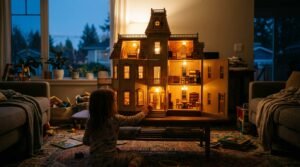
A dollhouse with lights and sounds is a miniature play environment designed for pretend play. It usually includes several rooms, openings for access, and details such as windows, doors, furniture, or printed flooring. Some models add battery-powered lighting, sound buttons, doorbells, music, or other electronic effects.
The lights and sounds may be activated by pressing a button, moving a door, placing an accessory in a particular spot, or using a dedicated switch. The exact setup differs by model, so buyers should check the product listing carefully rather than assuming every illuminated dollhouse works the same way.
Interactive features can make play more engaging, particularly for children who enjoy role-play with clear cause-and-effect actions. They also introduce more parts that can fail, require batteries, or need adult supervision. A simple dollhouse may offer fewer instant effects but can leave more room for imagination and customization.
Are Dollhouses with Lights and Sounds Worth Buying?
They can be a worthwhile choice when a child is drawn to interactive toys and the dollhouse will be used in a suitable play area. The lights may help define the different rooms, while sound effects can give pretend scenarios a stronger sense of action. These features may also encourage children to return to the toy after the initial setup.
That said, the electronic elements should be treated as an extra rather than the main reason to buy. A dollhouse still needs to be stable, accessible, appropriately sized, and enjoyable when the batteries are removed. If the structure is flimsy or the rooms are too cramped for the intended figures, sound and lighting won’t solve the underlying problem.
A traditional wooden or plastic dollhouse may be a better fit for children who prefer arranging furniture, creating long stories, or decorating the rooms. Families seeking a lower-maintenance toy may also prefer a non-electronic design. The best option depends less on the number of effects and more on whether the entire playset supports the child’s preferred style of play.
What to Check Before Buying
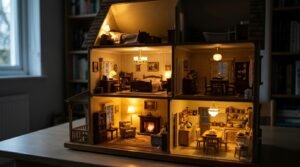
Build and Material Quality
Look for a structure that stands securely on a level surface and has parts that appear properly finished. Plastic dollhouses can be relatively easy to clean and may be lighter to move. Wooden models can offer a more furniture-like appearance, although their weight, assembly requirements, and finish vary significantly.
Pay attention to exposed edges, small detachable components, thin decorative panels, and the way doors or shutters are attached. Product photographs can be helpful, but they don’t always show how firmly pieces connect. If the listing provides material information, read it alongside the age guidance and assembly instructions.
Design and Appearance
Children often choose a dollhouse because of its visual style. Bright colors, open sides, balconies, large windows, and themed rooms can all affect how inviting the toy feels. An open-back design may make it easier for several children to play together, while a more enclosed house can look attractive but limit access.
Also consider whether the design leaves room for imagination. Highly themed furniture and printed details create a finished look, but a simpler interior may be easier to adapt with additional figures, handmade accessories, or furniture from another set.
Size and Fit
Size affects both play value and practicality. A large dollhouse can provide more room for furniture and figures, yet it needs a permanent location. A compact house is easier to store but may have small rooms that don’t accommodate all accessories comfortably.
Before ordering, check the assembled height, width, and depth rather than relying on the packaging size. Measure the intended surface and allow space for a child to stand or sit comfortably. If the dollhouse has a hinged front, opening doors, or side panels, include the extra clearance those parts require.
Lights, Sounds, and Power
Interactive details deserve close inspection. Buyers should verify whether the product includes batteries, which battery type it uses, and whether the lights or sounds can be switched off. These details may vary by seller, region, model revision, or production batch.
- Check whether the lighting is room-based, decorative, or limited to a single feature.
- Confirm how the sounds are activated and whether the controls are easy for a child to reach.
- Look for a volume control or mute option if the toy will be used in shared spaces.
- Verify whether batteries are included or sold separately.
- Read the safety information for battery compartments and small electronic parts.
- Check whether the toy remains usable if the batteries run out.
Descriptions such as “interactive” or “musical” can be broad. A listing may refer to one sound button rather than a large collection of effects, so the feature list and product manual are more useful than promotional wording alone.
Ease of Assembly
Many dollhouses require adult assembly, even when the finished toy is intended for young children. Assembly can involve attaching walls, floors, railings, furniture, stickers, or electronic components. The manufacturer’s stated assembly time is not available for every model and should not be assumed.
Check whether tools are required and whether the instructions are supplied in the package or available online. A complicated build isn’t necessarily a disadvantage, but families should know what is involved before purchase. If the house will be given as a birthday or holiday gift, allow time for assembly rather than expecting it to be ready immediately.
Age Suitability and Difficulty
Follow the manufacturer’s recommended age range, but also consider the individual child. Younger children may need larger accessories, fewer fragile details, and straightforward controls. Older children may want more rooms, movable parts, and space for creative decoration.
Age labels don’t describe every aspect of play. A child may be old enough to operate the lights but still need supervision around miniature accessories, batteries, or detachable pieces. Examine the actual parts included with the set before deciding whether it is appropriate.
Included Accessories
A dollhouse may be sold as a building only, with furniture and figures shown in photos available separately. Other sets include beds, tables, kitchen pieces, pets, dolls, or decorative items. The difference can have a meaningful effect on value.
Make a checklist before buying:
- Figures or dolls
- Furniture
- Room accessories
- Stickers or decorative pieces
- Sound or lighting components
- Batteries or charging equipment
- Assembly hardware
Don’t assume every item pictured is included. Product photography often shows a styled play scene, while the written contents list identifies what actually comes in the box.
Durability and Maintenance
Electronic dollhouses need the same basic care as other playsets, plus attention to battery compartments and wiring. Keep liquids away from light and sound controls, and follow the instructions for changing or removing batteries during extended storage.
Dust and fingerprints are usually easier to manage on smooth plastic surfaces than on textured or fabric accessories. Wooden components may need gentler cleaning, depending on the finish. Replacement parts may not be available for every brand, so buyers who want a long service life should check the manufacturer’s support information where possible.
Customer Feedback and Common Complaints
Customer reviews can reveal practical issues that product photographs don’t show, including difficult assembly, missing hardware, weak connections, confusing instructions, or electronic features that are less extensive than expected. Reviews should be read for repeated patterns rather than isolated reactions.
Feedback can also vary by seller and production batch. A complaint about a missing part may concern shipping or packaging rather than the design itself, while repeated comments about instability or poor fit deserve more attention. Look for reviews that describe the child’s age, the setup process, and the way the toy is being used.
Comparing Common Dollhouse Types
Because no specific product models or verified specifications were supplied for this review, the table below compares broad categories rather than ranking named dollhouses. Use it to narrow the type of playset that best fits your household, then verify the details for the individual model you are considering.
| Product Type | Best For | Difficulty | Key Feature | Main Drawback | Overall Value Consideration |
|---|---|---|---|---|---|
| Compact interactive dollhouse | Smaller rooms and occasional play | Usually lower, but model-dependent | Lights or sounds in a space-saving design | Limited room for furniture and figures | Useful when storage space matters most |
| Large multi-room dollhouse | Children who create extended role-play stories | May require more assembly | More accessible rooms and play areas | Needs substantial floor or table space | Can offer stronger play value if used regularly |
| Wooden interactive dollhouse | Appearance-focused buyers and longer-term display | Often more involved to assemble | Decorative structure with selected electronic details | May be heavier and less forgiving of rough handling | Worth considering if finish and presentation matter |
| Plastic electronic playset | Children who like buttons, sounds, and movable parts | Varies by design | Easy-clean surfaces and interactive functions | Electronic parts add maintenance requirements | Good fit when interactive play is the priority |
| Basic non-electronic dollhouse | Open-ended storytelling and low-maintenance play | Often straightforward | Fewer restrictions on imaginative play | No built-in lights or sound effects | May provide better simplicity and flexibility |
Choosing the Right Option for Different Buyers
For Beginners
A first dollhouse should be easy to access, stable, and large enough for the available figures. A model with simple lighting controls can add interest without making the play experience dependent on a complicated electronic system. Check the included accessories carefully so the child has enough to begin playing.
For Children Who Love Interactive Toys
A dollhouse with several clearly described buttons, doorbells, or room lights may suit children who enjoy cause-and-effect features. Confirm that the sounds can be muted and that the controls are not so small or delicate that they require constant adult help.
For Appearance-Focused Buyers
Wooden designs, detailed facades, balconies, and coordinated room themes may appeal to families who want the dollhouse to remain visible in a bedroom or playroom. Appearance shouldn’t be the only consideration, though. Make sure the interior is still easy for a child to reach.
For Value-Focused Buyers
Compare the complete package rather than the headline feature. A less expensive-looking option with furniture and figures included may offer more usable play value than a larger house that requires several additional purchases. Also consider the cost of replacement batteries and accessories over time.
For Shared or Group Play
An open-front or open-back dollhouse with multiple access points may be easier for two children to use together. A narrow, enclosed design can lead to blocked views and competing for the same room. Check the layout and opening dimensions before assuming the toy will work well for group play.
Potential Drawbacks to Consider
Interactive dollhouses are not automatically better than simpler designs. Their main disadvantages usually relate to complexity rather than pretend play itself.
- Battery dependence: Lights and sounds may stop working when batteries are depleted or contacts become dirty.
- More failure points: Switches, speakers, LEDs, and wires add components that can malfunction.
- Noise: Repeated sound effects may become distracting in bedrooms or shared living areas.
- Limited flexibility: Fixed electronic features can leave less space for rearranging rooms or furniture.
- Assembly demands: Larger models may take significant adult time to build.
- Accessory costs: A house that looks fully furnished in photos may require separate purchases.
- Storage challenges: Tall or wide structures can be difficult to move and put away.
These aren’t reasons to reject the category. They are reminders to assess the complete ownership experience, not just the first impression of glowing rooms and sound effects.
Safety and Practical Use
Always follow the age recommendation and inspect the toy after assembly. Look for loose hardware, sharp edges, unstable sections, and small accessories that could present a risk to younger children. Battery compartments should close securely, and damaged electronic components should not be used.
Place the dollhouse on a stable surface away from stairways and heavy foot traffic. Large models should not be positioned where a child might climb on them. If the set includes strings, small furniture, or delicate decorative parts, supervise children who may still put objects in their mouths.
Sound levels are another practical consideration. A mute switch or volume control can make the toy easier to live with, especially if it will be used near sleeping areas. If no control is provided, check whether the sound can be disabled safely according to the instructions; don’t modify the electronics yourself.
What to Verify on the Product Page
Before placing an order, read beyond the product title. Listings can combine similar models or use stock images that don’t show the exact contents of the selected version.
- Confirm the exact model name and version.
- Check assembled dimensions, not only package measurements.
- Read the recommended age range and safety warnings.
- Identify every included accessory.
- Confirm battery type, quantity, and whether batteries are included.
- Look for assembly instructions and tool requirements.
- Review the return policy for damaged, incomplete, or defective parts.
- Compare recent customer feedback for the same seller and model.
These checks are especially important when shopping through large marketplaces, where product names, images, and seller descriptions may differ. Availability, packaging, and specifications can change, so verify the current listing before buying.
Frequently Asked Questions
What age is suitable for a dollhouse with lights and sounds?
The correct age depends on the manufacturer’s guidance and the child’s ability to use the accessories safely. Check for small parts, battery compartments, and the complexity of the controls rather than relying on age alone.
Do dollhouses with lights and sounds usually include batteries?
Not always. Battery requirements and included batteries vary by model and seller. Check the contents list and instruction information before purchase.
Are electronic dollhouses better than wooden dollhouses?
Neither type is universally better. Electronic models may suit children who enjoy interactive effects, while wooden or non-electronic houses often provide simpler, quieter, and more open-ended play.
How much space does a large dollhouse need?
There is no standard size. Measure the assembled height, width, and depth listed by the manufacturer, then add clearance for doors, panels, and comfortable access around the house.
Can children use a dollhouse without the lights and sounds?
That depends on the design, but a well-designed playset should still function as a dollhouse when the electronics are switched off. Verify that the structure, rooms, and accessories provide usable play without relying on the effects.
What is the most important feature to compare?
Start with fit: age suitability, available space, stability, and compatibility with the figures and accessories your child will use. Interactive features are useful only when the underlying dollhouse is practical and durable enough for regular play.
Final Verdict
The best dollhouses for kids with lights and sounds are the ones that balance interactive appeal with stable construction, accessible rooms, sensible sizing, and clear battery information. Lights and sound effects can make pretend play more exciting, but they shouldn’t outweigh build quality, included accessories, or ease of use. Before buying, compare the complete contents, assembled dimensions, age guidance, and recent feedback for the exact model and seller.
Families that want quiet, flexible, low-maintenance play may prefer a traditional dollhouse, while children who enjoy buttons and cause-and-effect features may get more from an electronic design. Choose the play style first, then the extras.