
Choosing among the best plastic dollhouses for kids is less about finding the biggest model and more about matching the house to a child’s age, play style, available space, and tolerance for small pieces. Plastic dollhouses are popular because they’re usually lighter, easier to wipe clean, and less fragile than many wooden alternatives. Still, designs vary widely: some suit toddlers, while others include tiny furniture, multiple levels, or accessories better suited to older children.
Safety, stability, assembly, storage, and long-term play value all deserve attention before buying. This guide explains what to look for, where plastic dollhouses work well, and when another type of dollhouse may be a smarter choice.
What Is a Plastic Dollhouse?
A plastic dollhouse is a miniature play structure made mainly from molded plastic panels, floors, walls, furniture, or accessories. Children use it for imaginative play, arranging rooms, creating stories, and acting out everyday routines with dolls, figures, or other small toys.
Some models are simple open-front houses with a few ro
oms. Others may include several floors, working doors, elevators, balconies, furniture, or themed accessories. The exact contents depend on the manufacturer and model, so buyers should read the current product listing carefully rather than assuming that furniture or dolls are included.
Plastic construction offers practical advantages. It generally resists minor spills, can be cleaned more easily than fabric or unfinished wood, and may be lighter to move around the home. On the other hand, thin panels, small connectors, or decorative parts can feel less substantial than wood, and some large designs require assembly.
Are Plastic Dollhouses Worth Buying?
For many families, yes. A well-designed plastic dollhouse can p
rovide open-ended pretend play without the maintenance demands of a delicate wooden set. It can be a sensible option for children who like role-play, arranging furniture, or making up stories around familiar rooms such as kitchens, bedrooms, and living areas.
Plastic is especially practical where frequent cleaning matters. A wipeable surface is useful in playrooms, bedrooms, childcare settings, or homes where toys are regularly handled with food residue or sticky hands.
That doesn’t make every plastic dollhouse a good purchase. A very small child may need a larger, simpler model with fewer detachable pieces, while an older child may quickly outgrow a basic design. Families with limited floor space may also prefer a compact house or a foldable model rather than a tall, multi-level structure.
- Good choice for: imaginative play, ea
sy-clean toys, shared playrooms, and families seeking a lighter alternative to wood. - Less suitable for: children who prefer construction toys, homes with very limited storage, or buyers seeking heirloom-quality furniture and finishes.
- Worth checking carefully: age guidance, small-part warnings, stability, dimensions, assembly requirements, and accessory compatibility.
What to Consider Before Buying
Build and Material Quality
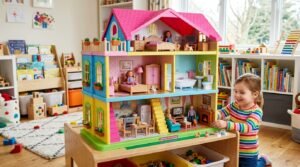
Not all plastic feels the same. Look for clear information about the construction, especially whether the main frame is molded as sturdy sections or assembled from many thin pieces.
A stable base matters more than a glossy finish. A house that tips easily can interrupt play and may be unsuitable for younger children.
Inspect product photographs for visible seams, narrow supports, exposed connectors, and thin balconies. These details don’t automatically indicate poor quality, but they can suggest where a model may be more vulnerable to rough handling.
Buyers should also distinguish between manufacturer claims and independent feedback. A listing may describe a product as durable, while customer comments may reveal that some accessories detach easily or that assembly takes longer than expected. Experiences can vary by model, production batch, and seller.
Design and Appearance
Appearance is subjective, but it affects whether a child returns to the toy. Bright colors, recognizable rooms, and accessible play areas can encourage storytelling. An open-front design usually makes it easier to reach furniture and figures than a deep house with narrow rooms.
Some children prefer realistic home layouts. Others enjoy themed houses with unusual colors, fantasy details, or character-based decoration. Avoid choosing only by appearance; a visually attractive house may still be awkward to play with if the rooms are too cramped or the furniture cannot be moved.
Size and Available Space
Check the assembled dimensions, not just the package size. A dollhouse can fit in a box but require considerably more room once built. Measure the shelf, table, or floor area where it will be used, and leave enough space for a child to stand or sit comfortably in front of it.
Height matters, too. A tall house may be engaging for older children but difficult for a smaller child to reach safely. Wider, lower models can provide easier access, while compact houses m
ay be better for bedrooms, apartments, or shared play areas.
Features and Functionality
Features should support play rather than simply increase the accessory count. Useful details may include movable furniture, wide openings, removable rooms, working doors, or spaces that accommodate figures a child already owns.
Some features are more decorative than practical. Tiny tables, chairs, or decorative pieces may look appealing but add little value if they are difficult to handle. Ask whether the child can actually use the features independently.
Before buying, check:
- Whether dolls or figures are included.
- How much furniture comes with the house.
- Whether the furniture is removable or fixed.
- Whether the house works with toys already owned.
- Whether doors, lifts, windows, or other moving features require careful handling.
- Whether replacement or additional accessories are available.
Age Suitability and Difficulty
Age guidance is a starting point, not a substitute for supervision or judgment. A dollhouse intended for toddlers should have large, easy-to-handle parts and a layout that doesn’t require delicate manipulation. Models aimed at older children may contain miniature accessories that are unsuitable for younger users.
For a two- or three-year-old, simplicity and accessibility usua
lly matter more than a large number of rooms. A five-year-old may enjoy a more detailed layout, while a seven-year-old may want a house that supports longer, more elaborate stories. Children develop differently, so consider their motor skills and play habits rather than age alone.
Parents and caregivers can consult the U.S. Consumer Product Safety Commission’s toy safety guidance for general information about age labels, small parts, and safe toy use.
Assembly and Ease of Use
Some plastic dollhouses arrive ready to play, while others require adult assembly. Assembly may involve snapping panels together, attaching floors, fitting accessories, or applying stickers. Pr
oduct instructions and customer feedback are useful here, particularly when the listing doesn’t clearly state how long setup takes.
Pay attention to whether parts click firmly into place. A difficult connection can be frustrating during setup, while an overly loose connection may cause the house to shift during play. Keep the packaging and instructions until assembly is complete and the return period has passed.
A ready-assembled or mostly assembled model may be worthwhile for buyers who want immediate play. A build-it-yourself option could make sense for families comfortable with setup, provided the finished structure is stable.
Durability and Maintenance
Plastic is generally easy to wipe, but cleaning instructions vary. Avoid assuming that every surface is suitable for soaking, strong cleaners, or dishwasher use. Stickers, painted details, and electronic components may need gentler care than the main plastic frame.
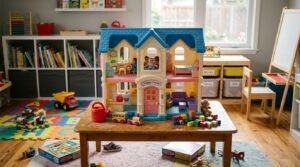
Durability depends on more than the material. The shape of the supports, quality of the joins, thickness of the panels, and how the child plays all matter. A house used for careful storytelling may last differently from one that is frequently moved, climbed on, or used for rough play.
Store small accessories in a labeled container. This reduces lost pieces and makes it easier to spot damaged parts before they become a safety concern.
Customer Feedback and Comm
o
n Complaints
Customer reviews can reveal practical details that product photographs don’t show. Look for repeated comments rather than isolated complaints. One unhappy review may reflect a damaged shipment, but several reports of the same loose panel or missing accessory deserve attention.
Common concerns in this category may include difficult assembly, smaller-than-expected rooms, flimsy accessories, unclear instructions, stickers that are hard to apply, and missing or broken parts on arrival. These issues aren’t universal, and they may differ by seller or production run.
Positive feedback is most useful when it explains why the product works: easy access, stable construction, convenient cleaning, or good compatibility with existing figures. Short claims such as “great toy” provide less buying information than specific observations.
Plastic Dollhouse Types Compared
There isn’t one correct design for every child. The following comparison focuses on broad product types rather than specific brands or models, since included features and dimensions vary between listings.
| Type | Best For | Difficulty | Key Feature | Main Drawback | Overall Value |
|---|---|---|---|---|---|
| Compact open-front house | Small rooms and younger users | Usually low | Easy access to rooms | Limited space for furniture | Good when simplicity and storage matter |
| Multi-level plastic house | Children who enjoy detailed pretend play | Low to moderate | Several rooms or floors | Needs more floor or shelf space | Strong if the child will use the extra layout |
| Accessory-focused set | Children who enjoy arranging scenes | Moderate | Furniture and decorative pieces | More small parts to lose | Best when accessories are genuinely usable |
| Foldable or portable house | Travel and shared storage | Usually low to moderate | Easier storage or transport | May offer less room or stability | Useful when portability is a priority |
| Electronic or feature-rich house | Children drawn to lights, sounds, or moving parts | Moderate | Interactive functions | More components that can fail or need batteries | Worth considering only if the features add real play value |
Advantages and Disadvantages of Plastic Dollhouses
What Plastic Dollhouses Do Well
- Easy maintenance: Most exposed plastic surfaces can be wiped clean with suitable household care.
- Lightweight construction: Many models are easier to move than similarly sized wooden houses.
- Accessible designs: Open-front layouts can make it easier for children to reach the rooms.
- Design variety: Plastic can be molded into colorful, themed, or highly detailed shapes.
- Flexible play: Children can use the house with dolls, figures, stuffed toys, and miniature accessories, subject to size compatibility.
- Lower maintenance than delicate finishes: Plastic usually doesn’t require polishing or special wood care.
Where They Can Fall Short
- Variable sturdiness: Lightweight plastic may feel less substantial than thick wood or heavier composite materials.
- Small accessories: Detailed sets can include pieces that are easy to lose and unsuitable for very young children.
- Plastic seams and connectors: Poorly fitted parts may loosen or show visible gaps.
- Limited repair options: A broken molded panel may be difficult to replace or fix neatly.
- Storage demands: Large houses can occupy considerable space even when they are lightweight.
- Appearance preferences: Some buyers prefer the natural look and feel of wood.
Choosing the Right Dollhouse for Different Buyers
For Younger Children
Choose a model with larger components, broad openings, rounded edges, and minimal loose decoration. The house should be low enough for the child to reach comfortably. Avoid prioritizing an impressive room count if it makes the layout crowded or difficult to use.
For Older Children
Older children may appreciate more rooms, movable furniture, character accessories, and spaces that support longer stories. Check that the structure can accommodate the figures they already enjoy. A detailed house is only useful if the child can manipulate its parts without constant adult help.
For Small Homes
Measure first. Compact open-front houses and foldable designs may be more practical than large multi-story options. Consider how the toy will be stored between play sessions, not just where it will stand during use.
For Families Focused on Easy Cleaning
A mostly plastic design with smooth, accessible surfaces is often preferable to fabric-heavy accessories or untreated materials. Check for stickers, electronic parts, and painted details that may require special handling.
For Value-Focused Buyers
Compare the complete package rather than the headline size. A smaller house with usable furniture may offer more play value than a larger structure filled with tiny, fragile accessories. Factor in assembly, storage, replacement parts, and whether existing figures will fit.
For Buyers Who Prefer Premium Materials
Plastic may not satisfy someone seeking a long-lasting display piece or heirloom toy. A wooden dollhouse, quality composite model, or modular system may offer a more substantial feel, though those alternatives can be heavier, more expensive, or harder to clean.
Alternatives to Plastic Dollhouses
Wooden Dollhouses
Wooden houses often appeal to buyers who value natural materials, heavier construction, and a furniture-like appearance. They may be less convenient to move and clean, and assembly can be more involved depending on the design.
Fabric or Foldable Dollhouses
Soft-sided houses can be useful for travel and storage. They are usually lighter and easier to collapse, but they may not provide the same structure or long-term rigidity as a hard plastic model.
Building-Block Houses
Construction sets offer a different kind of play. Children can redesign the house, which supports building and problem-solving, but smaller blocks may be unsuitable for young children and the play experience may be less immediate.
Open-Ended Pretend-Play Furniture
A collection of miniature furniture, figures, and room dividers can allow children to create scenes without a fixed house. This option uses more imagination and can adapt to changing interests, though it may be harder to store neatly.
Practical Buying Checklist
Before placing an order, confirm the following details on the current product page or packaging:
- Recommended age range and small-part warnings.
- Assembled height, width, and depth.
- Whether adult assembly is required.
- Exactly which furniture, dolls, and accessories are included.
- Material information for the main structure and accessories.
- How the house is cleaned and whether it contains electronic parts.
- Whether the model is stable on the intended surface.
- Compatibility with figures and furniture already owned.
- Seller return terms and the process for reporting missing or damaged parts.
- Recent customer feedback about assembly, size, durability, and loose components.
Frequently Asked Questions
What are the best plastic dollhouses for kids?
The best option depends on the child’s age, available space, preferred toys, and need for accessories. In general, prioritize stability, accessible rooms, age-appropriate parts, and usable features over size alone.
What is a good dollhouse for a three-year-old?
A low, open-front model with large, sturdy components and few loose accessories is usually easier for a three-year-old to use. Always follow the manufacturer’s age guidance and inspect the toy for small parts.
Is plastic or wood better for a dollhouse?
Plastic is often easier to clean and move, while wood may provide a heavier feel and a more traditional appearance. Neither material is automatically better; the right choice depends on durability expectations, storage, maintenance, and the child’s play style.
Do plastic dollhouses come assembled?
Some do, but many require at least partial assembly. Check the current listing for assembly instructions, included tools, and the number of pieces. Customer feedback may provide additional insight into how straightforward setup is.
What age is appropriate for a dollhouse?
Many children begin enjoying dollhouse play during the toddler or preschool years, but the appropriate age depends on the design and its smallest parts. Children who still mouth toys need especially careful attention to the age label and accessory size.
How can a plastic dollhouse be kept clean?
Wipe the main surfaces with a soft cloth and a cleaner approved for the material, following the manufacturer’s guidance. Remove small accessories before cleaning, and avoid soaking electronic parts, stickers, or painted details unless the instructions specifically allow it.
Final Verdict
The best plastic dollhouses for kids are practical choices for families that want imaginative play, easy cleaning, and a lighter alternative to wood. The strongest purchase is not necessarily the largest or most elaborate model. It’s the one with a stable layout, accessible rooms, age-appropriate parts, and features the child will actually use.
Before buying, verify the assembled dimensions, included accessories, assembly requirements, and current safety information. Choose a simpler design for younger children, a more detailed layout for experienced pretend-play users, and another material if heirloom appearance or heavy construction matters most. With those checks in place, a plastic dollhouse can be a worthwhile and adaptable addition to a child’s play space.