
Choosing among the best durable wooden dollhouses for play takes more than picking the prettiest design. A good dollhouse should suit the child’s age, fit the available room, withstand regular handling, and offer enough open space for imaginative play. Materials, paint finishes, assembly, furniture, and safety details can vary widely between models, while product listings don’t always explain those differences clearly.
This guide breaks down the features that matter, the compromises buyers should expect, and the types of wooden dollhouses that make sense for different families. It also explains when a woode
n house is a better choice than plastic, fabric, or miniature adult-oriented alternatives.
What Makes a Wooden Dollhouse Suitable for Play?
A wooden dollhouse is a miniature home designed for pretend play. Children can arrange rooms, move figures, create stories, and practise everyday routines through open-ended play. Unlike displa
y-only miniatures, a play-focused dollhouse needs to be accessible, stable, and forgiving of frequent handling.
Most wooden models use engineered wood, plywood, solid wood c
omponents, or a combination of materials. The exact construction differs by manufacturer and model. Some houses arrive painted and partly assembled, while others require substantial assembly before they can be used.
Durability isn’t determined by wood alone. A well-designed house also
needs secure joints, a stable base, smooth edges, a finish that doesn’t easily flake, and doors or shutters that can tolerate repeated movement.
Hardware matters too. Small detachable pieces may be unsuitab
le for younger children, even if the main structure is sturdy.
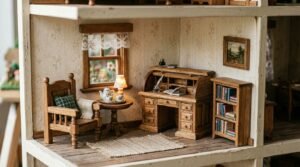
Are Durable Wooden Dollhouses Worth Buying?
For many families, yes. A well-made wooden dollhouse can provide years of imaginative play and may feel more substantial than lightweight plastic or fabric alternatives. Its fixed rooms and
open-front design also make it easier for several children to play from different sides, depending on the layout.
The main trade-off is that wooden dollhouses are usually heavier and less convenient to move. They can also take longer to assemble, require more floor or shelf space, and cost more than simple plastic playsets. Large models may become a permanent piece of furniture rather than something that can be packed away after every play session.
A wooden dollhouse is a good choice when:
- The child enjoys imaginative, role-play, or storytelling activ
ities. - The family has a stable place to keep the house between play sessions.
- Parents want a substantial toy that can be used repeatedly rather than a short-term novelty.
- The child can safely handle the included accessories or the accessories can be stored separately.
- The buyer is willing to check assembly instructions, dimensions, and material details before ordering.
Another option may be better when:
- Storage space is very limited.
- The child is too young for small furniture, figures, or decorative parts.
- The dollhouse must be carried between rooms or taken on trips.
- The intended use is adult miniature display rather than a
ctive children’s play. - The family prefers a washable, lightweight toy that can be wiped down quickly.
Types of Durable Wooden Dollhouses to Consider
There isn’t one universally correct dollhouse. The best format depends on the child, the room, and how the toy will be used.
Open-front wooden dollhouses
Open-front houses are generally the easiest for children to access. The rooms remain visible, and a child can reach inside without opening a front panel. This design also allows adults to see what is happening during play.
The drawback is that an open-front house can collect dust and may expose every room to pets, younger siblings, or accidental knocks. It also needs enough depth for hands and furniture to fit comfortably.
Wooden dollhouses with hinged fronts or doors
Models with a closing front can look more like a miniature real h
ouse and may help keep accessories contained. However, hinges and closures introduce additional moving parts. Buyers should check that doors open smoothly and don’t create pinching points.
Large multi-room houses
A larger house offers more room for furniture, figures, and several children to play together. It can be a strong choice for families with enough space and a child who enjoys elaborate storytelling.
Size can become a disadvantage. A large structure may be difficult to move, and its dimensions can be misleading if a listing gives only the package size or overall height. Check assembled width, depth, and clearance around the house.
Compact wooden dollhouses
Smaller houses suit bedrooms, apartments, playrooms with limited space, or occasional play. They are easier to position and may need less assembly.
Compact models can feel cramped once furniture and figures are added. A house that looks suitable in a product photograph may offer limited hand access, so interior dimensions and door openings deserve attention.
Wooden dollhouses for display or adult miniatures
Some wooden houses are made primarily for miniature collectors. These can feature delicate details, smaller scale, or decorative construction that isn’t intended for rough child-led play. A visually impressive model isn’t automatically a durable children’s toy.
For children, prioritise accessible rooms, sturdy construction, rounded or smooth edges, and age-appropriate accessories over fine decorative detail.
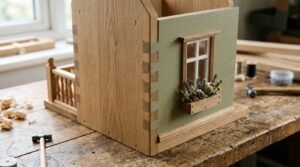
Buying Criteria That Matter Most
Build and material quality
Look beyond the word “wooden.” A product may combine engineered panels, solid wood trim, plastic windows, metal fasteners, and paper or printed decorative surfaces. None of those materials automatically makes a house unsuitable, but the listing should describe them clearly enough for you to understand what you’re buying.
Inspect the available photographs for uneven seams, unsupported balconies, thin-looking panels, or decorative pieces that appear loosely attached. If the seller doesn’t provide useful construction information, treat that as a reason to verify details before purchase rather than assuming the house is solid.
For a child’s toy, useful quality indicators include:
- Panels that appear properly supported rather than relying on fragile decorative sections.
- Securely fitted stairs, railings, balconies, and roof elements.
- Smooth edges and surfaces without visible splinters or rough cutouts.
- A finish that appears even and firmly bonded to the surface.
- Hardware and fittings that are not easily accessible to small children.
Design and appearance
Appearance is important because children often respond to colour, room layout, and recognisable home features. Still, a beautiful exterior won’t compensate for rooms that are hard to reach or too small for the intended figures.
Consider whether the design leaves enough uninterrupted space for play. Fixed decorative features can make a house attractive, but too many permanent details may limit how furniture and figures can be arranged.
Size and fit
Measure the area where the dollhouse will be used, not just the storage location. Allow room for children to sit or stand in front of it and reach the lower and upper levels. A tall house placed against a wall may be difficult to access from the sides.
Pay attention to these measurements:
- Assembled height, width, and depth.
- Room height and usable floor area.
- Door and window openings.
- Clearance needed for front doors, shutters, or hinged panels.
- Whether furniture and figures from another brand will fit.
Scale is especially important. Dollhouse furniture is not universally sized. If the child already owns figures or accessories, compare their height and width with the product’s stated interior dimensions where available.
Features and functionality
Useful features include open access, multiple rooms, movable shutters, removable roofs, elevators, balconies, and built-in storage. Each added feature should be judged by how it supports play and how likely it is to withstand use.
Moving components can increase interest, but they can also become weak points. An elevator that is difficult to operate may frustrate a child, while narrow railings or tiny furniture may be better suited to older children than preschoolers.
Ease of assembly
Assembly varies considerably. Some houses need only a few panels attached; others require a long sequence of steps, numerous fasteners, and careful alignment. Product pages should be checked for the assembly method, tool requirements, estimated assembly time, and whether more than one adult is recommended.
Customer feedback can be useful here, but it should be read carefully. Reports about missing hardware, unclear instructions, or misaligned panels may point to a recurring issue, while one isolated complaint may reflect a damaged shipment or an individual assembly mistake.
Before buying, confirm:
- Whether the house arrives flat-packed or partially assembled.
- Which tools are required.
- Whether all accessories need separate assembly.
- Whether the finished structure can be safely moved after assembly.
- What the seller’s process is for missing or damaged parts.
Durability and maintenance
Wooden dollhouses should be kept dry and away from prolonged exposure to direct sunlight, which may affect some finishes. Dust can usually be removed with a soft, dry or slightly damp cloth, but the care instructions supplied with the model should take priority.
Avoid assuming that every painted wooden house is washable. Excess moisture may affect engineered panels, printed surfaces, or unsealed edges. For younger children, removable accessories should be checked regularly for damage, loose parts, or peeling finishes.
Included accessories
Some dollhouses include furniture, figures, or decorative pieces; others sell the structure alone. Accessories can improve value, but quantity is less important than usefulness and compatibility.
Check whether the included items are made from wood, plastic, fabric, or mixed materials. Confirm their approximate scale and suitability for the child’s age. A house with fewer, sturdier pieces may be more practical than one supplied with many delicate miniatures.
Customer feedback and common complaints
Public customer feedback can reveal issues that product photographs don’t show. Look for repeated themes rather than focusing on a single review. Useful patterns include consistent comments about difficult assembly, weak hinges, small rooms, missing parts, strong odours, chipped finishes, or a structure that feels less substantial than expected.
Feedback can also vary by seller, production batch, shipping method, and region. A review of one listing may not accurately describe another version with a similar name. Check the exact model number, current photos, dimensions, and included items before relying on older comments.
Comparison of Wooden Dollhouse Formats
The table below compares common formats rather than specific products. Since no individual model specifications were supplied, exact materials, accessories, and assembly requirements should be confirmed with the seller.
| Format | Best For | Difficulty | Key Feature | Main Drawback | Overall Value |
|---|---|---|---|---|---|
| Compact open-front house | Small rooms and occasional play | Often lower, but model-dependent | Easy access to rooms | Limited space for furniture and figures | Good when space matters most |
| Large multi-room house | Frequent play and multiple children | Often moderate to high | More room for imaginative layouts | Heavy, bulky, and harder to relocate | Strong if the house will stay in one place |
| House with hinged front | Children who enjoy opening and closing a miniature home | Model-dependent | Can partly conceal the interior | Hinges and closures need careful inspection | Useful if the moving front is well made |
| Collector-style wooden house | Display and adult miniature projects | Often moderate to high | Decorative detail | May not tolerate active child play | Better for display than general play |
Safety and Age Considerations
Age guidance should be treated as an important starting point, not a substitute for supervision. The structure may be suitable for a young child while its tiny furniture, figures, or decorative parts are not.
For toddlers and younger preschoolers, prioritise large, sturdy components and simple access. Check for small detachable accessories, narrow railings, sharp corners, accessible fasteners, and doors that could pinch fingers. Parents should inspect the house after assembly and periodically during use.
Older children may be ready for more detailed rooms, smaller accessories, and moving features. Even then, a durable playhouse should not be confused with a fragile collector’s miniature. The intended age range, accessory size, and manufacturer’s warnings should all be reviewed before purchase.
Which Wooden Dollhouse Style Suits Different Buyers?
For beginners and younger children
Choose a straightforward open-front model with broad access, limited delicate parts, and an uncomplicated layout. A simpler house is easier to understand and usually leaves more room for child-led storytelling.
For children who enjoy detailed storytelling
A larger multi-room design may be more rewarding if the room can accommodate it. Look for flexible spaces, compatible furniture, and enough clearance for hands to move figures without knocking over fixed decorations.
For small homes or shared bedrooms
A compact model is the practical starting point. Measure carefully, and don’t forget that play space in front of the house is just as important as the footprint of the structure itself.
For appearance-focused buyers
Prioritise the finish, colour scheme, roofline, windows, and room layout, but still inspect construction details. Decorative quality and play durability are separate considerations.
For value-focused buyers
Compare the complete package rather than the structure alone. A less expensive house may require additional furniture, while a higher-priced option may include useful accessories. The real value depends on what is included, how long the house is likely to remain usable, and whether replacement parts are available.
For adult collectors
Collector-style models can offer more specialised scale and decorative detail. They may be the wrong choice for energetic children, however. Check whether the manufacturer describes the item as a toy, a display model, or a craft project.
Common Mistakes to Avoid
- Buying based on height alone without checking depth, room size, and access.
- Assuming every wooden product is suitable for toddlers.
- Ignoring assembly requirements until after the package arrives.
- Choosing a detailed collector model for rough everyday play.
- Overlooking the cost or availability of compatible furniture and figures.
- Relying on an old review without checking the current listing and model details.
- Putting the house in a location where it can be tipped, climbed on, or exposed to moisture.
- Focusing on the number of accessories instead of their size, quality, and usefulness.
Frequently Asked Questions
What kind of wood is best for a dollhouse?
There is no single wood type that guarantees quality. Solid wood, plywood, and engineered wood can all be used effectively when the structure is well designed and the surfaces are smooth and secure. Buyers should assess construction, finish, stability, and intended use rather than judging the product by the word “wooden” alone.
What is a good wooden dollhouse for a young child?
A suitable model should have sturdy construction, accessible rooms, smooth edges, and few small detachable parts. Always compare the manufacturer’s age guidance with the accessories included, since the furniture and figures may create a different safety concern from the main structure.
Are wooden dollhouses better than plastic ones?
Wooden houses often feel more substantial and may suit families looking for a fixed, furniture-like play feature. Plastic models are commonly lighter, easier to clean, and simpler to move. The better choice depends on storage, age, expected use, maintenance preferences, and the quality of the specific model.
How difficult are wooden dollhouses to assemble?
Difficulty ranges from basic panel attachment to more involved construction with many fasteners and alignment steps. Check the instructions, tool requirements, assembly reviews, and seller information before ordering. A second adult may be helpful for larger structures, but that depends on the model.
Do all dollhouse furniture sets fit wooden dollhouses?
No. Dollhouse scale and room dimensions vary.
Compare the height of existing figures and furniture with the house’s interior measurements, door openings, and floor space. If the listing does not state compatibility, ask the seller before buying accessories.
How can a wooden dollhouse be maintained?
Keep it dry, protect it from prolonged direct sunlight, and follow the model’s care instructions. Use a soft cloth for dust and inspect moving parts, rails, accessories, and painted surfaces regularly. Replace or remove damaged small parts promptly.
Final Verdict
The best durable wooden dollhouses for play are not necessarily the largest or most decorative. They are the models that match the child’s age, leave enough room for hands and accessories, fit the available space, and use construction that can handle repeated play. Before buying, verify the assembled dimensions, materials, age guidance, accessories, assembly requirements, and current customer feedback for the exact listing.
A wooden dollhouse is worth buying when it will stay accessible and be used often. Families with limited space, very young children, or a need for easy storage may prefer a compact plastic or fabric alternative. Choose for practical play first, then appearance, and the purchase is more likely to remain useful beyond the first few weeks.