
The best realistic DIY dollhouse kits turn a small-scale room into a creative project, display piece, and long-term hobby. Unlike ready-made dollhouses, these kits usually ask you to assemble the structure, decorate the interior, and sometimes create tiny accessories from separate parts. That hands-on process is the appeal, but it also makes choosing harder: kit difficulty, scale, materials, lighting, instructions, and missing supplies can vary widely.
Adult beginners may want a forgiving project, while experienced crafters may prefer detailed architecture and more demanding miniature work. This guide explains what to check before buying, where realistic kits can disappoint, and which type of miniature house is likely to suit your space, patience, and skill level.
What Are Realistic DIY Dollhouse Kits?
Realistic DIY dollhouse kits are miniature building projects designed to resemble real rooms, homes, shops, studios, cafés, or other interior spaces. A typical kit may include panels, flooring, furniture parts, decorative elements, fabric, paper pieces, and instructions. Some also include lighting components or other electrical details, although the exact contents depend on the manufacturer and model.
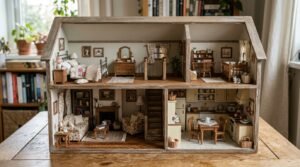
The word “realistic” generally refers to the level of visual detail rather than a guaranteed construction standard. A realistic miniature house might have convincing wood textures, tiny shelving, patterned wallpaper, working lights, miniature books, or carefully proportioned furniture. However, realism often comes with smaller parts and more complicated assembly.
These kits are usually made for display rather than everyday play. They can appeal to adults, older children working with supervision, model makers, miniature enthusiasts, and anyone who enjoys patient craft projects. Before ordering, check the recommended age, finished dimensions, scale, materials, and whether glue, paint, batteries, or tools are included.
Why People Choose Realistic Miniature House Kits
The main attraction is control. Instead of buying a finished scene, you build it gradually and decide how closely to follow the design. A kit can provide a starting point while leaving room for repainting, rearranging furniture, adding plants, changing fabrics, or creating custom details.
They also offer a different kind of creative experience from ordinary craft sets. The project combines model building, interior styling, paper crafting, painting, and sometimes basic wiring. That variety keeps the process interesting, although it means buyers should not assume every kit is a quick weekend activity.
- Display value: Finished scenes can work as decorative objects on shelves, desks, or cabinets.
- Creative flexibility: Many builders personalize colors, furniture placement, lighting, and accessories.
- Hands-on focus: Small, repetitive tasks can suit people who enjoy careful craft work.
- Gift appeal: A miniature house kit can be more engaging than a finished ornament because the recipient takes part in making it.
- Skill development: Projects may build confidence with measuring, gluing, painting, cutting, and small-scale assembly.
Are the Best Realistic DIY Dollhouse Kits Worth Buying?
They can be worth buying if you want a slow, detail-oriented hobby and have a suitable place to work. The value comes less from the amount of raw material in the box and more from the creative time, challenge, and finished display piece. Buyers who enjoy making miniatures may find the process rewarding even when the project requires adjustments.
They may not be a good choice if you want immediate results, dislike repetitive work, or have limited tolerance for tiny components. Some kits require tools and supplies beyond what is advertised in the main product description. Others may have instructions that assume prior crafting experience.
Consider an alternative if your priority is simplicity. A
preassembled dollhouse, a larger-scale model, a paint-by-number miniature scene, or a less detailed craft kit may provide a smoother experience. A traditional wooden dollhouse shell may also be better for buyers who want to design the interior themselves rather than follow a fixed room layout.
What to Check Before Buying
Build and Material Quality
Look for clear information about the main materials. Wood, plywood, MDF, paperboard, plastic, fabric, and resin can all appear in miniature kits, and each behaves differently during assembly. Thin wood may be easy to cut but more prone to warping or splitting.
Paper details can
look attractive but may need careful handling. Plastic parts can be consistent in shape, though their appearance may feel less natural than wood.
Product photos are useful, but they don’t always show the thickness of panels, the flexibility of fabric, or the quality of tiny fittings. If these details aren’t specified, avoid treating polished images as proof of premium construction.
Design and Appearance
Realistic DIY dollhouse kits vary from cozy rooms and vintage homes to modern interiors, stores, greenhouses, and themed scenes. Choose a design you’ll still enjoy looking at after the novelty fades. A crowded scene may contain more visual detail, but it can also be harder to assemble and dust.
Check whether the finished model is intended to look complete from one main viewing angle or from several sides. Some miniature houses have an open front, while others are enclosed with a transparent panel or designed as a three-dimensional room box. The display format affects both appearance and accessibility.
Scale and Finished Size
Scale is one of the easiest details to overlook. A 1:12 dollhouse kit is substantially larger than many smaller miniature room kits, while compact scenes may use a different scale altogether. Furniture from one project may not fit another, even if both products are described as dollhouses.
Measure your intended display area before ordering. Also allow room to assemble the project, store loose parts, and access the model for cleaning or repairs. Finished dimensions listed by a seller may exclude a base, roof overhang, lighting cable, or protective cover, so verify what the measurement includes.
Features and Functionality
Lighting is a popular feature in miniature house kits, but it adds another layer of work. Buyers should find out whether the light source, wiring, switch, battery compartment, and power requirements are included. A kit that shows illuminated rooms in its photos may not contain every component needed to reproduce that result.
Other features to compare include movable doors, opening windows, removable roofs, transparent panels, furniture, wall coverings, and decorative accessories. Treat these as specific inclusions rather than assuming they come with the box.
Ease of Assembly
“DIY” doesn’t describe one consistent difficulty level. Som
e projects involve simple construction and pre-cut pieces. Others require painting, folding, trimming, gluing, wiring, and making tiny objects from raw materials.
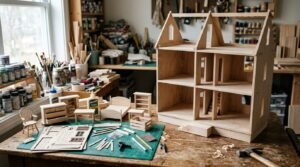
Before buying, look for:
- Photographs of the instruction booklet or assembly stages.
- Information about whether parts are pre-cut or need manual shaping.
- A clear difficulty rating, if the maker provides one.
- Details about required tools, glue, paint, batteries, and finishing materials.
- Customer comments about unclear steps, missing parts, or difficult fittings.
Reviews can be helpful, but individual experiences vary with skill, patience, lighting, and expectations. A complaint about difficulty doesn’t necessarily indicate a defective kit; it may reveal that the product is more demanding than its listing suggests.
Included Accessories and Supplies
Accessory lists deserve close attention. A kit may include the structure but leave out glue, paint, tweezers, a craft knife, wire cutters, batteries, or protective varnish. Sellers may also photograph extra items for styling that aren’t part of the package.
Make a short inventory before purchasing. If the listing uses phrases such as “materials included” without naming them, ask the seller for clarification. This is especially important for kits with electrical components or delicate finishing work.
Durability and Maintenance
A completed miniature scene is still vulnerable to dust, sunlight, humidity, knocks, and curious pets. Paper can fade, fabric can collect dust, and unfinished wood may stain. A protective display case can help, but it may not be supplied and must fit the finished model.
Maintenance is usually straightforward: gentle dusting, careful handling, and occasional checks of glued or wired parts. Don’t place a miniature house near a damp window, heater, or area with heavy foot traffic. If lighting is included, follow the manufacturer’s guidance for batteries and electrical connections.
Customer Feedback and Common Complaints
When reading customer feedback, look for patterns rather than one dramatic review. Repeated comments about missing pieces, poor instructions, fragile components, inaccurate dimensions, or weak adhesive deserve attention. Positive comments about attractive details are useful too, but they don’t answer every practical question.
Feedback may also vary by seller, production batch, region, and model revision. Confirm that reviews relate to the exact kit you’re considering. Marketplace listings sometimes group several sizes, colors, or designs under one page.
Comparison: Choosing the Right Type of Kit
Because no specific product models or verified specifications were supplied for this article, the table below compares common kit types rather than ranking named products. Use it to narrow the style that fits your experience and intended use.
| Kit Type | Best For | Typical Difficulty | Key Feature | Main Drawback | Overall Value |
|---|---|---|---|---|---|
| Simple room scene | Beginners and shorter projects | Low to medium | Limited space with fewer structural parts | Less scope for large displays | Good when ease and completion time matter most |
| Detailed miniature house | Experienced hobbyists | Medium to high | Multiple rooms, furnishings, and decorative details | More time, tools, and patience required | Strong for builders who enjoy a substantial project |
| Lighted dollhouse kit | Display-focused buyers | Medium to high | Illuminated interior | Wiring and power requirements add complexity | Worth considering if lighting is central to the display |
| Open-front room box | Interior styling and shelf display | Low to medium | Easy access to the miniature scene | May offer less of a traditional house silhouette | Practical for decorators and compact spaces |
| Traditional wooden dollhouse shell | Custom builders | Varies | Freedom to design rooms and finishes | Often requires separate furniture and decoration | Best when personalization matters more than convenience |
How to Approach Assembly
Start by reading the full instruction booklet before cutting or gluing anything. Sort parts into labeled containers, compare them with the inventory, and identify steps that involve wiring or structural alignment. A small mistake early in the build can affect doors, windows, flooring, and roof pieces later.
- Clear a stable workspace. Choose a well-lit surface where small components won’t be easily knocked away.
- Inventory the package. Separate structural pieces, decorative parts, fabric, paper, hardware, and electrical components.
- Dry-fit major sections. Test how walls, floors, and panels align before applying adhesive.
- Work in stages. Complete one room or structural section before scattering parts across the whole project.
- Allow drying time. Moving glued pieces too soon can create crooked joints and weak connections.
- Protect finished details. Keep completed sections covered while you work on dusty or messy stages.
Tweezers, a precision craft knife, a small ruler, fine sandpaper, clips, and suitable adhesive are often useful, but the exact tool list depends on the kit. Use care with sharp tools and supervise younger makers. If the project includes wiring, follow the supplied instructions rather than improvising connections.
Best Realistic DIY Dollhouse Kits by Buyer Type
Best for Beginners
Choose a compact room scene or a kit with fewer structural pieces, clearly labeled components, and straightforward instructions. An open-front design can be easier to reach than a deep, enclosed house. Beginners should avoid selecting a project solely because its product photos contain many tiny details; visual richness often increases the workload.
Best for Experienced Miniature Builders
More advanced builders may prefer a multi-room house, elaborate interior, or project with lighting and custom finishing opportunities. Look for a detailed parts list and enough information to judge the build before committing. A demanding kit is only a good purchase if the design genuinely interests you.
Best for Appearance-Focused Buyers
Prioritize the interior theme, viewing angles, furniture quality, and finishing details. Check whether the supplied colors and materials match the photographs. Buyers who care about a polished display may also want to budget for a case, upgraded accessories, or replacement adhesive.
Best for Value-Focused Buyers
Compare the contents of the box rather than judging value from the headline price alone. A cheaper kit that excludes tools, lighting, glue, or furniture may require more additional purchases. Conversely, a simpler kit with clearly stated contents can be easier to budget for.
Best for Customization
A traditional shell or a relatively plain room box may be more suitable than a tightly themed kit. These formats leave space for personal wallpaper, paint, flooring, furniture, and lighting choices. The trade-off is that you may need to source more components yourself.
Common Reasons Buyers Regret a Purchase
- The project is larger than expected: Finished dimensions may be difficult to visualize from listing photos.
- The difficulty is understated: Tiny parts and repetitive work can make an attractive kit demanding.
- Required supplies are missing: Glue, paint, tools, or batteries may not be included.
- The display style doesn’t fit the space: A deep or enclosed model may be awkward on a narrow shelf.
- The buyer expects a toy: Many detailed kits are designed for careful display, not rough play.
- The final appearance depends on extra finishing: Product photos may show a carefully styled result that requires patience and optional upgrades.
None of these issues automatically makes a kit poor. They show why the listing needs to be read as a specification, not just viewed as a gallery of attractive images.
Frequently Asked Questions
What is a good DIY dollhouse kit for adults?
A good adult kit is one whose difficulty, scale, finished size, and included materials match the builder’s experience. Beginners often benefit from a smaller room scene with clear instructions, while experienced makers may prefer a detailed house with more construction and customization.
Are miniature house kits suitable for beginners?
Some are, but the category covers a wide range of difficulty. Check for pre-cut parts, labeled components, step-by-step instructions, and a short list of required tools. Kits with wiring, many rooms, or very small accessories may be better suited to experienced crafters.
Do DIY dollhouse kits include glue and paint?
Not always. Contents vary by model and seller, so read the package list carefully. If glue, paint, tools, batteries, or protective finishes aren’t explicitly listed, assume they may need to be purchased separately until the seller confirms otherwise.
What scale is best for a realistic dollhouse?
There isn’t one best scale for every buyer. Larger scales can make details easier to handle and view, while smaller scales can suit compact displays but may require more precise work. Confirm the scale before buying if you plan to add furniture or accessories from other brands.
Are realistic dollhouse kits toys?
Many are better understood as craft and display projects. Small parts, delicate construction, sharp tools, glue, and electrical components may make them unsuitable for young children or unsupervised play. Follow the manufacturer’s age guidance.
How do you maintain a finished miniature house?
Keep it away from moisture, direct sunlight, heat, and heavy traffic. Dust it gently and handle it from sturdy structural areas rather than delicate furniture or decorative pieces. A correctly sized display case can reduce dust and accidental damage.
Final Verdict
The best realistic DIY dollhouse kits are worth considering when you want a creative project that rewards patience and produces a personal display piece. The right choice depends on more than appearance: check the scale, finished dimensions, material quality, instructions, included supplies, lighting requirements, and expected difficulty before ordering.
Beginners should start with a compact, well-documented scene, while experienced builders may prefer a larger house or a kit designed for customization. If you want a finished object with little effort, choose a preassembled miniature instead. For everyone else, carefully comparing realistic DIY dollhouse kits can lead to a satisfying hobby purchase rather than an attractive project that remains unfinished.