
Finding the best portable dollhouses for kids is less about choosing the biggest playset and more about matching the design to a child’s age, play style, available space, and ability to carry or tidy it away. Portable dollhouses can make pretend play easier in bedrooms, living rooms, playrooms, or on family trips, but models vary widely in size, construction, accessories, and ease of use.
The right choice should be sturdy enough for regular play without being awkward to move. It should also offer enough room for imaginative play while avoiding small parts that may not suit younger children. This article explains what portable dollhouses are, which features matter, where they can disappoint, and how to decide whether one is worth buying for your household.
What Is a Portable Dollhouse?
A portable dollhouse is a scaled-down pretend-play house designed to be moved, stored, or carried more easily than a large traditional dollhouse. Some are built with handles, folding panels, hinged sections, compact footprints, or cases that close for storage. Others are simply smaller and lighter than full-size wooden dollhouses.
The basic purpose is the same: children use the rooms, furniture, figures, and accessories to create stories and role-play scenes. A portable design can be especially useful when a permanent play area isn’t available. It may also help families keep toys contained rather than leaving a large structure assembled all the time.
Buyers should check the individual listing carefully. “Portable” doesn’t always mean lightweight, foldable, or travel-ready. A small dollhouse may still require separate storage for furniture, while a folding model may have a more limited interior than a rigid design.
Are Portable Dollhouses Worth Buying?
For many families, portable dollhouses are a practical compromise between imaginative play and limited space. They can suit children who enjoy arranging furniture, acting out family stories, and moving toys from one room to another. The ability to close or relocate the house is also useful in shared rooms where toys need to be put away regularly.
They may not be the best option for every child. A child who wants a large, detailed house with several rooms could outgrow a compact model quickly. Younger children may also need a simpler design with larger pieces, while children who prefer vehicles, construction toys, or open-ended building may use a dollhouse less often.
A portable dollhouse is more likely to be worth buying when:
- Storage space is limited or the play area serves more than one purpose.
- The child enjoys pretend play and can use the house safely at the recommended age.
- Adults want a toy that can be moved between rooms without permanent assembly.
- The design includes enough space for the child’s existing figures or accessories.
- The materials and hinges appear suitable for the expected level of play.
An alternative may make more sense if the priority is a large display piece, extensive furniture, outdoor play, or a very simple toy for a toddler. In those cases, compare portable dollhouses with traditional wooden houses, soft play houses, dollhouse rooms, or open-ended pretend-play sets.
What to Look for Before Buying
Build and Material Quality
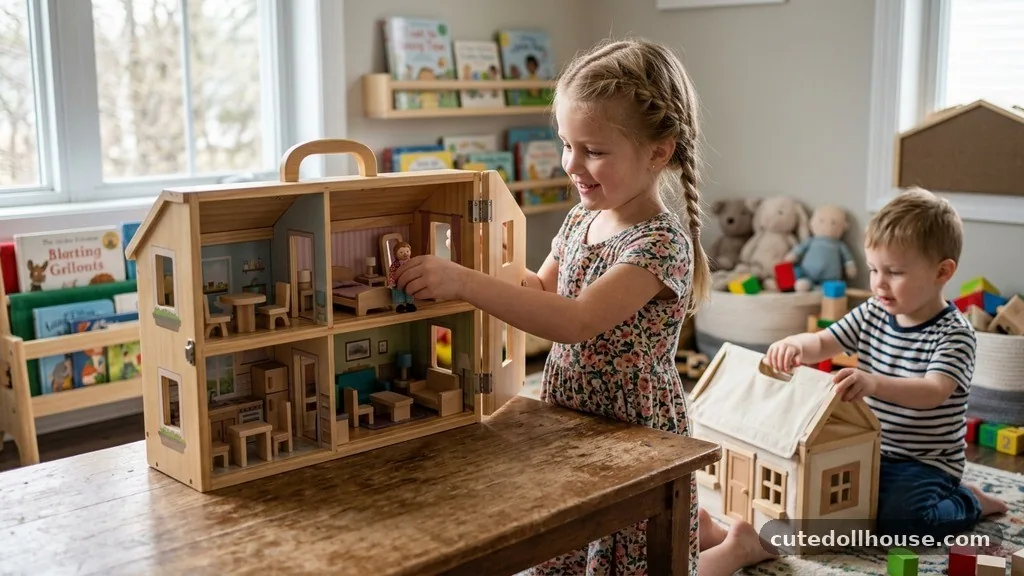
Materials affect both the feel of the dollhouse and how well it may cope with repeated handling. Common constructions include wood, engineered board, molded plastic, fabric, and combinations of these materials. Each has trade-offs.
- Wood and engineered board: Often provide a more furniture-like structure, but can be heavier and may require assembly.
- Plastic: Usually easier to wipe clean and may work well for active play, although the quality of molded parts and hinges can vary.
- Fabric or soft-sided designs: Can be light and easy to store, but may offer less structural support and a different style of play.
Look for clear information about the main materials, edge finishing, moving parts, and included hardware. Product photographs can help, but they don’t always show whether a panel feels thin or whether a hinge is reinforced. If the listing doesn’t explain construction, treat durability as uncertain rather than assuming the dollhouse is sturdy.
Size, Weight, and Storage
Dimensions matter in three directions: the assembled footprint, the closed or folded size, and the interior scale. A dollhouse may be compact when folded but still take up considerable room during play. Check both sets of measurements where they are provided.
Weight is equally important. A design that a child can carry independently may encourage more flexible play, while a heavier model may need an adult to move it.
Neither approach is automatically better. The best fit depends on whether portability means carrying it across the room, storing it on a shelf, or taking it on a trip.
Also check whether accessories have a dedicated storage area. A portable dollhouse that closes neatly but leaves furniture scattered around the room may be less convenient than expected.
Design and Appearance
Appearance is subjective, but it can influence how often a dollhouse stays in a child’s play rotation. Some families prefer bright, toy-like colors. Others want a more neutral design that blends into a bedroom or shared living space.
Pay attention to printed details, painted surfaces, room layouts, and whether the design is open from one side or several sides. An open-front house may be easier for two children to use together. A fold-out design may offer better access during play but require more floor space when opened.
Features and Functionality
Useful features should support play rather than simply add visual detail. Depending on the model, buyers may find features such as:
- Carry handles or a case-style closure
- Folding or hinged walls
- Multiple rooms or play zones
- Movable furniture
- Figures, pets, or household accessories
- Opening doors, windows, or cupboards
- Built-in storage for smaller pieces
More features aren’t always better. A house packed with tiny accessories may create a better-looking product photograph but be frustrating for younger children or difficult to keep organized. Consider whether the child will actually use each feature.
Age Suitability and Small Parts
Age guidance should be treated as a starting point, not a substitute for supervision. Dollhouses often include miniature furniture, figures, and decorative pieces that may create a choking risk for young children. The appropriate age depends on the complete set, not only the house itself.
Parents and caregivers should read the manufacturer’s warnings and inspect accessories before handing the toy to a child. For general product-safety information, the U.S. Consumer Product Safety Commission’s toy safety guidance offers useful advice about age labels, small parts, and supervision.
Assembly and Ease of Use
Some portable dollhouses arrive ready to play with, while others need adult assembly. Assembly can involve attaching walls, fitting hinges, applying stickers, or adding decorative elements. The product page should state what is included and whether tools are required, but listings are not always equally detailed.
Before ordering, look for:
- Estimated assembly time, if supplied by the manufacturer
- Clear instructions and labeled parts
- Whether furniture needs separate assembly
- Whether the house folds after assembly
- How securely the structure closes or locks
A complicated build may be acceptable for an adult-led project, but it may be a poor fit for a family expecting an immediately usable toy. If the dollhouse will travel often, test the practicality of opening and closing it rather than focusing only on its appearance.
Durability and Maintenance
Portable toys experience more handling than stationary dollhouses. Folding panels, handles, latches, and hinges deserve particular attention because they are likely to receive repeated stress. A design with several moving parts may be convenient, but each part is also a possible maintenance concern.
For routine care, wipeable surfaces are generally easier to manage than fabric or textured finishes. Keep small accessories in a labeled container, avoid forcing panels beyond their intended range, and inspect the house periodically for loose parts, splintering, cracked plastic, or damaged closures.
Reliable durability information may be difficult to confirm from a product listing alone. Customer feedback can reveal recurring complaints, but individual experiences vary by child, frequency of use, and handling. Look for patterns rather than relying on one unusually positive or negative review.
Comparison Checklist for Portable Dollhouses
Because no specific products were supplied for this article, the table below compares the main design types rather than ranking named models. Use it as a screening tool when comparing listings.
| Design type | Best for | Portability | Key advantage | Main drawback | Value considerations |
|---|---|---|---|---|---|
| Foldable hard-sided house | Families needing storage flexibility | Usually good when closed; verify weight | Combines structure with easier storage | Hinges and closures may need careful handling | Worth considering when folding convenience is used regularly |
| Compact plastic house | Active everyday play | Often easier to move than large wooden designs | Simple cleaning and practical handling | Interior scale and molded details vary | Compare included accessories and construction quality |
| Soft-sided or fabric house | Light storage and occasional travel | Often highly portable | Low storage burden | May not provide the same firm structure as hard-sided models | Check cleaning instructions and frame support |
| Small wooden house | Children wanting a more traditional dollhouse | Portable within a home, but weight varies | May offer a solid, furniture-like play environment | Can require assembly and more storage space | Check material details, finish, and long-term usability |
Common Advantages and Drawbacks
Potential Benefits
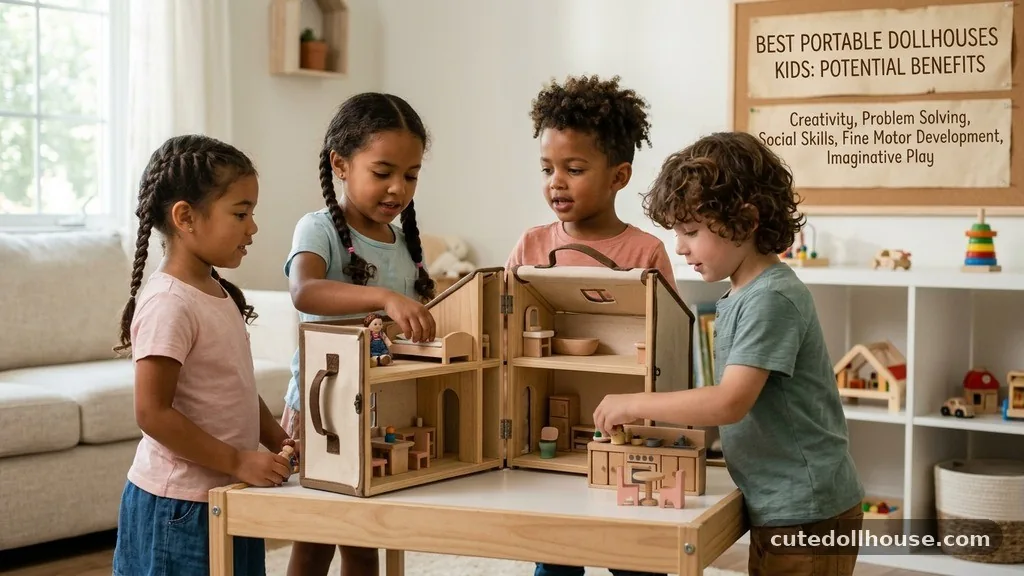
- Flexible storage: Folding or compact designs can be put away when the play area is needed for something else.
- Travel-friendly play: Some models can move between rooms or accompany a family trip.
- Imaginative play: Children can create stories, arrange rooms, and develop role-play scenarios.
- Lower space demands: A portable option may suit apartments, shared bedrooms, or smaller playrooms.
- Easy access: Open-front and fold-out designs can make it easier for children to reach different rooms.
Potential Drawbacks
- Limited scale: Compact interiors may not fit existing dolls or accessories.
- Moving-part wear: Hinges, handles, and closures can become weak if handled roughly.
- Accessory clutter: Small furniture and figures are easy to lose unless storage is planned.
- Less room for multiple children: Narrow layouts may work better for solo play.
- Unclear specifications: Some listings don’t provide enough information about weight, materials, or assembly.
Who Should Buy a Portable Dollhouse?
Portable dollhouses are a sensible choice for children who already enjoy imaginative household play and for families that need toys to be moved or stored often. They can also suit grandparents, childcare settings, or relatives who want a pretend-play toy without dedicating a permanent room to it.
They may be particularly useful for:
- Children with limited bedroom or playroom space
- Families who rotate toys and store some items between play sessions
- Children who like arranging miniature furniture and creating stories
- Homes where toys need to move between shared spaces
- Buyers who prefer a smaller commitment than a large fixed dollhouse
Who May Prefer an Alternative?
A traditional, non-portable dollhouse may be a better fit for a child who wants a permanent centerpiece with more rooms, larger furniture, or extensive decorative detail. Its lack of portability can be a disadvantage for storage, but a fixed structure may feel more stable during long play sessions.
A play tent, dollhouse room, or open-ended building set could work better for children who value physical space over miniature detail. For toddlers, a larger-scale pretend-play environment may be easier to handle than a set filled with tiny accessories. Always compare the complete age guidance before choosing.
How to Judge Customer Feedback
Reviews are helpful when they answer practical questions that product photographs cannot. Focus on repeated comments about assembly, stability, portability, missing pieces, accessory size, and whether the closure works as described.
Be cautious with vague praise or complaints that don’t identify the model configuration. Sellers may offer several versions under similar names, and materials or included accessories can vary by region, production batch, or retailer. Confirm the exact contents of the listing before buying.
Customer feedback is strongest when it aligns with the manufacturer’s specifications. If reviews repeatedly mention that a “travel” dollhouse is too heavy to carry comfortably, that may be important even if the listing uses portable language. On the other hand, one report of damage doesn’t establish a general quality problem.
Recommendations by Buyer Type
For Small Homes
Prioritize folded dimensions, storage options, and how easily the house can be put away. A compact model with fewer accessories may be more useful than a larger set that creates a second storage problem.
For Frequent Movers
Look for a secure closure, a practical handle, and a structure that doesn’t require loose rooms or furniture to remain assembled. Verify the closed weight rather than assuming a smaller house is easy for a child to carry.
For Younger Children
Choose based on the full safety guidance and the size of the included pieces. Simpler layouts and larger accessories may be easier to supervise than highly detailed sets with many miniature items.
For Appearance-Focused Buyers
Compare room layouts, colors, finish quality, and how the house looks when closed as well as open. A visually attractive model is more likely to stay in an exposed play area, but appearance shouldn’t replace checks for construction and safe use.
For Value-Focused Buyers
Count what is actually included and consider whether the child already owns compatible figures or furniture. A lower-priced house that requires many additional accessories may not offer better overall value than a simpler set that can be used immediately.
Questions to Ask Before Checkout
- What are the open and closed dimensions?
- How much does the assembled or folded house weigh?
- What materials are used for the walls, floor, hinges, and handle?
- Are figures and furniture included, and how many pieces come with it?
- Does it require adult assembly or tools?
- Can the child’s existing dolls fit comfortably inside?
- Are small parts present, and does the age guidance suit the intended child?
- How are the accessories stored when the house is closed?
- Does the seller specify what happens if pieces arrive missing or damaged?
Frequently Asked Questions
What age is suitable for a portable dollhouse?
It depends on the specific model, its accessories, and the child’s development. Follow the manufacturer’s age guidance, pay close attention to small-parts warnings, and supervise younger children during play.
Are portable dollhouses good for toddlers?
Some may be suitable, but many miniature dollhouses include small furniture and figures that aren’t appropriate for toddlers. A larger-scale pretend-play set with fewer small pieces may be a safer alternative, depending on the child’s age and the manufacturer’s instructions.
What is the difference between a foldable dollhouse and a portable dollhouse?
A foldable dollhouse has panels or sections designed to close or collapse. “Portable” is broader and may describe anything compact or movable, including rigid houses that do not fold. Check the actual dimensions and weight.
Do portable dollhouses include dolls and furniture?
Some do, while others include only the house. Product contents can vary by model, retailer, region, or bundle, so read the included-items list carefully before purchasing.
Are wooden or plastic dollhouses more durable?
Neither material is automatically more durable. Quality depends on the construction, finish, joints, hinges, and how the toy is used. Wood may feel more substantial, while plastic can be easier to clean and move.
What should I do if product information is incomplete?
Check another listing for the same model, contact the seller, and confirm dimensions, materials, age guidance, included accessories, and assembly requirements before ordering. Missing specifications are a reason to delay the purchase rather than guess.
Final Verdict
The best portable dollhouses for kids are the ones that fit a child’s play habits and a family’s available space, not necessarily the largest or most detailed models. Folding structures can simplify storage, compact plastic designs may be practical for everyday use, and soft-sided options can reduce the burden of carrying and storing a toy. Each style has limits, so dimensions, weight, small parts, materials, and included accessories deserve careful checking.
A portable dollhouse is worth buying when imaginative play is a good match and portability solves a real household problem. Before choosing, compare the exact model details and recent feedback for the specific seller or bundle. That approach will help you find a useful playhouse rather than simply a product that looks portable in its photos.