Finding the best DIY dollhouse kits under $50 usually means balancing price, scale, materials, and the amount of work involved. Budget kits can be rewarding projects for adults, older children, and miniature enthusiasts, but they aren’t all equally complete or beginner-friendly. Some include furniture and lighting, while others provide only the main structure and require extra supplies.
Assembly time, tiny components, unclear instructions, and seller-specific contents can also affect the experience. The most useful choice depends on whether you want a relaxing craft, a display piece, a child-friendly activity, or a detailed miniature build. Before buying, check exactly what comes in the box, how difficult the project is, and whether the finished size suits your available space.
What DIY Dollhouse Kits Include
A DIY dollhouse kit is a miniature building project that typically includes pieces for walls, floors, windows, doors, furniture, decorations, and sometimes lighting. Instead of receiving a finished dollhouse, you assemble and decorate the model yourself.
Most kits use thin wood, plywood, cardboard, plastic, fabric, paper, or a combination of materials. The pieces may be pre-cut, but they often still need to be separated, glued, painted, trimmed, or fitted together. Some sets are designed as traditional dollhouses, while others represent cafés, bedrooms, shops, greenhouses, studios, or compact miniature rooms.
The phrase “under $50” can describe very different products. A low-cost kit may be a small room box with basic furniture, while another may offer a larger structure with more decorative elements but fewer finished accessories. The advertised price may also exclude glue, batteries, paint, tools, or replacement parts.
Are DIY Dollhouse Kits Under $50 Worth Buying?
For the right buyer, budget dollhouse kits can offer a lot of creative value. They provide a hands-on activity and a finished display piece without requiring the larger financial commitment associated with premium miniature houses. They can also be a practical way to find out whether you enjoy miniature assembly before investing in a more advanced project.
There is a trade-off. Kits in this price range may involve more improvisation, smaller or less refined parts, and less complete instructions than higher-priced alternatives. The final result can depend heavily on the builder’s patience, tools, and willingness to solve small problems during assembly.
A budget kit is a good choice when:
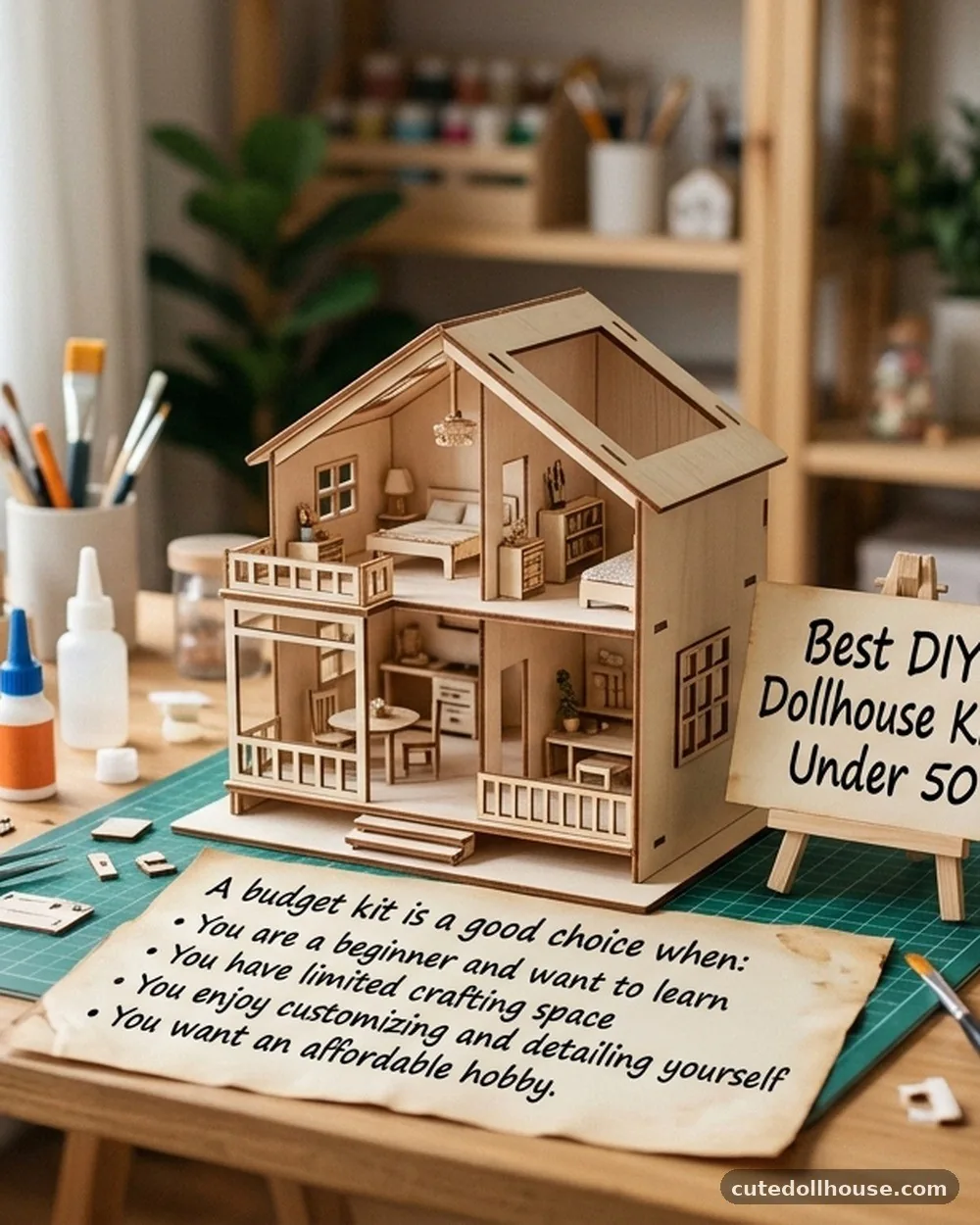
- You enjoy crafts, model making, or detailed creative projects.
- You want a compact miniature scene rather than a full-size toy house.
- You are comfortable using glue, tweezers, scissors, and small hand tools.
- You want a lower-cost introduction to the hobby.
- You don’t mind adding small finishing touches or substitute materials.
Consider another option when:
- You need a project that can be completed quickly.
- The recipient is too young to handle tiny pieces or craft adhesives safely.
- You expect every accessory, tool, and decorating material to be included.
- You want a highly durable toy intended for frequent child-directed play.
- You prefer a finished model that requires no construction.
What to Check Before Buying
1. Build and material quality
Look for clear information about the main construction material. Thin plywood and pre-cut wood can create a convincing miniature structure, but the pieces still need to be straight, cleanly cut, and adequately labeled. Cardboard-based designs may be lighter and easier to modify, though they may need careful handling during gluing and decorating.
Product photographs can make materials difficult to judge. A listing showing painted surfaces, fabric, and decorative accessories may present a finished example rather than the exact condition of the parts in the box. Read the description closely and check whether the image represents an assembled sample.
2. Finished size and scale
Size matters in two ways: the amount of space the completed kit occupies and the scale of the miniature objects. A small room can be easier to display, but tiny furniture may be more challenging to assemble. A larger dollhouse may be more visually impressive while requiring considerably more storage and work space.
Check the stated dimensions for the finished model, not just the packaging. If scale is provided, confirm whether the furniture is made for that scale. Mismatched pieces can make a scene look less cohesive, especially if you plan to add furniture from another kit.
3. Included accessories
“Kit” doesn’t always mean “complete project.” Depending on the seller and model, the package may or may not contain items such as:
- Furniture and miniature household objects
- Fabric, wallpaper, flooring, or printed decorative sheets
- Glue or other adhesives
- Paint, brushes, and finishing materials
- Lighting components, wiring, switches, or batteries
- Tweezers, scissors, craft knives, or sanding tools
- Instructions in your preferred language
Do not assume that a photo showing a decorated miniature room means every visible item is included. Sellers may use additional props to demonstrate how the finished project could look.
4. Difficulty level
A kit described as suitable for beginners may still involve delicate work. Tiny objects, repeated folding, threading, gluing, and electrical components can make a project more demanding than the product title suggests.
For a first project, a simpler room scene with fewer structural pieces is often less frustrating than a multi-room house. Experienced builders may prefer a more detailed kit with room for customization, even if it requires extra supplies and longer assembly.
5. Instructions and labeling
Good instructions should show the sequence clearly and identify parts without forcing the builder to guess. Look for product images that show the manual or describe the instruction format. Some kits use diagrams with little written explanation, which may be manageable for confident crafters but difficult for children or complete beginners.
Part labels are especially useful. If many pieces look similar, unlabeled components can slow the project and increase the chance of incorrect assembly.
6. Safety and age suitability
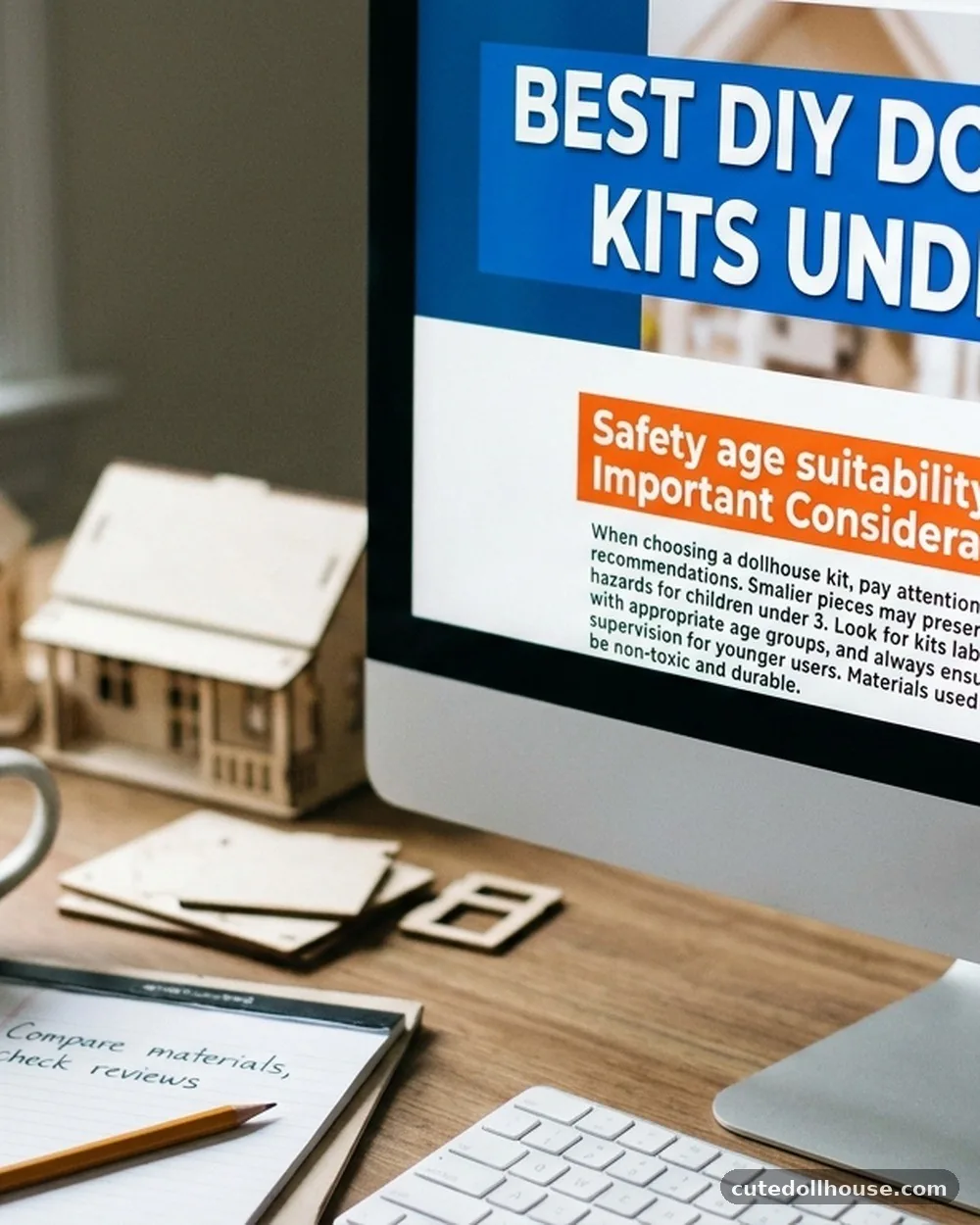
Many miniature kits contain small parts, sharp tools, wires, or adhesives. Age guidance should be treated as a starting point rather than a guarantee of suitability. Adult supervision may be necessary for younger builders.
For general product-safety information, buyers can consult the U.S. Consumer Product Safety Commission’s toy safety guidance. Also check the seller’s warnings, especially if the kit includes button batteries, electrical parts, or very small decorative objects.
7. Customer feedback and common complaints
Reviews can reveal issues that product photographs do not show. Pay attention to repeated comments about missing parts, unclear instructions, poor-fitting panels, weak lighting, damaged packaging, or accessories that differ from the listing.
A single complaint doesn’t necessarily define a kit. Repeated reports across multiple reviews deserve more weight, especially when they concern the same structural component or recurring omission. Reviews may also vary by seller, production batch, region, and fulfillment source, so verify the exact listing before ordering.
Comparison of Common Kit Types Under $50
No specific product list or verified model specifications were supplied for this roundup, so the table below compares common DIY dollhouse kit formats rather than inventing product-level claims. Exact contents, dimensions, and difficulty can vary between brands and sellers.
| Kit Type | Best For | Typical Difficulty | Key Feature | Main Drawback | Overall Value |
|---|---|---|---|---|---|
| Single-room miniature | Beginners and short projects | Beginner to intermediate | Compact scene with fewer structural parts | Limited display space and fewer rooms | Good for testing the hobby |
| Small cottage or house | Builders wanting a traditional dollhouse shape | Intermediate | More complete building experience | May require more time and finishing supplies | Useful when structure matters most |
| Café, shop, or studio scene | Display-focused crafters | Beginner to intermediate | Strong theme and decorative storytelling | Furniture and props may be smaller or less practical for play | Good for visual customization |
| Lighting-equipped miniature | Builders who want an illuminated display | Intermediate to advanced | Lighting adds atmosphere | Wiring, batteries, or switches may need troubleshooting | Worth considering if the electrical contents are clearly specified |
| Paper or cardboard craft kit | Lightweight projects and makers who like customization | Beginner to intermediate | Easy to cut, decorate, or modify | Usually less resistant to moisture and rough handling | Affordable for creative experimentation |
How to Choose the Best DIY Dollhouse Kits Under $50
For beginners
Choose a kit with a clear room layout, pre-cut components, simple furniture, and limited electrical work. A smaller project may be more satisfying than a large house that becomes difficult halfway through.
Beginner-friendly doesn’t mean detail-free. Look for a design that provides enough decoration to make the finished scene interesting without requiring dozens of separate miniature items.
For adults and experienced crafters
Adults may appreciate kits that leave room for painting, wallpapering, furniture changes, and personal styling. A project with a strong base structure can be more useful than one that includes many low-detail accessories.
Experienced builders should also check whether replacement materials are easy to source. Plain wood, paper, fabric, beads, and miniature hardware can expand a basic kit, but only if the construction allows modifications.
For children
DIY dollhouse kits for kids need careful screening. Small parts, craft knives, hot glue, super glue, and button batteries may not be appropriate for young children. A simpler, larger-scale craft set may be safer and more enjoyable than a highly detailed miniature kit.
Adult involvement can turn an advanced kit into a shared project, but the product’s stated age guidance should still be checked. The child should be able to participate meaningfully rather than simply watch an adult complete the model.
For appearance-focused buyers
If the finished scene will sit on a shelf, prioritize the design, color palette, window layout, roofline, and quality of the visible surfaces. Lighting can improve presentation, but it also adds another possible failure point.
Look for photos from more than one angle. A kit can appear attractive in a carefully staged front view while having plain side panels or a relatively open rear construction.
For value-focused buyers
Compare the contents rather than judging value by the number of pieces alone. A kit with fewer but more useful components may be a better purchase than a larger bundle filled with tiny decorative items you won’t use.
Remember to account for extras. If glue, paint, batteries, tools, or replacement parts aren’t included, the real project cost will be higher than the listed product price.
Common Advantages of Budget Miniature Kits
- They offer an accessible entry point to the dollhouse hobby.
- Compact designs are easier to display in small rooms.
- The builder can personalize colors, fabrics, furniture, and layout.
- They can work as creative gifts for older children, teens, and adults.
- A themed scene may be more visually distinctive than a plain traditional house.
- They encourage patience, fine-motor work, and careful sequencing.
Potential Drawbacks to Keep in Mind
- Parts may be extremely small and easy to lose.
- Instructions can differ significantly in clarity and translation quality.
- Some products may omit glue, tools, paint, or batteries.
- Thin materials can be damaged by excessive glue or rough handling.
- Electrical features may require extra care and troubleshooting.
- Finished examples can look more detailed than the supplied components.
- Low-cost kits may not be designed for heavy child-directed play.
Assembly and Maintenance Advice
Before starting, sort the parts and compare them with the instructions. Keep small pieces in labeled containers or shallow trays rather than leaving them loose on the work surface. A bright lamp, tweezers, a small ruler, craft scissors, and a suitable adhesive can make the process easier, although the exact tools depend on the materials.
Dry-fit structural pieces before gluing. This simple step helps reveal alignment problems and shows whether a panel needs light trimming. Use adhesive sparingly; excess glue can warp paper, cloud clear plastic, or remain visible on finished surfaces.
Allow each stage to dry before adding weight or moving the model. If the kit includes wiring, follow the manufacturer’s instructions and confirm whether batteries or a power source are supplied. Don’t assume that lighting components are interchangeable with parts from another kit.
Once finished, keep the model away from moisture, direct sunlight, and areas where it can be knocked over. Dust can collect quickly around miniature furniture, so gentle cleaning with a soft brush is preferable to a wet cloth.
What Information Buyers Should Verify
Because marketplace listings can change, verify these details on the exact product page before purchasing:
- The finished dimensions and approximate scale
- The recommended age and difficulty level
- Whether furniture and decorative items are included
- Whether adhesive, paint, tools, batteries, or lights are included
- The language and format of the instructions
- Whether the displayed model uses additional decorations
- The seller’s policy for missing or damaged parts
- Expected delivery condition and packaging protection
This checklist is particularly important for low-priced kits sold through multiple retailers. Two listings may use similar photographs while offering different contents, sizes, or versions.
Who Should Buy a Budget DIY Dollhouse Kit?
These kits make the most sense for people who enjoy slow, detail-oriented crafts and want a finished miniature scene they can personalize. They can suit adults seeking a screen-free hobby, older children working with an adult, gift buyers who know the recipient enjoys miniatures, and experienced builders looking for a small project.
They are less suitable for anyone who wants immediate play value, a fully assembled display, or a guaranteed simple build. A traditional ready-made dollhouse, a larger-scale craft set, or a preassembled miniature room may be a better alternative in those cases.
Frequently Asked Questions
What is the best dollhouse kit for beginners?
A small single-room kit with pre-cut parts, clear diagrams, limited electrical work, and basic furniture is usually the most approachable starting point. Check the full contents rather than relying only on the word “beginner” in the title.
Are DIY dollhouse kits suitable for children?
Some are, but suitability depends on age guidance, part size, tools, adhesives, and the child’s ability to follow detailed instructions. Many miniature kits are better suited to older children with adult supervision or to teens and adults.
Do dollhouse kits under $50 include glue and paint?
Not necessarily. Inclusion varies by model and seller, so read the package contents carefully. Product photos may show a completed example using materials that aren’t included.
Are lighting-equipped kits harder to assemble?
Usually, lighting adds another layer of work because the builder may need to route wires, install a switch, or provide batteries. The difficulty depends on how complete and clearly documented the electrical system is.
Can a budget dollhouse kit be customized?
Yes. Builders often change paint colors, flooring, wallpaper, fabrics, furniture, and decorative objects. Before modifying the structure, dry-fit the original parts and confirm that changes won’t interfere with doors, windows, or lighting.
What should I do if parts are missing?
Document the contents as soon as the package arrives and contact the seller using the order information. Keep the packaging and avoid discarding the instructions until the inventory is checked.
Final Verdict
The best DIY dollhouse kits under $50 can be worthwhile purchases when you want an affordable, creative project rather than a ready-to-use toy. The strongest choice will depend on the finished size, assembly difficulty, included accessories, material quality, and how much extra work you’re willing to do. A compact room kit is often the safest starting point, while experienced makers may prefer a themed house or lighting-equipped scene.
Before ordering, verify the exact contents, dimensions, age guidance, and seller support. If you enjoy careful crafting and accept that budget kits may need extra supplies or patience, this category offers genuine value. If you need quick assembly or robust play durability, consider a larger-scale or preassembled alternative instead.