
Finding the best dollhouse furniture for 1:12 scale starts with one basic question: will the pieces look right beside the dolls, rooms, and architecture you already have? This popular scale offers a wide choice of beds, sofas, kitchen units, tables, and accessories, but measurements, proportions, materials, and styling can vary sharply between sellers. A beautiful set may still be too large for a compact room, while a low-cost kit may need painting or careful assembly before it looks finished.
The right choice depends on whether you’re furnishing a display house, building a realistic miniature scene, creating a child-friendly playset, or working on an adult hobby project. The advice below explains what to measure, which features matter, and where compromises are acceptable.
What Does 1:12 Scale Mean?
A 1:12 scale dollhouse is built at one-twelfth of the size of its real-world equivalent. In simple terms, one inch in the miniature represents one foot in full size. A real 12-inch table, for example, would be represented by a table approximately one inch high, although miniature manufacturers may adjust dimensions for appearance, construction, and playability.
The scale is often associated with dolls around 5 to 6 inches tall, but there is no single universal doll height. Body proportions differ. A fashion-style figure, a child figure, and a traditionally shaped doll may all stand at different heights while still being described as suitable for a 1:12 setting.
This is why labels alone aren’t enough. Check the actual measurements of furniture, doorways, chairs, and beds before buying. A piece can be marketed as 1:12 scale yet appear oversized beside your existing room or figure.
For a useful explanation of how scale models represent real objects, the Encyclopaedia Britannica overview of scale models provides helpful background.
Why 1:12 Dollhouse Furniture Is So Popular
One-twelfth scale is widely used for detailed miniature interiors because it offers a practical balance between realism and manageable size. Furniture can include visible wood grain, fabric textures, handles, hinges, cushions, and other small details without being impossibly tiny to handle.
It also has a broad ecosystem of accessories. Buyers can usually find furniture for bedrooms, living rooms, nurseries, kitchens, bathrooms, offices, and outdoor areas. That variety makes it easier to furnish one room at a time rather than buying a complete houseful of pieces at once.
- Good visual detail: larger pieces allow room for moulding, upholstery, paintwork, and hardware.
- Flexible collecting: rooms can be furnished gradually as budgets and project plans allow.
- Strong creative potential: furniture can be painted, reupholstered, distressed, or modified.
- Useful for display: the scale works well for scenes, photography, miniature interiors, and room boxes.
- Suitable for experienced hobbyists: many kits support custom finishes and scratch-building.
That said, 1:12 is not automatically the right choice for every project. A 1:6 dollhouse environment is designed for much larger dolls, while smaller scales may be more convenient for compact houses and large multi-room layouts.
Is 1:12 Scale Dollhouse Furniture Worth Buying?
For many miniature enthusiasts, yes. The scale is a sensible choice when realism, variety, and hands-on detail matter more than keeping the entire project very small. It suits collectors who want to build coherent rooms and creators who enjoy changing the appearance of individual pieces.
It may also be a good starting point for adults and older children working with a well-built dollhouse. Furniture at this scale is generally easier to position and inspect than extremely small miniatures.
There are limitations. Detailed pieces can become expensive as a whole house takes shape, and fragile accessories may not tolerate rough play. Ready-made furniture can also have inconsistent proportions, especially when items come from different brands or production batches.
Choose 1:12 Furniture If You Want:
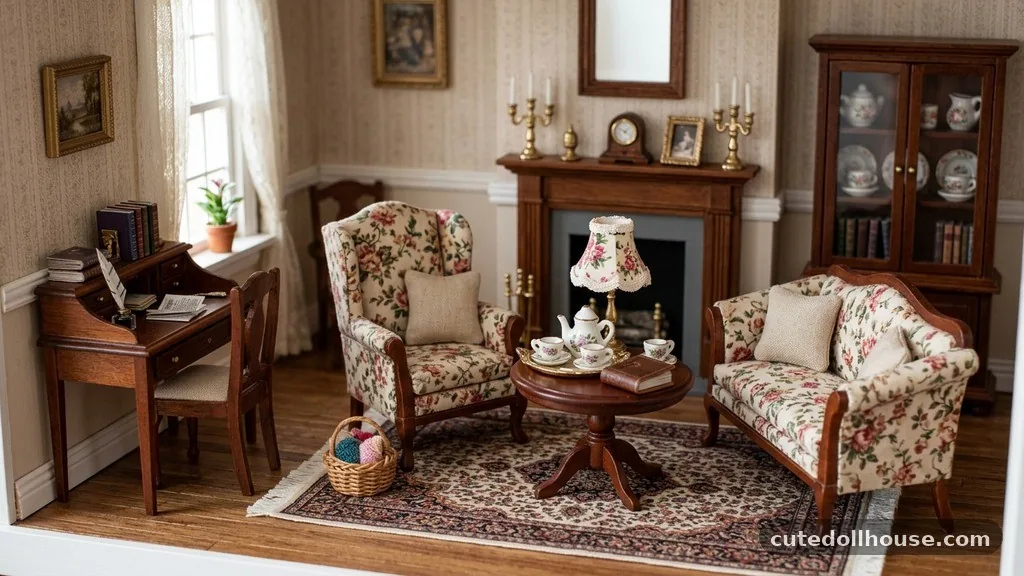
- A widely available miniature scale with many room types and styles.
- Furniture that shows more detail than very small-scale alternatives.
- A display house, room box, or realistic interior scene.
- Pieces that can be repainted, repaired, or customised.
Consider Another Scale If:
- Your dollhouse has very limited floor space.
- Your figures are clearly designed for 1:6, 1:24, or another scale.
- The furniture is intended for young children who may pull, drop, or chew on accessories.
- You need a complete interior at the lowest possible cost and don’t want to assemble or modify pieces.
What to Check Before Buying
1. Actual Measurements and Proportion
Measure the room first. Record the width, depth, and height available for each major item, including space needed to open doors or place figures beside furniture. A sofa that fits physically may still be too deep for a room to look believable.
Pay particular attention to seat height, table height, bed length, and the relationship between furniture and doors. If a figure cannot sit with its feet near the floor or cannot reach a table naturally, the scene may look out of proportion even when the listing says 1:12.
2. Material Quality
Common materials include wood, engineered wood, resin, plastic, metal, fabric, paperboard, and combinations of these. Each has a different role.
- Wood: often gives a convincing furniture appearance and can be painted or stained, but thin parts may warp or break.
- Resin: can reproduce ornate shapes and curved details, though brittle sections may need careful handling.
- Plastic: is usually easy to clean and may suit play-oriented settings, but surface texture and paint quality vary.
- Metal: works well for frames, handles, lamps, and hardware, although small parts can detach.
- Fabric: adds realism to upholstery and bedding, but it can collect dust and may fray at the edges.
- Paperboard or thin card: can be lightweight and inexpensive, but it generally needs more protection from moisture and rough use.
Don’t assume that a heavier item is automatically better. Weight can help a chair or cabinet stay in place, but fine detail, joint quality, finish, and repairability matter just as much.
3. Style and Room Coordination
Furniture should work as a set, even if it was purchased separately. Decide whether the room is meant to look modern, traditional, farmhouse-inspired, rustic, minimalist, Victorian, or deliberately eclectic.
Colour is only part of the decision. Leg shapes, wood tones, upholstery patterns, hardware, and surface sheen can make two pieces look as though they belong to different eras. If you are furnishing multiple rooms, choose a loose design direction before buying individual accessories.
4. Features and Functionality
Some miniature furniture is purely decorative. Other pieces include working drawers, opening doors, removable cushions, adjustable parts, or hinged sections. Functional details can make a scene more engaging, but they also create additional points of failure.
Consider whether the feature will actually be used. A working cabinet may be worthwhile in a dollhouse designed for interactive play. For a sealed display case, a fixed door with a better finish may be the more durable choice.
5. Assembly and Difficulty
Furniture may arrive ready to display, partly assembled, or as a kit requiring sanding, gluing, painting, and upholstery. Product photographs do not always make this distinction obvious, so read the listing carefully.
Beginners often benefit from finished pieces or simple kits with clearly labelled parts. Experienced makers may prefer unfinished wooden furniture because it offers more control over colour and surface treatment.
Before starting a kit, verify whether glue, paint, brushes, fabric, or tools are included. These omissions aren’t necessarily a problem, but they affect the true cost and the time required to finish the project.
6. Durability and Maintenance
Miniature furniture has a difficult job: it needs to be small enough to fit a room while remaining strong enough to move, dust, and reposition. Look for clean joins, secure legs, firmly attached handles, and upholstery that isn’t loosely fitted.
Most pieces are best cleaned with a soft, dry brush or a lightly damp cloth used sparingly. Water can damage unfinished wood, paper details, fabric, and some painted finishes. Keep miniatures away from direct sunlight if fading is a concern, and store loose accessories in a labelled container.
7. Included Accessories
A listing may show a fully styled room while the purchase includes only one item. Confirm exactly what is supplied. A dining table might not include chairs; a bed may not include bedding; and a kitchen set may exclude the small accessories shown in the photographs.
Check whether accessories are permanently attached or loose. Loose items offer more flexibility, but they are easier to misplace and may not be suitable around young children.
8. Customer Feedback and Common Complaints
Customer reviews can reveal issues that product descriptions overlook, such as inconsistent sizing, weak glue joints, rough edges, colour differences, missing parts, or packaging damage. Read several reviews rather than relying on a single photograph or headline rating.
Feedback may also vary by seller, model revision, region, or production batch. Treat repeated comments as useful signals, not absolute proof that every example will have the same issue. Look for photographs showing the furniture beside a ruler, doll, or familiar object.
Comparison: Which Type of 1:12 Furniture Fits Your Project?
| Furniture Type | Best For | Typical Difficulty | Key Advantage | Main Drawback | Overall Value Consideration |
|---|---|---|---|---|---|
| Ready-made furniture | Beginners and display rooms | Low | Fastest route to a finished interior | Less control over finish and proportions | Good when convenience matters most |
| Unfinished wooden kits | Custom projects and hobbyists | Moderate | Can be painted, stained, and modified | Requires tools, materials, and time | Strong value for makers who enjoy the process |
| Plastic play furniture | Interactive use and easier cleaning | Low | Usually simple to handle and maintain | May look less realistic than crafted alternatives | Practical if durability matters more than fine detail |
| Resin decorative pieces | Ornate scenes and display houses | Low to moderate | Can reproduce elaborate shapes | Some delicate parts may be brittle | Worth considering for statement pieces |
| Hand-finished or artisan pieces | Collectors and appearance-focused buyers | Usually low after purchase | Distinctive finishes and character | Availability and specifications may vary | Best judged by finish quality and fit, not appearance alone |
Best Furniture Choices by Room
Living Room
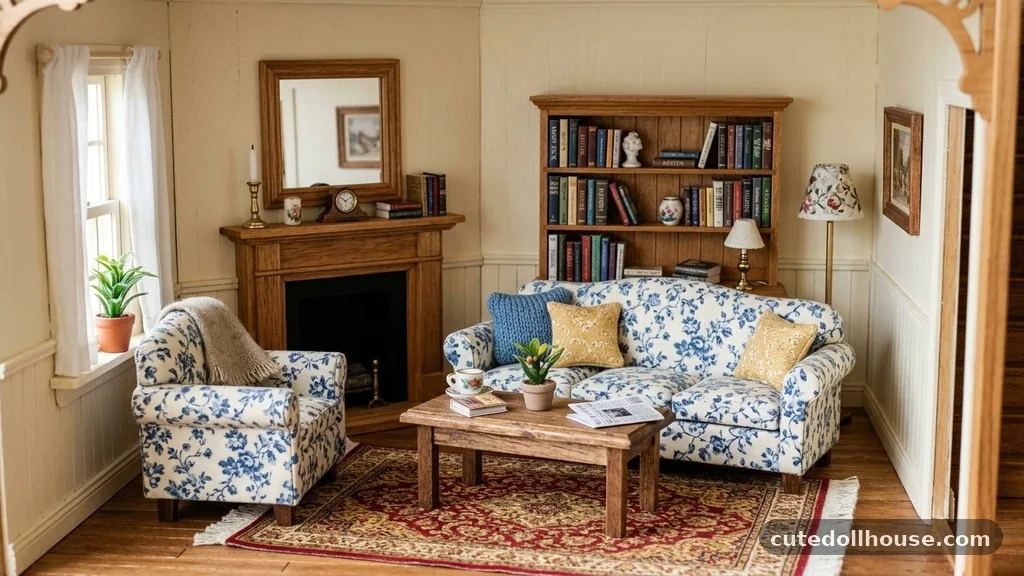
Start with the seating arrangement. A sofa, armchair, coffee table, and side table should leave enough visual and physical space for figures to stand or sit. Upholstered pieces add warmth, while wooden or painted furniture may be easier to dust and maintain.
Watch the depth of sofas in particular. Oversized seating can dominate a small room and make other furniture appear crowded.
Bedroom
A bed is usually the visual anchor. Check its exterior dimensions, mattress height, and whether bedding is included. A bed can be technically 1:12 scale but still look unsuitable if the headboard is too tall or the mattress is too thick for the figures.
Wardrobes, chests, bedside tables, and dressing tables should be chosen with the room layout in mind. Opening drawers are appealing, but fixed details may be more durable for a display-only house.
Kitchen and Dining Room
Kitchen furniture often includes multiple cabinets, appliances, tables, and chairs. Measure carefully before buying a set because a few oversized units can leave little room for movement.
Dining chairs should sit at a believable height beside the table. If the set includes only a table, check the chair dimensions you plan to pair with it rather than assuming all 1:12 chairs will match.
Bathroom
Bathrooms expose scale inconsistencies quickly. Compare the height of the toilet, sink, and bath with your figures and doorways. Glossy finishes may look convincing, but inspect photographs for visible seams, mould lines, and uneven paint.
Nursery and Children’s Rooms
These rooms can include cots, toy chests, highchairs, desks, and small chairs. Loose miniature accessories may create a choking hazard, so interactive displays should be kept away from young children unless the pieces are specifically designed for that use.
Recommendations for Different Buyers
For Beginners
Finished furniture is usually the least frustrating entry point. Choose a small group of essential pieces with clearly stated dimensions, then add accessories after the main layout works. Buying an entire room set can be convenient, but confirm that every pictured item is included.
For Experienced Hobbyists
Unfinished wood kits and plain furniture offer more creative control. They suit buyers who already have suitable adhesives, paints, sanding materials, and a clear idea of the desired finish. Check whether parts require drilling or other advanced work before ordering.
For Appearance-Focused Buyers
Prioritise proportion, finish, and consistency across the room. A simple, well-made chair may look more convincing than a highly decorated item with rough edges or an inaccurate seat height.
For Value-Focused Buyers
Compare the complete project cost rather than the ticket price alone. A lower-priced kit may need glue, paint, fabric, tools, and replacement parts. Ready-made bundles can offer practical value when they include several genuinely useful pieces, but only if the dimensions suit your house.
For Interactive Play
Choose sturdy construction, rounded or secure parts, and easy-clean surfaces where possible. Avoid relying on delicate decorative pieces simply because they photograph well. Age guidance and small-part warnings should be checked carefully.
Common Mistakes to Avoid
- Buying by label alone: confirm measurements instead of assuming every 1:12 item has identical proportions.
- Ignoring room scale: an item can fit a dollhouse technically while making the room look crowded.
- Forgetting door and stair clearance: furniture may fit inside a room but be impossible to move through the house.
- Trusting staged photographs: images may show accessories, lighting, or furniture that aren’t included.
- Mixing finishes without a plan: different wood tones and design periods can clash unexpectedly.
- Overlooking maintenance: fabric, unfinished wood, and fragile details need more care than smooth plastic.
- Buying too much at once: furnishing gradually makes it easier to spot proportion problems before they spread through the project.
How to Measure Before Ordering
- Measure the available floor area, wall height, and doorway width.
- Mark the position of windows, stairs, radiators, and fixed architectural details.
- Measure an existing doll or figure from foot to head, then compare its seated height with prospective chairs and sofas.
- Check the footprint of each furniture item, not only its height.
- Allow room for hands, camera angles, removable walls, and opening drawers if the house will be used interactively.
- Compare all dimensions in the same unit before purchasing.
A simple paper template can help. Cut rectangles representing sofas, beds, tables, or cabinets and place them in the room. This quick step often reveals crowding that is difficult to judge from an online listing.
Who Should Consider Alternatives?
A different scale may be better if your project is built around figures that are visibly larger or smaller than typical 1:12 dolls. It may also make sense to choose a smaller scale for a compact apartment-style house where every inch of floor space matters.
Collectors who want highly realistic, museum-style interiors may prefer individually crafted or custom-made pieces. Buyers who mainly want uncomplicated child-friendly play could find durable plastic furniture more practical than delicate wood, fabric, or resin models.
There is no single correct option. The best furniture is the furniture that fits the figures, room, handling conditions, and visual style of the project.
Frequently Asked Questions
What size doll fits 1:12 scale furniture?
Many 1:12 settings use dolls roughly 5 to 6 inches tall, but figure proportions vary. Measure the doll and compare its seated height, shoulder width, and foot placement with the furniture rather than relying on height alone.
Where can I find affordable 1:12 scale furniture?
Affordable options may include unfinished kits, mixed bundles, craft-market pieces, second-hand listings, and simpler plastic furniture. Check the measurements and included items carefully, because low initial cost may be offset by assembly supplies or missing accessories.
Is 1:12 the most common dollhouse furniture scale?
It is one of the most widely recognised dollhouse scales and has a broad range of furniture and accessories. However, availability depends on the region, seller, style, and whether the item is intended for display or play.
Can 1:12 scale furniture be used with any dollhouse?
No. The house’s room dimensions, doors, ceilings, windows, and architectural proportions must also suit the furniture. Always compare the furniture measurements with the actual interior space.
Is modern 1:12 furniture better than traditional furniture?
Neither style is inherently better. Modern pieces may suit clean, contemporary rooms, while traditional designs can provide more ornament and character. Choose based on the house’s architecture and the look you want to create.
Should I buy assembled furniture or a kit?
Assembled furniture is usually more convenient, while kits provide greater control over colour, materials, and customisation. Your available time, tools, confidence, and intended finish should determine the choice.
Final Verdict
The best dollhouse furniture for 1:12 scale is not necessarily the most decorated or expensive option. It is the furniture with believable proportions, dependable construction, a finish that suits the room, and dimensions that match the house and figures. Ready-made pieces make sense for beginners and display projects, while unfinished kits appeal to makers who enjoy painting and customising.
Before buying, measure twice, confirm what the listing includes, and treat customer feedback as useful evidence rather than a guarantee. For most realistic miniature interiors, 1:12 remains a flexible and rewarding scale, provided you choose pieces for fit and quality rather than the scale label alone.