
The best DIY dollhouse kits with furniture combine a miniature building project with the details that make a finished room feel lived in. They appeal to adults who enjoy crafts, families working on a shared project, and miniature enthusiasts who want more than a display shell. The difficult part is comparing scale, materials, furniture, assembly demands, and the amount of finishing still required after opening the box.
Some kits include nearly everything for a themed room, while others provide a basic structure and leave painting, lighting, or furnishing to the builder. Knowing that difference helps you choose a kit that matches your patience, skill level, available space, and expectations.
What DIY Dollhouse Kits with Furniture Include
A DIY dollhouse kit usually contains the main pieces needed to build a miniature house, room box, shop, greenhouse, or similar scene. Depending on the design, the package may include wood or board panels, flooring, windows, doors, wallpaper, small decorative parts, and miniature furniture. Some sets also include fabric, thread, wire, lighting components, or tools, although the exact contents vary considerably between brands and sellers.
The phrase “with furniture” deserves careful attention. It doesn’t always mean a complete collection of finished tables, chairs, beds, and accessories. Furniture might be preassembled, supplied as flat pieces, or represented by materials that require cutting, painting, gluing, and detailed decoration.
Scale is another important consideration. A 1:12 dollhouse kit is made at one-twelfth of real-life size and is a common format for traditional dollhouses.
Smaller formats, such as 1:24, create more compact scenes but may require finer handling. Furniture from one scale generally won’t fit another correctly, so confirm compatibility before adding accessories from a different kit.
Are DIY Dollhouse Kits with Furniture Worth Buying?
For the right buyer, yes. These kits offer a structured creative project without requiring every component to be designed from scratch. Including furniture can also make the finished scene feel more complete and reduce the time spent sourcing individual miniature pieces.
They aren’t automatically the most economical option. A kit may include many tiny parts but still require paint, adhesive, batteries, craft tools, replacement materials, or extra décor. A plain shell can cost less initially, while a fully furnished or prebuilt miniature may save many hours of assembly.
A kit is a good choice if you want:
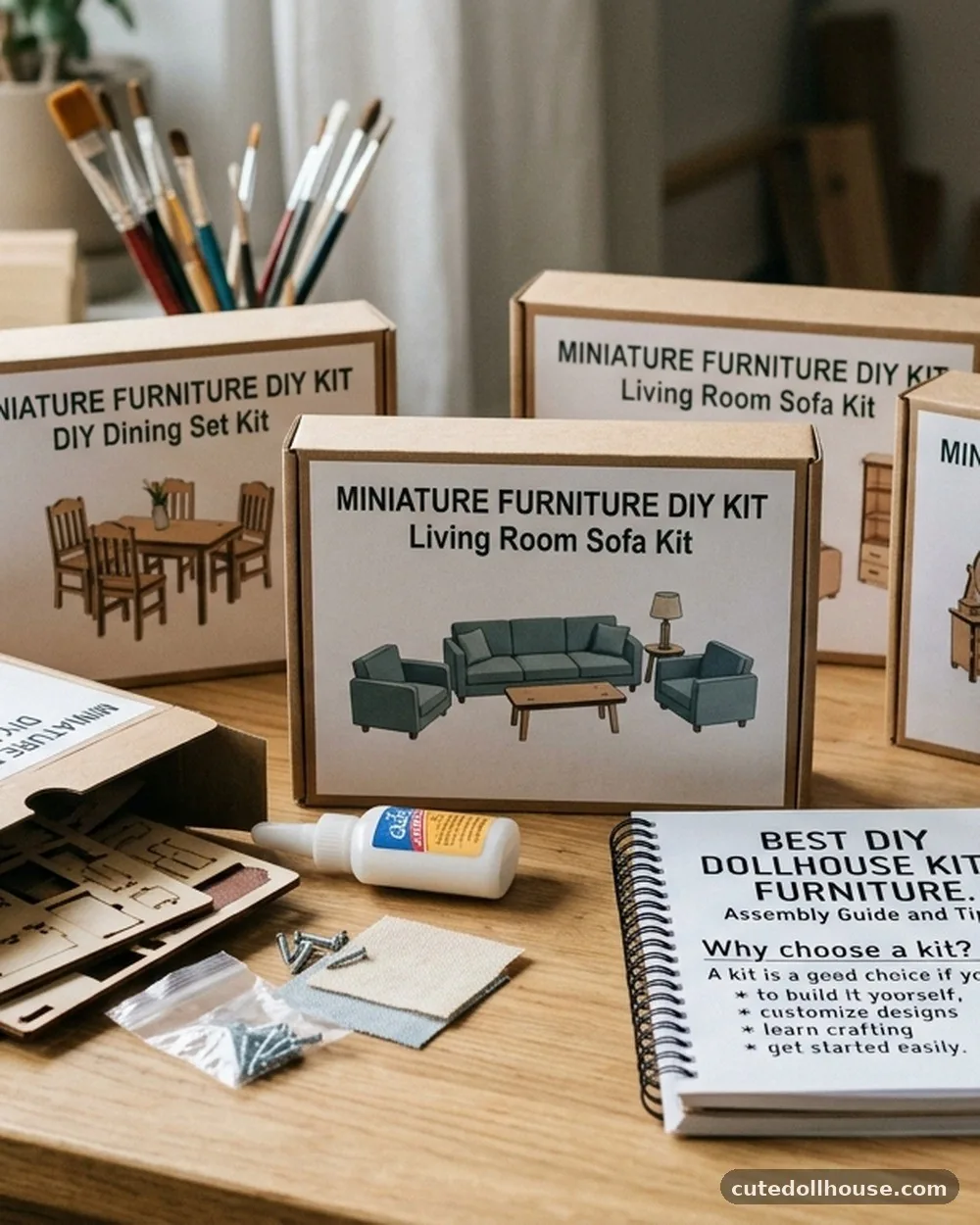
- A hands-on craft project with a defined end result.
- A miniature room or house that can be customised.
- Furniture and décor designed to coordinate with the structure.
- A gift for an adult crafter or an experienced older child, subject to the maker’s age guidance.
- A display piece that reflects your own painting and decorating choices.
Another option may suit you better if:
- You want a finished display immediately rather than a long assembly project.
- You dislike repetitive cutting, gluing, painting, or fine-detail work.
- You need a durable toy for rough play rather than a delicate craft model.
- You have limited time and would prefer a preassembled miniature house.
- You already own compatible furniture and only need an empty shell.
How to Choose the Right Miniature House Kit
Build and material quality
Inspect the stated materials before buying. Wooden dollhouse kits may use plywood, MDF, solid wood, or a combination of materials.
Board thickness, cut accuracy, and panel rigidity can affect how easily the structure aligns. Product photographs may show a finished model, so read the contents list and buyer questions carefully rather than assuming every visible item is included.
Wood can provide a satisfying base for painting and decorating, but it may need sanding and sealing. MDF often has smooth surfaces that accept paint well, though it can produce dust when cut or sanded. Thin card and printed paper can work effectively for interior details but may be less forgiving if assembled with too much moisture.
Design and appearance
Choose the overall scene before focusing on accessories. A cottage, café, bedroom, bookstore, greenhouse, and modern apartment can involve very different construction styles and decoration requirements. A highly themed kit may look cohesive out of the box, while a more neutral design gives you greater freedom to create your own interior.
Pay attention to the difference between promotional photography and the supplied components. Finished images may include handmade upgrades, additional lighting, extra plants, replacement furniture, or custom paintwork. If a feature matters to you, confirm that it is listed as included.
Size and available space
Measure the intended display area before ordering. Check the assembled dimensions, not only the package size. A miniature house can need extra clearance for a roof, hinged panel, removable wall, or rear access point.
Also consider working space. Some builders assemble a kit over several sessions, so a small table may need to remain available until the project is complete. If storage matters, a room box or compact 1:24 model may be more practical than a large multi-room house.
Furniture and accessory coverage
Furniture is one of the biggest differences between kits. Look for an itemised contents list that explains whether the set includes major pieces only or also smaller accessories such as books, dishes, lamps, plants, textiles, and wall décor.
Ask these questions before purchasing:
- Is the furniture assembled, partially assembled, or supplied as raw pieces?
- Are textiles and miniature accessories included?
- Are the furniture pieces made for the same scale as the house?
- Does the kit include lighting, wiring, or only decorative lamps?
- Are glue, paint, batteries, and tools included?
- Are instructions available in a language you can comfortably follow?
Difficulty and assembly time
Difficulty labels aren’t fully standardised. One seller’s “beginner” kit may still involve delicate paper folding, miniature wiring, or hours of painting. Read the construction description, examine the number of parts, and search customer feedback for comments about instructions and fit.
For a first project, a smaller room scene with fewer structural sections is often easier to manage than a large house with stairs, multiple floors, and complex lighting. Experienced builders may prefer an unfinished wooden kit that leaves more room for custom work.
Lighting and electrical features
Lighting can transform a miniature room, but it adds another layer of work. Determine whether the kit uses simple battery-powered components, plug-in wiring, or a more involved circuit. Check whether the lighting is supplied or merely shown in the product photos.
If wiring is included, follow the manufacturer’s instructions and keep small electrical parts away from young children. You can also consult the U.S. Consumer Product Safety Commission’s toy-safety guidance when deciding whether a particular project is suitable for a child.
Durability and maintenance
Miniature models are display crafts, not usually playsets designed for heavy handling. Finished pieces last longer when protected from dust, moisture, direct sunlight, and frequent movement. A covered shelf or display case can help, particularly for fabric, paper, and unsealed wood components.
Consider how repairs would be handled. A kit with accessible rear panels may be easier to clean or rewire than a sealed structure. If the house is intended for children, look for sturdier construction and avoid treating fragile accessories as toys unless the manufacturer specifically says they are suitable.
Customer feedback and common complaints
Reviews can reveal practical issues that product descriptions leave out. Look for repeated comments rather than isolated complaints. Useful patterns include missing pieces, unclear instructions, poorly fitting panels, weak adhesive, inaccurate scale, or furniture that differs from the photos.
Feedback can also be subjective. A demanding project may be frustrating for a beginner but enjoyable for an experienced miniature builder. Check whether complaints relate to the kit itself, shipping damage, seller packaging, or a buyer’s expectations about what “complete” means.
Comparison of Common Kit Types
Because no individual products or verified specifications were supplied for this roundup, the table compares common DIY dollhouse kit formats rather than inventing product names, prices, or ratings.
| Kit type | Best for | Typical difficulty | Key feature | Main drawback | Overall value consideration |
|---|---|---|---|---|---|
| Small room box | Beginners and limited spaces | Beginner to intermediate | Focused scene with fewer structural parts | Less room for multiple furniture layouts | Good if you want a shorter, contained project |
| Traditional wooden house | Builders who want a classic dollhouse | Intermediate | Expandable interior and familiar 1:12 format options | May need extensive finishing and furniture upgrades | Strong choice when customisation matters |
| Pre-themed miniature house | Buyers who prefer coordinated décor | Beginner to intermediate | Matching furniture, wallpaper, and accessories | Less flexibility and uncertain accessory coverage | Value depends on how much is genuinely included |
| Large multi-room kit | Experienced hobbyists and display projects | Intermediate to advanced | More rooms and scope for detailed storytelling | Greater time, space, and finishing demands | Worth considering only if you can complete and display it |
| Compact 1:24-style kit | Small displays and detailed miniature scenes | Intermediate to advanced | Reduced footprint | Smaller parts can be harder to handle | Useful where display space is limited |
What to Expect During Assembly
Most DIY dollhouse projects involve a sequence of structural assembly, surface preparation, decorating, and furnishing. The order matters. Wallpaper, flooring, and painted trim are often easier to apply before the interior becomes crowded with furniture.
- Inventory the contents and compare them with the instructions.
- Check the scale and test-fit major panels before applying adhesive.
- Prepare wood or board surfaces with careful sanding where appropriate.
- Paint or decorate structural sections while access is still easy.
- Assemble the shell according to the instructions and allow adhesive to cure.
- Build, finish, and place furniture without blocking doors or access panels.
- Add lighting and fragile accessories only after the main structure is stable.
Don’t rush the alignment stage. A small error in a base or wall can become more obvious as additional panels are added. Dry-fitting parts first is a simple way to identify orientation problems before glue makes them difficult to correct.
Tools and materials you may need
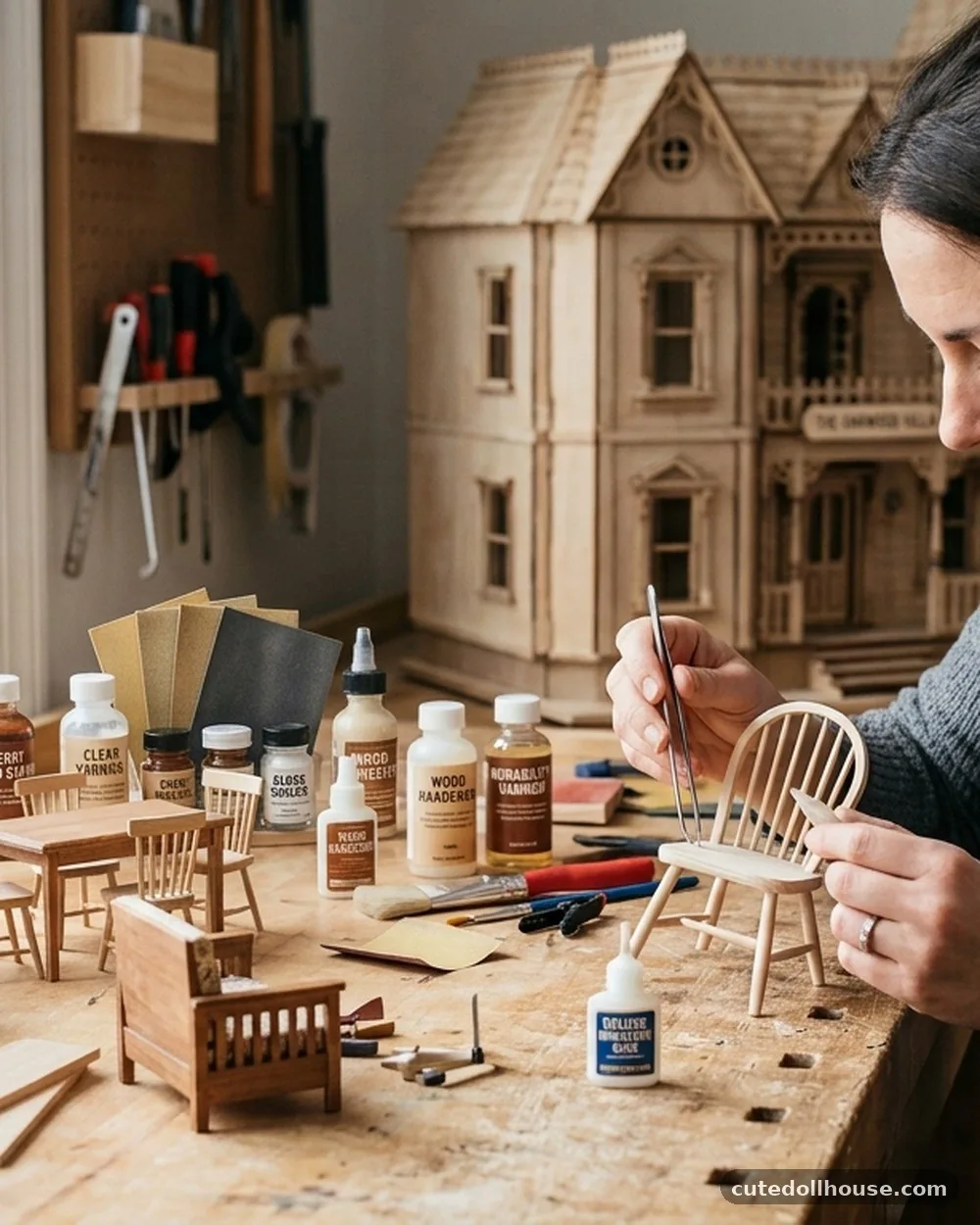
The exact requirements depend on the kit, but buyers commonly need a clean work surface, craft adhesive, fine sandpaper, a precision cutting tool, tweezers, small clamps, paintbrushes, and suitable paints. These items shouldn’t be assumed to be included.
Safety matters too. Cutting, sanding, painting, and soldering or wiring may require adult supervision, protective equipment, and adequate ventilation. Follow the instructions supplied with the kit and any safety information for the materials you add.
Recommendations by Buyer Type
Best for beginners
Start with a smaller room scene or a kit that clearly identifies its parts and provides illustrated instructions. A coordinated furniture set can reduce design decisions, but verify whether the pieces arrive finished or require construction.
Best for experienced builders
An unfinished wooden structure or larger multi-room kit may be more rewarding if you enjoy painting, modifying layouts, and sourcing additional accessories. Look for clear dimensions and accessible construction rather than relying only on styled photographs.
Best for appearance-focused buyers
Choose a themed kit with a consistent interior style, but compare the supplied contents with the finished images. If lighting or particular furniture is central to the look, confirm that those elements are included.
Best for value-focused buyers
Calculate the likely total project cost, not just the box price. A cheaper shell may need furniture, adhesive, paint, flooring, tools, and lighting. A more complete kit may offer better practical value if it includes the elements you would otherwise buy separately.
Best for limited display space
A compact room box or smaller-scale model can provide the miniature experience without requiring a large permanent display area. Measure carefully and leave room to access the model for cleaning or repairs.
Common Buying Mistakes to Avoid
- Assuming every item shown in the product image is included.
- Buying furniture before confirming the dollhouse scale.
- Ignoring the assembled dimensions and required workspace.
- Choosing a large kit without checking the instruction quality.
- Expecting a “DIY” kit to arrive fully painted and ready to display.
- Overlooking the cost of tools, adhesive, batteries, paint, and replacement parts.
- Treating a delicate display model as a conventional children’s toy.
Frequently Asked Questions
What is the best dollhouse kit available?
There isn’t one universal best option. The right choice depends on scale, available space, experience, furniture coverage, and how much assembly you enjoy. A small room box may be better for a beginner, while an experienced builder may prefer a larger unfinished wooden house.
What is a good DIY dollhouse kit for adults?
A good adult-oriented kit usually has clear instructions, well-identified parts, a manageable difficulty level, and enough room for customisation. Check whether “adult” refers to the intended hobby audience rather than assuming the set includes premium materials or finished furniture.
What does a dollhouse kit with furniture usually include?
It may include the structural shell plus some furniture and decorative pieces. Contents vary widely. Confirm whether furniture is assembled, unfinished, or absent from certain rooms, and check whether glue, paint, tools, and lighting are separate purchases.
Is 1:12 the best dollhouse scale?
1:12 is a popular traditional scale because it offers room for visible furniture and detailed interiors. It isn’t best for every buyer. Smaller scales take up less space, but their parts may be more difficult to handle and source.
How long does it take to build a miniature house kit?
Build time varies with the kit’s size, the number of accessories, the level of painting, and your experience. A simple room may be manageable as a short project, while a furnished multi-room house can require many separate sessions.
Can children use DIY dollhouse kits?
Some may be suitable for older children with adult supervision, but many involve small parts, sharp tools, adhesives, paint, or delicate components. Follow the manufacturer’s age guidance and consider the child’s ability to handle the construction safely.
Final Verdict
The best DIY dollhouse kits with furniture are worth buying when you want a creative, customisable project and have checked exactly what the box contains. Prioritise scale, assembled size, instruction quality, furniture coverage, and the tools or materials you’ll need to add. A compact room kit is a sensible starting point for beginners, while a larger wooden house suits builders who want more scope for decoration and personalisation.
Before ordering, compare the finished dimensions with your display space and read recent seller feedback for repeated issues. If you want immediate display value, consider a preassembled miniature instead; if you enjoy the process, a well-documented DIY kit can deliver the more satisfying result.