The best dollhouse kitchen furniture sets make a miniature home feel lived in, but choosing one isn’t as simple as picking the prettiest cabinet or stove. Scale, material, included accessories, and compatibility can vary widely between sets, especially across marketplace listings. Some are designed for detailed display rooms, while others are better suited to children’s imaginative play.
The right choice depends on the dollhouse itself, the user’s age and skill level, and how much realism matters. This guide explains the main types of dollhouse kitchen furniture, the features worth checking, common limitations, and the situations where a complete set makes more sense than buying individual pieces.
What Dollhouse Kitchen Furniture Sets Include
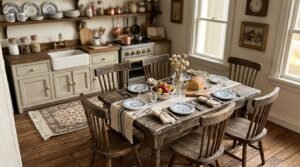
A dollhouse kitchen furniture set is a group of miniature furnishings and accessories designed to create a kitchen scene inside a dollhouse or scale model. Depending on the design, a set may contain cabinets, a sink, a cooker, a refrigerator, a table, chairs, shelves, cookware, dishes, or small decorative items.
Not every set includes the same pieces. Some focus on large furniture, while others provide a broad collection of tiny accessories. Product photographs can also show props that aren’t included, so the written contents list matters more than the staged image.
Most buyers should begin with scale compatibility. A 1:12 scale kitchen is common in traditional dollhouses, while 1:6 and 1:24 scales are also used for different dolls and miniature settings. Furniture from one scale generally won’t look right in another, even if the overall design is attractive.
Are Dollhouse Kitchen Furniture Sets Worth Buying?
For many projects, a complete kitchen set is more practical than purchasing every item separately. Matching pieces usually share a consistent style and proportion, and a bundled set can make it easier to create a finished room without searching for compatible cabinets, appliances, and accessories one at a time.
Sets aren’t automatically the best choice, though. A buyer who only needs a sink or dining table may pay for duplicate items. Likewise, collectors focused on highly realistic miniatures may prefer artisan-made individual pieces, which can offer more detail and better materials but often require a larger budget and more careful sourcing.
A set is usually a good choice when:
- You are furnishing an empty or unfinished dollhouse kitchen.
- You want coordinated furniture rather than a mixed collection of styles.
- You are starting a miniature project and need several basic pieces at once.
- You want a practical playroom setup with recognizable kitchen furniture.
- You need an easier way to judge whether all the pieces will fit together.
Consider alternatives when:
- You already own most of the furniture and need only one replacement item.
- Scale accuracy and fine craftsmanship matter more than convenience.
- The dollhouse has unusual dimensions that require custom-built furniture.
- Very small accessories may be unsafe or unsuitable for the intended user.
Important Buying Criteria
1. Confirm the scale and measurements
Scale is the first filter, not a minor detail. A listing may describe a product as “dollhouse furniture” without making the intended scale obvious. Check the dimensions of the largest pieces, particularly the refrigerator, cabinet, dining table, and chairs.
Measure the available floor and wall space inside the dollhouse before ordering. Leave room for doors, windows, stairways, and hand access. A cabinet that technically fits may still make the room difficult to arrange or play in.
If the listing gives only the package dimensions, ask the seller for the size of each individual item. Product measurements can vary by model and seller, so the exact listing should be treated as the source of truth.
2. Look closely at the materials
Miniature kitchen furniture may be made from wood, engineered wood, plastic, metal, resin, or a combination of materials. Each option has trade-offs.
- Wood: Often offers a traditional appearance and can suit display-focused dollhouses. Finish quality and construction methods vary.
- Plastic: Usually easier to wipe clean and may be suitable for frequent handling, although some pieces can look less realistic.
- Metal: Can add convincing detail to handles, taps, hinges, and cookware, but thin parts may bend or detach.
- Resin: Allows molded detail and unusual shapes. It may be more brittle than flexible plastic.
- Mixed construction: Combines different materials for appearance or function, but the finish may not be uniform across all pieces.
Look for clear information about the main body material, surface finish, and small hardware. If the material is not stated, don’t assume that a wood-look finish means the furniture is made from solid wood.
3. Assess the design and visual style
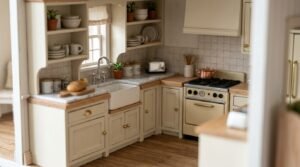
The kitchen should fit the wider dollhouse. Traditional painted cabinets may look out of place in a modern miniature interior, while a highly realistic appliance set can overwhelm a simple child’s dollhouse.
Useful design details include opening doors, visible shelves, realistic handles, molded burners, tiled backsplashes, and coordinated colors. These features can add character, but they also create more points that may break or loosen. Decide whether the furniture is primarily for display, gentle play, photography, or a craft project.
4. Check what is actually included
Some sets are furniture-only. Others include accessories such as plates, cups, pans, utensils, food items, and small storage containers. Neither approach is inherently better, but the difference affects value and the finished appearance of the room.
Read the inventory carefully. Pay attention to whether the table and chairs are included, whether appliances are separate pieces, and whether accessories are decorative or functional. Images often include additional items from the seller’s room styling.
5. Consider assembly and setup
Some miniature furniture arrives ready to place, while other sets require assembly, adhesive, painting, or minor finishing. Assembly instructions may be simple, but tiny parts can make the work fiddly for beginners.
Before buying, look for information about:
- Whether the furniture arrives assembled or flat-packed.
- Whether glue, batteries, or tools are required.
- Whether the finish is complete or intended for painting.
- How clearly the instructions explain the steps.
- Whether parts are labeled and easy to identify.
If the set is intended for a child, adult assembly may be necessary. Small hardware, loose accessories, and adhesive should be kept away from young children unless the manufacturer specifically states otherwise.
6. Think about durability and maintenance
Durability depends on more than the material. Thin legs, delicate hinges, narrow handles, and unsupported shelves can be vulnerable during handling. A display-only set may tolerate less movement than furniture intended for regular play.
Painted surfaces can show chips or rubbing over time. Plastic may be easier to clean, but painted details can still fade or wear.
For maintenance, use a soft, dry cloth unless the manufacturer gives different cleaning instructions. Avoid soaking wooden or layered pieces.
7. Use customer feedback carefully
Customer reviews can reveal practical problems that a specification sheet doesn’t mention. Look for repeated comments about scale accuracy, missing pieces, poor instructions, weak joints, rough edges, color differences, or furniture that looks smaller than expected.
One isolated complaint may reflect shipping damage or an unusual experience. A pattern across multiple reviews deserves more attention. Reviews can also vary by production batch, seller, or regional version, so confirm that the feedback applies to the exact listing you intend to buy.
Comparison of Common Dollhouse Kitchen Set Types
Because no specific products or verified manufacturer specifications were supplied, the table below compares common set formats rather than ranking named products. It is a practical starting point for deciding which type suits the project.
| Set Type | Best For | Typical Difficulty | Key Advantage | Main Drawback | Overall Value Consideration |
|---|---|---|---|---|---|
| Basic furniture set | Furnishing an empty kitchen | Low to moderate | Provides the main room structure | May include few decorative accessories | Useful if you need several large pieces |
| Furniture and accessory set | Display scenes and imaginative play | Low to moderate | Creates a more complete kitchen setting | Small parts may be easy to lose | Strongest when all included items will be used |
| Unfinished or craft-ready set | DIY projects and customization | Moderate to high | Allows painting and personal detailing | Requires extra time and materials | Good for makers who value flexibility |
| Display-focused miniature set | Collectors and detailed room boxes | Moderate | Often emphasizes realism and finish | May be less suitable for rough handling | Value depends heavily on craftsmanship and detail |
| Children’s play-oriented set | Frequent handling and pretend play | Low | Simple, recognizable furniture | May sacrifice fine scale detail | Prioritize sturdiness and age suitability |
Common Strengths and Limitations
Potential advantages
- Coordinated appearance: Cabinets, appliances, and dining furniture are more likely to share a visual style.
- Faster room planning: A set gives you a starting point for arranging the kitchen.
- Less compatibility guesswork: Matching items are generally designed to work together, although scale should still be verified.
- Useful for beginners: A complete package can be less intimidating than sourcing every item separately.
- Flexible styling: Additional miniature food, textiles, or wall décor can be added later.
Potential disadvantages
- Uneven quality: A set may contain one well-finished centerpiece alongside simpler accessories.
- Unwanted duplicates: Buyers may receive pieces they don’t need.
- Scale uncertainty: Vague listings can make it difficult to judge fit from photographs alone.
- Fragile small parts: Handles, crockery, and utensils can be lost or damaged.
- Limited customization: A finished set may offer fewer options than individual or unfinished pieces.
How to Plan a Dollhouse Kitchen Before Buying
Start with the room rather than the product photograph. Sketch the kitchen floor plan, mark doors and windows, and measure the usable wall length. If the dollhouse is already furnished, note the style and scale of nearby rooms so the kitchen doesn’t look disconnected.
Next, decide what the kitchen needs to do. A display room may benefit from realistic accessories and carefully finished surfaces.
A playroom needs accessible layouts and pieces that can tolerate handling. A craft project may be better served by unfinished furniture that can be painted to match the rest of the house.
- Measure the room and record the available floor and wall space.
- Confirm the dollhouse scale and compare it with every listed furniture dimension.
- Choose the essential pieces, such as a sink, cooker, refrigerator, or table.
- Decide whether accessories are useful or likely to become clutter.
- Check assembly requirements and age guidance.
- Review the seller’s returns policy and the exact contents list.
Recommendations for Different Buyers
For beginners
A basic coordinated furniture set is usually the easiest starting point. Choose one with clearly stated measurements, a complete contents list, and minimal assembly. Avoid listings that rely entirely on photographs to explain scale or included pieces.
For experienced miniature makers
An unfinished or modular set may be more appealing. It allows the buyer to adjust colors, add hardware, repaint cabinets, or combine the furniture with handmade details. Check the surface material before selecting paints, glues, or sealants.
For appearance-focused buyers
Prioritize finish quality, realistic proportions, and consistency between pieces. Close-up photographs are more useful than wide room scenes. Look for details such as aligned doors, clean edges, convincing handles, and a finish that matches the intended period or style.
For value-focused buyers
Compare the number of useful pieces rather than simply choosing the largest package. A smaller set with the right furniture can be better value than a larger one filled with accessories that won’t be used. Factor in shipping, assembly supplies, and any additional items needed to complete the room.
For children
Age guidance should take priority over appearance. Choose furniture with fewer delicate parts if the set will be handled frequently, and check for small components that could pose a choking hazard. Adult supervision may be appropriate depending on the child’s age and the set’s construction.
When Individual Pieces May Be Better
Buying furniture separately makes sense when the room has unusual dimensions or when the owner already has a clear design plan. It also allows more control over the quality of high-visibility pieces, such as a statement cooker, farmhouse sink, or dining table.
The trade-off is compatibility. Separate pieces may differ in scale, color, depth, or visual style.
Before mixing brands or sellers, compare measurements and finish descriptions. A cabinet listed as miniature may still be too large for the intended room.
Questions to Ask Before Ordering
- Is the scale stated clearly, and are individual item dimensions provided?
- Does the listed contents section match the photographs?
- Are the furniture pieces assembled, unfinished, or supplied as a kit?
- Are accessories included, or are they room props only?
- What materials and finishes are used?
- Are there repeated complaints about breakage, rough surfaces, or missing parts?
- Will the furniture leave enough room for doors, windows, and movement?
- Is the product intended for display, craft use, or children’s play?
- Can the seller be contacted if measurements or contents are unclear?
Frequently Asked Questions
What is the most common dollhouse kitchen scale?
1:12 is a common scale for traditional dollhouses, but it is not universal. Always compare the product’s stated scale and measurements with the dimensions of your dollhouse before buying.
Where can I find high-quality dollhouse kitchen furniture?
High-quality options may be available from specialist miniature retailers, craft suppliers, independent makers, and large online marketplaces. Quality varies by listing, so examine materials, measurements, close-up images, contents, and repeated customer feedback rather than relying on the store type alone.
Is dollhouse furniture suitable for children?
Some sets are designed for children’s play, while others are intended mainly for collectors or display. Check the manufacturer’s age guidance and inspect the set for small, detachable parts before giving it to a child.
Does a dollhouse kitchen set usually include food and dishes?
Not always. Some sets contain only cabinets and appliances, while others include cookware, dishes, food, or dining accessories. Treat every pictured item as unconfirmed until it appears in the written contents list.
How can I tell if furniture will fit my dollhouse?
Measure the room and compare those measurements with each item’s height, width, and depth. Check door and window placement as well as floor space. Scale labels alone are not enough, particularly when listings are incomplete.
Should I choose wood or plastic miniature furniture?
Wood can provide a traditional display appearance, while plastic is often easier to clean and may tolerate handling well. Neither material guarantees quality; construction, finish, thickness, and the intended use matter just as much.
Final Verdict
The best Dollhouse Kitchen Furniture Sets are worth buying when you need several coordinated pieces, have confirmed the scale, and understand exactly what the package includes. They can simplify room planning and offer a practical starting point for both display scenes and imaginative play.
Don’t buy based on appearance alone. Measure the room, check materials and assembly requirements, read repeated customer feedback, and decide whether the set suits display, crafting, or regular handling. If no complete set fits your layout, carefully chosen individual pieces may be the better investment.