
The best handmade wooden dollhouses combine lasting materials, characterful design, and room for imaginative play or display. Unlike many mass-produced plastic models, a handcrafted doll house may have visible wood grain, individually finished details, and a look that changes slightly from one piece to the next. That appeal comes with trade-offs: product dimensions, scale, included furniture, finish quality, and assembly requirements can vary widely between makers.
Buyers also need to decide whether the dollhouse is for children, adult collectors, creative projects, or decorative use. This guide explains the practical details that matter most, how to assess quality when product information is limited, and when a handmade wooden dollhouse is a better choice than a ready-built or mass-market alternative.
What Is a Handmade Wooden Dollhouse?
A handmade wooden dollhouse is a small-scale house model built primarily from wood and finished by an individual craftsperson, small workshop, or specialist maker. It may arrive fully assembled, partly assembled, or as a wooden dollhouse kit that requires construction, sanding, painting, and decorating.
The purpose varies. Some dollhouses are designed as toys for children, while others are intended for adult hobbyists, collectors, interior-design projects, miniature photography, or display. A model can be simple and open-ended, with bare rooms ready for decoration, or highly finished with windows, doors, stairs, trim, roofing, and built-in features.
“Handmade” doesn’t automatically mean flawless or fully finished. Small variations in wood tone, paint coverage, joinery, and alignment may be part of the character of a handmade piece. At the same time, buyers should distinguish natural variation from genuine quality problems such as loose joints, sharp edges, unstable walls, strong chemical odors, or misleading dimensions.
Are Handmade Wooden Dollhouses Worth Buying?
For the right buyer, yes. A well-made wooden dollhouse can offer a more substantial feel than a lightweight plastic toy, a warmer appearance for a bedroom or hobby room, and a flexible setting for imaginative play. Wood also provides a practical surface for repainting, wallpapering, adding furniture, and creating a highly personal miniature home.
The category isn’t automatically the best choice for every household. A handcrafted model may cost more than a basic mass-produced doll house, take longer to assemble, or require careful handling. If the main priority is immediate play, simple cleaning, or a lower upfront price, a ready-built plastic dollhouse may be more convenient.
Before buying, consider the intended user and the amount of work involved. A detailed kit can be rewarding for an experienced adult but frustrating for a young child.
A large display model may look impressive yet need considerable floor or shelf space. The best handmade wooden dollhouses are those that match the buyer’s scale, skill level, available space, and expectations about finish.
Important Buying Criteria
Build and Material Quality
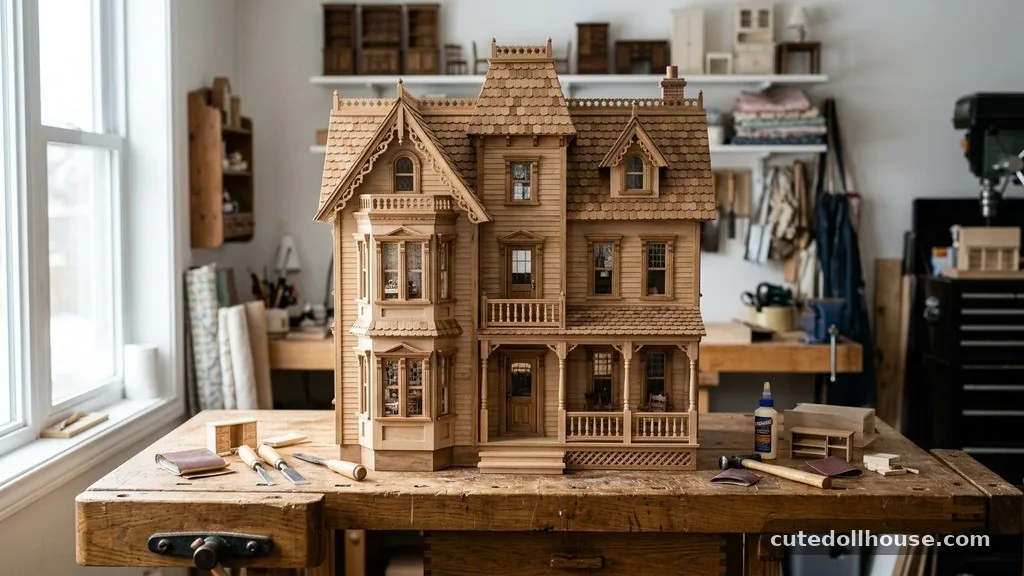
Look for clear information about the type of wood, panel thickness, joinery, and surface finish. Product descriptions may use broad terms such as “wooden” without explaining whether the model uses solid wood, plywood, fiberboard, or a combination. That distinction affects weight, appearance, resistance to warping, and how easily the surface can be painted or modified.
Inspect product photographs for clean corners, even panel edges, secure railings, and properly aligned openings. If the seller provides close-up images, check the roofline, stairs, balconies, window frames, and interior walls. Handmade work may show small variations, but major gaps or visibly bowed panels deserve clarification before purchase.
Design and Appearance
Handmade models often appeal because they look like miniature architecture rather than ordinary toys. Some have a traditional cottage style, while others resemble modern homes, farmhouses, townhouses, or open-sided play spaces. Think about whether the design should blend with a child’s room, serve as a display piece, or provide a neutral canvas for a creative project.
Paint and stain matter too. A finished model is usually quicker to enjoy, but an unfinished dollhouse can be more useful for adults who want to choose the color scheme, flooring, wallpaper, and furniture. Ask whether the finish is sealed, washable, child-appropriate, or intended only for display if that information isn’t clearly stated.
Size, Scale, and Available Space
Never judge size from photographs alone. Check the external width, height, and depth, then measure the location where the dollhouse will sit. Leave room for access, especially if children will play inside or if the model has a front-opening design.
Scale is equally important. A 1:12 dollhouse scale is common in adult miniature hobbies, but other models may use a different proportion.
Furniture, dolls, accessories, and toys designed for one scale may look too large or too small in another. If the listing doesn’t state the scale, check the height of doorways and rooms or contact the seller.
Features and Functionality
Useful features can include opening fronts, removable roofs, hinged walls, staircases, balconies, windows, lighting channels, and multiple room layouts. None is automatically better. An open-backed model may be easier for children to reach, while a closed-front design may offer a more convincing display.
- Check how easily hands can reach the rooms.
- Confirm whether doors and windows actually open or are decorative.
- Look for removable panels if wiring or interior decoration is planned.
- Verify that balconies, stairs, and railings are securely attached.
- Confirm whether furniture and accessories are included or sold separately.
Assembly and Difficulty
Assembly can range from straightforward slot-together construction to a substantial adult hobby project. A kit may require glue, clamps, sanding, painting, wallpapering, and careful alignment. Tools and adhesives may not be included, so read the contents list rather than assuming the package is ready to build.
For a child, the most suitable option is usually a stable, preassembled structure with accessible rooms and durable finishes. For an adult maker, a more involved kit may be part of the appeal. If instructions are vague or unavailable, consider that a meaningful buying risk.
Accessories and Furniture
A dollhouse sold without furniture can offer more creative freedom, but furnishing every room may add time and expense. A set that includes miniature beds, tables, chairs, kitchens, or bathroom pieces can be convenient, though the quality and scale of those pieces should be checked separately.
Ask whether the photos show items included in the purchase or merely demonstrate how the finished model could look. This is one of the most common sources of confusion in miniature products. The listing should clearly separate the house, furniture, lighting, dolls, and decorative accessories.
Durability and Maintenance
Wooden dollhouses need protection from excessive moisture, direct sunlight, and rough handling. Dust can usually be removed with a soft, dry cloth or a carefully controlled brush. Avoid soaking unfinished wood, and check the maker’s advice before using cleaning products on painted surfaces.
For children, stability is more important than intricate decoration. A tall model should have a broad, secure base and should be positioned where it won’t be pulled down. Small furniture and accessories can also create choking hazards, so follow the stated age guidance and use supervision where appropriate.
The U.S. Consumer Product Safety Commission’s toy safety guidance is a useful reference for general toy-safety considerations.
Customer Feedback and Seller Information
Customer feedback can reveal issues that product photographs don’t show, including missing parts, unclear instructions, fragile trim, inconsistent paint, or packaging damage. It can also show how much assembly was required in practice. Treat individual experiences as useful signals rather than universal proof, since handmade production, shipping conditions, and user expectations vary.
Before ordering, look for:
- Recent photographs from buyers, where available.
- Clear measurements and an itemized contents list.
- Information about dispatch time and made-to-order production.
- Instructions for returns, damage claims, and missing components.
- Answers to questions about materials, finish, scale, and age suitability.
How to Compare Handmade Wooden Dollhouses
Because no specific product models or verified specifications were supplied for this article, it would be misleading to invent a ranked list, price comparison, or product-by-product score. Instead, use the table below as a practical comparison framework when reviewing listings from different makers.
| Factor | What to Check | Why It Matters | Potential Concern |
|---|---|---|---|
| Materials | Wood type, panel construction, finish, and thickness | Influences weight, appearance, stability, and customization | “Wooden” may not explain the actual material used |
| Size and scale | External dimensions, room dimensions, and stated scale | Determines fit, furniture compatibility, and play access | Photos can make a model appear larger or smaller than it is |
| Assembly | Preassembled, partial assembly, or full kit | Helps match the product to the buyer’s time and skill | Glue, tools, paint, or clamps may be extra |
| Included contents | House, furniture, lighting, figures, and accessories | Prevents unexpected additional spending | Staged photographs may show items not included |
| Safety and stability | Age guidance, finish details, sharp edges, and base stability | Important for children and frequent handling | Decorative models may not be suitable as active toys |
| Seller support | Instructions, replacement parts, returns, and damage policy | Reduces risk with handmade or made-to-order purchases | Support and policies vary significantly by seller |
Common Types of Handmade Wooden Dollhouses
Finished Display Dollhouses
These arrive painted, stained, or otherwise decorated. They’re a practical option for buyers who want an attractive dollhouse without a long construction project. The compromise is less freedom to change the layout or finish, and a finished surface may be harder to modify cleanly.
Unfinished Wooden Dollhouse Kits
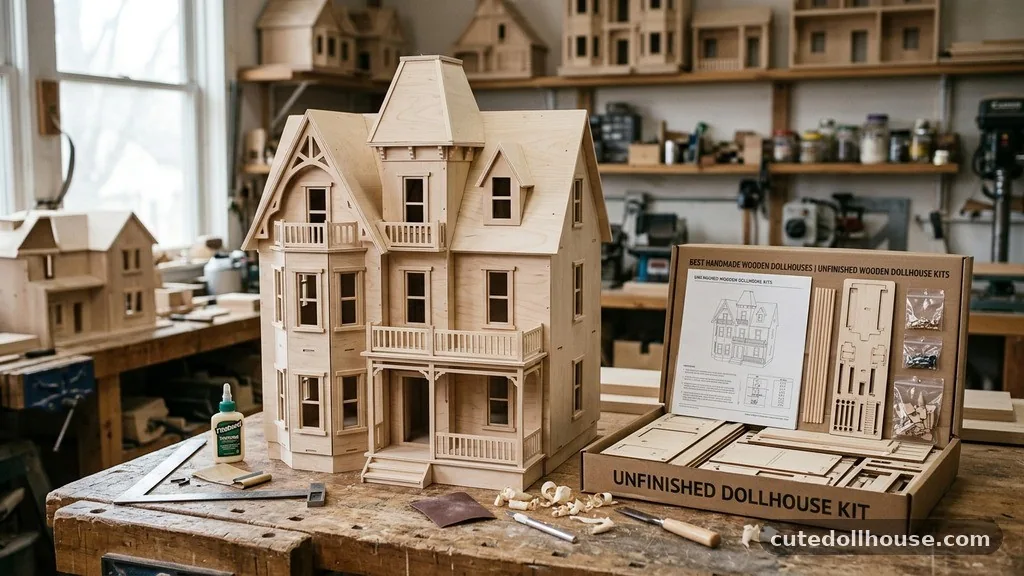
An unfinished kit is a blank canvas for painting, wallpapering, flooring, and custom furniture. It suits adults and older children with appropriate supervision who enjoy craft work. The finished result depends heavily on preparation, adhesive choice, sanding, and patience, so the kit should be viewed as a project rather than a quick toy.
Children’s Play Dollhouses
These typically prioritize accessibility and sturdiness over fine miniature detail. Larger rooms and open fronts make it easier for little hands to move furniture and toys. A child-focused model should be checked for smooth edges, secure components, stable construction, and suitable small-part guidance.
Adult Miniature and Collector Models
Adult-oriented dollhouses often emphasize architectural detail, realistic proportions, and compatibility with miniature furniture. They can be rewarding for collectors and hobbyists, but delicate trim and small accessories may not tolerate rough play. Verify the scale before buying additional items.
Practical Advantages and Limitations
What Buyers May Like
- Natural appearance: Wood can give a dollhouse a warmer, more substantial look than molded plastic.
- Creative flexibility: Many unfinished surfaces can be painted, papered, stained, or adapted.
- Long-term hobby value: A model can evolve as new rooms, furniture, and accessories are added.
- Decorative appeal: A thoughtfully finished house may work as both a toy and a room display.
- Distinctive character: Handmade construction can provide details and variations not found in identical factory-made sets.
What Could Be Better
- Inconsistent specifications: Measurements, materials, and included items aren’t standardized across makers.
- More preparation: Kits may need sanding, painting, gluing, and careful assembly.
- Higher total cost: Furniture, lighting, figures, and tools can add to the initial purchase.
- Potential fragility: Fine trim, balconies, and small accessories may be unsuitable for rough play.
- Variable support: Replacement parts and instructions depend on the individual seller or workshop.
Who Should Buy One?
Best for Beginners
Beginners should favor a preassembled or clearly documented model with simple rooms, standard dimensions, and a well-defined contents list. A small or medium-sized house may be easier to furnish and maintain than a grand multi-room design. If assembly is required, look for step-by-step instructions and an honest description of the tools needed.
Best for Experienced Hobbyists
Experienced makers may prefer an unfinished kit with enough room for customization. Features such as removable sections, accessible interiors, and compatible scale dimensions are more valuable than decorative details that cannot be altered. Check the construction diagrams before ordering.
Best for Children
For children, choose stability, smooth construction, reachable rooms, and age-appropriate accessories ahead of miniature realism. A model intended for adult collectors may be beautiful but too delicate for regular play. Supervision is sensible where small parts, tools, glue, or paint are involved.
Best for Appearance-Focused Buyers
Buyers who care most about appearance should inspect close-up images and ask whether the shown finish, furniture, and decorative elements are included. A finished house may be the better choice, but handmade surfaces can still show variation. Confirm the final dimensions and display requirements before purchasing.
Best for Value-Focused Buyers
Value isn’t simply the lowest price. Compare what arrives in the box, how much assembly is required, whether furniture is included, and whether the seller offers help with missing or damaged parts. A cheaper bare structure may become more expensive after buying paint, tools, furniture, and accessories.
Who May Prefer an Alternative?
A mass-produced plastic dollhouse may be more suitable when low maintenance, quick setup, and easy cleaning are priorities. These models can also be practical for younger children who may handle the house roughly or use it frequently.
A ready-built wooden dollhouse is another option for buyers who want the warmth of wood without a full construction project. For adult hobbyists who primarily enjoy building, a detailed dollhouse kit may offer more satisfaction than a finished handmade model. Those with limited space may prefer a compact design, foldaway structure, or smaller scale.
Questions to Ask Before Buying
- Is the model fully assembled, partly assembled, or supplied as a kit?
- What exact materials are used for the walls, floors, roof, and trim?
- What are the finished external dimensions?
- Is a scale stated, and will standard furniture fit?
- Are the furniture, dolls, lights, and accessories shown in the images included?
- What tools, glue, paint, or other supplies are required?
- Is the finish suitable for children, or is the model intended for display?
- What happens if the item arrives damaged or a part is missing?
Frequently Asked Questions
What is the best wood for a dollhouse?
There isn’t one universally best wood. The right material depends on whether the priority is weight, stability, surface quality, carving detail, or ease of painting. Ask the seller whether the model uses solid wood, plywood, fiberboard, or mixed materials.
Are wooden dollhouses suitable for children?
Some are, but not all. Check the stated age guidance, stability, finish, sharp edges, and size of accessories. Adult collector models and detailed kits may be better treated as display or supervised craft projects.
What does 1:12 scale mean?
A 1:12 scale model represents an object at one-twelfth of its approximate full size. It is a common miniature scale, but not every wooden dollhouse uses it. Confirm the scale before buying furniture or dolls.
Do handmade dollhouses include furniture?
Some do, while others include only the structure. Never assume that staged furniture, lighting, figures, or accessories are part of the purchase. Read the contents list and contact the seller if the listing is unclear.
Are dollhouse kits difficult to assemble?
Difficulty varies considerably. A simple slot-together kit may be manageable for a beginner, while a detailed model can involve sanding, gluing, painting, wallpapering, and precise alignment. The instructions and required tools are important indicators.
How should a wooden dollhouse be maintained?
Keep it dry, protect it from prolonged direct sunlight, and dust it gently. Avoid water on unfinished wood and follow any care guidance supplied by the maker. Check small components periodically if children play with the model.
Final Verdict
The best handmade wooden dollhouses are worth buying when you want natural materials, distinctive design, and the chance to create a more personal miniature space. They work especially well for adult hobbyists, careful older children, collectors, and buyers who value craftsmanship over instant setup. The strongest choice will have clear dimensions, a stated scale, honest assembly details, and a precise list of included items.
Don’t buy on appearance alone. Verify the material, finish, stability, accessories, and seller policies before committing.
If you need a low-maintenance toy with quick setup, another type of doll house may be more practical; if you enjoy building and customization, a handmade wooden model can provide years of creative use. Compare listings carefully, then choose the model that fits your space, skill level, and intended kind of play.