
Choosing among the best dollhouses for kids birthday gifts takes more thought than picking the prettiest design. A dollhouse needs to suit the child’s age, available play space, handling style, and interest in imaginative play, while also offering materials and features that can hold up over time. Some children want a large house they can furnish and rearrange; others need a compact, ready-to-play option with fewer loose pieces.
The right choice can become a lasting creative toy, but the wrong size or complexity may leave it unused. This guide explains the main dollhouse types, practical buying criteria, common drawbacks, and which options make sense for different children and gift-giving situations.
What Makes a Dollhouse a Good Birthday Gift?
A dollhouse is a miniature play setting designed for role-play. Children can arrange rooms, move figures, create stories, and imitate familiar routines such as cooking, sleeping, visiting, or caring for pets. Depending on the design, the house may arrive assembled, partly assembled, or as a flat-packed kit requiring adult construction.
The category is broad. A traditional wooden house may offer several levels and open access from the front or back.
A molded plastic model may be lighter, easier to wipe clean, and supplied with accessories. Foldable and compact designs are intended for homes where storage space is limited, while larger furnished houses aim to provide a more immersive play environment.
Before buying, check what is actually included. Some listings show furniture, dolls, pets, and accessories in photographs even though the box contains only the house. Dimensions also require care: the exterior size may look manageable, but the house still needs clearance for doors, rooms, children’s hands, and storage of loose pieces.
Are Dollhouses Worth Buying for Children?
For children who enjoy pretend play, a dollhouse can provide open-ended entertainment rather than a single activity with one correct outcome. It encourages storytelling, arranging, role-play, and sometimes cooperative play between siblings or friends. The appeal can also last longer than that of a novelty toy because rooms, furniture, and characters can be changed repeatedly.
That doesn’t make every dollhouse a good purchase. A large model can take up substantial floor or shelf space, and a wooden kit may require significant assembly. Small furniture and accessories can be easy to lose, while a detailed house may not suit a younger child who wants simple, hands-on play.
A dollhouse is usually worth considering when:
- The child already enjoys pretend play, figures, miniature furniture, or storytelling.
- There is a safe, practical place to set up and store the house.
- The intended age range matches the size of the parts and the design’s complexity.
- The buyer is comfortable checking assembly requirements and included accessories.
- The child is likely to revisit the toy rather than play with it only once.
Another type of toy may be more suitable if the child prefers construction, outdoor activity, electronic play, or large figures that cannot fit comfortably in miniature rooms. For a very young child, a simple pretend-play set with larger pieces may also be more appropriate than a detailed dollhouse containing small accessories.
Main Dollhouse Types to Consider
Traditional Wooden Dollhouses
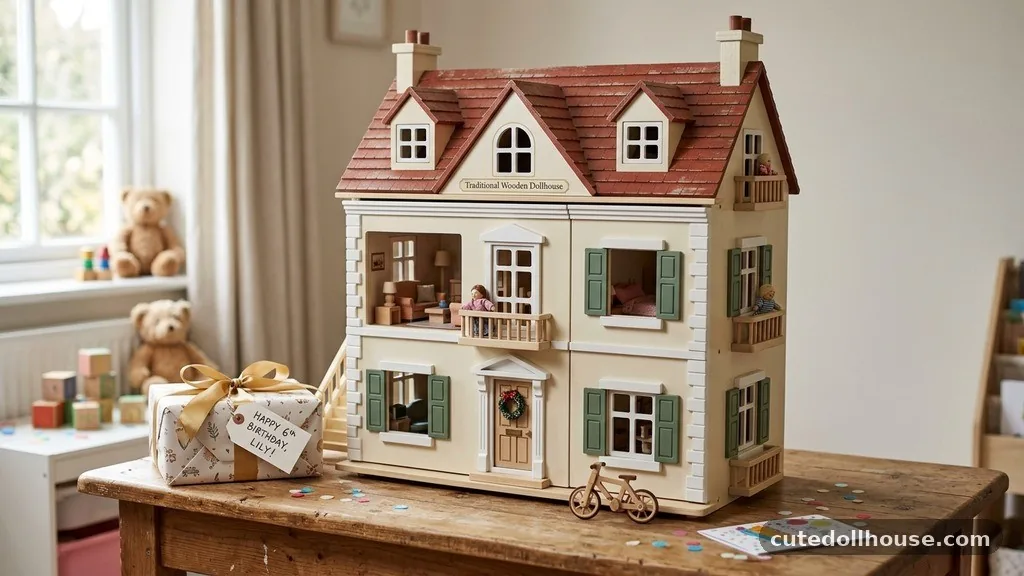
Wooden dollhouses are often chosen for their furniture-like appearance and sturdy visual presence. Many use painted, printed, or decorative room details, although construction quality varies by model. They can make attractive permanent play spaces, but buyers should expect more weight and potentially more assembly than with a lightweight plastic alternative.
Look closely at the material description rather than assuming that every wooden house is made entirely from thick solid wood. Some designs combine wood, engineered panels, plastic components, paper details, or fabric accessories. Those materials aren’t automatically a problem, but they affect durability, cleaning, and how carefully the house should be handled.
Plastic Dollhouses
Plastic models are often practical for everyday play because they tend to be lighter and easier to clean. They may also include molded features, bright colors, or larger accessories that are simpler for younger children to handle. On the other hand, thin plastic sections, hinges, tabs, or small connection points may be vulnerable to rough treatment depending on the design.
Plastic is not a guarantee of low quality. Check how the walls, doors, stairways, and furniture are constructed, and look for clear information about the recommended age and included pieces.
Foldable or Portable Dollhouses
Foldable dollhouses can be useful in bedrooms, shared living spaces, or homes where toys need to be packed away regularly. Their main advantage is convenience. The trade-off may be reduced room size, fewer levels, or a less substantial structure than a full-size display model.
A portable design makes sense when storage is a higher priority than having a large, highly detailed house. Confirm how the model closes, whether accessories have a storage location, and whether it can be carried safely once furnished.
Dollhouses With Furniture and Accessories
Some houses are sold as largely empty shells, while others include furniture, characters, pets, or room accessories. An included set can make a birthday gift feel ready to use, but the number of pieces is less important than whether they suit the child’s age and the house’s scale.
Accessory-heavy sets may create more play possibilities, yet they also create more pieces to sort and store. If the listing uses staged photographs, read the contents carefully instead of relying on the image.
Buying Criteria That Matter Most
Build and Material Quality
Inspect the stated materials, panel thickness where provided, finish, and construction method. For a wooden dollhouse, look for securely joined panels, stable floors, smooth edges, and painted or printed surfaces that appear designed for regular handling. For plastic, pay attention to wall rigidity, hinge quality, and whether furniture feels overly flimsy.
Safety details matter more than decorative styling. Avoid products with accessible sharp edges, loose fasteners, splintering surfaces, or poorly finished openings. If information about materials or finishes is vague, contact the seller or choose a listing with clearer specifications.
Design and Appearance
A dollhouse is often visible in a child’s room, so appearance can influence the purchase. Some children prefer realistic rooms and muted colors, while others respond to bright colors, themed designs, or imaginative shapes. The child’s interests should guide the decision more than adult assumptions about what looks best.
Consider access as well as decoration. An attractive house with narrow rooms or deep sections may be difficult to play with. Open-front designs can provide easier access, while rear-opening models may work better when the house is placed against a wall.
Size and Fit
Compare the full assembled dimensions with the available space, not just the package size. Measure the shelf, table, or floor area and allow room for children to sit, reach into rooms, and move accessories around.
Scale is equally important. Dolls and furniture need to fit the rooms comfortably. A house may technically include accessories but still feel awkward if figures are too large for the doors or furniture is too crowded to arrange.
Features and Functionality
Useful features can include opening doors, movable shutters, elevators, staircases, removable roofs, rotating sections, storage compartments, or lighting. Each feature adds interest, but it can also introduce hinges, batteries, assembly points, or parts that need extra care.
Prioritize features the child will actually use. A simple house with accessible rooms may support better play than a heavily decorated model with limited hand access.
Ease of Assembly
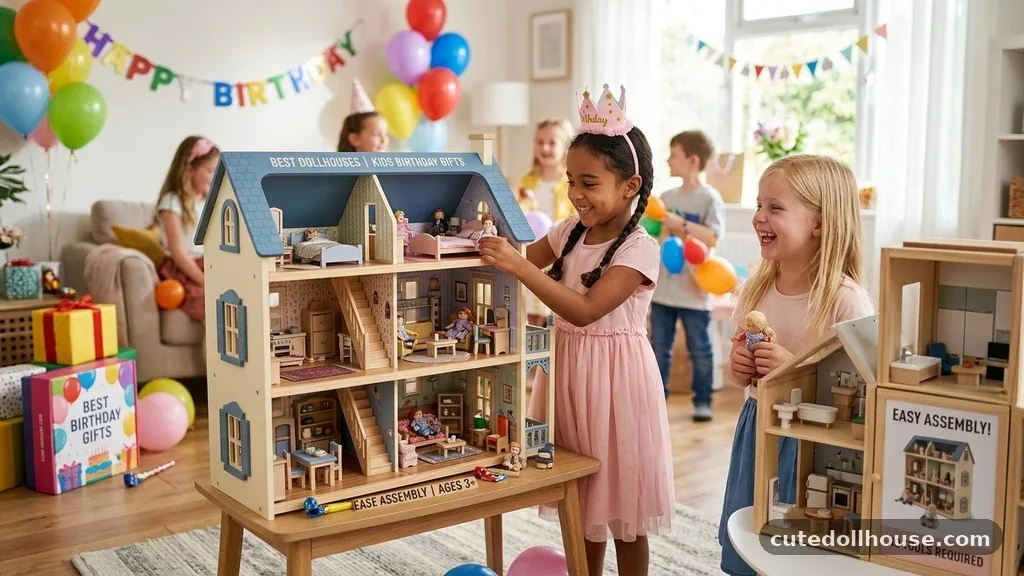
Assembly can range from minimal setup to a substantial adult project. Check whether tools are required, whether the instructions are clearly described, and whether the manufacturer gives an estimated assembly time. Those details may vary by model and seller, so they should be verified on the specific product page.
Assembly is not necessarily a disadvantage. Some adults enjoy building a dollhouse before gifting it, while others need a ready-to-play present. If the birthday is close, allow time for inspection and construction rather than assuming the house can be used immediately.
Durability and Maintenance
Durability depends on material, construction, handling, and how often the house is moved. A fixed wooden house may suit a dedicated playroom, whereas a lighter model may be better for frequent storage. Painted surfaces, paper wall details, fabric items, and small plastic accessories may need gentler cleaning.
Use the manufacturer’s care instructions where available. For general upkeep, remove dust with a soft dry or slightly damp cloth and avoid soaking materials that could swell, peel, or warp. Keep loose accessories in a labeled container.
Included Accessories
Read the contents list line by line. Important questions include:
- Does the package include dolls, figures, furniture, or only the house?
- Are all accessories shown in the product images included?
- Do the included pieces match the house’s scale?
- Are batteries, tools, or additional components required?
- Are replacement accessories available if pieces are lost?
If the product page does not answer these questions, treat the omission as a reason to verify before buying.
Customer Feedback and Common Complaints
Customer reviews can reveal practical issues that specifications overlook, such as unclear instructions, missing pieces, weak hinges, difficult access, or a larger-than-expected footprint. They should be read for repeated patterns rather than isolated praise or criticism.
Review information may vary by seller, production batch, packaging, or individual expectations. A complaint about assembly is more meaningful when several buyers report the same problem. Likewise, a comment about size should be compared with the listed measurements rather than treated as a universal flaw.
Dollhouse Comparison by Use Case
Because no specific product models were supplied for this article, the table below compares common dollhouse formats rather than ranking named products. Actual features, materials, dimensions, and accessories vary by manufacturer and model.
| Format | Best For | Typical Difficulty | Useful Strength | Potential Drawback | Overall Value Consideration |
|---|---|---|---|---|---|
| Traditional wooden house | Children wanting a permanent pretend-play setting | Often moderate assembly | Furniture-like appearance and room structure | Can be heavy, large, or time-consuming to assemble | Strong if the child will use it regularly and space is available |
| Plastic dollhouse | Everyday play and easier cleaning | Often low to moderate, depending on the model | Lightweight surfaces and practical maintenance | Some parts may feel less substantial | Good when convenience matters more than display quality |
| Foldable or portable house | Small rooms, shared spaces, and regular storage | Usually low to moderate | Space-saving storage | May offer less room for furniture and figures | Useful when footprint is the deciding factor |
| Accessory-rich set | Children who enjoy arranging scenes and role-play details | Varies by house and piece count | Ready-made play possibilities | More loose pieces to lose or organize | Worth considering if the included contents match the child’s interests |
| DIY or customizable house | Older children and adults who enjoy creative projects | Moderate to advanced | Personalization and longer project involvement | May not be ready for birthday-day play | Good for creative households prepared for extra work |
Age and Safety Considerations
There is no single ideal age for a dollhouse. The correct choice depends on the child’s ability to handle small pieces, follow basic safety rules, and engage with pretend play. A larger, simpler design may be more appropriate for a younger child, while older children may appreciate small furniture, detailed rooms, and customization.
Always check the manufacturer’s age recommendation and any choking-hazard warnings. Small accessories should be kept away from children who still put objects in their mouths. Adults should inspect the house after assembly and periodically check for loose parts, cracked components, sharp edges, or damaged finishes.
For a three-year-old, buyers may prefer fewer accessories and larger pieces. A six- or seven-year-old may be ready for more detailed room layouts, provided the specific product’s age guidance supports that choice. Age alone should not be used as a substitute for checking the actual parts and design.
Recommendations for Different Buyers
Best for Beginners
Choose a compact, ready-to-use house with straightforward access and a manageable number of accessories. Avoid making assembly complexity the centerpiece of the gift unless an adult has time and interest in building it.
Best for Children With Limited Space
A foldable or smaller-format design is usually easier to store. Measure first, and think about where the house will go when play ends. A model that fits on a shelf may be more useful than a larger one that must be dismantled or left in a walkway.
Best for Appearance-Focused Buyers
A traditional wooden design may appeal to adults who want a decorative piece that blends into a bedroom or playroom. Still, visual quality should not replace practical access. Check whether the child can comfortably reach each room.
Best for Accessory-Loving Children
Look for a set with clearly listed furniture and figures that match the house’s scale. More pieces do not automatically mean better play, so consider whether the child enjoys sorting and arranging small items.
Best for Creative Families
A customizable or DIY model can provide an extended craft project, especially for older children working with an adult. It may be less suitable as an instant birthday present unless the house arrives largely assembled.
Common Mistakes to Avoid
- Buying based on staged photographs without checking the included contents.
- Ignoring the assembled dimensions and storage requirements.
- Assuming all dollhouse figures and furniture use the same scale.
- Choosing a detailed model for a child who prefers simple, larger toys.
- Overlooking assembly time when the gift is needed for a specific date.
- Treating one customer review as proof of a universal product problem.
- Forgetting that loose accessories need a storage solution.
- Skipping the manufacturer’s age guidance and safety warnings.
Frequently Asked Questions
What are the best dollhouses for kids?
The best choice depends on the child’s age, available space, preferred play style, and tolerance for small pieces. A simple, accessible house may suit younger children, while older children may prefer a larger model with detailed rooms and accessories.
What is a good dollhouse for a five-year-old?
Look for a stable house with accessible rooms, age-appropriate accessories, and no unnecessary complexity. Confirm the manufacturer’s recommended age range and check whether the included pieces are large enough for the child to handle safely.
Is a dollhouse suitable for a three-year-old?
It can be, but the specific design matters. Choose a model with larger components and fewer small accessories, and follow all choking-hazard warnings. Close adult supervision may be appropriate depending on the child’s development and the product.
Should a dollhouse come with furniture?
Furniture is convenient because it allows play to begin immediately, but it is not essential. An empty or lightly furnished house can work well if the child already owns compatible figures and accessories or enjoys creating furniture through craft projects.
How much assembly does a dollhouse require?
Assembly varies widely. Some models need only minor setup, while wooden or customizable houses may require tools, multiple construction steps, and careful alignment. Read the instructions and product description before purchasing, especially if the gift is needed quickly.
What should I check before buying a dollhouse online?
Verify the assembled dimensions, materials, age recommendation, scale, included accessories, assembly requirements, care instructions, and seller-specific return policy. Product information can vary by listing, so compare the exact model rather than relying on a general product photograph.
Final Verdict
The best dollhouses for kids birthday gifts are not necessarily the largest or most decorated. A good choice has a suitable scale, safe and usable construction, enough room for hands and figures, and a setup that fits the family’s space and time. Buyers should confirm what is included, how much assembly is required, and whether the child’s age and play style match the design.
Dollhouses are worth buying for children who enjoy imaginative, repeatable play and have a practical place to use one. Choose a compact or simpler model for easier storage and younger users, or a larger wooden or customizable house for children ready for more detailed play. Check the exact listing carefully before ordering, and the gift is more likely to become a lasting part of playtime rather than an oversized decoration.