
Choosing among the best beginner dollhouses for kids is less about finding the biggest or most decorated model and more about matching the house to a child’s age, space, patience, and style of play. A suitable first dollhouse should be inviting without being frustrating, sturdy enough for regular handling, and simple enough that children can start playing soon after opening the box.
The right choice can still be difficult because dollhouses vary widely in scale, materials, assembly, accessories, and recommended ages. This guide explains the main types, practical safety considerations, useful features, likely drawbacks, and the questions to ask before buying.
What Is a Beginner Dollhouse?
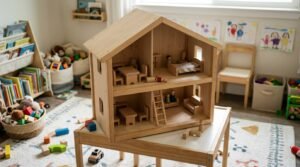
A beginner dollhouse is a child-friendly miniature house designed for early imaginative play. It may be a simple open-front structure, a plastic playset, a wooden house with several rooms, or a small-scale kit intended for an older child to assemble and decorate.
Unlike advanced hobby dollhouses, beginner models usually place greater emphasis on accessible play. Children should be able to reach the rooms, move furniture without excessive difficulty, and understand how the house works without needing specialist tools or delicate construction techniques.
Some dollhouses arrive ready to play with, while others need adult assembly. The product description should make this distinction clear, but listings can vary by seller. Buyers should check the current instructions, dimensions, included accessories, recommended age, and assembly requirements before ordering.
Why Families Choose a First Dollhouse
Dollhouses give children a setting for open-ended play. A child can arrange furniture, create family stories, act out everyday routines, and change the layout repeatedly. That flexibility is often more valuable than a long list of electronic features.
A well-designed model may also encourage several practical skills:
- Imaginative play: Children invent characters, situations, and dialogue.
- Fine-motor practice: Moving small furniture and accessories can involve careful hand movements.
- Language development: Storytelling and role-play create opportunities to describe actions and relationships.
- Early organisation: Arranging rooms and returning pieces to their places introduces sorting and tidy-up habits.
- Social play: Larger, accessible houses can support cooperative play between siblings or friends.
These benefits depend on the child and the design. A complicated, fragile, or poorly sized dollhouse may be ignored rather than enjoyed. For younger children, straightforward access and durable parts usually matter more than a highly detailed appearance.
Are Beginner Dollhouses for Kids Worth Buying?
For many families, yes. A good first dollhouse can remain interesting beyond the initial excitement because the play changes as the child creates new stories. It can also work with existing dolls, figures, toy animals, vehicles, and household accessories, although compatibility depends on scale.
The purchase is most likely to make sense when the child already enjoys pretend play, arranging toys, or acting out familiar routines. It may be a less suitable choice for a child who prefers construction toys, outdoor play, puzzles, or fast-moving interactive toys.
Space is another deciding factor. A large dollhouse may offer more rooms but can dominate a bedroom or playroom. A compact model might be easier to store and carry, though it can feel cramped if the child wants to play with several figures at once. Alternatives may suit some families better. A portable dollhouse, foldable playset, dollhouse bookcase, or simple room box can provide pretend-play value without committing to a large permanent structure. For very young children, a larger-scale play home with oversized accessories may be safer and easier to handle than a traditional miniature house.
Types of Beginner Dollhouses
Ready-to-Play Plastic Dollhouses
Plastic models are often chosen for younger children because they tend to be easier to wipe clean and less vulnerable to minor knocks than delicate wooden kits. Their molded parts may include built-in rooms, stairs, windows, or furniture.
The trade-off is that plastic construction can vary considerably in thickness and finish. Some models are lightweight and portable; others have bulky sections that need a dedicated play area. Buyers should inspect the stated dimensions rather than relying on product photographs, which can make a house appear larger than it is.
Wooden Dollhouses
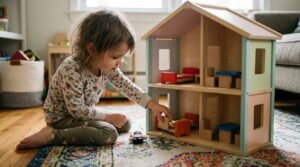
Wooden dollhouses can have a more furniture-like appearance and may blend into a playroom or bedroom. They often provide a clear room layout and a stable structure, though the actual quality depends on the wood, joins, paint or finish, and assembly design.
Wooden models usually require more assembly than simple plastic playsets. An adult may need to align panels, tighten fasteners, and confirm that the structure is stable before a child uses it. Some are designed for younger children, while others are closer to miniature hobby pieces, so the age guidance matters.
Portable or Foldable Dollhouses
Portable designs are useful when toys need to be stored after play or moved between rooms. They can be a practical choice for apartments, shared bedrooms, grandparents’ homes, or families who do not want a permanent display.
Portability can reduce interior space. A foldable house may also rely on hinges, clips, or lightweight panels, so check whether the product is designed for frequent opening and closing. A compact footprint is helpful, but it should not make the rooms too difficult for small hands to reach.
Dollhouse Kits for Older Beginners
Some beginner dollhouses are beginner-friendly only within the hobby category. These kits may involve cutting, gluing, painting, wallpapering, and installing miniature components. They can be rewarding for older children working with an adult, but they are not usually appropriate as independent playthings for toddlers.
Before buying a kit, confirm whether the stated age refers to assembly, play, or both. Also check what tools, paint, adhesive, furniture, and figures are included. “Kit” does not always mean fully furnished.
Important Buying Criteria
Build and Material Quality
Look for a structure that remains stable when a child moves figures in and out. Panels should fit together cleanly, edges should be appropriately finished, and doors or windows should not feel unnecessarily flimsy. For wooden products, the quality of joins and the finish can matter as much as the material itself.
For plastic houses, inspect the way larger parts connect and whether furniture is thick enough for regular handling. Very lightweight pieces may be easy to carry but can shift during play. Product photographs cannot always show this clearly, so current customer feedback and seller specifications are useful supporting evidence.
Design and Appearance
Children often choose a dollhouse because of its visual appeal. Bright colours, open rooms, balconies, roof details, and themed spaces can encourage immediate interest. Adults may prefer a neutral wooden finish or a design that fits existing furniture.
Appearance should not overshadow playability. A house with attractive details but narrow rooms may be frustrating, particularly if the child wants to place furniture or play with more than one figure. Open-front designs generally make supervision and access easier.
Size, Scale, and Fit
Size has two meanings: the outside dimensions of the house and the scale of the figures and furniture it accepts. A house can be physically large while still having small interiors, or compact while offering usable open space.
Measure the intended play area before ordering. Leave enough room for a child to stand or sit comfortably in front of the house. If the child already owns dolls, check whether their height and accessories are compatible with the model.
Scale confusion is one of the most common causes of disappointment. A product may include miniature furniture, but that does not guarantee that a child’s existing figures will fit naturally in the rooms.
Features and Functionality
Useful features depend on the child’s age and play habits. Multiple rooms, movable furniture, opening doors, a carry handle, and accessible floors can all add play value. Some features are mostly decorative; others change how easily the child can interact with the house.
Consider whether the house has:
- Open sides or a wide front opening for easy access.
- Room heights that accommodate the intended figures.
- Furniture that can be moved rather than permanently fixed.
- Rounded or finished edges in child-accessible areas.
- A stable base that does not tip easily during ordinary play.
- Storage space or a compact folding design, if organisation matters.
- Accessories that are useful rather than numerous but too small to handle.
Age Suitability and Safety
Age guidance should be treated as an important starting point, not a substitute for supervision. Small furniture, miniature food, tiny animals, and other accessories can present a choking risk for young children. The appropriate age depends on the complete set, not just the main house.
For toddlers, look for larger accessories, fewer detachable small parts, sturdy construction, and easy-to-clean surfaces. A traditional miniature dollhouse may be better suited to an older preschool child or school-age child, particularly if the set contains many small pieces.
Always read the current warning label and instructions. Safety information can vary between versions of a product, regions, and production batches.
Ease of Assembly
Assembly ranges from attaching a few large components to building an entire miniature structure. A beginner-friendly playhouse should have clear instructions, labelled parts where necessary, and fasteners that can be installed without specialised equipment.
Adult assembly is not automatically a problem. It becomes a concern when the listing understates the time, tools, or precision required. Before buying, look for information about:
- Whether tools are included.
- Whether furniture and decorative pieces arrive assembled.
- How many panels or sections need to be joined.
- Whether glue, paint, or batteries are required.
- Whether the completed house can be moved safely.
If a child is eager to play immediately, a ready-to-use model may be a better fit than a project kit.
Durability and Maintenance
Dollhouses are handled from many angles. Children may reposition them, lean on the front, move furniture between rooms, or carry smaller models from place to place. A product intended for active play should be judged by its construction and repairability, not just its appearance when new.
Removable accessories are easy to lose, so storage matters. A small container or labelled drawer can keep furniture together, while a quick clean-up routine helps prevent missing pieces. Follow the manufacturer’s cleaning instructions, especially for painted wood, decals, fabric items, and electronic components.
Included Accessories
Accessories can make a house feel ready for play, but the number of pieces is not the only consideration. A smaller set with sturdy, usable furniture may be more practical than a larger set filled with tiny decorative objects.
Check exactly what is included. Some product images show dolls, pets, vehicles, or room decorations that may be sold separately or used only for illustration. The listing should distinguish between included contents and optional extras; if it does not, confirm with the seller before purchase.
Customer Feedback and Common Complaints
Customer reviews can reveal recurring issues that specifications miss, such as difficult instructions, missing hardware, weak connectors, or a smaller-than-expected interior. One isolated complaint does not establish a general problem, but repeated comments about the same part deserve attention.
Feedback can also be affected by expectations. A buyer expecting a fully assembled toy may be unhappy with a kit, while another buyer may appreciate the building activity. Read reviews in relation to the intended use, age group, and stated product description.
Quick Comparison of Beginner Dollhouse Types
| Type | Best For | Typical Difficulty | Key Strength | Main Drawback | Overall Value Consideration |
|---|---|---|---|---|---|
| Ready-to-play plastic house | Younger children and quick-start play | Low | Usually simple to clean and use | Quality, stability, and interior size vary | Good when durability and convenience matter most |
| Wooden play dollhouse | Families wanting a more substantial display piece | Low to moderate | Often offers a defined room layout and furniture-like appearance | May require adult assembly and more careful handling | Worth considering when the house will stay in one play area |
| Portable or foldable house | Small spaces and flexible storage | Low to moderate | Easy to move or put away | Interior space may be limited | Useful when storage is a higher priority than scale |
| Miniature hobby kit | Older children and supervised creative projects | Moderate to high | Offers customisation and hands-on building | May need tools, adhesives, paint, and extra materials | Best judged as a project as well as a toy |
How to Choose by Age and Play Style
For Toddlers
Prioritise large, easy-to-grip accessories, stable construction, and a simple layout. Avoid assuming that a product is suitable because it is colourful or marketed as a children’s toy. Small removable pieces can make a traditional miniature house unsuitable for a toddler.
A larger-scale play home or a simple room-based set may be safer and easier to supervise. The house should be placed where an adult can see how it is being used.
For Preschool Children
Preschoolers may enjoy a house with several rooms, movable furniture, and familiar domestic details. Open access matters because children often want to use both hands inside the rooms.
At this stage, a small number of durable accessories can be more useful than an elaborate collection. Check the recommended age and inspect the smallest included items before handing over the complete set.
For Children Around School Age
Older children may appreciate more detailed rooms, customisation, and compatibility with existing dolls. A wooden house or beginner assembly kit can become a longer project if the child enjoys decorating and organising.
Ask whether the child wants a toy for immediate role-play or an activity that includes building. Those are different buying decisions, even when the finished product looks similar.
For Children Who Share Play Space
Choose a model with broad access and enough room for two children to reach the interior. A house with a narrow front opening can lead to arguments when both children try to use it at once.
For shared spaces, portability and storage are useful, but frequent moving can put stress on joints and accessories. A stable model with a designated storage location may be a better long-term solution than the lightest option available.
Common Mistakes to Avoid
- Buying by photograph alone: Product images can disguise the actual scale and footprint.
- Ignoring the smallest accessories: The house may be suitable while its included pieces are not.
- Assuming all dolls will fit: Figure compatibility depends on scale and room height.
- Underestimating assembly: A kit can require tools, glue, paint, or significant adult time.
- Choosing detail over access: Attractive features are less useful if children cannot reach the rooms.
- Forgetting storage: Furniture and tiny accessories need a practical home between play sessions.
- Overlooking the floor surface: A house that sits on an uneven or crowded area may be more likely to shift.
Which Beginner Dollhouse Type Suits Different Buyers?
Best for a First-Time Buyer
A ready-to-play house with clear age guidance and a manageable number of accessories is usually the least complicated starting point. Focus on safe access, stable construction, and the child’s existing toys rather than buying the most elaborate design.
Best for Small Homes
A portable or foldable design may be the most practical choice, provided the interior remains usable. Measure the storage area as well as the play area. A house that fits on a shelf but cannot be opened comfortably may not solve the space problem.
Best for Appearance-Focused Buyers
A wooden model may appeal to adults who want a more permanent-looking piece for a bedroom or playroom. Verify the finish, assembly requirements, and maintenance instructions before treating it as furniture.
Best for Creative Older Children
A beginner hobby kit can be a good option for a child who likes crafts, painting, and construction. Adult supervision may be needed, especially when the kit uses adhesives, sharp tools, or very small parts.
Best for Value-Conscious Buyers
Value is not simply the lowest purchase price. Consider whether the house includes useful furniture, works with toys the child already owns, and can tolerate regular play. A cheaper model that needs immediate replacement parts may offer less practical value than a simpler, sturdier alternative.
What to Check Before Ordering
Product listings can change, especially across different sellers and regions. Before purchasing, confirm the current details rather than relying on an old image or a copied description.
- Read the recommended age and all safety warnings.
- Measure the assembled dimensions and compare them with the available space.
- Check the scale against the child’s existing dolls and furniture.
- Confirm whether assembly is required and which tools or materials are needed.
- Review the complete included-items list.
- Look for recurring feedback about stability, missing parts, fit, or instructions.
- Check the seller’s current return, replacement, and support policies.
- Decide where accessories will be stored between play sessions.
FAQ About the Best Beginner Dollhouses for Kids
What is the best dollhouse for kids?
There is no single best choice for every child. The most suitable model is one that matches the child’s age, the size of their existing figures, the available space, and their preferred style of play. For younger children, accessibility and larger pieces are usually more important than fine detail.
What age is appropriate for a dollhouse?
It depends on the design and its smallest parts. Some larger-scale playhouses are intended for younger children, while traditional miniature houses and hobby kits may suit older preschoolers or school-age children. Always follow the current manufacturer’s age guidance and warnings.
Are dollhouses safe for toddlers?
Some may be, but not every dollhouse is appropriate for toddlers. Small furniture, dolls, food, and decorative pieces can create choking hazards. Look for a product specifically intended for the child’s age, and supervise play when small accessories are present.
What should I look for in a dollhouse for a five-year-old?
Consider accessible rooms, stable construction, furniture that is easy to move, and accessories large enough for the child to handle safely. A model with moderate detail may offer a good balance between independent play and manageable clean-up.
Do dollhouses come assembled?
Some do, while others require partial or complete assembly. The amount of work varies by model and seller. Check the current listing and instructions for tool, glue, paint, and battery requirements before ordering.
Will any doll fit in a dollhouse?
No. Dollhouses use different scales, and room heights can vary significantly.
Measure the child’s figures and compare them with the stated dimensions or scale of the house. If the listing does not provide enough information, ask the seller before buying.
Final Verdict
The best beginner dollhouses for kids are not necessarily the largest or most detailed. They are the ones that a child can reach, understand, and enjoy without constant frustration, while still offering enough flexibility for stories and repeat play. Choose based on age safety, scale, construction, access, storage, and the difference between a ready-to-play toy and an assembly project.
A simple plastic or wooden playhouse may be the sensible starting point for a young child, while a portable model suits limited space and a hobby kit may work better for an older, craft-focused child. Before buying, verify the current dimensions, included pieces, warnings, and assembly instructions. That practical check is the best way to decide whether a particular dollhouse is worth the investment for your family.