Dollhouse furniture turns an empty miniature home into a setting for imaginative play, but the best Dollhouse Furniture Sets for Kids need to fit more than a charming room layout. Size, material, small parts, assembly, and the child’s age all affect whether a set feels enjoyable or frustrating. Some kits focus on simple wooden pieces, while others add fabric, tiny accessories, or realistic room details that suit older children.
The right choice depends on the dollhouse scale, the type of play expected, and how much adult help is practical. This guide explains what to check before buying, where these sets offer real value, and when a simpler or more durable alternative may make more sense.
What Dollhouse Furniture Sets Are Designed to Do
A dollhouse furniture set is a collection of miniature items made to furnish one or more rooms in a dollhouse. Depending on the set, it may include beds, tables, chairs, sofas, kitchen pieces, bathroom fixtures, lamps, storage units, or small decorative accessories.
The basic purpose is straightforward: furniture gives children objects to arrange, move, and use in pretend scenarios. A bedroom becomes a place for a doll to sleep, a kitchen becomes part of a family routine, and a living room can become the setting for stories that change every time the child plays.
Most sets are designed around a particular scale, although scale descriptions aren’t always presented consistently across sellers. A piece that looks suitable in a product photo may be too large or too small for a specific dollhouse. Buyers should compare the listed dimensions of the furniture with the interior dimensions of the house rather than relying only on photographs.
It also helps to separate decorative furniture from play furniture. Decorative pieces may be delicate and highly detailed, while play-oriented pieces are generally easier to handle.
Neither is automatically better. The right type depends on the child’s age, the amount of unsupervised play, and whether appearance or resilience matters most.
Are Dollhouse Furniture Sets Worth Buying?
For many children, yes. A well-matched set can add variety to an existing dollhouse without requiring the purchase of a new structure. It also gives children control over layout and storytelling, which can make a familiar dollhouse feel new again.
The value is strongest when the set fits the house properly and includes pieces the child will actually use. A large assortment isn’t necessarily a better purchase if half the items are too fragile, too small, or unrelated to the child’s preferred play themes.
When a Set Is a Good Choice
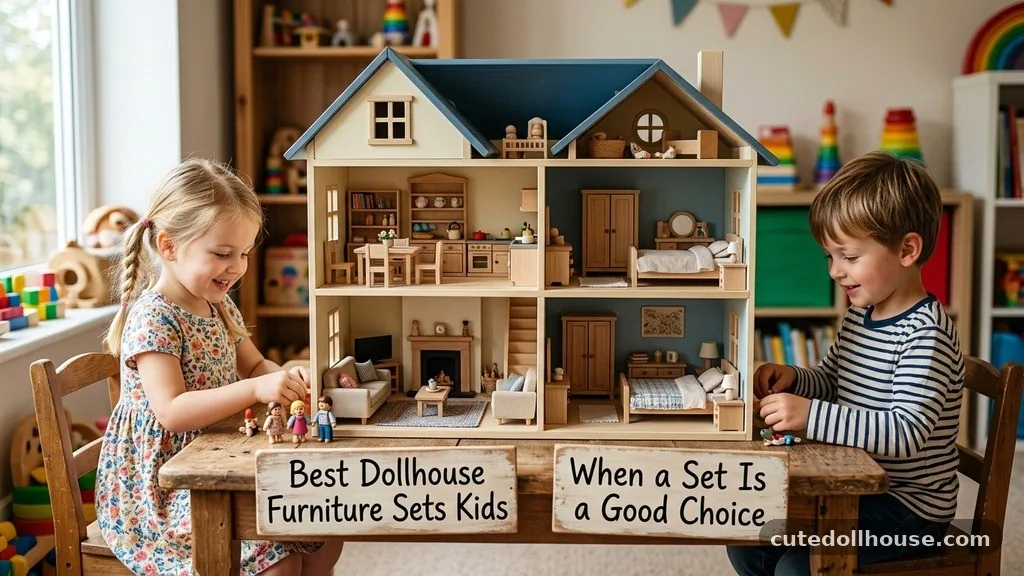
- The child already has a dollhouse with empty or under-furnished rooms.
- The furniture dimensions match the house and the dolls used with it.
- The child enjoys arranging spaces and creating pretend household routines.
- The set includes durable pieces appropriate for the intended age range.
- Parents want to expand play gradually rather than replace the entire dollhouse.
When Another Option May Be Better
- A child is likely to chew, throw, or frequently squeeze small pieces.
- The dollhouse has unusual dimensions and compatible furniture is difficult to find.
- The set relies on complex assembly that doesn’t suit the child’s patience or age.
- The buyer wants a complete dollhouse rather than accessories for an existing one.
- Open-ended household items or larger pretend-play toys would be safer and more engaging.
Parents should also consider whether the set will be used independently or with supervision. Small furniture can be easy to misplace and may present a risk for younger children.
For general toy-safety information, the U.S. Consumer Product Safety Commission’s toy safety guidance is a useful reference, particularly when a set contains small detachable parts.
Types of Dollhouse Furniture Sets to Consider
There isn’t one universally best furniture set. Different formats suit different play styles and levels of care.
Room-Specific Sets
Room-specific kits concentrate on one area, such as a bedroom, kitchen, bathroom, or living room. They can be a practical choice when one part of a dollhouse is unfinished or when a child has a strong interest in a particular type of pretend play.
These sets often make it easier to maintain a consistent style. The trade-off is that buying several individual room kits can cost more than choosing a mixed set, depending on the seller and included quantity.
Whole-Home Furniture Sets
Whole-home sets provide furniture for several rooms. They’re useful for a new or sparsely furnished dollhouse and may offer a broader play setup in one purchase.
Check the balance of the contents carefully. Some sets contain many small accessories but only a few substantial furniture pieces. A set with fewer, sturdier items may be more useful than one that looks larger on a contents list.
Wooden Furniture Sets
Wooden dollhouse furniture is often chosen for its solid feel and traditional appearance. Painted or finished wood can give a room a warm, simple look, and larger pieces may be easier for children to grasp than tiny plastic accessories.
Wood does not automatically mean indestructible. Look for smooth edges, secure joins, stable bases, and a finish that doesn’t appear likely to flake. Product construction can differ considerably between manufacturers and production batches.
Plastic Furniture Sets
Plastic pieces can offer bright colours, molded detail, and easy cleaning. They’re often practical for active play, but the quality range is wide. Thin plastic, poorly finished edges, or loose detachable parts can reduce confidence in a set.
Plastic is usually easier to wipe clean than fabric-covered furniture. That matters if the set will be used around snacks, craft materials, or younger children.
Fabric and Detailed Miniature Sets
Some sets include upholstered-looking chairs, bedding, curtains, cushions, or other soft details. These pieces can make a dollhouse feel more realistic, especially for older children who enjoy decorating rather than simply moving furniture around.
The extra detail may bring extra maintenance. Fabric can collect dust, and tiny decorative elements may not tolerate rough handling. Consider whether the visual appeal justifies the additional care.
Buying Criteria That Matter Most
Build and Material Quality
Inspect the materials listed by the manufacturer, but don’t treat a material label as a complete quality assessment. A wooden piece can still have weak joints, and a plastic piece can be sturdy if it is well molded.
Useful signs include:
- Smooth, rounded, or well-finished edges.
- Furniture that sits flat rather than rocking.
- Joints that appear secure and don’t separate easily.
- Paint or printed details that look evenly applied.
- No obvious loose pieces, sharp points, or rough surfaces.
Online photographs can hide finish problems, so customer images and recent reviews may provide useful context. Feedback can vary by seller, model version, and manufacturing batch, so it should be treated as supporting evidence rather than a guarantee.
Design and Appearance
Appearance is important because dollhouse furniture is part of the play environment. Some children prefer colourful, modern-looking pieces; others respond better to simple wooden furniture or realistic miniature designs.
Think about whether the set works with the existing house. A brightly coloured set may look out of place in a traditional wooden dollhouse, while highly realistic furniture may not appeal to a child who prefers simple, imaginative play.
Size and Scale
Scale is one of the most common sources of disappointment. Sellers may describe furniture as dollhouse-sized without making the intended scale clear, or they may list dimensions for only a few items.
Before buying, measure:
- The width, depth, and height of the room.
- Doorways, stair openings, and other access points.
- The height of the dolls or figures used in the house.
- The available floor space after existing furniture is placed.
- The height of beds, counters, chairs, and tables relative to the figures.
Don’t assume every item in a mixed set is proportioned equally. A decorative accessory may be intentionally oversized or undersized, and listings can use broad descriptions that aren’t precise enough for close scale matching.
Features and Functionality
Some furniture is purely static. Other pieces may have movable doors, drawers, folding parts, removable bedding, or repositionable components. Moving features can add play value, but they also create more points that may break or detach.
For younger children, simple pieces are often easier to manipulate. Older children may appreciate functional details, especially if they enjoy arranging scenes or recreating everyday activities.
Included Accessories
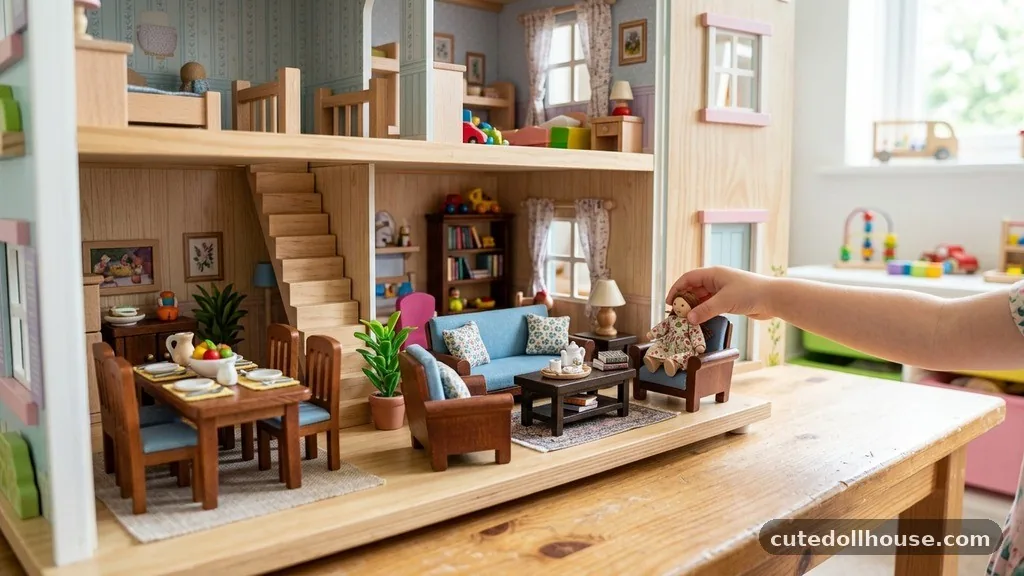
Accessories can make a set feel generous, but quantity shouldn’t be the only consideration. A small number of useful, recognizable pieces may support more play than a large collection of tiny objects that are quickly lost.
Check whether the listing clearly states what is included. Product photography sometimes shows dolls, houses, or extra props that aren’t part of the package. If the contents list is vague, contact the seller before ordering or choose a listing with a detailed inventory.
Ease of Use and Assembly
Some furniture arrives ready to play with, while other sets require assembly. Assembly may involve attaching legs, fitting small parts, applying stickers, or building several pieces from components.
Review the instructions and tools required if that information is available. A set that needs adult assembly isn’t necessarily a poor choice, but buyers should factor in setup time and the possibility that some pieces will need occasional tightening or repair.
Durability and Maintenance
Dollhouse furniture tends to last longer when it is stored in a container or dedicated play area rather than left underfoot. A simple storage solution can prevent missing pieces and reduce damage to delicate details.
Maintenance needs depend on the materials. Plastic and sealed wood are generally easier to wipe, while fabric and unfinished surfaces may need more careful cleaning. Avoid assuming that every set is water-resistant or suitable for soaking; verify the manufacturer’s care instructions.
Safety and Age Suitability
Age guidance deserves more attention than many buyers give it. A set may be intended for an older child because of small parts, delicate construction, or assembly requirements, even if the furniture looks simple.
Use the manufacturer’s age recommendation as a starting point, then consider the individual child. A child who handles miniature objects carefully may be ready for more detail, while another may be better served by larger, simpler pieces.
Comparison of Common Furniture Set Types
| Set Type | Best For | Typical Difficulty | Key Advantage | Main Drawback | Overall Value Consideration |
|---|---|---|---|---|---|
| Room-specific set | Filling one unfinished room | Usually low to moderate | Focused contents and easier style matching | May not furnish the whole house | Strong when only one room needs attention |
| Whole-home set | New or mostly empty dollhouses | Varies by included pieces | Broad play setup in one purchase | Some items may be less useful or very small | Depends on the balance of core furniture and accessories |
| Wooden set | Traditional appearance and repeated handling | Usually low, unless assembly is required | Solid feel and classic styling | May be heavier, less flexible, or more difficult to clean | Worth considering when construction matters more than quantity |
| Plastic set | Colourful, easy-clean everyday play | Often low | Lightweight and commonly easy to wipe | Quality varies, and thin pieces may break | Best judged by construction rather than piece count |
| Fabric or detailed miniature set | Older children focused on decorating and realism | Low to moderate | More visual detail and atmosphere | More difficult to clean and potentially more fragile | Good when appearance and careful play are priorities |
Common Advantages and Drawbacks
Potential Benefits
- Expands an existing toy: New furniture can refresh a dollhouse without replacing it.
- Encourages pretend play: Different rooms and objects create prompts for storytelling.
- Supports creative control: Children can arrange furniture and change layouts themselves.
- Offers gradual purchasing: Families can add rooms or accessories over time.
- Provides variety: Furniture sets can complement dolls, figures, and other miniature play items.
Potential Drawbacks
- Scale mismatch: Furniture may not fit the house or figures as expected.
- Small parts: Tiny accessories can be unsuitable for young children and easy to lose.
- Uneven quality: Sets from different sellers can vary in finish and construction.
- Unclear contents: Photos may show items that aren’t included in the package.
- Limited practical value: A large number of decorative pieces may not replace essential furniture.
- Storage demands: Small collections need an organised place to prevent missing parts.
How to Read Customer Feedback Carefully
Reviews are most useful when they contain specific observations. Comments about dimensions, broken joints, paint quality, assembly, or missing pieces are more informative than general statements that a set is “cute” or “good.”
Look for repeated patterns across multiple reviews rather than relying on one unusually positive or negative experience. A complaint about a damaged parcel may reflect shipping, while repeated comments about the same loose part could point to a design or manufacturing issue.
Also check the date of the review and the exact product variation. Sellers sometimes use one listing for multiple colours, sizes, or versions, and customer feedback may not apply equally to all of them.
Recommendations by Buyer Type
For First-Time Dollhouse Buyers
Start with a clearly described whole-home set or a simple room-specific set that lists dimensions and contents. Avoid buying solely from a styled photograph. The house’s measurements should come first.
For Children Who Play Actively
Prioritise sturdy, easy-to-grip furniture with limited fragile decoration. Plastic or solid wooden pieces may be more practical than fabric-heavy or highly intricate designs, although construction quality still needs checking.
For Appearance-Focused Buyers
Detailed miniature furniture or fabric-accented pieces may create the desired look. Confirm that the set matches the existing dollhouse’s scale and style, and expect to provide more careful storage and cleaning.
For Value-Focused Buyers
Compare the number of useful core pieces rather than the total item count. A room-specific purchase can be better value than a large mixed set if it solves a particular furnishing gap without adding unwanted accessories.
For Gift Buyers
Ask about the recipient’s dollhouse dimensions, preferred colours, age, and existing furniture before choosing. If those details aren’t available, a flexible set with clearly stated measurements is safer than a highly specialised miniature collection.
What to Check Before Ordering
- Measure the dollhouse rooms, doors, stairs, and available floor space.
- Compare those measurements with the listed dimensions of the furniture.
- Read the complete contents list and check whether pictured props are included.
- Confirm the recommended age and identify any small or detachable parts.
- Look for assembly instructions, tool requirements, and care guidance.
- Review recent customer comments for repeated quality or scale concerns.
- Check the seller’s return policy in case the size or finish doesn’t match the listing.
Final Verdict: Are the Best Dollhouse Furniture Sets for Kids Worth It?
The best Dollhouse Furniture Sets for Kids are worth buying when they fit the house, suit the child’s age, and contain durable pieces that support the way the child actually plays. Room-specific sets make sense for targeted upgrades, while whole-home collections can furnish an empty house more efficiently. Wooden, plastic, and detailed fabric options each have a place, but none should be chosen on appearance or item count alone.
Before purchasing, verify scale, materials, included accessories, assembly requirements, and safety guidance. A thoughtfully matched set can add lasting value to a dollhouse; a poorly sized or overly delicate one may become clutter. Take measurements first, then choose the simplest option that meets the child’s interests and handling ability.
Frequently Asked Questions
What should I look for in dollhouse furniture for children?
Focus on accurate dimensions, smooth and secure construction, age suitability, useful included pieces, and a style that fits the existing dollhouse. Durability is usually more important than having the largest possible accessory count.
How do I know whether furniture will fit a dollhouse?
Measure the room, doorways, and available floor space, then compare those figures with the product dimensions. Also consider the size of the dolls or figures, since furniture can fit physically but still look out of proportion.
Is wooden dollhouse furniture better than plastic?
Not in every situation. Wooden pieces may offer a solid feel and classic appearance, while plastic can be lighter and easier to clean. The quality of the individual set, the child’s play style, and the required maintenance matter more than the material alone.
Are dollhouse furniture sets suitable for a five-year-old?
Some are, but suitability depends on the manufacturer’s age guidance, the size of the parts, and the child’s ability to handle miniature objects safely. Sets with many tiny accessories may require closer supervision than larger, simpler furniture.
Do dollhouse furniture sets usually include dolls or the dollhouse?
Not necessarily. Many sets contain furniture and accessories only, while product photographs may show a house or figures for display. Read the contents list carefully and ask the seller if anything is unclear.
What is the best way to store miniature furniture?
Use a lidded container with separate compartments for very small accessories, and keep the collection away from areas where pieces can be stepped on or lost. Fabric pieces should be stored dry and clean, while care for painted or finished items should follow the seller’s instructions.