
Advanced DIY dollhouse kits appeal to builders who want more than a quick craft project. They combine miniature architecture, furniture-making, decorating, lighting, and patient handwork in one long-form hobby. Finding the best advanced DIY dollhouse kits can be difficult because product listings often use terms such as “deluxe,” “large,” or “expert” without clearly explaining the real skill level, materials, scale, or amount of finishing required.
The right choice depends on your experience, available workspace, tolerance for tiny parts, and preferred style. This guide explains how advanced kits are designed, which features matter, where common frustrations arise, and what to verify before ordering.
What Are Advanced DIY Dollhouse Kits?
Advanced DIY dollhouse kits are miniature building projects that require the buyer to assemble, decorate, and often furnish a small-scale house or room scene. Unlike ready-made dollhouses, they may arrive as unpainted panels, wooden components, fabric pieces, miniature accessories, wiring parts, and instructions that need to be interpreted and followed carefully.
The word “advanced” usually refers to the complexity of the build rather than a single industry standard. One kit may be difficult because it includes intricate woodwork, while another may be challenging because it has extensive wallpapering, miniature sewing, lighting, or furniture assembly. Buyers should read the full product description instead of relying only on the label.
These kits are generally intended for adult hobbyists, experienced crafters, model makers, and patient beginners who are comfortable learning as they work. They can be displayed as decorative miniatures, used as long-term creative projects, or given as gifts to people who enjoy detailed handcrafts.
Why People Choose Advanced Miniature House Kits
A complex dollhouse kit offers a different experience from a toy or a pre-built display model. The appeal is often in the process: measuring, cutting, painting, arranging, and gradually turning loose parts into a finished scene.
- Creative control: Builders can often select colors, finishes, furnishings, and room layouts.
- A longer hobby project: An advanced kit may provide weeks or months of creative work rather than a single afternoon of activity.
- Decorative value: A finished miniature house can become a display piece for a shelf, cabinet, or dedicated hobby area.
- Skill development: These projects can improve patience, precision, painting technique, scale awareness, and craft confidence.
- Personalization: Builders may modify rooms, add handmade details, or replace supplied accessories with custom pieces.
The experience isn’t effortless. Tiny components can be easy to lose, some instructions may rely heavily on diagrams, and finishing work often takes longer than the initial assembly. That demanding pace is part of the appeal for some buyers and a reason for others to choose a simpler model.
Are Advanced DIY Dollhouse Kits Worth Buying?
They can be worth buying if you want a hands-on miniature-building project and have the time, workspace, and tools to complete it. The strongest candidates are usually people who enjoy detail-oriented crafts and don’t expect the finished result to appear quickly.
An advanced kit may be a poor fit if you want a ready-to-display house, a project suitable for young children, or a build with minimal painting and gluing. In those cases, a preassembled miniature, a beginner dollhouse kit, or a simpler room-box project may be more practical.
Value also depends on what the box contains. A kit with extensive furniture, lighting, decorative materials, and clear instructions may offer more useful content than a larger-looking kit that requires many additional purchases. Compare the included materials, not just the exterior dimensions or product photographs.
Important Buying Criteria
Build and Material Quality
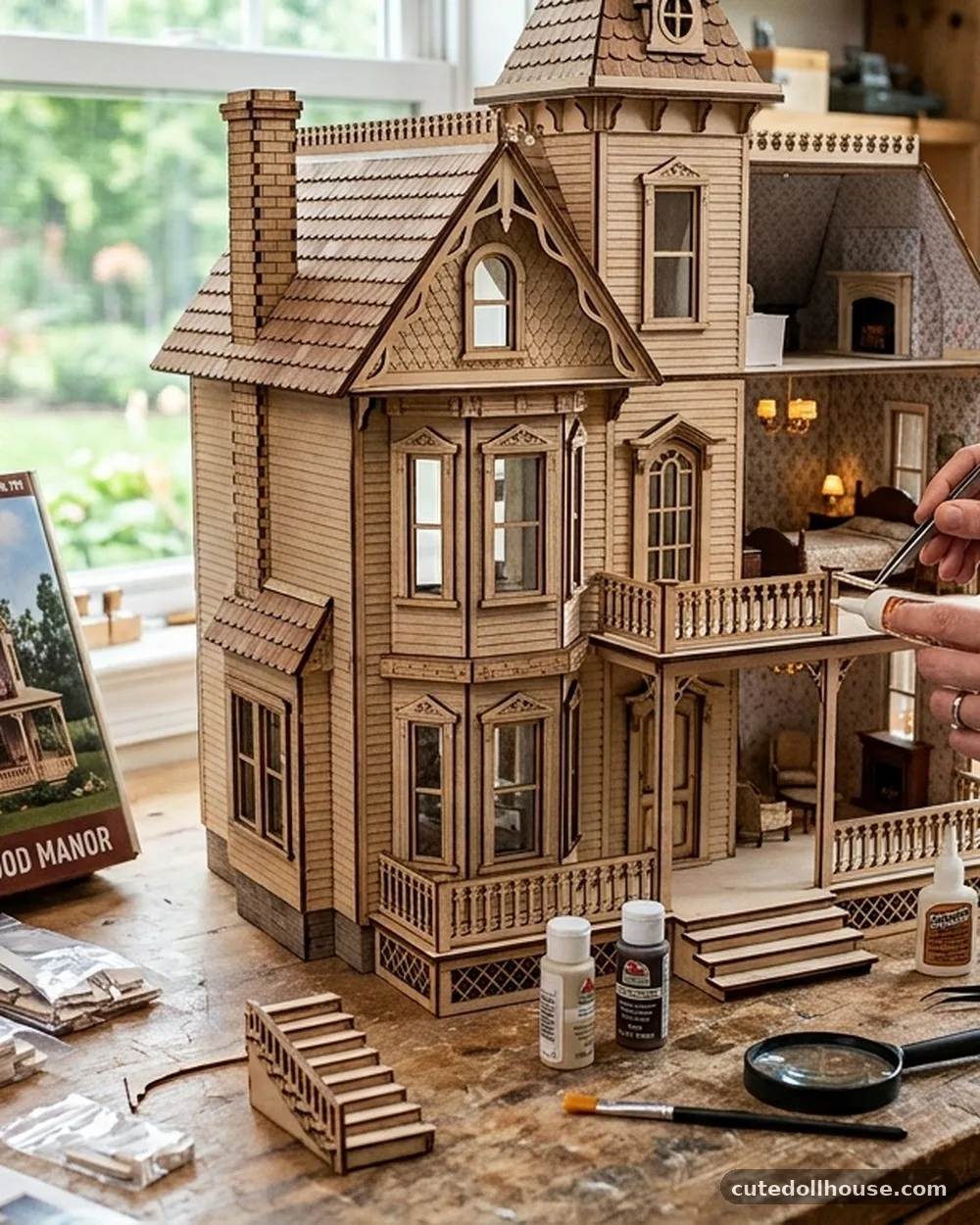
Most advanced dollhouse projects use some combination of wood, paper, fabric, plastic, metal, and adhesive materials. The important question is whether those materials are suitable for precise miniature work and whether the components appear consistently cut and clearly labeled.
Wood panels should be checked for warping, rough edges, or unclear connection points. Thin materials can be easier to cut and modify but may require careful handling. Heavier components may feel more substantial, although weight alone doesn’t prove better construction.
Because product specifications vary by seller and production batch, verify the material list before buying. A listing may show beautifully finished rooms while supplying only unfinished parts and a limited selection of accessories.
Design and Appearance
Appearance is highly personal. Some builders prefer traditional cottages, shops, libraries, cafés, greenhouses, or multi-room homes. Others want modern interiors, fantasy scenes, or compact room boxes that can fit into a smaller display area.
Look closely at the product photographs and ask whether they show the completed kit or a digitally enhanced presentation. Check whether furnishings, plants, lamps, wallpaper, and decorative pieces are included or merely shown as styling examples.
A well-designed advanced kit should have a coherent visual theme. Mismatched furniture, inconsistent scale, or accessories that don’t suit the building can make a finished scene look less convincing.
Scale, Size, and Workspace
Scale affects almost every part of the experience. It influences furniture compatibility, the apparent size of details, the amount of room required, and whether replacement accessories will be easy to find.
Don’t judge size from listing photos alone. Confirm the assembled dimensions, the approximate scale if provided, and the dimensions of the shipping box or unfinished panels. A project that fits on a desk during assembly may need substantially more space once tools, glue, paint, and parts are added.
Builders should also plan for safe storage between sessions. Dust, pets, children, humidity, and accidental knocks can affect a partly completed miniature.
Features and Functionality
Some advanced kits include lighting, opening doors, stairs, balconies, removable roofs, multiple rooms, or working-style decorative elements. These features can make the completed scene more engaging, but they also introduce extra assembly steps.
Lighting deserves particular attention. Verify whether bulbs, wires, switches, batteries, connectors, and power supplies are included. Product descriptions don’t always treat “lighting-ready” and “lighting included” as the same thing.
- Check whether electrical parts are supplied or sold separately.
- Look for information about the power source and cable routing.
- Confirm whether the design allows access for repairs or battery changes.
- Consider whether added features justify the extra complexity for your intended display.
Ease of Assembly and Difficulty
Advanced does not necessarily mean impossible, but it usually means the project requires patience and careful sequencing. The builder may need to paint or wallpaper parts before assembly, allow adhesive to dry, and test-fit components before committing them permanently.
Clear instructions matter. Useful documentation should identify parts, show the order of construction, explain adhesive recommendations, and make electrical or fabric steps understandable. If the listing provides no sample instructions, buyers should treat the stated difficulty with caution.
Tools may include precision scissors, craft knives, small files, tweezers, rulers, clamps, fine brushes, glue, paint, and possibly soldering or wiring equipment. Requirements vary, so check the seller’s supply list before purchasing.
Included Accessories
Accessory coverage can change the value of a kit dramatically. One package may include furniture, books, dishes, textiles, plants, wall coverings, and lighting. Another may provide only the structure.
Read the contents list carefully and separate three categories:
- Included: Parts specifically stated to be in the box.
- Required but not included: Tools, glue, paint, batteries, or other supplies the builder must provide.
- Shown but unconfirmed: Decorative items visible in promotional photos but not listed in the contents.
This distinction helps prevent unpleasant surprises and makes it easier to estimate the real project cost without relying on an advertised headline price.
Durability and Maintenance
A finished miniature is delicate, even when the structural components are sturdy. Thin trim, paper decorations, tiny furniture, and wiring can be damaged by frequent handling. Display cases or enclosed shelving can reduce dust and accidental contact.
Keep the completed project away from direct sunlight and damp areas where possible. Paper, fabric, wood, and some adhesives can change over time when exposed to moisture, heat, or strong light.
Maintenance is usually simple but careful. Use a soft brush or gentle air blower for dust, avoid soaking surfaces, and inspect loose parts before moving the display.
Customer Feedback and Common Complaints
Customer feedback can be useful, but it should be read with context. A complaint about difficulty may reflect a buyer’s limited experience, while a complaint about missing pieces or poor instructions may identify a genuine kit-quality problem.
Look for repeated themes across reviews rather than relying on one enthusiastic or negative comment. Common issues in complex craft kits can include:
- Instructions that are too brief or rely on unclear illustrations.
- Parts that are difficult to identify or not labeled consistently.
- Small components missing from the package.
- Decorative materials that differ from the listing photographs.
- Adhesives, paint, tools, or batteries not included.
- Scale differences that make replacement accessories difficult to use.
- Shipping damage to thin panels or fragile decorative pieces.
These concerns may vary by seller, model, region, and production run. Check the current listing, recent reviews, return terms, and replacement-part policy before ordering.
Advanced DIY Dollhouse Kit Profiles
No specific product models or manufacturer details were supplied for this article, so it would be misleading to invent a ranked list of individual kits. Instead, the profiles below explain the main types of advanced projects buyers are likely to encounter and the trade-offs associated with each.
1. Multi-Room Wooden Dollhouse Kits
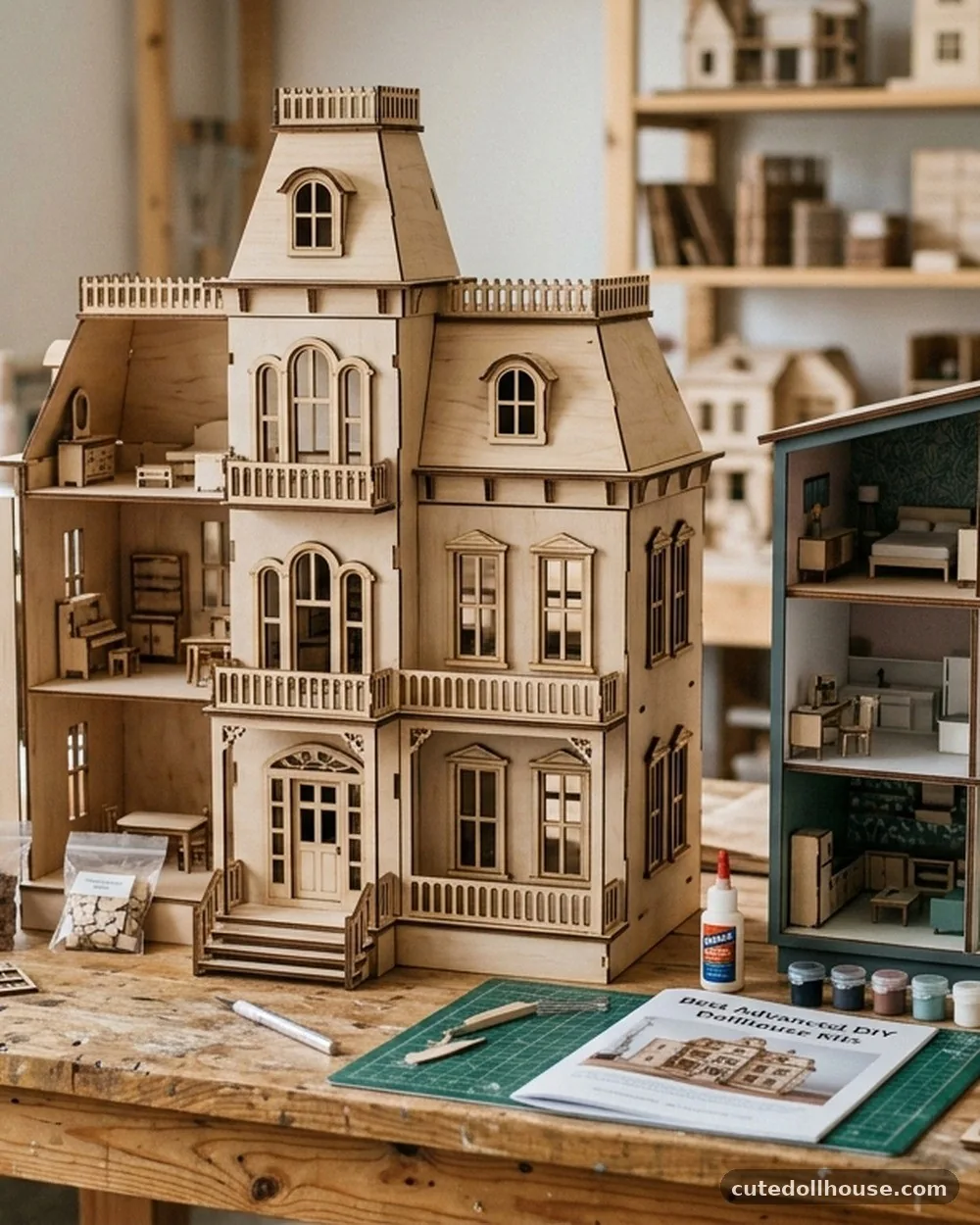
Overview
Multi-room wooden kits are designed for builders who want a larger architectural project with several connected spaces. They may include floors, partitions, stairs, windows, doors, and a roof or exterior shell.
Key Features
- Several rooms or display areas.
- Greater opportunity for coordinated interior design.
- Potential for structural modifications and custom decoration.
- Compatibility with additional furniture may depend on the stated scale.
What We Like
These kits provide room to develop a complete miniature environment rather than a single vignette. They suit builders who enjoy planning a theme across multiple spaces and want a substantial display after completion.
What Could Be Better
The size can make storage, painting, and assembly more demanding. A large structure also magnifies small inaccuracies, so careful dry-fitting and measuring are important.
Ease of Use or Assembly
Expect a staged process. Structural sections may need to be aligned before interior decoration, while wallpaper, flooring, and electrical components may need to be installed in a particular order. Buyers should confirm whether the instructions explain that sequence.
Quality and Durability
Durability depends on panel thickness, joinery, adhesive, and how well the finished structure is protected. Warped panels or poorly marked connection points can make a large build especially frustrating.
Who It Is Best For
This profile is best for experienced builders or patient crafters with a permanent display area and enough room to work on a larger project.
Who Should Avoid It
Choose another format if you need a compact project, have limited storage, or prefer quick builds with fewer structural decisions.
Final Verdict
A multi-room wooden kit can be a rewarding centerpiece, but its value depends heavily on accurate parts, usable instructions, and a realistic plan for workspace and display.
2. Detailed Room-Box Kits
Overview
Room-box kits focus on one interior scene, such as a study, kitchen, shop, bedroom, or craft room. They are often smaller than complete houses but can be just as demanding because the design emphasizes close-up detail.
Key Features
- A concentrated theme rather than a full building.
- More manageable display dimensions than many multi-room projects.
- Strong emphasis on furniture, surfaces, lighting, and small accessories.
- Potentially easier to customize or complete in stages.
What We Like
A room box can deliver the visual satisfaction of a detailed miniature without requiring an entire house. It may also be easier to display in a cabinet or on a shelf.
What Could Be Better
Small rooms leave little space for error. Furniture placement, wiring, and decorative details can feel cramped, and buyers may need to confirm that the pictured accessories are included.
Ease of Use or Assembly
The structure may be simpler, but finishing can be intricate. Wallpaper seams, floor coverings, miniature textiles, and tiny objects often require steady hands and precise tools.
Quality and Durability
Because the project is viewed at close range, uneven edges and weak decorative materials can be noticeable. A protective case is particularly useful for small open-front scenes.
Who It Is Best For
Room boxes suit detail-focused crafters, collectors with limited space, and builders who want a themed project rather than a complete architectural shell.
Who Should Avoid It
They may disappoint buyers who want a large house, multiple exterior viewpoints, or extensive room-to-room storytelling.
Final Verdict
A well-specified room box can offer strong detail in a compact format, provided the product description clearly separates included components from display props.
3. Lighting-Enhanced Miniature House Kits
Overview
Lighting-enhanced kits add illuminated rooms, lamps, or other electrical details to the miniature. They can create an attractive display, but the wiring adds another layer of planning and troubleshooting.
Key Features
- Room or fixture lighting.
- Wire channels or hidden cable routes.
- Battery or mains-powered options, depending on the model.
- Potentially greater visual impact in a dim display area.
What We Like
Lighting can make a finished miniature feel more atmospheric and help interior details stand out. It also gives experienced builders an opportunity to learn basic miniature electrical installation.
What Could Be Better
Listings may use vague language about lighting. A kit might include lamps but not bulbs, wires, switches, batteries, or a power adapter. Access for future repairs is another concern.
Ease of Use or Assembly
Builders should plan cable routes before sealing walls or floors. If soldering is required, the kit may be unsuitable for people who want a purely non-electrical craft project.
Quality and Durability
Electrical reliability depends on the components, connections, and handling. Avoid placing a lighted model where cables will be pulled or crushed, and follow the seller’s safety instructions.
Who It Is Best For
This format is appropriate for experienced hobbyists who specifically want an illuminated display and are willing to verify the electrical requirements.
Who Should Avoid It
It may not suit young children, buyers who dislike wiring, or anyone without a safe display location and suitable power access.
Final Verdict
Lighting adds atmosphere but shouldn’t be treated as an automatic benefit. Confirm exactly what is included before paying extra for an illuminated version.
Comparison of Advanced Kit Types
| Kit Type | Best For | Typical Difficulty | Key Feature | Main Drawback | Overall Value Consideration |
|---|---|---|---|---|---|
| Multi-room wooden house | Large-scale displays and experienced builders | Advanced | Multiple connected spaces | Needs substantial workspace and storage | Strong if structural parts and accessories are well documented |
| Detailed room box | Compact, theme-focused scenes | Intermediate to advanced | Close-up interior detail | Limited space for furniture and wiring | Good when included contents match the display photographs |
| Lighting-enhanced kit | Builders who want an illuminated display | Advanced | Decorative electrical features | Extra wiring and uncertain component coverage | Depends on whether the full lighting system is included |
Recommendations by Buyer Type
For Experienced Builders
Prioritize the design you find most interesting, then examine the parts list, scale, instructions, and construction sequence. Experienced hobbyists may enjoy kits that leave room for customization, but they still benefit from accurate panels and clearly identified components.
For Patient Beginners
A smaller room box may be a more sensible starting point than a large multi-room house, even if the listing calls it advanced. Choose a project with accessible instructions, a complete contents list, and no unexplained electrical requirements.
For Appearance-Focused Buyers
Study photographs carefully and verify whether the finished look depends on optional paint, handmade accessories, or separately purchased furniture. The kit’s theme matters, but the quality of the finishing materials matters just as much.
For Space-Conscious Buyers
Measure the intended display area before ordering. A compact room scene can deliver substantial detail without committing you to a large house, worktable, or permanent cabinet.
For Buyers Who Want Lighting
Choose lighting only after checking the power source, included components, wiring instructions, switch placement, and repair access. “Lighted” should mean more than a photograph showing glowing rooms.
How to Prepare for Assembly
Preparation reduces mistakes and makes a long build easier to manage. Before opening glue or paint, inventory the parts and compare them with the instructions. Photographing the contents can also help if you need to ask the seller about a missing component.
- Confirm the assembled dimensions and choose a stable work surface.
- Sort parts into labeled containers or small bags.
- Read the full instructions before permanently attaching major pieces.
- Dry-fit walls, floors, and furniture where possible.
- Paint, wallpaper, or finish parts at the stage recommended by the instructions.
- Allow adhesives and coatings to dry fully before adding delicate details.
- Keep a record of optional modifications and cable routes.
Work in a well-lit area and use a cutting mat if craft knives are required. Fine dust, strong adhesives, and small components call for sensible ventilation and careful storage.
Questions to Ask Before Buying
- What is the exact assembled size?
- What scale does the kit use?
- Are furniture, wallpaper, paint, glue, tools, and lighting included?
- Does the seller provide a complete parts list?
- Are instructions available in a language you understand?
- What skill level does the manufacturer state, and do customer reviews support it?
- How are missing or damaged parts handled?
- Can the finished model be moved safely, or is it intended to stay in one place?
Frequently Asked Questions
What makes a dollhouse kit advanced?
Advanced kits generally involve detailed construction, numerous small parts, complex decoration, furniture assembly, lighting, or several stages that must be completed in the correct order. There is no universal difficulty scale, so inspect the instructions and contents list.
What is a good advanced DIY dollhouse kit for adults?
The right choice depends on the builder’s interests and available space. Experienced crafters may prefer a large multi-room structure, while someone who wants concentrated detail may prefer a room box. Verify scale, included accessories, and tool requirements before buying.
Do DIY dollhouse kits include everything needed?
Not always. Many kits may require glue, paint, craft tools, batteries, or extra decorative materials. Product descriptions sometimes show accessories that aren’t included, so rely on the written contents list rather than photographs alone.
Are advanced dollhouse kits suitable for children?
They are usually better suited to adults or older teenagers with close supervision, particularly when the kit uses sharp tools, strong adhesives, tiny parts, or electrical components. Check the manufacturer’s age guidance.
How long does an advanced dollhouse kit take to build?
Completion time varies widely with the kit’s size, the builder’s experience, the amount of painting and customization, and how often they work on it. Treat seller estimates as approximate rather than guaranteed.
What should I do if parts are missing?
Stop before modifying nearby components, compare the contents with the parts list, and contact the seller or manufacturer promptly. Keep packaging and order information until the kit has been checked.
Final Verdict
The best advanced DIY dollhouse kits are worth considering when you want a detailed, slow-paced craft project rather than an instant display. Large wooden houses suit builders with space and structural experience, room boxes offer concentrated detail in a smaller footprint, and lighting kits add atmosphere at the cost of extra planning.
Before buying, confirm the scale, finished dimensions, contents, tool requirements, instructions, and support for missing parts. Because no single kit is right for every hobbyist, comparing those practical details is more useful than choosing a product based on attractive photographs alone. With realistic expectations and a suitable workspace, an advanced miniature house can become a rewarding long-term project.