Choosing among the best wooden dollhouses for toddlers takes more thought than picking the prettiest playset. A good model needs to suit a young child’s age, hand size, attention span, and play space while offering sturdy construction and sensible safety features. Open-front designs, chunky furniture, smooth edges, and simple layouts often matter more than elaborate decoration.
Parents also need to check assembly requirements, material details, accessory sizes, and whether the house is intended for supervised play. This article explains what to look for, where wooden dollhouses work well, which limitations to expect, and how to decide whether one is a sensible buy for a 2- or 3-year-old.
What Is a Wooden Dollhouse for Toddlers?
A wooden dollhouse is a miniature home designed for pretend play. Children can move figures through rooms, arrange furniture, create simple stories, and practise everyday routines such as cooking, sleeping, or tidying. Toddler-friendly versions usually have a more open design and fewer delicate parts than traditional dollhouses made for older children.
The term “toddler dollhouse” is not a universal product category with one fixed specification. Some houses are compact wooden structures with large openings, while others are multi-level playsets with small accessories. Age guidance varies by manufacturer and seller, so buyers should read the product information rather than relying only on the word “toddler.”
Wood can give a dollhouse a solid feel and a warm appearance, but it doesn’t automatically make a product safer or more durable. Construction quality, finish, hardware, accessory size, and supervision requirements still matter.
Are Wooden Dollhouses Worth Buying for Toddlers?
For many families, a wooden dollhouse is a worthwhile open-ended toy. It can support imaginative play without requiring a fixed set of rules, and children may return to it as their stories become more detailed. A well-designed house can also become part of a playroom for years, particularly if it accommodates larger figures and replacement furniture.
The best value comes from choosing a simple, accessible design that matches the child’s developmental stage. A toddler may get more from a one- or two-room open-front house than from a tall model filled with tiny furniture. An expensive playset with many accessories can look impressive but may be frustrating if the pieces are hard to handle or easy to lose.
Another type of toy may be more suitable if space is limited, if the child is still putting small objects in their mouth, or if adults cannot provide supervision. Fabric playhouses, large-format pretend-play sets, chunky wooden figures, and simple stacking toys may offer a better fit in those situations.
Important Safety Considerations
Safety should come before colour, theme, or the number of rooms. Toddlers explore with their hands and mouths, and a dollhouse often includes furniture, figures, doors, windows, and decorative components that vary substantially in size.
Before buying, check the manufacturer’s stated age range and inspect the product information for warnings about small parts. For broader toy-safety information, parents can consult the U.S. Consumer Product Safety Commission’s toy safety guidance.
- Look for smooth, well-finished wooden surfaces without obvious splinters, rough edges, or exposed fasteners.
- Check whether small furniture or accessories are intended for supervised use only.
- Consider tipping risk, especially with tall or narrow multi-storey designs.
- Inspect doors, shutters, lifts, and hinges for pinch points or loose components.
- Follow the supplied assembly instructions and keep packaging information for future reference.
- Recheck the house periodically for loosened screws, chipped finish, or damaged accessories.
Age labels are useful, but they don’t replace judgement. Children develop at different rates, and a toy that suits one three-year-old may not suit another.
Buying Criteria for a Toddler Wooden Dollhouse
Build and Material Quality
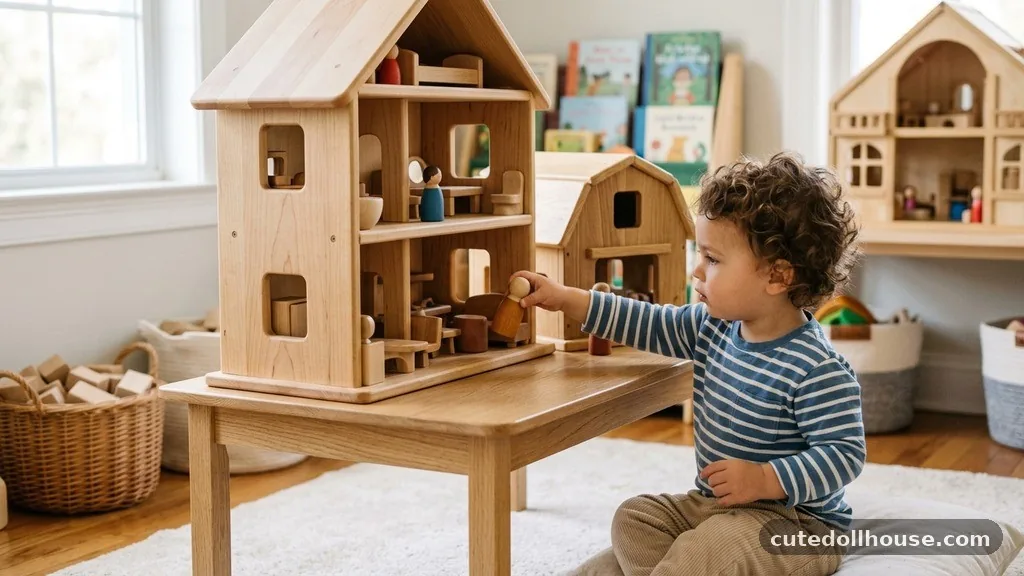
Solid-feeling panels, secure joints, clean edges, and a stable base are practical signs to look for in product photographs and specifications. “Wooden” can describe many constructions, including solid wood, plywood, engineered wood, and products that combine wood with plastic components. A listing should make the main materials reasonably clear.
Paint and finish deserve attention too. Buyers should look for information about the type of finish and whether it has been made for children’s products. If the listing provides vague material claims or limited safety information, treat that as a reason to investigate further rather than assume the product is suitable.
Design and Appearance
A toddler needs access more than architectural detail. Open-back or open-front houses make it easier to reach rooms, move figures, and play with another child. Large windows and wide entrances can also reduce frustration.
Colourful designs may attract attention, but neutral or lightly decorated houses can be easier to adapt as children grow. A house that works with different figures and furniture is less likely to become tied to one short-lived theme.
Size and Fit
Measure both the available floor area and the storage space. Dollhouses can occupy more room than expected once accessories are spread around them. A tall model may provide multiple levels without a large footprint, but it can be harder for a small child to reach the upper floors.
Check the scale of any included figures and furniture. Accessories should be large enough for the intended age group and easy for small hands to grasp. If accessories aren’t included, confirm that compatible replacements are available before purchasing.
Features and Functionality
Useful toddler features tend to be straightforward: open access, wide rooms, sturdy stairs, movable doors, and furniture with simple shapes. Extra features such as elevators, working shutters, or removable roofs can add interest, though each moving part also creates another component that may loosen or break.
More features aren’t automatically better. For a young child, a clear layout and easy access often support longer independent play than a crowded house with many delicate details.
Assembly and Ease of Use
Most larger wooden dollhouses require adult assembly, but the time and tools needed can vary. Read the assembly description carefully and check whether the product arrives flat-packed. Product pages may not always explain how long assembly takes, so customer feedback can be helpful here.
Once assembled, the house should be stable and easy to move only if its design allows it. A large structure that is difficult to relocate may need a permanent playroom position. Families with limited time or no suitable workspace may prefer a smaller, simpler model.
Durability and Maintenance
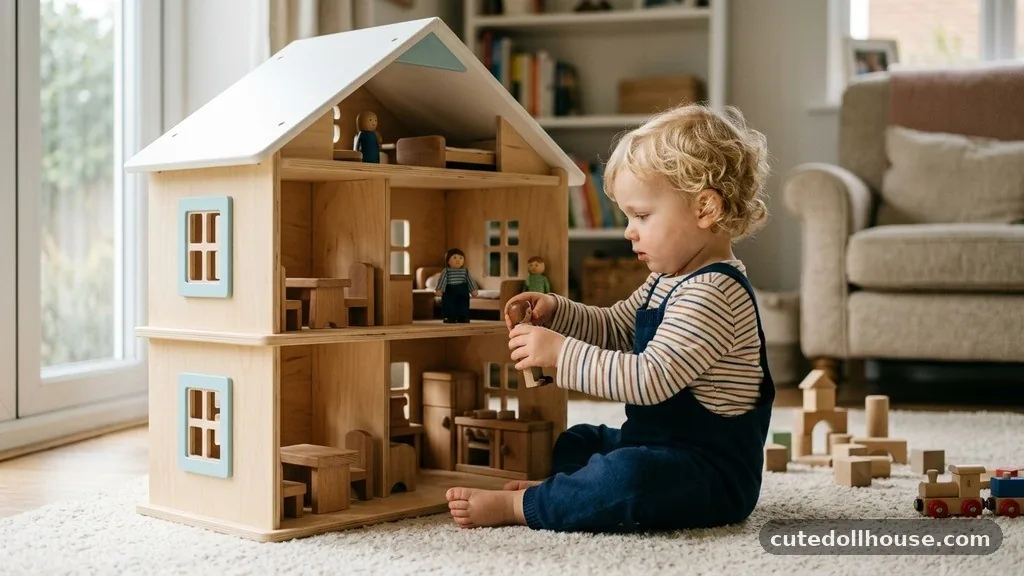
Wooden toys generally need ordinary care rather than complicated maintenance. Dust can be removed with a dry or slightly damp cloth, but buyers should follow the manufacturer’s cleaning instructions and avoid soaking unfinished or vulnerable surfaces.
Durability depends on more than material. Thin panels, weak joints, fragile accessories, and frequent relocation can shorten a dollhouse’s useful life. Customer comments about loose parts, chipped paint, missing hardware, or difficult assembly can reveal weaknesses that product photographs won’t show.
Included Accessories and Replacement Parts
A house supplied without furniture may offer more flexibility, but the final cost can rise if suitable accessories must be purchased separately. Included pieces should be assessed for size, usefulness, and safety rather than counted as a selling point.
It is also worth checking whether replacement furniture or compatible figures can be found. Small pieces disappear easily in family homes. A dollhouse that can accept generic, age-appropriate accessories may be easier to maintain over time.
Comparison of Wooden Dollhouse Types
Because no specific product models were supplied for this review, the comparison below focuses on common wooden dollhouse formats rather than inventing product specifications or rankings.
| Product type | Best for | Difficulty | Key feature | Main drawback | Overall value |
|---|---|---|---|---|---|
| Compact open-front house | Young toddlers and smaller rooms | Usually lower | Easy access to the interior | Fewer rooms and less expansion space | Strong when simplicity and storage matter |
| Multi-level wooden house | Older toddlers with more developed pretend play | Often moderate | More play areas in one structure | Upper levels may be difficult to reach | Useful if floor space is limited and the child can access it safely |
| Furniture-included playset | Families wanting a ready-to-play option | Varies by house design | Provides an immediate play scenario | Accessories may be small or easy to lose | Good if the included pieces are suitably sized |
| Plain wooden shell | Families wanting flexibility and long-term adaptation | Usually lower to moderate | Can be furnished or decorated over time | May require additional purchases | Potentially good for creative, budget-conscious buyers |
Common Advantages of Wooden Dollhouses
- Open-ended play: Children can invent stories rather than follow a single scripted activity.
- Hands-on interaction: Moving figures and furniture can encourage grasping, arranging, and pretend routines.
- Visual appeal: Wood often suits playrooms and may look less disposable than lightweight plastic alternatives.
- Longer useful life: A flexible design may remain relevant as a child moves from simple imitation to more imaginative storytelling.
- Shared play: Larger open designs can support play between siblings, carers, or friends.
Potential Drawbacks
- Adult assembly: Larger houses can require careful construction before they are ready to use.
- Space demands: Even a compact dollhouse needs room for children to stand or sit comfortably around it.
- Small accessories: Furniture and figures may not be appropriate for every toddler.
- Variable quality: Wooden construction ranges from sturdy and refined to thin, rough, or poorly finished.
- Higher initial cost: A well-built wooden house may cost more than a basic plastic or cardboard playset, especially once furniture is added.
- Limited portability: Multi-level models are often awkward to move and store.
Who Should Buy a Wooden Dollhouse?
Good Choice for Beginners
First-time buyers should usually prioritise an open-front house with a simple layout, a stable base, and clearly stated age guidance. A modest design is easier to understand, assemble, and supervise. It also leaves room to add furniture gradually rather than committing to a large themed set.
Good Choice for Appearance-Focused Buyers
If the dollhouse will remain visible in a family room, look for a finish and colour scheme that fits the space. Appearance should not override safety or access, but a well-designed house is more likely to stay out and receive regular use than one that must always be packed away.
Good Choice for Small Spaces
A compact model may work better than a tall, multi-floor house. Measure the footprint, allow room for children to play around it, and consider where loose accessories will be stored. A foldable or portable alternative may be more practical if the toy needs to move often.
Good Choice for Long-Term Play
Choose a neutral structure with flexible room layouts and compatible accessories. Avoid buying solely for a character theme if you want the toy to remain useful after a child’s interests change.
Who May Want an Alternative?
A wooden dollhouse may not be the right purchase for a child who is still mouthing small objects, has limited reach, or shows little interest in pretend play. In those cases, large wooden figures, soft playhouses, chunky household role-play toys, or open-ended blocks may be easier to use.
It may also be sensible to avoid a large house if the family lacks storage or if assembly would be a major burden. A smaller house with fewer accessories can deliver the same basic type of imaginative play without taking over the room.
How to Read Customer Feedback Carefully
Reviews can help identify recurring issues, but individual experiences vary by seller, model, production batch, and assembly technique. Look for patterns rather than relying on one very positive or very negative comment.
- Repeated mentions of unclear instructions may indicate an assembly concern.
- Comments about rough edges, missing hardware, or damaged panels deserve attention.
- Feedback about scale can reveal whether the furniture is genuinely toddler-friendly.
- Photographs may show the real size and finish more clearly than marketing images.
- Recent reviews may be more relevant if the manufacturer has changed the design.
Seller descriptions can also differ. Confirm the exact model, dimensions, included accessories, material description, and return terms before ordering.
Frequently Asked Questions
What are the best dollhouses for 2-year-olds?
The most suitable options are generally simple, stable, open-front designs with large, easy-to-grasp components and few small accessories. Always follow the product’s own age guidance and supervise play when needed.
What is a good dollhouse for a 3-year-old?
A three-year-old may be ready for a house with more rooms, furniture, and moving features, provided the child can reach the interior and handle the accessories safely. A flexible design can remain useful as pretend play develops.
Are wooden dollhouses safer than plastic ones?
Not automatically. Safety depends on the specific construction, finish, hardware, accessory size, stability, and age guidance. Wood can be durable, but buyers should still inspect the product information and monitor the toy during use.
Should a toddler’s dollhouse include furniture?
Included furniture makes the house ready to play with, but it can also add small parts and increase clutter. If furniture is not included, check whether appropriately sized accessories are available before buying.
How much assembly do wooden dollhouses require?
Assembly varies widely. Compact houses may need only a few steps, while larger multi-level models can require more time, tools, and careful alignment. Read the instructions and customer feedback if the listing provides them.
What should I check before buying a wooden dollhouse online?
Verify the age range, dimensions, materials, safety warnings, included accessories, assembly requirements, seller identity, and return policy. Also check whether the product shown matches the exact model being sold.
Final Verdict
The best wooden dollhouses for toddlers are not necessarily the largest or most decorated. They are the ones with safe, accessible layouts, stable construction, suitably sized accessories, and enough flexibility to support changing play habits. A simple open-front model is often the sensible starting point, while a multi-level house may suit an older toddler with more developed pretend play and plenty of space.
Before buying, compare the exact dimensions and age guidance, inspect the material and finish information, and treat customer feedback as evidence rather than proof. Wooden dollhouses can be worth buying when they match the child and the room, but a smaller or less detailed alternative may be the better choice if safety, storage, or supervision is a concern.