
Choosing the best miniature dollhouse furniture kits is less about finding the largest box and more about matching the kit to your scale, patience, tools, and decorating style. Some sets are designed for quick display projects, while others are closer to small woodworking or craft builds that require careful assembly and finishing. That difference matters for adults, children, collectors, and anyone creating a detailed 1:12-scale room.
Since product listings don’t always explain what’s included or how demanding a build may be, buyers can easily choose a kit that doesn’t fit their project. This guide explains what to check, where these kits work well, and when ready-made miniature furniture may be the smarter option.
What Are Miniature Dollhouse Furniture Kits?
Miniature dollhouse furniture kits contain the parts needed to build small furnishings for a dollhouse, room box, diorama, or scale model scene. Depending on the design, a kit may include unfinished wood pieces, cut panels, hardware, fabric, printed materials, decorative details, or assembly instructions.
Some kits are simple craft projects. Others involve several stages, including sanding, gluing, painting, staining, upholstering, and adding tiny fittings. The finished item might be a chair, bed, cabinet, table, sofa, kitchen unit, desk, or a coordinated room set.
These kits are different from ready-made dollhouse furniture. A completed piece can be placed directly into a scene, while a kit gives the buyer more control over colour, texture, proportions, and finish. That flexibility is appealing, but it also means the final result depends on the quality of the parts and the builder’s technique.
Before buying, check the stated scale carefully. A piece intended for 1:12 scale will not necessarily look right beside 1:24 or 1:48 furniture. Scale descriptions can vary by seller, so compare the listed measurements with the room or dollhouse you already own.
Are Miniature Furniture Kits Worth Buying?
For many hobbyists, yes. The main appeal is involvement: building and decorating a piece can be as enjoyable as displaying it. Kits also make it easier to create a coordinated interior than buying unrelated furniture one item at a time.
They are particularly suitable for adults who enjoy miniature crafts, model making, restoration projects, and creative finishing. A kit can also be a thoughtful project gift, though the recipient’s age, dexterity, available tools, and experience should be considered before choosing a complicated design.
They may not be the best choice for someone who wants an immediate result. Small parts can be fiddly, instructions may be brief, and some kits require supplies that aren’t included. If the priority is speed, consistency, or a display-ready finish, assembled furniture may offer better value even if it provides less creative control.
Reasons to Choose a Kit
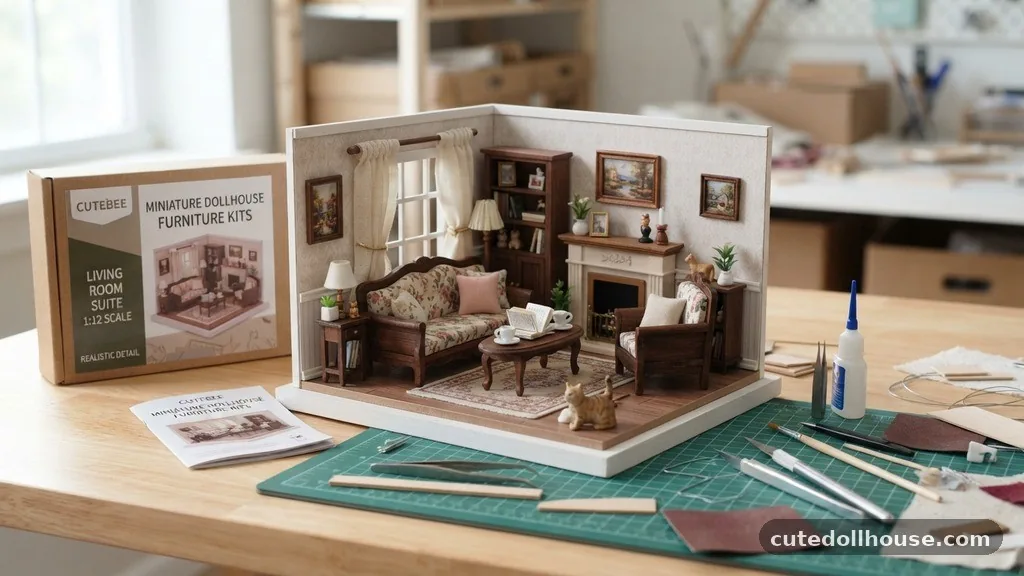
- You want to customise paint, stain, fabric, or decorative details.
- You enjoy hands-on craft projects rather than simply collecting finished pieces.
- You need furniture that fits a particular room theme or miniature scene.
- You’re comfortable using craft adhesive, fine tools, and small finishing materials.
- You want to build a collection gradually and improve your skills over time.
When a Ready-Made Alternative Makes More Sense
- You need furniture for a project with a short deadline.
- You have limited vision, dexterity, workspace, or patience for tiny components.
- You want uniform, professionally finished pieces across an entire room.
- The kit requires tools or materials you would need to buy separately.
- You’re unsure whether the stated scale matches your dollhouse.
What to Check Before Buying
Scale and Measurements
Scale should be the first check, not an afterthought. Dollhouse furniture is commonly described using ratios, but the ratio alone doesn’t tell you whether a chair, bed, or cabinet will fit the available space. Measure the room, doorways, windows, and nearby furniture before ordering.
Also look for the finished dimensions. A listing may show the size of the package rather than the assembled item, and product photographs can make miniature pieces appear larger than they are. If measurements are missing, treat that as a reason to contact the seller or choose another listing.
Material Quality
Wooden kits can provide a natural base for paint or stain, but the quality of thin pieces may vary. Look for clear information about the material and whether parts are pre-cut, laser-cut, moulded, or supplied as raw shapes. Clean edges and consistent parts make assembly easier.
Plastic, resin, cardboard, and mixed-material kits can also be useful. Plastic may be easy to wipe clean, resin can support ornate shapes, and card-based pieces may be lightweight and affordable. The trade-off is that each material accepts adhesives and finishes differently.
Be cautious with listings that use attractive photos but provide little information about construction. If the material, dimensions, or part count is unclear, the finished result is harder to predict.
Design and Appearance
Choose furniture that suits the period and mood of the scene. A modern sofa may look out of place in a traditional room, while ornate furniture can overwhelm a minimalist miniature interior. Consider silhouette, leg shape, drawer fronts, upholstery, and decorative trim rather than judging a product by its colour alone.
Unfinished kits are often the most adaptable. They can be painted to match a room, distressed for an older appearance, or covered with new fabric. Pre-coloured components are quicker, but they may be less flexible if the shade doesn’t match your project.
Included Accessories and Materials
Read the contents list closely. A kit may include only the structural parts, leaving you to provide glue, paint, brushes, fabric, sandpaper, handles, or miniature hardware. Other kits may include some decorative materials but not every item needed for completion.
A useful listing should make clear whether the package contains:
- All structural components
- Assembly instructions
- Decorative pieces or hardware
- Fabric, foam, or stuffing for upholstered items
- Paint, stain, or other finishing materials
- Adhesive and tools
If the information is incomplete, assume that basic craft supplies may be required until the seller confirms otherwise.
Difficulty Level
Difficulty depends on more than the number of pieces. A simple-looking chair may require careful upholstery, while a cabinet with several flat panels may be easier to assemble but more demanding to finish neatly. Tiny hardware, curved parts, and repeated decorative details usually increase the challenge.
Beginners should look for clear instructions, fewer components, uncomplicated shapes, and forgiving materials. Experienced makers may prefer kits with more scope for customisation, realistic joinery, or detailed finishing.
Instructions and Assembly Support
Instructions should show the assembly sequence, identify parts, and explain which adhesive or tools are appropriate. Clear diagrams are especially valuable when several pieces look similar.
Customer feedback can help reveal whether the instructions are understandable, but reviews should be interpreted carefully. One person’s “easy” may mean they already have model-making experience. Look for repeated comments about missing parts, poor diagrams, misaligned components, or unclear scale.
Durability and Maintenance
Miniature furniture is decorative, but it still needs to withstand handling during room arrangement, cleaning, and occasional moving. Strong joints, properly sealed surfaces, and well-attached decorative elements help protect the finished piece.
Dust can be removed with a soft brush or gentle air flow. Avoid soaking unfinished wood or using strong cleaners on painted, paper, or fabric surfaces. If the piece will be handled regularly, consider a protective finish that is compatible with the material and intended appearance.
Comparing the Main Types of Furniture Kits
Because no individual products or verified specifications were supplied for this review, the table below compares common kit formats rather than ranking named brands. Actual quality can vary by manufacturer, seller, scale, and production batch.
| Kit Type | Best For | Typical Difficulty | Key Advantage | Main Drawback | Value Consideration |
|---|---|---|---|---|---|
| Unfinished wooden furniture | Custom finishing and traditional dollhouses | Beginner to advanced | Can be painted, stained, and altered | Usually needs extra finishing supplies | Good if you already own craft materials |
| Upholstered furniture kits | Builders who enjoy fabric and interior detail | Intermediate | Allows control over textile colour and pattern | Small-scale upholstery can be fiddly | Best when fabric and padding are included |
| Plastic or resin kits | Ornate designs and shaped components | Beginner to intermediate | Can reproduce detailed forms | May need careful surface preparation and suitable adhesive | Check material compatibility before buying |
| Paper or card furniture kits | Lightweight scenes and low-cost craft projects | Beginner to intermediate | Light and often easy to customise | Less tolerant of moisture and rough handling | Useful for temporary or display-only projects |
| Room or furniture sets | Coordinated interiors | Varies by contents | Creates a consistent visual theme | Some pieces may not suit your layout | Compare the included items with your actual needs |
How to Assemble and Finish a Miniature Furniture Kit
Start by checking every component against the instructions. Don’t glue immediately. Lay the pieces out, identify duplicates, and dry-fit the main sections to see how they align.
- Confirm the scale and layout. Place the unassembled parts near the intended room or dollhouse to check proportions.
- Inspect and prepare the pieces. Remove flash, rough edges, or excess material carefully. Light sanding may be appropriate for wood, but delicate parts can break if overworked.
- Choose a compatible adhesive. The best adhesive depends on whether the parts are wood, plastic, resin, card, metal, or fabric.
- Assemble in small stages. Allow joints to set before adding weight or attaching the next section.
- Finish before adding fragile details. Painting, staining, or sealing is often easier before handles, trim, and small accessories are attached.
- Test the completed piece in the room. Check that it fits through openings and leaves enough space for other furniture.
Work in a well-lit area with a stable surface. A cutting mat, fine tweezers, small clamps, sanding tools, and a precision craft knife may be useful, although the exact tools depend on the kit. Young users should have age-appropriate supervision, particularly when sharp tools, adhesives, or small parts are involved.
Common Problems Buyers Should Watch For
Missing or Unclear Measurements
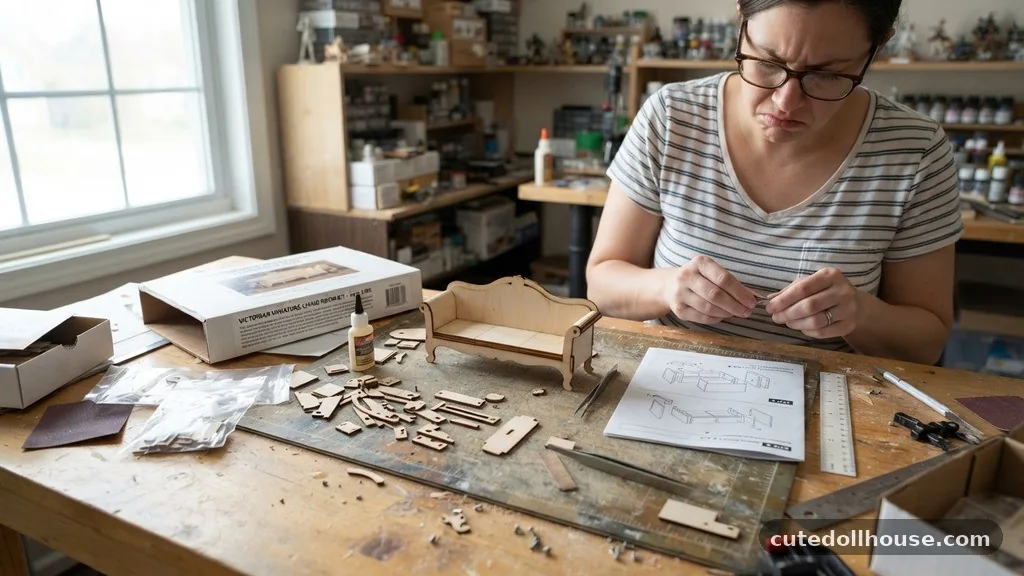
Scale errors are among the most frustrating problems because they may not become obvious until the furniture is assembled. Always compare the stated finished dimensions with your room layout. Don’t rely on photographs alone.
Incomplete Contents Lists
A low purchase price can become less attractive if you need to buy glue, paint, tools, upholstery materials, and replacement hardware separately. The contents list should be specific enough for you to estimate the complete project cost.
Weak or Poorly Fitting Parts
Small gaps can sometimes be corrected with careful sanding or filler, but badly warped or inaccurately cut components may be difficult to rescue. Repeated customer comments about warped pieces, breakage, or misaligned holes deserve attention.
Photos That Show a Finished Example
Finished photographs can demonstrate what the kit might look like, but they may also include paint, accessories, or improvements that aren’t included. Look for a clear distinction between the kit contents and the seller’s styled display.
Inconsistent Seller Information
Details can vary between marketplaces, sellers, regions, and production batches. Verify the scale, dimensions, materials, included components, age guidance, and return terms on the exact listing you plan to buy.
Recommendations by Buyer Type
For Beginners
Choose a small, uncomplicated kit with clearly labelled parts and straightforward instructions. Unfinished wooden furniture with simple shapes can be a sensible starting point because it offers room for basic painting without requiring advanced upholstery or complex joins.
For Experienced Miniature Makers
Look for kits that leave room for custom work. Detailed cabinets, upholstered seating, and mixed-material designs can be more rewarding if you already understand adhesives, surface preparation, scale, and miniature finishing.
For Appearance-Focused Buyers
Prioritise shape, proportions, and surface quality over the number of pieces in the box. A smaller set with coherent styling may look more convincing than a large assortment of unrelated furniture.
For Value-Focused Buyers
Calculate the complete cost rather than comparing the kit price alone. A kit that includes instructions, structural parts, and key decorative materials may be better value than a cheaper option requiring multiple additional purchases.
For Buyers Who Want a Quick Result
Consider assembled furniture or partly finished pieces. Kits offer creative control, but they aren’t always the fastest route to a completed room. If the project is a gift or deadline-based display, convenience may matter more than customisation.
Where to Find Reliable Product Information
Start with the manufacturer’s or seller’s full product description, then compare it with multiple customer reviews. Pay particular attention to comments that discuss scale, missing components, instruction quality, and the difference between the product images and the actual contents.
For historical context and inspiration, the Victoria and Albert Museum’s dollhouse collection information shows how miniature interiors can reflect design, craftsmanship, and domestic history. It won’t replace a product specification, but it can help buyers think more carefully about period style and realistic detailing.
Frequently Asked Questions
What scale is most common for miniature dollhouse furniture?
Several scales are used, including 1:12, 1:24, and smaller formats. The correct choice depends on the dollhouse or room box. Always compare the furniture’s stated measurements with the space rather than assuming two items will match because both are described as miniature.
Are miniature furniture kits suitable for adults?
Yes. Many are designed as adult craft or model-making projects, particularly those involving sanding, painting, upholstery, and small decorative details. Difficulty varies widely, so check the instructions, part count, tool requirements, and age guidance before buying.
Do these kits usually include glue and paint?
Not necessarily. Some kits include finishing materials, but others provide only the structural components. Read the contents list carefully and confirm what is excluded before placing an order.
What is the best place to buy dollhouse furniture kits?
The best source is one that provides clear scale information, finished measurements, material details, contents, assembly guidance, and a practical returns policy. Specialist miniature retailers may offer better technical descriptions, while large marketplaces may provide more customer feedback. Compare the exact listing rather than relying on the seller name alone.
Are miniature furniture kits difficult to assemble?
Some are beginner-friendly, while others require patience and experience. Upholstery, tiny hardware, curved parts, and complex decorative work usually increase the difficulty. Reviews can help, but interpret difficulty claims according to the reviewer’s skill level.
Should I buy a kit or ready-made furniture?
Buy a kit if you enjoy building and want control over the finish. Choose ready-made furniture if you prioritise speed, consistency, or a display-ready result. A mixed approach often works well: use kits for feature pieces and finished items for less important parts of the room.
Final Verdict
The best miniature dollhouse furniture kits are worth buying when the project itself is part of the enjoyment. They can deliver more creative control and a stronger sense of ownership than ready-made pieces, but the right choice depends on accurate scale information, complete contents, manageable difficulty, and materials that suit your tools and finishing plans.
Before ordering, measure your space, check what’s included, and read feedback for repeated complaints rather than isolated opinions. Beginners should start with simple, well-documented designs; experienced makers can take on detailed or customisable kits. If you want an immediate, polished display, assembled furniture may be the more practical option.