A well-chosen dollhouse gives children a setting for imaginative play, storytelling, and small-world exploration, but the best dollhouses for kids with furniture included aren’t automatically the largest or most elaborate. A house that suits a toddler may be too delicate for rough play, while a detailed wooden model can overwhelm a younger child or require substantial assembly.
Size, safety, materials, included accessories, and room layout all a
ffect whether a dollhouse gets regular use or ends up taking up space. This guide explains what to look for, where furniture bundles add real value, which trade-offs matter, and how to choose a design that fits a child’s age, play style, and available room.
What Are Dollhouses with Furniture Included?
A dollhouse with furniture included is a miniature house sold with so
me combination of beds, chairs, tables, kitchen pieces, ba
throom items, lamps, or decorative accessories. The set may be made from wood, engineered wood, molded plastic, or a mixture of materials.
Unlike an empty dollhouse, a furnished model lets children begin arranging rooms and creating stories soon after assembly. The included pieces may also help children understand how the house is intended to be used. A bedroom, kitchen, living room, or nursery can become a starting point for role-play.
Not every furniture bundle is equally complete. Some sets include only a few large pieces, while others provide many small accessories. Product descriptions can also differ between sellers, so buyers should check the exact contents, dimensions, recommended age, and assembly requirements before ordering.
Are Dollhouses with Furniture Inclu
ded Worth Buying?
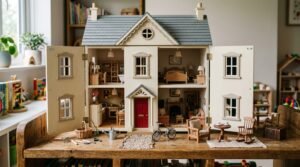
For many families, the answer is yes. A furnished dollhouse offers an immediately usable play environment and may cost less than buying the house and accessories separately. It can also make a more appealing gift because the child has more to explore from the first play session.
The main benefit is convenience, but there are other advantages. Moving furniture, placing figures, and rearranging rooms encourage fine-motor practice, while open-ended stories support language development and social play. These benefits depend on the child’s interest and the design of the house, not simply on the number of accessories in the box.
Still, a furnished dollhouse isn’t right for every household. A very young child may need a larger, simpler set with fewer loose parts.
A child who already owns miniature furniture may prefer an em
pty house that allows more personal customization. Families with limited floor space may also find a compact townhouse or tabletop model more practical than a large multi-level design.
A Furnished Dollhouse Is Usually a Good Choice If:
- The child enjoys pretend play, role-play, and arranging small objects.
- You want a playset that can be used without purchasing furniture separately.
- There is enough space for the house and its accessories to remain accessible.
- The child is old enough to handle the smallest included pieces safely.
- You want a gift with several rooms and play scenarios rather than a single-purpose toy.
Consider an Alternative If:
- The child is likely to put small accessories in their mouth.
- Storage space is limited or the dollhouse cannot stay assembled.
- The child prefers vehicles, construction toys, sensory play, or active outdoor play.
- You need a highly detailed collector-style house rather than a durable children’s toy.
- You already have compatible furniture and figures and want to choose every detail yourself.
Important Buying Criteria
Build and Material Quality
Wooden dollhouses often appeal to buyers who want a substantial appearance and a structure that can remain in a playroom for years. However, the quality of wooden construction varies. Look for clear information about the material, panel thickness where provided, edge finishing, paint or coating, and the type of fasteners used.
Plastic models can be lighter and easier to wipe clean. They may also be better suited to younger children or play areas where spills are common. On the other hand, thin plastic components can feel less substantial, and some lightweight houses may need a stable surface to prevent tipping.
Whatever the material, inspect the design for accessible sharp edges, loose decorative parts, unstable balconies, and doors or hinges that could pinch fingers. Safety information should come from the manufacturer or seller, and age guidance should be treated as an important part of the product specification.
Design and Appearance
Appearance matters because a dollhouse usually stays visible in a bedroom or playroom. Neutral colors, bright colors, realistic rooms, and fantasy-inspired designs each suit different households and children.
Look beyond the front view. An attractive house can still be awkward if the rooms are too shallow, the roof blocks access, or the furniture cannot be reached easily. Open-backed designs often make play and supervision easier, while enclosed designs may look more house-like but provide less access to interior spaces.
Printed wallpaper, flooring, windows, and decorative details c
an make a set visually engaging. They can also limit customization. If a child likes redesigning rooms, a simpler interior may be more flexible than a heavily themed one.
Size and Fit
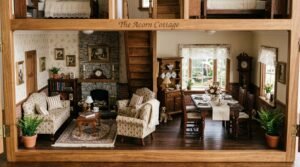
Check the assembled height, width, and depth rather than relying on photographs. Product images can make a dollhou
se look smaller or larger than it is, especially when no familiar object is shown beside it.
Measure the intended location and leave room for children to sit, reach into rooms, and move furniture. A tall model may suit an older child who can access higher floors, while a low, wide house may be easier for younger children to use independently.
Also consider the scale of the furniture and dolls. Accessories from another brand may not fit correctly, and a house designed for small miniatures may be frustrating if the child expects to use larger dolls or figures.
Features and Functionality
Useful features include wide-open rooms, movable furniture, opening doors, working shutters, elevators, staircases, balconies, and removable roof sections. These details can add play value, but more features also create more parts that may break, detach, or require assembly.
Ask whether the feature improves play or simply adds visual complexity. An elevator that is difficult to operate may be less useful than an open room with easy access. A rotating design may save space, but it needs a stable base and enough clearance.
Lighting and electronic effects deserve extra scrutiny. Check whether batteries are required, whether controls are accessible, and whether the feature can be used without adult help. Electronics can make a set more engaging, but they are not essential to good imaginative play.
Included Accessories
“Furniture included” can mean very different things. One set might contain the core pieces for a few rooms, while another may add small decorations, food, plants, pets, or figures. Read the contents list carefully.
Useful questions include:
- How many furniture pieces are included?
- Are dolls, people, pets, or vehicles part of the package?
- Are accessories freestanding or permanently attached?
- Do the beds, chairs, and tables fit the intended figures?
- Are small accessories likely to be easy to lose?
- Can replacement or compatible accessories be found later?
A large accessory count is not automatically better. A smaller set with sturdy, usable furniture may provide more value than a bundle filled with tiny decorative pieces that are difficult to handle or store.
Ease of Assembly
Many full-size dollhouses arrive flat-packed. Assembly time can vary significantly depending on the number of panels, screws, connectors, stickers, and decorative parts. Product listings do not always describe the process in enough detail.
Before buying, look for:
- Whether tools are included or need to be supplied separately.
- Whether the instructions use clear diagrams and labeled parts.
- Whether assembly requires one adult or two people.
- Whether furniture arrives assembled or needs construction.
- Whether the finished structure can be disassembled for storage.
Children generally should not be expected to assemble the structural parts unless the manufacturer specifically designs the product for that purpose. Adult assembly also provides an opportunity to check for loose hardware, unstable sections, or damaged parts before the toy is used.
Durability and Maintenance
Durability depends on material quality, construction, storage, and the way a child plays. A dollhouse used gently in a bedroom may remain in good condition longer than one repeatedly moved, climbed on, or exposed to moisture.
Wooden surfaces may need a dry or lightly damp cloth, while plastic components are often easier to clean. Avoid assuming that a painted or laminated surface is waterproof unless the manufacturer says so. Small furniture should be stored in a container or drawer to reduce loss.
Customer feedback can be useful for identifying recurring concerns such as missing hardware, confusing instructions, fragile accessories, or color differences. Individual reports are not proof that every unit has the same issue, though, because sellers, production batches, packaging, and shipping conditions can vary.
Comparison: Which Type of Dollhouse Fits Your Needs?
Because no specific products were supplied for this category review, the table below compares common dollhouse formats rather than ranking individual brands. Use it as a starting point, then confirm the details of the model you are considering.
| Type | Best For | Typical Difficulty | Key Strength | Main Drawback | Value Consideration |
|---|---|---|---|---|---|
| Wooden multi-level house | Older children and long-term pretend play | Often moderate to high assembly | Substantial appearance and room variety | Can be heavy, large, and less portable | More worthwhile when construction and accessories are strong |
| Plastic playhouse | Younger children and easy-clean play areas | Often low to moderate | Lightweight surfaces and simple maintenance | May feel less durable or detailed | Good value when the child prioritizes easy handling |
| Compact tabletop house | Small rooms, travel, or limited storage | Usually low to moderate | Space-efficient footprint | Smaller rooms and accessories | Useful if size matters more than scale |
| Open-front furnished house | Accessible solo play and adult supervision | Varies by construction | Easy reach into rooms | May offer less enclosed-house realism | Often practical for younger or less experienced players |
| Detailed collector-style model | Older children, teens, or adult hobbyists | Moderate to high | Decorative detail and customization potential | Small parts and greater fragility | Worth considering only when detail is the priority |
Choosing a Dollhouse by Age and Play Style
For Toddlers and Very Young Children
Age guidance matters more than appearance. Younger children typically need larger components, simple layouts, stable construction, and furniture that is easy to grasp. Avoid models with numerous tiny accessories unless the manufacturer clearly states that they are suitable for the child’s age.
A low, open design can make it easier for a toddler to reach the rooms. Rounded edges and fewer movable mechanisms may also be preferable. Adult supervision remains important, particularly when the set includes small objects.
For Preschool Children
Preschoolers often enjoy role-play involving families, pets, meals, bedtime, and household routines. A dollhouse with several clearly defined rooms can support these stories without requiring a complex layout.
At this stage, furniture should be substantial enough to move without constant frustration. A moderate accessory selection is usually more practical than a box packed with tiny decorative items.
For Children Around Five to Six
Children in this age range may be ready for more detailed houses, multiple levels, stairs, balconies, and furniture rearrangement. Their interests can also become more specific: some prefer realistic homes, while others want bright colors, fantasy rooms, or large spaces for figures.
Check reachability before choosing a tall model. A house with inaccessible upper rooms may look impressive but receive less play if the child cannot comfortably arrange the furniture.
For Older Children and Hobbyists
Older children, teenagers, and adults may care more about scale accuracy, decoration, customization, and compatibility with additional miniature furniture. A furnished starter set can provide a useful foundation, but it may not include the detail or room proportions expected by hobbyists.
For this audience, an empty or partially furnished house may actually be the better purchase if customization is central to the experience. Materials, joinery, replacement parts, and accessory compatibility deserve closer attention.
Common Drawbacks to Consider
Even the best dollhouses for kids with furniture included have practical limitations. The biggest issue is often space. A multi-story house can occupy more room than expected once furniture, figures, and storage containers are added.
Small accessories are another concern. They can be misplaced easily and may not be suitable around younger children. Furniture can also be disproportionately small or difficult to position, especially in houses designed primarily for appearance.
Assembly is a further trade-off. A carefully built house may feel more stable, but assembling it can take time and patience. Buyers should not assume that a high accessory count means the product is ready to play immediately.
- Space: Measure the complete play area, not just the shelf.
- Small parts: Match accessory size to the child’s age and supervision level.
- Scale: Confirm that figures and furniture are compatible.
- Assembly: Read the instructions and inspect the hardware requirements.
- Storage: Plan where loose accessories will go between play sessions.
- Maintenance: Choose surfaces that suit the expected level of mess.
Recommendations by Buyer Type
Best for Beginners
Choose a stable, open-front model with a simple room layout and a manageable number of furniture pieces. Clear assembly instructions and easily accessible rooms are more important than decorative extras.
Best for Small Spaces
A compact tabletop house or a narrow vertical design may fit better than a wide mansion-style model. Measure carefully, and remember to allow space for children to sit and play rather than simply display the house.
Best for Appearance-Focused Buyers
Look for consistent finishes, attractive room details, clean edges, and a design that suits the playroom. Do not sacrifice access and stability for decoration alone.
Best for Value-Focused Buyers
Compare the furniture included, not just the advertised accessory count. A sturdy house with useful core pieces may offer better long-term value than a cheaper-looking set with numerous fragile decorations.
Best for Customization
Choose a model with accessible rooms, flexible furniture placement, and a scale supported by widely available accessories. Neutral interiors may provide more creative freedom than a heavily themed design.
Best for Older Children or Adult Hobbyists
Prioritize material quality, proportions, finish, and compatibility with additional miniature items. A children’s playset may not provide the precision or durability expected for detailed decorating projects.
How to Check a Product Listing Before Buying
Product pages can leave important details unclear. Before placing an order, read the specification panel and, if available, the assembly instructions or manufacturer’s documentation.
- Confirm the assembled dimensions, not only the package size.
- Check the recommended age and any small-parts warning.
- Count the listed furniture and accessory pieces.
- Verify whether dolls, figures, batteries, tools, or lighting are included.
- Look for the construction material and cleaning guidance.
- Read recent buyer feedback for recurring packaging or assembly issues.
- Review the seller’s return policy in case parts arrive damaged or missing.
- Check delivery packaging requirements if the house is large or heavy.
Specifications may vary by seller, region, model revision, or production batch. If a listing uses vague wording such as “accessories included” without a contents list, treat that as a reason to verify before purchasing rather than assuming a full furniture set is provided.
Frequently Asked Questions
What is the best dollhouse to buy for a child?
The best choice depends on the child’s age, available space, preferred play style, and ability to handle small parts. A stable, accessible house with appropriately sized furniture is usually more useful than the largest or most detailed model.
At what age can a child use a dollhouse?
There is no single age for every dollhouse. Some simple models suit younger children, while detailed houses with miniature accessories are better for older children. Follow the manufacturer’s age guidance and supervise children around small pieces.
Are wooden dollhouses better than plastic ones?
Neither material is automatically better. Wood may provide a more substantial look and feel, while plastic can be lighter and easier to clean. Construction quality, stability, edge finishing, and suitability for the child matter more than material alone.
Does furniture usually come with a dollhouse?
Not always. Some houses include only a few pieces, while others come with furniture for several rooms and additional accessories. Check the exact contents list because “furnished” and “accessories included” can describe very different packages.
Can furniture from another dollhouse be used?
Only if the scale and room dimensions are compatible. Compare the height of the figures, beds, chairs, and doorways before assuming that accessories from another set will fit.
Why might a child lose interest in a dollhouse?
The house may be difficult to reach, too large for the available space, poorly matched to the child’s interests, or filled with accessories that are frustrating to handle. Open-ended figures, movable furniture, and room layouts that support storytelling can help maintain interest.
Final Verdict
The best dollhouses for kids with furniture included are worth buying when the set matches the child’s age, the available space, and the way they like to play. Included furniture adds convenience and gives children an immediate starting point, but accessory quantity should never outweigh stability, accessibility, safe sizing, and sensible construction.
Before choosing, measure the room, check the full contents list, confirm the age guidance, and read feedback for recurring assembly or durability concerns. A modest, well-designed house can provide more lasting value than an oversized model with fragile extras, so focus on practical fit rather than the most impressive product photograph.