
Finding the best affordable dollhouses for kids takes more than choosing the cheapest model on the shelf. A good dollhouse should suit the child’s age, available play space, and preferred style while remaining stable, easy to assemble, and safe to use. Budget options can offer imaginative play without the cost or footprint of a large wooden house, but quality varies widely between designs.
Some are compact and portable; others provide more rooms, furniture, or creative possibilities but require extra assembly. This guide explains what to check before buying, which trade-offs matter, and when an inexpensive dollhouse is a sensible choice—or when a different type of toy may serve your family better.
What Is an Affordable Dollhouse?
An affordable dollhouse is a miniature home designed for pretend play at a lower price than premium wooden or highly detailed collector-style models. Depending on the design, it may be made from wood, engineered board, molded plastic, fabric, or a combination of materials. Some arrive mostly assembled, while others need adult assembly before a child can play with them.
Dollhouses give children a setting for imaginative storytelling. They can arrange rooms, move figures, create family routines, and invent scenarios around cooking, sleeping, school, work, or pets. The value isn’t limited to the furniture included in the box; an open-ended dollhouse can remain useful as children add their own figures and household objects.
Affordable doesn’t always mean small, and it doesn’t automatically mean poor quality. A lower-priced model may save money through simpler decoration, fewer accessories, lighter materials, or a compact layout. Buyers should compare the entire play experience rather than judging a product by its room count or appearance alone.
Are Affordable Dollhouses Worth Buying?
For many families, yes. A reasonably designed budget dollhouse can provide years—or at least several stages—of imaginative play without requiring the investment associated with larger wooden houses. It may also be a practical way to find out whether a child enjoys dollhouse play before buying a more elaborate setup.
The best affordable dollhouses for kids are usually the ones that match the child and the room, not necessarily the ones with the most decorations. A compact model may be a better purchase than a larger house that has nowhere to sit. Likewise, a simple structure with sturdy walls can be more useful than a visually attractive model that tips easily or has delicate pieces.
An inexpensive dollhouse may not be the right choice if the child needs an especially durable toy, has a strong preference for a particular doll scale, or wants a detailed house for long-term collecting. In those cases, a higher-quality wooden model, modular playset, or larger open-ended construction toy may offer better value despite the higher initial cost.
When a Budget Dollhouse Makes Sense
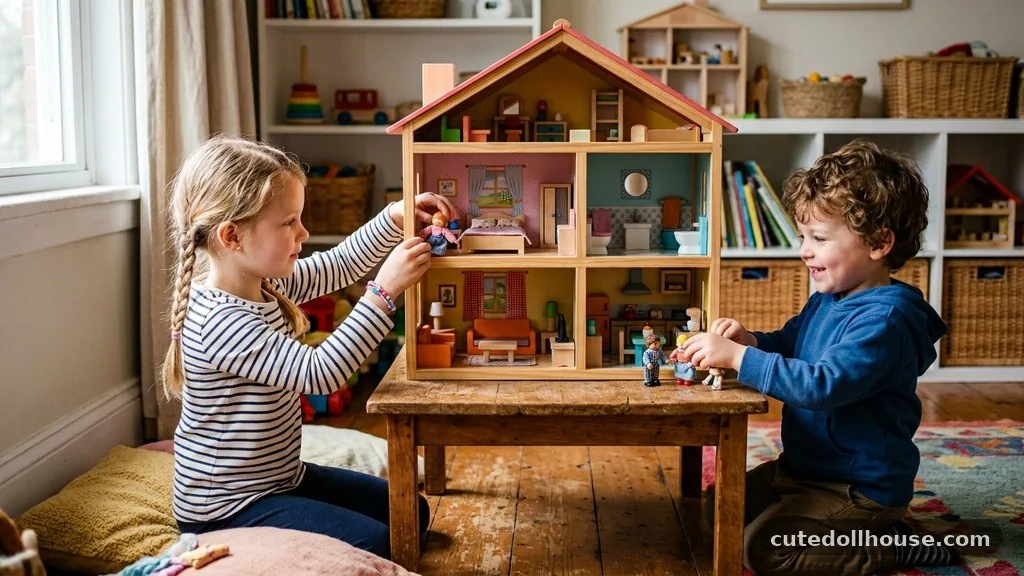
- You want to introduce a child to dollhouse play without making a large purchase.
- Available floor or shelf space is limited.
- The child enjoys pretend play more than detailed collecting.
- You prefer a lightweight or portable option.
- You want a basic structure that can be furnished gradually.
- The toy will be shared by siblings or used in a supervised play area.
When to Consider an Alternative
- The child is likely to outgrow a small layout quickly.
- You need a model made from heavier, more resistant materials.
- The child already owns figures that may not fit the house.
- Small accessories would be difficult to store or supervise.
- You want a display-quality miniature rather than a play-focused toy.
What to Look for in the Best Affordable Dollhouses for Kids
Build and Material Quality
Material choice affects stability, weight, cleaning, and long-term wear. Wooden and engineered-board dollhouses often have a more substantial feel, but the quality depends on thickness, joints, surface finish, and assembly. Plastic models can be easier to wipe clean and may handle everyday handling well, though thin panels or flexible parts can feel less substantial.
Fabric or foldable dollhouses are often easy to store and carry. Their lower weight can be useful for younger children, but they may not provide the same rigid structure as a traditional house. Check whether the frame remains stable during play and whether the fabric is removable or washable if that matters for your household.
Look closely at the areas most likely to experience stress: wall connections, balconies, stair sections, doors, roof pieces, and furniture joints. A decorative finish is helpful, but it shouldn’t distract from whether the structure is likely to stay together during ordinary play.
Design and Appearance
Appearance is subjective, but it affects whether a child wants to return to the toy. Some children prefer colorful, heavily decorated rooms. Others enjoy a plain house that they can furnish and customize themselves.
Consider whether the layout leaves enough open space for moving figures. A house with many printed details may look busy while offering limited room for play. Removable roofs, open fronts, or accessible side panels can make a model easier to reach, especially for younger children.
Neutral designs may blend more easily into a bedroom or family room. Bright plastic styles may be more visually engaging for children and easier to identify as a toy. Neither approach is automatically better; the right choice depends on where the house will be used and what kind of play the child enjoys.
Size, Scale, and Fit
Size is one of the most common sources of buyer disappointment. A dollhouse may look large in product photographs but occupy a modest amount of space in person, or the reverse. Always check the listed assembled dimensions and compare them with the intended shelf, table, or floor area.
Scale matters just as much. Dolls and figures come in different sizes, and accessories made for one house may look oversized or unusable in another.
If the child already owns figures, measure them before ordering. Check door heights, room openings, staircase width, and furniture proportions where those details are available.
Allow extra space around the house for hands to reach inside. A model that technically fits on a shelf may be frustrating if children cannot comfortably access the rooms.
Features and Functionality
Budget dollhouses vary in how much they encourage active play. Some provide a basic shell with rooms and windows. Others include opening doors, movable furniture, elevators, balconies, kitchens, bathrooms, lighting effects, or sound features.
More features aren’t always more useful. Electronic functions may require batteries and can limit play if they stop working.
Printed details don’t need maintenance, while movable parts may eventually loosen or break. Think about which features support the child’s preferred play rather than paying extra for decoration that may receive little attention.
Useful features can include:
- Wide openings that make rooms easy to reach.
- Stable floors and a base that resists tipping.
- Furniture that can be rearranged.
- Storage for small accessories.
- A layout compatible with figures the child already owns.
- Simple surfaces that can be cleaned without damaging the finish.
- Modular sections that can be expanded or rearranged.
Assembly and Ease of Use
Many dollhouses marketed for children require adult assembly. The difficulty may depend on the number of panels, fasteners, stickers, accessories, and decorative parts. Before buying, review the assembly information provided by the manufacturer or seller rather than assuming that a low price means a quick setup.
A straightforward assembly process should have clearly identified parts and readable instructions. Missing hardware, unclear diagrams, or tight-fitting pieces can turn a budget purchase into a frustrating project. If customer feedback frequently mentions assembly problems, treat that as a reason to investigate the current version carefully.
Once assembled, the house should be placed on a stable surface. Lightweight models can be convenient, but they may move or tip if children pull on balconies, roofs, or attached furniture. A floor-based design should not block walkways, and a tabletop model should be positioned where it cannot easily be knocked onto a child.
Accessories and Compatibility
Included accessories can make a dollhouse feel ready for play, but accessory count alone shouldn’t determine value. A box full of tiny pieces may be less useful than a smaller set of well-sized furniture that fits the rooms properly.
Find out whether figures are included, whether furniture is fixed or removable, and whether the pictured accessories are all part of the package. Product images sometimes show optional items, separately sold figures, or room decorations that aren’t included with the main structure.
Compatibility is especially important if the child has a favorite doll or character range. A house designed for small fashion dolls may not work well with larger baby dolls, plush toys, or wooden figures. When measurements aren’t provided, ask the seller before purchasing rather than relying on photographs.
Durability and Maintenance
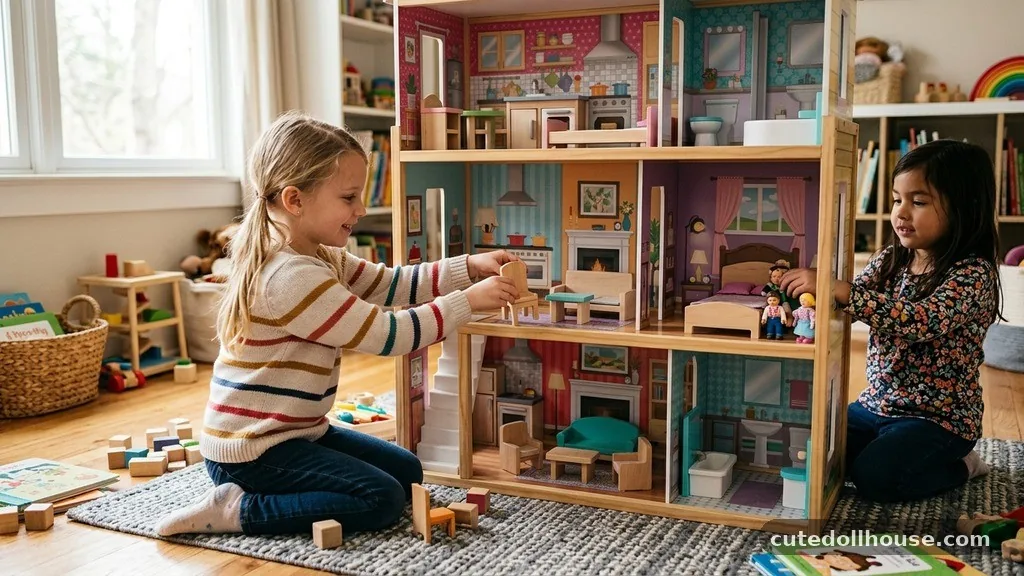
Durability depends on materials, construction, and how the toy is used. A dollhouse kept in one playroom may experience less wear than one carried between rooms or shared by several children. Younger children may also handle doors, stairs, and accessories more forcefully than older children.
For easier maintenance, look for smooth surfaces without unnecessary recesses that trap dust. Plastic is often simple to wipe, while painted wood may require gentler cleaning. Follow the manufacturer’s care instructions, particularly if the model includes decals, fabric, electronics, or unfinished-looking surfaces.
Small accessories are easy to lose. A storage box or dedicated drawer can help preserve the playset and reduce the chance that pieces end up under furniture. If a model includes tiny components, follow the manufacturer’s age guidance and supervise younger children as appropriate.
Customer Feedback and Common Complaints
Reviews can reveal practical issues that product descriptions don’t explain. Look for repeated comments about stability, missing parts, difficult assembly, inaccurate dimensions, weak furniture, or accessories that don’t match the advertised images.
One negative review doesn’t establish a general problem. However, similar complaints across multiple recent reviews deserve attention. Also check whether feedback refers to the exact model and size being considered; sellers sometimes group different versions under one listing.
Customer experiences can vary by production batch, seller, shipping method, and region. Verify the current product photos, included contents, return policy, and assembly instructions before ordering.
Comparison Factors at a Glance
Because no specific dollhouse models were supplied for this category, the table below compares the main types buyers are likely to encounter rather than ranking individual products.
| Type | Best For | Typical Difficulty | Key Feature | Main Drawback | Overall Value Consideration |
|---|---|---|---|---|---|
| Compact plastic house | Young children and smaller spaces | Often low to moderate | Lightweight, wipe-clean construction | May feel less substantial | Good when portability and easy care matter most |
| Wooden or engineered-board house | Families wanting a more permanent play setup | Moderate to high | Rigid structure and furniture-like appearance | Heavier and usually less portable | Value depends on construction and finish quality |
| Foldable or fabric house | Travel, storage, and occasional play | Low to moderate | Easy to pack away | May offer less structural stability | Strong choice where storage is the priority |
| Feature-rich electronic house | Children attracted to lights, sounds, or interactive functions | Varies by model | Interactive play elements | Battery needs and more parts that can fail | Worth considering only if the added functions will be used |
| Expandable or modular house | Children whose interests may grow over time | Moderate | Ability to add or rearrange sections | Extra sections may cost more or be difficult to find | Potentially good long-term value if expansion is available |
Safety Considerations for Dollhouse Play
Age guidance should be treated as a practical safety instruction, not just a marketing detail. Check for small parts, detachable furniture, batteries, magnets, sharp edges, and openings that could trap fingers.
For general toy-safety information, parents can consult the U.S. Consumer Product Safety Commission’s toy safety guidance.
Inspect the house after assembly and again after regular use. Stop using it if panels crack, fasteners loosen, or small components become damaged. Keep packaging, instructions, and spare parts until the product has been fully checked and the return period has passed.
Placement also matters. Avoid unstable shelves, narrow ledges, and locations near stairs. A large dollhouse should have enough clearance for children to play without pulling against surrounding furniture.
Recommendations by Buyer Type
For Beginners
A simple, compact dollhouse is usually the least complicated starting point. Prioritize clear assembly instructions, stable construction, and compatibility with readily available figures. A basic model also lets families learn whether dollhouse play suits the child before adding more furniture or upgrading.
For Small Homes
Choose a house with verified dimensions and easy storage. Foldable designs can be useful for occasional play, while compact vertical models may provide several levels without taking up much floor space. Leave enough room for children to reach every area.
For Appearance-Focused Buyers
Wooden or carefully finished engineered-board designs may better suit a shared living space, but inspect the finish and construction rather than relying on staged photographs. A visually attractive house still needs a practical interior and stable base.
For Value-Focused Buyers
Compare what is included, not just the purchase price. A less expensive house that requires separate figures, furniture, and batteries may cost more to make playable. A simpler model with useful accessories and a compatible scale may offer better overall value.
For Children Who Like Open-Ended Play
Look for movable furniture, accessible rooms, and a layout that doesn’t dictate one narrow story. Plain walls and flexible spaces can be advantages because children can redesign the rooms and add their own objects.
For Families Seeking Long-Term Use
Prioritize construction, repairability, and expandable features. Confirm that replacement parts or additional sections are actually available before treating a modular design as a long-term investment. A more expensive house isn’t automatically more durable, but very lightweight construction may not suit intensive shared play.
Common Buying Mistakes to Avoid
- Choosing by product photographs without checking assembled dimensions.
- Assuming every pictured accessory is included.
- Ignoring the scale of dolls and furniture already owned.
- Buying an elaborate house for a child who prefers portable toys.
- Overlooking assembly requirements and required tools.
- Confusing decorative detail with structural durability.
- Failing to check the seller’s return policy for damaged or incomplete packages.
- Buying a model with many tiny parts without considering storage and supervision.
Frequently Asked Questions
What are the best dollhouses for kids?
The best option depends on the child’s age, the available space, preferred doll size, and how the house will be used. For many families, a stable model with accessible rooms, compatible furniture, and manageable assembly is more useful than the largest or most decorated design.
What age is appropriate for a dollhouse?
There isn’t one universal age because dollhouses differ in size, small-part content, and complexity. Follow the manufacturer’s age recommendation and consider the child’s ability to play safely with detachable accessories, batteries, and miniature furniture.
How can I find an inexpensive dollhouse online?
Compare current listings across reputable retailers, then check dimensions, included accessories, seller feedback, shipping costs, and return terms. Search for the exact model number where possible because similar-looking houses may have different sizes or contents.
Do affordable dollhouses come assembled?
Some do, but many require at least partial adult assembly. The amount of work varies by material, number of levels, decorative pieces, and included furniture. Check the instructions or assembly notes before purchasing.
How do I know whether dolls will fit?
Compare the doll’s height and width with the house’s listed scale or interior measurements. Pay particular attention to doorways, staircases, beds, and seating areas. If the manufacturer doesn’t provide measurements, contact the seller rather than guessing from photos.
Are wooden dollhouses better than plastic ones?
Neither material is automatically better. Wood may offer a more substantial, furniture-like structure, while plastic can be lighter and easier to clean. Construction quality, stability, finish, and intended use matter more than material alone.
Final Verdict
The best affordable dollhouses for kids are worth buying when they provide a stable, accessible setting for imaginative play at a size and price that suit the household. Focus on scale, construction, assembly, included accessories, and storage before judging appearance or feature count. A basic model can be an excellent starting point, while children who play intensively may benefit from a stronger or expandable design.
Before ordering, verify the current dimensions, age guidance, package contents, and seller return policy. With those checks in place, an affordable dollhouse can offer meaningful open-ended play without requiring a premium purchase.