Finding the best dollhouses for kids under $50 means balancing play value, size, construction, and age suitability without relying on a low price alone. Budget dollhouses can range from compact plastic homes to simple wooden designs, and each type suits a different play space and child. The right choice should be safe, easy to use, sturdy enough for regular play, and large enough for the dolls or figures your child already owns.
It also helps to check what accessories are included, whether assembly is required, and whether the listed dimensions match your expectations. This guide explains what to look for, where inexpensive dollhouses may fall short, and which buyer priorities matter most before ordering.
What to Expect From a Dollhouse Under $50
A dollhouse is a small-scale play environment with rooms, openings, and surfaces where children can arrange furniture, figures, and accessories. Some models are open-front designs, while others have hinged panels, carrying handles, multiple floors, or foldable layouts. Materials commonly include plastic, engineered wood, cardboard elements, or a combination of these.
At a budget price, buyers should expect practical compromises. A less expensive dollhouse may be smaller, include fewer accessories, use lighter materials, or require more assembly than a higher-priced model.
That doesn’t automatically make it a poor purchase. A simple house with a durable layout can offer more useful play than a larger set with fragile parts or confusing assembly.
Product details can vary by retailer, production batch, color option, and regional listing. Before buying, confirm the current dimensions, recommended age, included pieces, material information, and return policy on the seller’s page.
Are Dollhouses Under $50 Worth Buying?
For many families, yes. A budget dollhouse can provide imaginative, open-ended play without requiring the cost or floor space associated with a large premium playset. It may be especially suitable as a first dollhouse, a gift for a young child, or a compact option for a bedroom, playroom, or shared living area.
The strongest value usually comes from a dollhouse that matches the child’s existing toys. A basic structure can work well if the child already has small dolls, furniture, or pretend-play accessories. By contrast, a heavily accessorized set may be more convenient for a gift, but the accessories should be checked carefully because tiny or easily lost pieces can limit long-term usefulness.
An inexpensive dollhouse may not be the best choice if you need a large wooden structure, realistic furniture, extensive room detail, or a design intended for several children to use at once. In those cases, saving for a larger model or choosing a modular play environment may make more sense.
Key Buying Criteria for Budget Dollhouses
Build and Material Quality
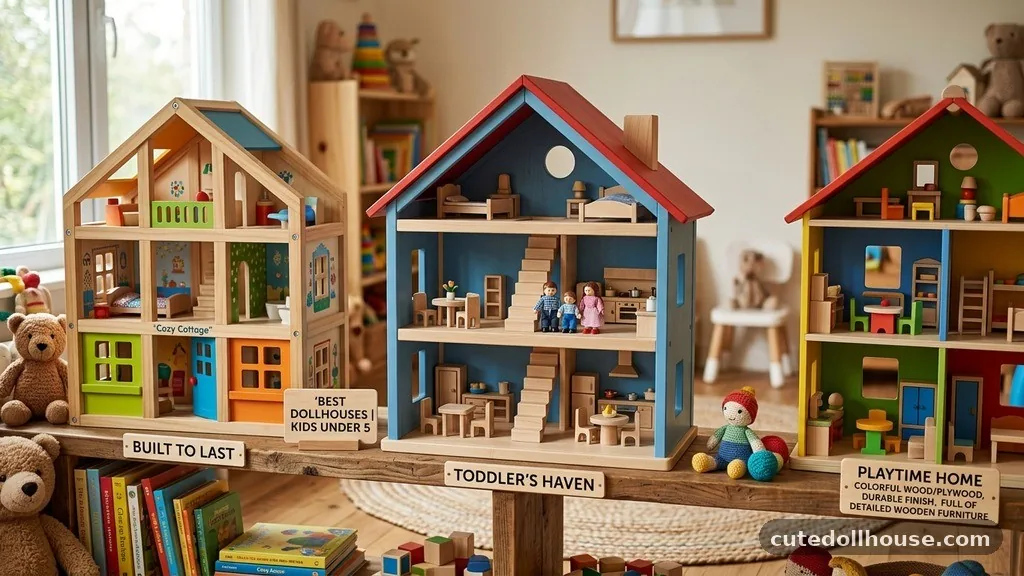
Materials affect weight, stability, cleanability, and how the house feels during play. Plastic models are often easier to wipe clean and may handle spills well. Wooden or wood-effect designs can look more substantial, but the quality depends on the panel material, edge finishing, fasteners, and assembly.
Look closely at product photographs and specifications for:
- Rounded or covered edges rather than sharp exposed corners
- Panels that appear properly aligned and securely connected
- Stable floors and a base that doesn’t look easy to tip
- Paint, laminate, or printed finishes that appear consistent
- Small parts that are appropriate for the child’s age and supervision level
Marketing terms such as “wooden,” “eco-friendly,” or “sturdy” should be treated as claims to verify rather than proof of quality. If the listing doesn’t identify the material clearly, contact the seller or look for a more complete specification.
Size and Fit
A dollhouse’s overall height can be misleading if the footprint, room depth, and access points aren’t also considered. Measure the shelf, table, or floor area where the house will be used. Leave room for a child to reach inside and for accessories to sit around the structure.
Scale matters, too. A dollhouse may be advertised for dolls but still have rooms too small for the figures your child owns. Check door openings, floor dimensions, and product images with a ruler or familiar toy for reference when those measurements are available.
Design and Appearance
Appearance is subjective, but it can affect whether a dollhouse remains appealing after the initial excitement. Bright plastic designs may attract younger children, while neutral colors or wood-look finishes may blend more easily into a family room.
Prioritize function over decoration. Printed walls and decorative details can look attractive, but accessible rooms, wide openings, and stable floors usually matter more during everyday play.
Features and Functionality
Useful features vary according to age and play style. Open-front layouts are generally easier for children to reach into, while foldable designs may be more convenient to store. Handles can help with portability, but they also add another component that should be checked for secure attachment.
Potential features include:
- Multiple levels or rooms
- Opening doors, windows, or shutters
- Movable furniture and figures
- Foldable or portable construction
- Built-in storage or space for accessories
- Compatible scale for commonly used dolls or figures
More features aren’t automatically better. A child who enjoys arranging furniture may prefer open space, while another may get more use from a set with included characters and pretend-play props.
Assembly and Ease of Use
Some budget dollhouses arrive mostly assembled, while others require adult construction. Assembly can involve screws, snap-fit panels, stickers, or small decorative parts. The product page should state whether tools are needed and how long assembly is expected to take, although seller descriptions aren’t always consistent.
Before ordering, check:
- Whether adult assembly is required
- Whether tools are included
- Whether instructions are supplied
- Whether stickers or decorative pieces need to be applied
- Whether the house can be disassembled for storage
A house that takes longer to assemble isn’t necessarily a bad choice, but missing hardware or unclear instructions can turn a low-cost purchase into a frustrating one. Keep the packaging until assembly is complete in case a part is missing or the item needs to be returned.
Durability and Maintenance
Durability depends on both construction and how the dollhouse will be used. A child who plays gently and leaves the house in one location may be well served by a lightweight model. A portable house that is moved frequently needs secure connections, strong hinges, and parts that don’t detach easily.
For maintenance, follow the manufacturer’s cleaning instructions. Plastic surfaces may be simpler to wipe down, while unfinished or laminated wood can be more sensitive to moisture. Avoid assuming that a dollhouse is water-resistant unless the product information says so.
Included Accessories
Accessory counts can make listings appear more generous than they really are. A set may include furniture but no dolls, or figures but very little furniture. Read the included-items list instead of relying on the photographs, since images may show optional accessories or props used for display.
Also consider storage. Numerous small pieces can improve pretend play, but they are easier to lose and may not be appropriate around toddlers. A small accessory set with a useful table, bed, or chair may be more valuable than a large collection of decorative pieces.
Safety and Age Suitability
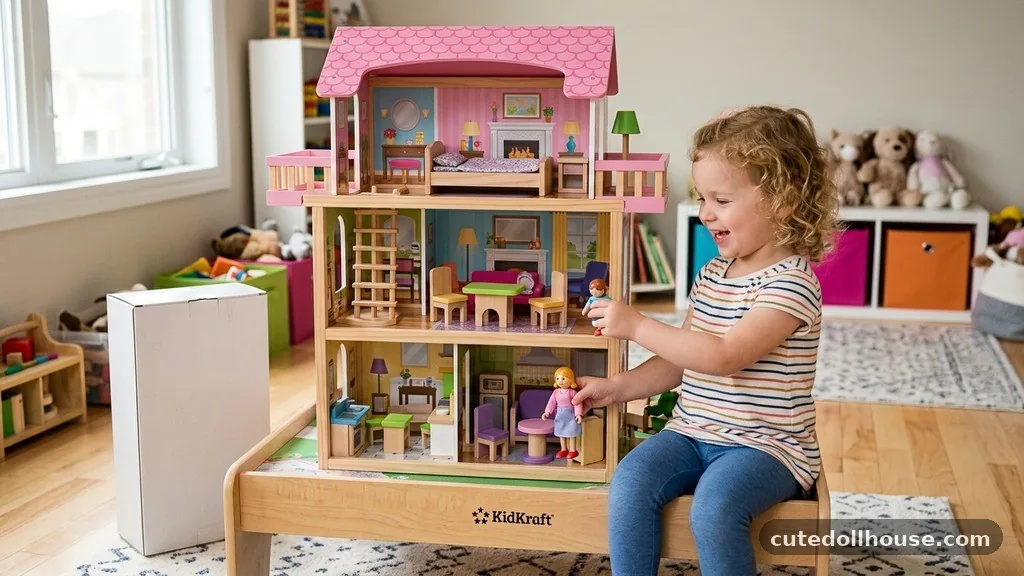
The recommended age is a starting point, not a substitute for supervision. Small furniture, miniature figures, and detachable decorations can create a choking risk for younger children. Parents and caregivers should inspect the house after opening it and remove damaged or loose parts.
For general toy-safety information, the U.S. Consumer Product Safety Commission’s toy safety guidance is a useful reference. Always compare that general advice with the specific warning label and instructions supplied with the product.
Budget Dollhouse Types Compared
Because no specific product listings or verified specifications were supplied for this roundup, the table below compares common dollhouse formats rather than ranking named products. Individual models can differ substantially, so use the product page to confirm the details before purchase.
| Dollhouse Type | Best For | Typical Difficulty | Useful Feature | Main Drawback | Overall Value Consideration |
|---|---|---|---|---|---|
| Compact plastic house | Young children and easy-clean play | Often low, but varies | Lightweight, wipeable surfaces | May feel less substantial or have smaller rooms | Good when portability and simple maintenance matter |
| Small wooden or wood-effect house | Children who prefer a more traditional look | Often moderate if assembly is required | Decorative appearance and structured rooms | Panel quality and hardware may vary | Worth considering when appearance and stability outweigh portability |
| Foldable dollhouse | Small homes or shared rooms | Usually low to moderate | Storage and portability | Hinges and folding joints need careful inspection | Strong fit where storage space is limited |
| Accessory-focused playset | Children starting without existing dollhouse toys | Varies by assembly and piece count | Furniture, figures, or themed props included | Small parts can be easy to lose | Convenient if the included pieces are genuinely useful |
| Open-front multi-level house | Imaginative play and easy room access | Moderate if multiple panels need fitting | Reachable rooms and flexible layouts | Can require more display space | Good for children who enjoy rearranging and role play |
What Common Customer Feedback Can Reveal
Customer feedback is useful, but it needs to be read for patterns rather than isolated complaints. A single report of a missing screw may reflect a one-off fulfillment problem; repeated comments about unstable floors, unclear instructions, or inaccurate dimensions deserve more attention.
Look for repeated feedback about:
- Whether the assembled house matches the listing photos
- Missing hardware, damaged panels, or incomplete accessory packs
- Room size and compatibility with the intended dolls
- How well the house stays upright during normal play
- Whether stickers, paint, or printed details remain attractive
- Packaging quality and the seller’s response to problems
Reviews can also be affected by expectations. Someone expecting a large wooden dollhouse may criticize a compact plastic model even if the item matches its stated measurements. Check the reviewer’s context where available, then compare it with the verified dimensions and materials.
Recommendations by Buyer Type
For First-Time Dollhouse Buyers
Choose a straightforward model with accessible rooms, a clear age recommendation, and enough open space for the child to play without constant adult help. Avoid paying extra for accessories that don’t match the toys already in the home.
For Small Rooms or Shared Living Spaces
A compact or foldable dollhouse is likely to be more practical than a wide multi-level structure. Measure the storage area first, and confirm whether folding the house requires removing furniture or accessories.
For Children Who Already Own Dolls and Furniture
Prioritize the structure itself: room dimensions, floor stability, access points, and compatibility with existing figures. A house with fewer included accessories may offer better value if the child has plenty of toys already.
For Appearance-Focused Buyers
Compare panel finishes, colors, printed details, and photographs from more than one listing where possible. A wood-look design may fit a room better, but confirm whether it uses solid wood, engineered material, plastic, or a combination.
For Buyers Who Want the Simplest Setup
Look for a model described as ready to play or mostly assembled. Verify what “easy assembly” means, because it may still involve attaching floors, railings, doors, or decorative components.
For Premium Buyers
A strict $50 ceiling limits size, material choices, and detailing. If you want a large structure, extensive furniture, long-term heirloom quality, or a highly realistic design, a higher budget may be more suitable than choosing the most elaborate budget listing.
When to Consider an Alternative
A dollhouse isn’t the only way to support pretend play. A miniature room, doll tent, play mat, or open storage cube can provide a flexible setting for dolls while taking up less space. These alternatives may also work better for children who prefer moving figures between different scenes rather than maintaining one fixed house.
Consider another option if:
- The available dollhouses are too small for the child’s existing figures
- The child is likely to outgrow the theme or character set quickly
- There isn’t a safe, stable place to display the house
- Small accessories would be unsuitable for the child’s age
- You need a structure that can withstand frequent transport
For very young children, larger pretend-play items with fewer detachable parts may be easier to supervise. For older children, a customizable dollhouse or separate miniature furniture may provide more creative flexibility than a fixed budget set.
How to Check a Listing Before You Buy
- Measure the intended play and storage area.
- Compare the dollhouse dimensions with the child’s dolls or figures.
- Read the complete included-items list, not just the product title.
- Confirm the recommended age and inspect small-part warnings.
- Check whether adult assembly and tools are required.
- Review recent customer comments for repeated quality issues.
- Confirm the current price, shipping cost, stock status, and return terms.
- Save the product page or order details until the house has been inspected and assembled.
Prices and availability can change, especially across major marketplaces and local retailers. A product that falls below $50 in one listing may exceed the budget after shipping, taxes, accessories, or a different size option is selected.
Frequently Asked Questions
What is the best age for a dollhouse?
There is no single best age. Many children become interested in pretend homes during the toddler and preschool years, but the appropriate choice depends on the child’s maturity, supervision needs, and ability to handle small parts. Always follow the manufacturer’s age guidance.
What is the best dollhouse for a two-year-old?
For a two-year-old, prioritize a stable, simple design with large accessible spaces and as few small detachable accessories as possible. Check the specific safety warnings rather than choosing based only on appearance or the word “toddler” in a listing title.
Can a dollhouse under $50 be made of wood?
Some budget models may use wood, engineered wood, wood-effect panels, or mixed materials, but construction varies. Verify the material description carefully; “wooden” in a title may not mean the entire house is made from solid wood.
Are inexpensive dollhouses suitable for older children?
They can be, particularly if the child enjoys imaginative storytelling and the rooms fit their existing figures. Older children may want more detail, customization, or space, so compare the layout and accessory options rather than relying on the price category.
Do dollhouses usually include dolls and furniture?
Not always. Some sets include furniture, figures, or accessories, while others provide only the house. Read the full contents list and check whether the items shown in product photographs are included or sold separately.
How can I tell whether a budget dollhouse is sturdy?
Look for clear information about the base, panel thickness, fasteners, hinges, and assembled weight. Repeated customer comments about tipping, loose joints, broken parts, or difficult assembly are more informative than vague claims such as “strong” or “durable.”
Final Verdict
The best dollhouses for kids under $50 are not defined by the biggest room count or the longest accessory list. They offer a sensible match between the child’s age, existing toys, available space, and expected play style. A compact plastic house may be the practical choice for easy cleaning, while a small wooden or wood-effect model may appeal more to families focused on appearance and a traditional playroom look.
Before buying, verify dimensions, materials, included pieces, safety information, and assembly requirements. If the listing provides clear details and the design suits the child, a budget dollhouse can be a worthwhile purchase. If you need premium construction, extensive detail, or room for several children, increasing the budget or choosing a flexible alternative may deliver better long-term value.