Choosing among the best DIY dollhouses for teens takes more thought than picking the largest or most elaborate-looking kit. These projects combine miniature design, crafting, painting, and careful assembly, so the right choice depends on a teen’s patience, experience, available space, and creative interests. Some kits are approachable first projects, while others demand many hours of detailed work and extra supplies.
The materials, scale, instructions, lighting, furniture, and finished appearance can vary widely between sellers and models. This guide explains what to check before buying, which types of kits suit different users, where common frustrations arise, and when a ready-made alternative may make more sense.
Important note: No specific product names or manufacturer specifications were supplied for this article. Rather than inventing a product roundup, the recommendations below focus on the main DIY dollhouse kit types and the practical decisions buyers should make before ordering.
What DIY Dollhouse Kits for Teens Are
A DIY dollhouse is a miniature construction project that typically requires the builder to assemble structural pieces, decorate rooms, and sometimes install lighting or arrange small accessories. Depending on the model, construction may involve wood, plywood, paper, fabric, plastic, wire, adhesive, paint, and other craft materials.
These kits are not all alike. Some are designed as simple room boxes or small scenes, while others recreate a multi-room house with stairs, windows, furniture, landscaping, and electrical features. A product described as a “dollhouse kit” may arrive partly finished, completely unassembled, or somewhere in between.
Before purchasing, buyers should check what the box actually contains. Glue, paint, batteries, tools, miniature furnishings, and lighting components may be included in some kits but sold separately in others. Product photographs can also show decorative items that aren’t part of the package.
Are DIY Dollhouses Worth Buying for Teens?
A DIY dollhouse can be worthwhile for a teenager who enjoys hands-on projects and doesn’t mind working slowly. The appeal isn’t limited to the finished miniature house; much of the value comes from planning rooms, selecting colors, solving small construction problems, and adding personal details.
The category is less suitable for someone who wants an immediate playhouse or becomes frustrated by repetitive tasks. Tiny components can be easy to misplace, instructions may require interpretation, and some builds take considerably longer than their listing suggests. Adult supervision may also be sensible when a kit involves sharp tools, hot glue, cutting, soldering, or small parts.
For safety information related to toys and small components, buyers can consult the U.S. Consumer Product Safety Commission’s toy safety guidance.
Main DIY Dollhouse Types to Consider
Because product names, contents, and difficulty ratings differ between manufacturers, it is often more useful to compare the type of project than to rely on a marketing label.
Room Boxes and Small Miniature Scenes
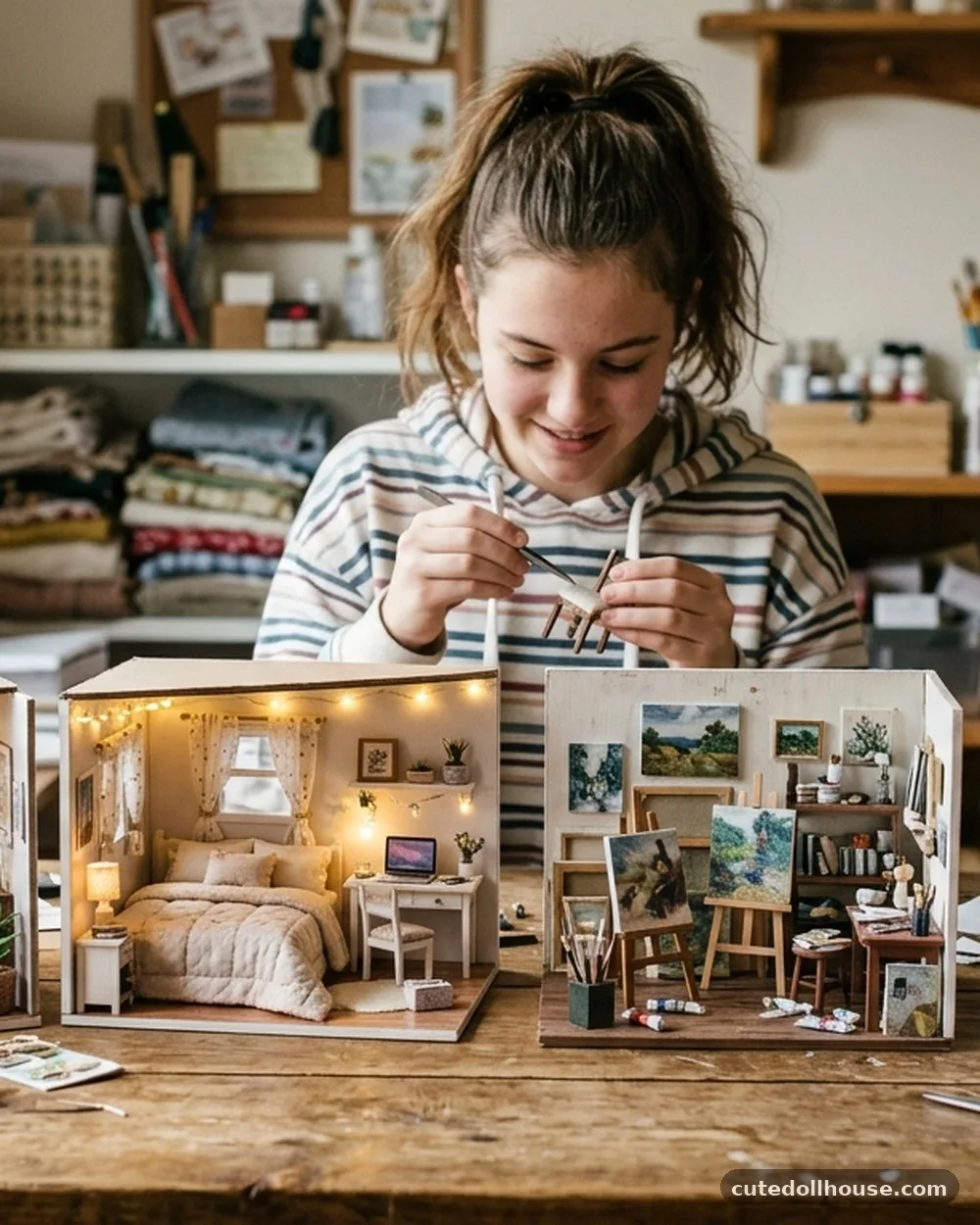
Room boxes recreate one setting, such as a bedroom, café, library, shop, or studio. They usually require less space and may be easier to complete than a full house. A focused scene can also be more satisfying for a beginner because the project has a clear endpoint.
- Best for: beginners, limited workspaces, and shorter creative projects
- Strengths: manageable scale, focused decoration, and easier display
- Limitations: less room for expansion and fewer structural building challenges
Traditional Multi-Room Dollhouse Kits
These kits are closer to conventional miniature houses, with several rooms and a more substantial structure. They offer greater scope for customization, but they also create more opportunities for alignment problems, incomplete finishing, and uneven paintwork.
- Best for: experienced crafters or teens who want a longer project
- Strengths: strong display presence and extensive decorating options
- Limitations: more assembly, more supplies, and a larger storage footprint
Book Nooks and Shelf-Insert Scenes
Book nooks are narrow miniature scenes designed to sit between books or on a shelf. They often emphasize atmosphere rather than open-ended play. Their compact shape makes them attractive to buyers with little floor or table space.
- Best for: readers, collectors, and appearance-focused buyers
- Strengths: compact display format and strong storytelling potential
- Limitations: cramped working areas and limited access after assembly
Pre-Cut Wooden Kits
Wooden kits may use pre-cut panels that the builder assembles and decorates. The accuracy of the cuts, clarity of the instructions, and quality of the joining points matter greatly. Even small dimensional errors can affect the fit of walls, floors, roofs, or stairs.
Fabric, Paper, and Soft-Craft Miniatures
Some miniature kits lean more heavily on paper, fabric, printed artwork, and decorative craft techniques. These can be visually detailed without requiring the same kind of structural assembly as a wooden house. They may suit teens who prefer styling and composition over construction.
What to Check Before Buying
Build and Material Quality
Look for a clear description of the main materials rather than relying only on photographs. Wood or plywood panels should be described accurately, and buyers should check whether the listing identifies the thickness, finish, or construction method when those details matter.
Inspect user photos if available. They can reveal warped panels, rough edges, delicate decorative parts, or gaps that are not obvious in polished product images. However, customer photos represent individual experiences and should not be treated as proof that every kit will have the same issue.
Design and Appearance
Consider whether the finished style suits the intended owner. Some kits are realistic and architectural, while others use bright colors, fantasy details, cozy rooms, or storybook themes. A teen who enjoys interior design may care more about open decorating space than about a highly complex structure.
Check whether the interior is visible after completion. Narrow openings, fixed roofs, or deep rooms can make it difficult to reach corners for painting and furnishing. A beautiful design is less useful if most of its details disappear from normal viewing angles.
Size, Scale, and Display Space
Dimensions should be checked before purchase, including the approximate finished height, width, and depth. A kit may look compact in an online image but occupy considerable desk or shelf space once assembled.
Scale matters, too. Furniture and accessories from one project may not fit another. If the buyer already owns miniature figures or furnishings, confirm compatibility rather than assuming that all dollhouse items are interchangeable.
Included Components
Listings should be read carefully for what is included and what is not. Common categories to verify include:
- Structural panels and decorative pieces
- Furniture and miniature accessories
- Lighting, wiring, switches, and battery compartments
- Paint, fabric, paper, and other finishing materials
- Glue or recommended adhesive
- Tools, brushes, cutting equipment, and assembly aids
- Instructions, diagrams, and language availability
“DIY” does not always mean that every part must be made from raw materials, but it usually does mean that some assembly or finishing is expected. A product with many finished accessories may be easier to complete than one that requires extensive crafting from supplied sheets.
Difficulty and Time Commitment
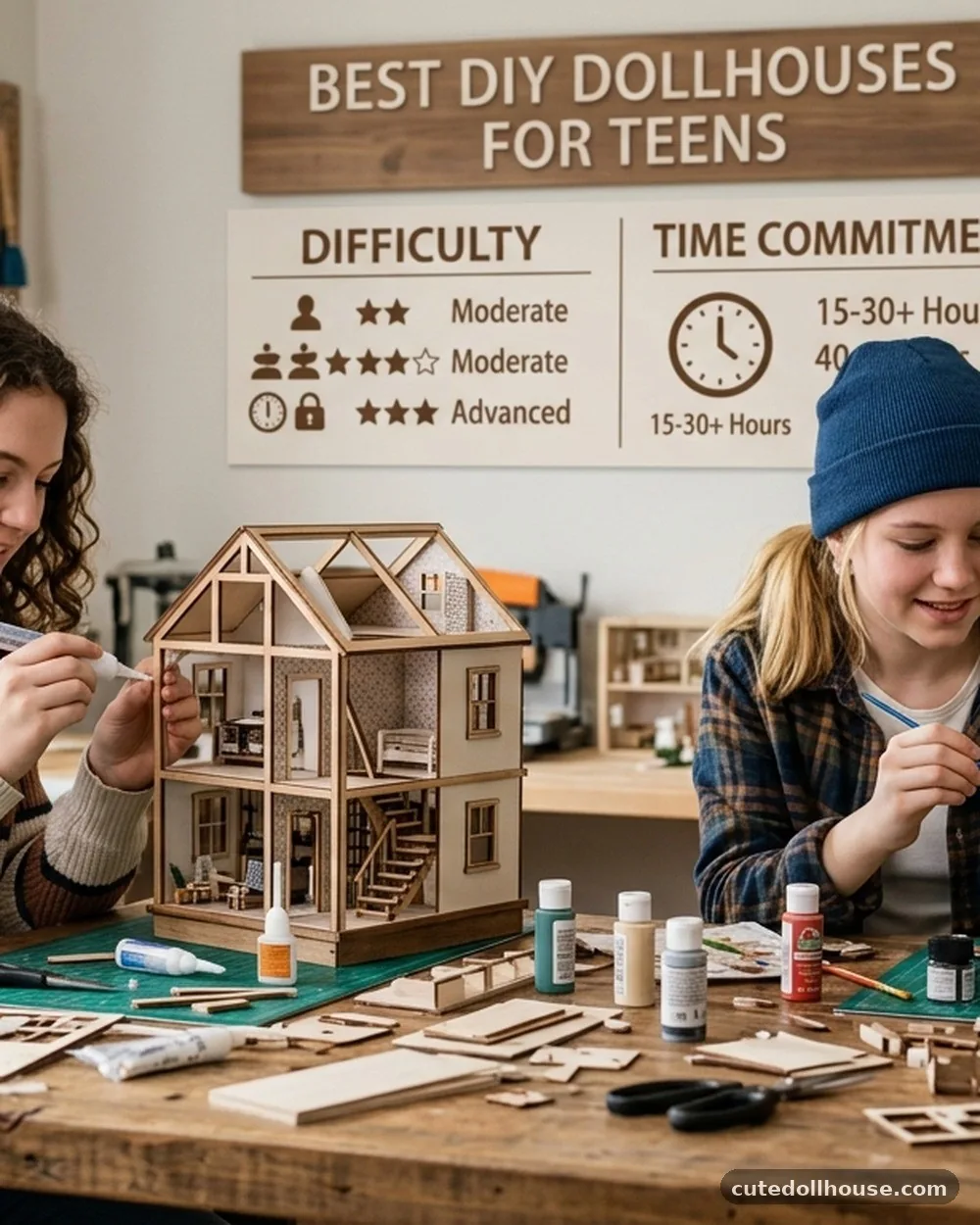
Difficulty labels are not standardized. One seller’s “beginner” kit may be another seller’s intermediate project, particularly if the build includes wiring, intricate wallpaper, tiny furniture, or parts that need trimming.
Look for photographs of the assembly stages, the number of components, and comments about instruction quality. A large piece count is not automatically a sign of better quality; it may simply indicate that the kit includes many small decorative items.
Instructions and Customer Support
Good instructions should identify parts clearly and show the order of assembly. Diagrams need to be legible, especially for wiring, stairs, windows, and overlapping decorative layers. If buyers commonly report missing steps or unclear illustrations, beginners may need outside guidance.
Check how the seller handles missing or damaged parts. Policies can vary by retailer, manufacturer, region, and production batch, so buyers should save the listing and inspect the contents soon after delivery.
Durability and Maintenance
Miniatures are display objects, and many are more delicate than ordinary toys. Thin trim, tiny lamps, paper details, and lightweight furniture may need careful handling. Dust can also collect in rooms and textured surfaces.
A durable project should have stable structural joints and a finish that does not rely entirely on fragile surface decorations. Display location matters: direct sunlight, humidity, pets, and frequent moving can all affect a completed model.
Comparison of DIY Dollhouse Formats
| Format | Best For | Typical Difficulty | Key Feature | Main Drawback | Overall Value Consideration |
|---|---|---|---|---|---|
| Room box | Beginners and small spaces | Beginner to intermediate | Focused scene with a clear display area | Limited room for expansion | Strong choice when completion time and footprint matter |
| Multi-room house | Longer projects and experienced crafters | Intermediate to advanced | More rooms and customization opportunities | More assembly, supplies, and storage space | Better suited to buyers who value scope over simplicity |
| Book nook | Shelf displays and story-focused designs | Beginner to advanced, depending on the kit | Narrow, atmospheric presentation | Restricted access and working space | Appealing when display style is the priority |
| Wooden kit | Builders who enjoy construction | Varies widely | Structured assembly and a solid base | Fit depends on panel accuracy and instructions | Worth considering when materials and parts are clearly specified |
| Paper or fabric miniature | Decorators and soft-craft enthusiasts | Beginner to intermediate | Emphasis on styling and fine decorative work | May be less structurally durable | Useful for buyers who prefer creative finishing to carpentry |
Common Advantages of DIY Dollhouses for Teens
- Creative control: Rooms can often be painted, rearranged, or accessorized according to personal taste.
- Skill building: Projects can encourage planning, measuring, fine-motor control, patience, and problem-solving.
- Flexible display: Completed scenes can decorate a bedroom, study area, shelf, or craft space.
- Longer-lasting interest: A detailed kit may provide several sessions of activity rather than a single afternoon.
- Personal meaning: Handmade rooms can reflect hobbies, favorite colors, fictional settings, or family interests.
Potential Drawbacks to Consider
- Extra costs: Paint, adhesive, tools, batteries, and replacement materials may not be included.
- Small parts: Tiny pieces are easy to lose and may not suit every workspace.
- Unclear difficulty: Marketing labels do not consistently indicate the amount of work involved.
- Fragility: Decorative details and lighting can require careful handling after assembly.
- Uneven instructions: Poor diagrams or translation issues can make an otherwise appealing kit difficult.
- Space requirements: A completed house may need a permanent display location.
Which Option Suits Different Buyers?
For a First-Time Builder
Choose a smaller room box or a clearly documented project with fewer structural stages. A kit with pre-cut parts, straightforward diagrams, and limited wiring is generally easier to approach than a large house with complex electrical features.
For an Experienced Crafter
A multi-room house or highly detailed wooden project may offer more satisfying work. Experienced users should still inspect the materials, part list, and instruction quality; familiarity with crafts cannot compensate for missing components or inaccurate panels.
For a Teen Who Cares Most About Appearance
Focus on the finished design, viewing angles, included furniture, and the amount of visible interior space. A book nook or polished room scene may be more appealing than a larger but sparsely furnished structure.
For a Buyer with Limited Space
Measure the intended shelf or desk before ordering. Room boxes and book nooks usually make more sense than a wide multi-level house, but the product’s actual dimensions should always take priority over its category name.
For a Value-Focused Buyer
Compare the total project cost, not only the kit price. A less expensive package may require paint, glue, tools, furniture, or replacement parts that make the finished project more costly and time-consuming than expected.
For Someone Who Wants an Immediate Gift
A fully assembled or partly furnished miniature may be more appropriate. DIY kits are activities as much as they are products, so they are not ideal if the recipient expects a finished house straight out of the box.
How to Make Assembly More Manageable
Set up a clean, well-lit workspace before opening the package. Sort pieces into labeled groups, keep the instructions nearby, and avoid removing every small component from its packaging at once. A shallow tray or compartment organizer can reduce lost parts.
Read the complete instruction booklet before gluing anything permanently. Dry-fit walls, floors, stairs, and furniture first. This simple step can expose orientation mistakes before they become difficult to correct.
Allow painted or glued sections to dry fully before adding the next layer. Rushing can lead to fingerprints, shifted trim, blocked openings, and parts that no longer align. When instructions are unclear, consult the seller rather than guessing about structural or electrical components.
What Customer Feedback Can Reveal
Public reviews are most useful when they describe specific issues rather than simply assigning a star rating. Look for repeated comments about warped panels, missing pieces, unclear directions, weak adhesive, inaccurate dimensions, or lighting that is difficult to install.
Positive feedback can also identify practical strengths, such as well-labeled parts, attractive printed details, useful diagrams, or furniture that arrives ready to place. Still, reviews may reflect different skill levels and expectations. A project that feels easy to an experienced miniaturist may be challenging for a first-time builder.
Pay attention to the date of reviews and the exact seller or model variation. Manufacturing batches, packaging, instructions, and included accessories can change, especially when similar listings are sold through multiple marketplaces.
Frequently Asked Questions
What is the best DIY dollhouse kit for a beginner teen?
A small room box or simple pre-cut kit is usually the safest starting point. Choose one with clear instructions, limited wiring, accessible interior spaces, and a transparent list of included materials.
Are DIY dollhouses suitable for all teenagers?
No. They suit teens who enjoy patient, detailed activities, but they may frustrate anyone who wants fast results or finds tiny parts difficult to handle. Difficulty, tools, and supervision needs vary by kit.
Do dollhouse kits include paint and glue?
Some do and some don’t. Check the package contents carefully, because photographs may show completed decorations that aren’t included. Also verify whether batteries, tools, and lighting supplies are separate purchases.
How long does it take to build a miniature house?
The time varies with the size, detail, experience of the builder, drying time, and amount of customization. Treat seller estimates as approximate rather than guaranteed deadlines.
What can be made for a DIY dollhouse?
Builders can add miniature artwork, rugs, bedding, books, plants, food, wall decorations, and personalized furniture. These additions may be purchased, crafted from household materials, or adapted from other miniature projects if the scale fits.
Is a large dollhouse better than a small one?
Not necessarily. A large house offers more space for rooms and decoration but needs more time, supplies, and storage. A smaller scene may be a better choice for a first project or a limited display area.
Final Verdict
The best DIY dollhouses for teens are not defined by size or the number of tiny accessories. The strongest choice is the one that matches the builder’s patience, experience, workspace, preferred style, and willingness to buy or make additional supplies. Beginners will usually benefit from a compact, clearly explained project, while experienced crafters may prefer a larger house with more room for customization.
Before buying, verify the dimensions, scale, materials, included components, instructions, difficulty, and return policy. DIY dollhouses are worth buying when the creative process is part of the appeal; if the goal is instant play or display, a finished miniature may be a better fit. Compare the complete project requirements, then choose the kit that feels challenging without becoming discouraging.