
Colorful dollhouses can turn a child’s room, play corner, or reading area into a more imaginative space, but the brightest design isn’t automatically the best choice. The right dollhouse needs to suit the child’s age, available floor space, preferred dolls, and tolerance for small parts or assembly.
Parents also need to think about stability, material quality, cleaning, and whether the house will remain interesting after the novelty fades. This guide to the best colorful dollhouses for kids’ rooms explains the features that matter, the compromises to expect, and how to compare options when product specifications or seller listings are incomplete.
What Is a Colorful Dollhouse?
A dollhouse is a miniature home designed for pretend play. Children can arrange furniture, move dolls between rooms, create stories, and use the house as a setting for imaginative games. A colorful dollhouse uses bright paint, patterned walls, colorful accessories, or playful architectural details to make the toy more visually engaging.
These dollhouses come in many formats. Some are compact wooden structures with a few open rooms.
Others are larger multi-level playsets made from engineered wood, plastic, or a combination of materials. Certain models are sold with furniture and figures, while others include only the house, leaving families to choose compatible accessories separately.
Before buying, check what “dollhouse” means for the specific listing. A house designed for small wooden figures may not accommodate larger fashion dolls, and a room-sized structure may be unsuitable for a small bedroom. Product measurements, recommended age, included accessories, and assembly requirements should be treated as essential information rather than minor details.
Are Colorful Dollhouses Worth Buying?
A colorful dollhouse can be a worthwhile purchase for children who enjoy role-play, decorating, storytelling, and open-ended games. It can also provide a more attractive alternative to a toy that stays hidden in a storage box, especially when its colors complement the room.
The value depends on how well the dollhouse matches the child and the space. A beautifully decorated model may be disappointing if it is too small for the child’s favorite figures, too delicate for frequent play, or difficult to reach once placed against a wall. A simpler house with sturdy construction and flexible room layouts may offer more lasting use than a highly themed set with many fragile decorative pieces.
Another toy category may be better for children who prefer vehicles, construction, outdoor activity, or fast-moving games. Families with limited space may also prefer a foldable, portable, or compact playset rather than a large permanent structure.
What to Check Before Buying
Build and Material Quality
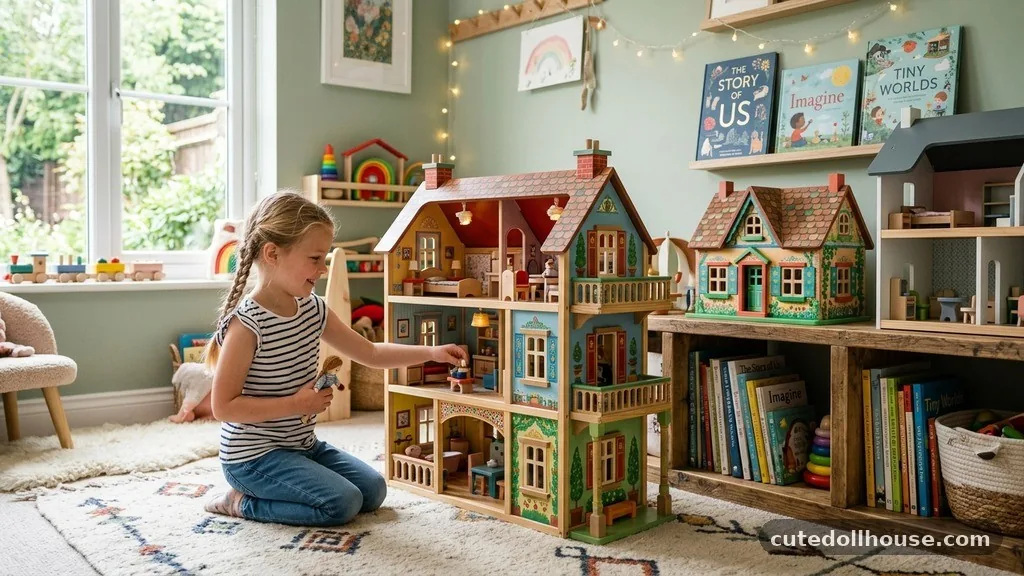
Material affects stability, appearance, weight, and long-term maintenance. Wooden dollhouses often have a substantial feel and may suit a bedroom where the house will remain set up. Plastic models can be easier to wipe clean and may handle spills well, but the quality of plastic, joints, panels, and decorative parts varies by product.
Look closely at the construction details listed by the manufacturer or seller. Useful information includes panel thickness, the type of fasteners, whether edges are smoothed, and whether the structure is designed to stand freely or needs support against a wall.
- Check that the base appears wide enough for the height of the house.
- Look for rounded or finished edges rather than exposed rough surfaces.
- Confirm that doors, balconies, stairs, and railings are securely attached.
- Review whether the finish is described as child-safe, and verify the relevant details on the product listing.
- Be cautious when photographs show accessories that are not clearly included.
Design and Appearance
Color is more than decoration. Bright rooms and contrasting details can make the house easier to use, while a softer palette may blend better with a child’s bedroom. Some children enjoy a traditional home shape, while others prefer a modern apartment, castle-inspired design, or open-front structure.
Appearance should not replace practical design. A house with attractive printed walls may be less useful if its rooms are difficult to access. Open-backed or open-front models generally make it easier for children to reach furniture and figures, although they may collect more dust and can look less like a real house from the rear.
Size and Fit
Measure the intended location before ordering. Account for the width, depth, and height of the assembled house, not just the package dimensions. Leave enough space for a child to sit or stand in front of it and move figures around comfortably.
Compatibility is equally important. Sellers may use terms such as miniature, dollhouse scale, fashion-doll size, or large dollhouse without applying those descriptions consistently. If the child already owns dolls or furniture, compare their measurements with the internal room dimensions and door openings whenever those details are available.
Features and Functionality
Useful features can include multiple rooms, removable furniture, working doors, staircases, balconies, elevators, lighting, or repositionable accessories. More features are not automatically better. A child may get more value from a house with accessible rooms and durable furniture than from one with electronic details that add complexity.
Think about how the toy will be used. If the child likes arranging spaces, movable furniture matters.
If storytelling is the main attraction, several distinct rooms may be more useful. If the house is mainly decorative, color coordination and footprint may matter more than accessory count.
Assembly and Ease of Use
Large dollhouses commonly require adult assembly. The difficulty can depend on the number of panels, the clarity of the instructions, the type of fasteners, and whether a second adult is needed to hold pieces in place. A listing may provide an assembly time, but that estimate can vary with tools, experience, and the condition of the parts.
Before purchasing, confirm whether tools are supplied and whether the house arrives flat-packed. Read customer feedback for recurring comments about unclear instructions, misaligned holes, missing hardware, or difficult decals. A model that takes longer to assemble may still be a good buy if its construction is solid, but buyers should plan for the setup rather than treating it as a quick unpack-and-play toy.
Safety and Age Suitability
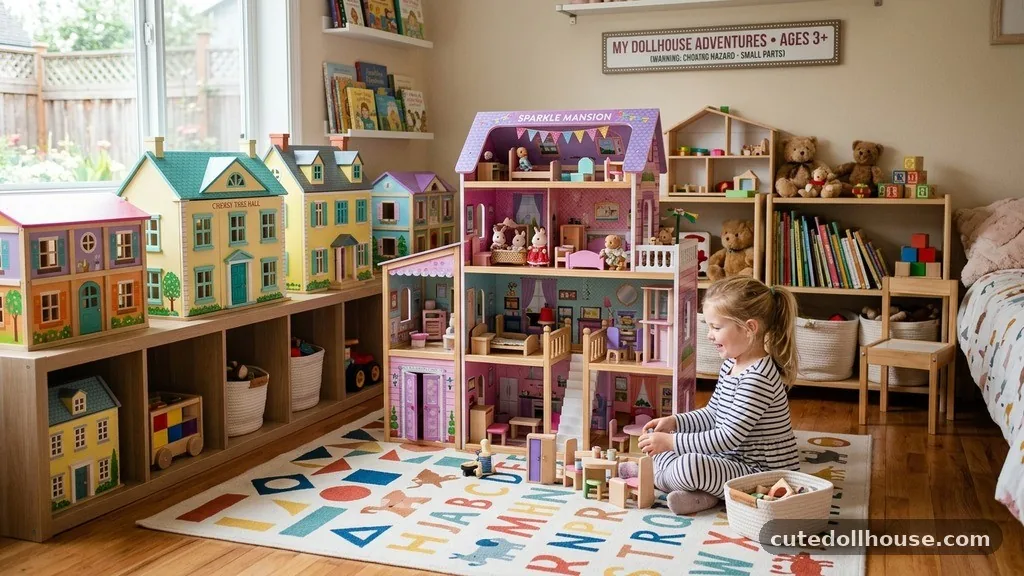
Follow the manufacturer’s recommended age range and inspect the product after assembly. Small furniture, detachable decorations, and miniature figures can present a choking risk for younger children. A dollhouse with a tall upper level should also be placed where it cannot be pulled over easily.
For general toy-safety guidance, parents can consult the U.S. Consumer Product Safety Commission’s toy safety information. Product-specific warnings still take priority because materials, accessories, and construction differ between models.
Maintenance and Durability
Dust can gather quickly on ledges, balconies, printed floors, and tiny furniture. Smooth plastic surfaces are usually straightforward to wipe, while unfinished or textured wood may need gentler care. Ask whether stickers, paper details, or painted surfaces can tolerate regular cleaning.
Durability also depends on how the child plays. A display-oriented house may work well for careful, supervised play but may not withstand frequent moving, climbing, or rough handling. Removable accessories are convenient, yet they are also easier to lose.
Comparison Points for Colorful Dollhouses
| Factor | What to Look For | Why It Matters | What to Verify |
|---|---|---|---|
| Materials | Wood, plastic, or mixed construction | Affects weight, cleaning, appearance, and durability | Finish, edges, panels, and hardware |
| Scale | Room dimensions and figure compatibility | Prevents dolls and furniture from being unusable | Internal measurements and door openings |
| Layout | Open-front rooms, levels, balconies, and stairs | Determines how easily children can play inside the house | Access to every room and stability when furnished |
| Accessories | Furniture, figures, lighting, or decorative pieces | Influences out-of-box play and replacement costs | Included items rather than photographed items |
| Assembly | Flat-packed or partly assembled construction | Changes setup time and the tools required | Instructions, hardware, and customer feedback |
| Footprint | Width, depth, and height after assembly | Ensures the dollhouse fits the intended room | Clearance for play and storage |
Common Types of Colorful Dollhouses
Wooden Dollhouses
Wooden dollhouses often appeal to families who want a substantial centerpiece for a playroom or bedroom. Their painted rooms and fixed structure can look attractive, but they may be heavier and more demanding to assemble. Wood also requires attention to splinters, chipped paint, and rough edges if the product is used heavily.
This style is often a good fit for children who enjoy arranging rooms and leaving the house set up in one place. It may be less suitable for families who need to move the toy frequently.
Plastic Dollhouses
Plastic houses are often lighter and easier to wipe clean. They can work well in play areas where spills are likely, although plastic quality varies. Thin panels, loose connectors, or delicate accessories can affect the experience, so buyers should not assume that every plastic model is equally durable.
Plastic construction may suit younger children when the design has large, easy-to-handle pieces and clear safety guidance. Small detachable parts still need careful consideration.
Large Multi-Level Dollhouses
Large houses offer more space for furniture and imaginative scenes. They can become a focal point in a child’s room, but their size creates practical demands: more floor space, more assembly, more dusting, and potentially more difficulty reaching upper rooms.
Check whether the child can comfortably access every level. A tall house that looks impressive but places key play areas out of reach may not deliver the expected value.
Compact or Portable Dollhouses
Compact models are easier to store and may suit bedrooms with limited space. Some can be carried between rooms or packed away after play. The trade-off is usually a smaller interior, fewer accessories, or reduced compatibility with larger dolls.
This type can be a sensible starting point for a child who is interested in dollhouses but has not yet shown a long-term preference for them.
How Customer Feedback Can Help
Customer reviews are most useful when they reveal repeated patterns rather than isolated complaints. Look for several buyers mentioning the same issue, such as missing parts, fragile furniture, confusing instructions, strong odors, inaccurate dimensions, or colors that differ from the photographs.
Feedback should still be interpreted carefully. A product may arrive damaged because of shipping rather than poor design, and assembly problems can result from an individual mistake or incomplete hardware packet. Reviews are more persuasive when they include photographs, specific measurements, and clear descriptions of how the product was used.
Before relying on a review, compare it with the current listing. Sellers sometimes update a product, alter the included accessories, or use different versions under a similar name. The exact model number, dimensions, material description, and packaging details can help prevent confusion.
Who Should Consider a Colorful Dollhouse?
Colorful dollhouses are generally most suitable for children who enjoy pretend play and have enough space to keep the house accessible. They can also be a strong choice for parents who want an attractive play feature rather than a toy that disappears into a bin.
- For imaginative storytellers: choose a layout with several accessible rooms and room for movable furniture.
- For appearance-focused buyers: prioritize color quality, printed details, and a design that suits the child’s room.
- For small bedrooms: measure carefully and consider compact or portable construction.
- For frequent play: focus on stability, secure fittings, and durable furniture instead of decorative extras.
- For younger children: check age guidance, accessory size, and the need for adult supervision.
- For gift buyers: confirm what is included so the child is not disappointed by a house supplied without dolls or furniture.
Who May Prefer an Alternative?
A traditional dollhouse may not be the right choice for a child who prefers building sets, action play, or toys that can be packed away quickly. It may also create frustration if the child’s existing dolls are too large for the rooms.
Families who move often may prefer a soft-sided or compact playset. Those with limited storage should avoid buying based only on photographs, since a dollhouse can occupy more space than expected once assembled and furnished. Buyers who want a decorative room accent but anticipate little play may also find a smaller display model more practical.
Practical Questions to Ask Before Ordering
- Will the assembled house fit the intended location with space for a child to play?
- Are the child’s existing dolls compatible with the rooms, doors, and furniture?
- Does the listing clearly state which accessories are included?
- Is the structure stable on a level surface?
- Will an adult have the tools and time needed for assembly?
- Can the surfaces be cleaned without damaging paint, decals, or printed details?
- Are safety warnings and age recommendations easy to find?
- Do recent reviews mention recurring issues with missing parts or fragile components?
Frequently Asked Questions
What is the best dollhouse for a child’s room?
The best choice is the one that fits the available space, matches the child’s dolls, and has a stable, accessible design. A colorful appearance matters, but scale, construction, and ease of play should come first.
What age is suitable for a dollhouse?
Suitability depends on the specific model and its accessories. Always follow the manufacturer’s age recommendation and consider whether the house contains small detachable parts. Younger children may need close supervision.
Are wooden or plastic dollhouses better?
Neither material is automatically better. Wood may provide a substantial look and feel, while plastic can be lighter and easier to wipe clean. Construction quality, stability, finish, and design are more important than material alone.
Will standard dolls fit in a colorful dollhouse?
Not necessarily. Doll sizes vary widely, and sellers do not always use scale terminology consistently. Compare the doll’s height and width with the house’s room dimensions, door openings, and furniture before ordering.
Do colorful dollhouses usually include furniture?
Some do, while others include only the structure. Product photos may show optional or separately sold accessories, so check the written contents list carefully.
How can a dollhouse be kept clean?
Use the cleaning method recommended for the material and finish. Smooth plastic can often be wiped with a soft cloth, while painted wood, paper details, and decals may require gentler care. Remove small accessories before dusting.
Final Verdict
The best colorful dollhouses for kids’ rooms are worth considering when a child enjoys imaginative play and the family has enough space for a stable, accessible setup. Bright colors can make the toy feel special, but they shouldn’t distract from scale, safety, construction, assembly, and the accessories actually included.
Before buying, measure the room, compare the house with the child’s existing dolls, and read recent feedback for repeated quality concerns. A well-matched dollhouse can support years of creative play; a poorly sized or fragile one may become an expensive decoration. Choose the most practical design your child will genuinely use, not simply the most colorful listing.