
Choosing among the best Scandinavian Style Dollhouses is less about finding the most decorated miniature home and more about matching clean design with practical details. Scandinavian-inspired dollhouses typically use simple forms, light colours, natural-looking materials, and uncluttered interiors, making them appealing as both children’s toys and display pieces. The challenge is that product listings don’t always make construction quality, scale, assembly requirements, or included furnishings clear.
A stylish exterior can also hide thin panels, limited play access, or a design better suited to adults than young children. This article explains what defines the style, which features deserve attention, where these dollhouses work well, and when a traditional or more heavily furnished alternative may make better sense.
What Is a Scandinavian-Style Dollhouse?
A Scandinavian-style dollhouse is a miniature home influenced by Nordic interior and architectural design. Its appearance usually centres on restrained decoration rather than ornate trim. Think pale wood tones, white or muted colours, simple rooflines, open rooms, large windows, and furniture with practical shapes.
The style is connected to broader Scandinavian design principles, which favour usability, natural materials, light, and visual simplicity. Readers who want background on the design tradition can explore this overview of Swedish design and its functional approach.
These dollhouses can serve several purposes:
- Open-ended play: Children can arrange rooms, create stories, and add figures or furniture.
- Interior display: Adults may use them as decorative objects in nurseries, playrooms, studios, or living spaces.
- Creative projects: Hobbyists can paint, furnish, wallpaper, and customise the structure.
- Design education: The simple layout can help children understand rooms, scale, proportion, and spatial planning.
Before buying, check whether a listing describes a complete dollhouse, a shell that requires finishing, or a furnished set. Those are very different purchases. Product dimensions, scale, materials, safety guidance, and assembly requirements should be confirmed from the specific seller or manufacturer because they can vary by model and production batch.
Why People Choose Scandinavian Dollhouses
The appeal is partly visual. A clean-lined dollhouse can fit more easily into a modern home than a brightly coloured miniature mansion covered in decorative details. Neutral finishes also leave room for personalisation, whether that means adding handmade textiles, miniature plants, simple furniture, or seasonal decorations.
There is a practical advantage, too. A restrained design often makes it easier to see the structure and move furniture around.
For some children, that creates a calmer play environment. For adults, it can make the dollhouse feel like a considered piece of décor rather than a toy that has to be hidden after use.
Still, minimalist styling shouldn’t be confused with superior construction. A simple shape may reduce visual clutter, but it doesn’t guarantee thick panels, secure joints, smooth edges, or good access to every room.
Are the Best Scandinavian Style Dollhouses Worth Buying?
They can be a good purchase for buyers who value understated design, customisation, and a dollhouse that works in a contemporary room. The style is particularly appealing when the item needs to serve as both a play environment and a display feature.
That said, the right choice depends on how the house will be used.
A Scandinavian-style model is a sensible choice when:
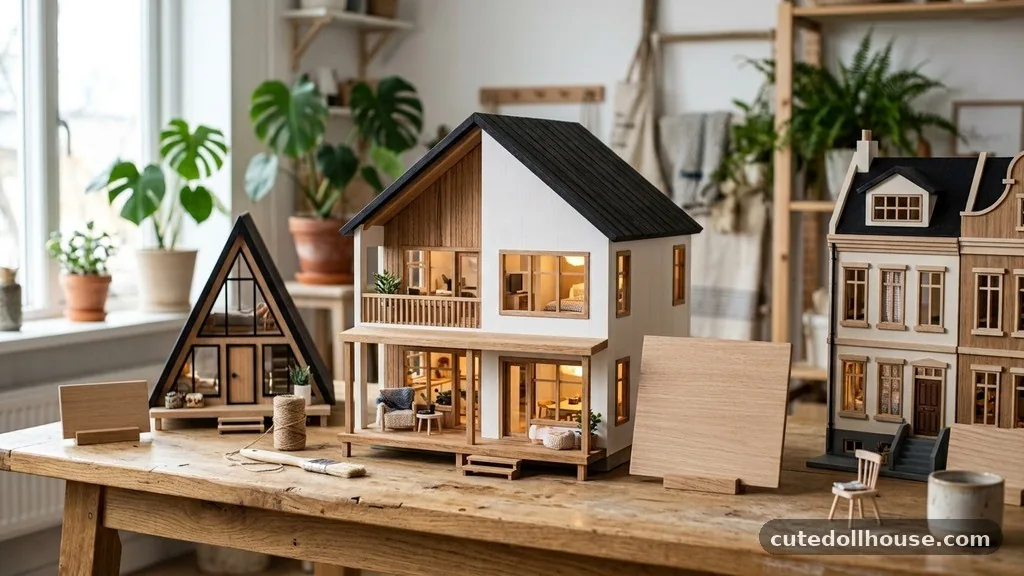
- You prefer neutral colours and uncomplicated architecture.
- The dollhouse will remain visible in a bedroom, nursery, or family room.
- You enjoy furnishing or decorating miniature spaces yourself.
- You want a flexible shell that can change as a child’s interests develop.
- You are comfortable checking measurements, scale, and assembly details carefully.
Another style may be more suitable when:
- A young child needs a ready-to-play set with furniture and figures included.
- You want a highly detailed traditional house with ornate windows, porches, and trim.
- Frequent relocation makes a lightweight or compact toy more practical.
- You need clearly documented safety information for a particular age group.
- You don’t want to paint, glue, furnish, or finish the structure after purchase.
There is no universal winner. A Scandinavian dollhouse earns its place through the combination of appearance, build, scale, and intended use—not through its label alone.
Important Buying Criteria
Build and material quality
Material descriptions should be specific. “Wooden” can refer to plywood, solid wood, composite board, fibreboard, or a mixture of materials. Each has different implications for weight, surface finish, moisture resistance, and screw-holding strength.
Look for clear information about panel construction, edge treatment, fasteners, paint or finish, and whether any parts arrive preassembled. Smooth edges matter for a toy that will be handled regularly. Panels should sit securely together without obvious gaps, excessive flex, or unfinished surfaces.
If the listing is vague, ask the seller for:
- The exact material used for the main walls and floors.
- Whether the finish is painted, laminated, stained, or unfinished.
- Which components require glue, screws, or other tools.
- Whether replacement parts are available.
- How the product should be cleaned and stored.
Design and appearance
Scandinavian styling is usually recognisable through restraint. Look for uncluttered façades, light or natural finishes, simple windows, and furniture that prioritises function over ornament. Some designs may borrow from Nordic interiors without being especially faithful to a particular architectural tradition; that isn’t necessarily a problem, but buyers should know whether they want authentic influence or simply a modern minimalist look.
Colour also deserves attention. White and pale wood can brighten a room, while grey, beige, muted blue, or soft green may offer more visual warmth. A neutral exterior is easier to customise, but it can also show marks more readily than a darker or patterned finish.
Size, scale, and fit
Dimensions are among the most important details in any dollhouse purchase. Measure the available floor, shelf, or table space, then allow room for children to stand or sit comfortably while playing. A dollhouse may fit physically but still be awkward if the rooms are too deep to reach.
Scale affects every later purchase. Furniture, dolls, vehicles, rugs, and accessories need to match the house.
If a listing doesn’t state the scale, don’t assume that standard miniature furniture will fit. Check the height of doorways, room openings, staircases, and window ledges as well.
Features and functionality
Minimalist dollhouses can be visually appealing but functionally different from one another. Some are open-front designs, while others have a hinged side, removable roof, or rear access. A fixed roof may improve the silhouette but make the upper floor difficult to furnish.
Useful features may include:
- Wide room openings that allow hands to reach the interior.
- Removable or hinged panels for easier play and cleaning.
- Multiple floors with stable, level surfaces.
- Windows that add light without creating fragile projections.
- Adaptable rooms that can serve as bedrooms, offices, kitchens, or play areas.
- Compatibility with commonly available miniature accessories.
More features are not automatically better. Hinges, balconies, ladders, and delicate railings can add interest but may also create breakage points.
Ease of use and assembly
Assembly difficulty can vary widely. A basic open-sided house may be manageable for a confident adult, while a multi-level structure with small fittings can require more time, careful alignment, and suitable tools.
Read the instructions before starting, if they are available online. Check whether the kit includes all hardware and whether adhesives, screwdrivers, clamps, or paint must be supplied separately. Children should not be expected to assemble structural parts independently unless the manufacturer specifically says the activity is age appropriate.
A good assembly process should provide:
- Clearly labelled parts.
- Illustrated or logically sequenced instructions.
- Stable joints that align without excessive force.
- Safe handling guidance for small components.
- Enough access to tighten fasteners and correct minor alignment issues.
Durability and maintenance
Durability depends on material thickness, joint design, surface treatment, and how often the house will be moved. A display piece may remain in one location and receive gentle handling, while a children’s toy needs to tolerate repeated furniture changes and accidental knocks.
Lightly finished or untreated wood may be attractive but can absorb marks and moisture. Painted surfaces can be easier to wipe, although chipped paint may become more visible.
Avoid soaking wooden components. Use the cleaning method recommended for the specific model, especially if the finish or adhesive is unknown.
Included accessories
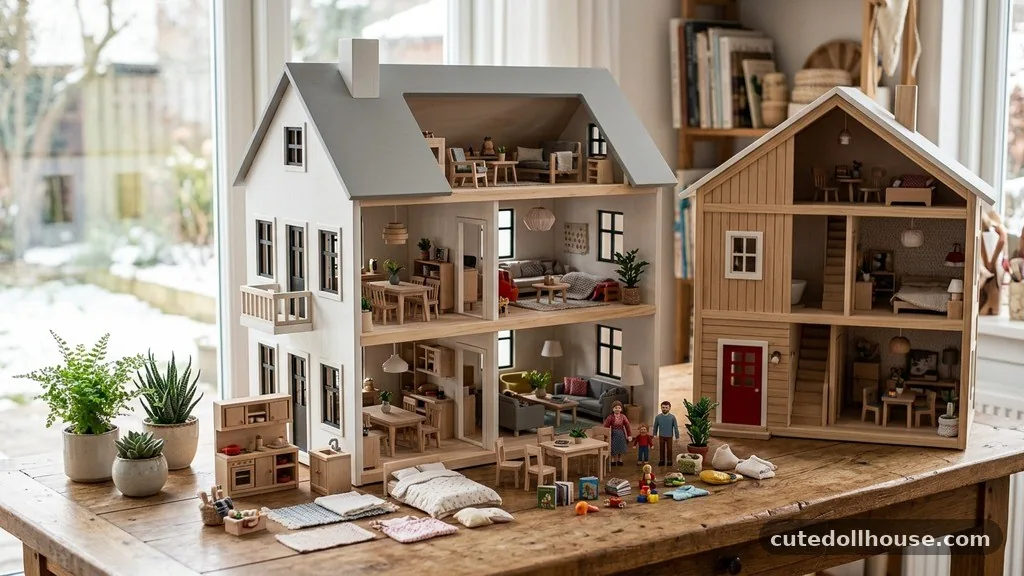
Some listings show a fully decorated room but sell only the structure. Others include a limited furniture set, while a few are supplied as complete play environments. Product photography can make these differences easy to miss.
Confirm whether the package includes:
- Furniture and room accessories.
- Figures or dolls.
- Lighting or electrical components.
- Decorative panels, wallpaper, or flooring.
- Assembly hardware and tools.
- Instructions and safety information.
Accessories should be judged against the intended use. A hobbyist may prefer an empty shell, while a child may become frustrated if the house arrives without the furniture shown in the photographs.
Customer feedback and common complaints
Customer reviews can reveal practical issues that a product description leaves out, such as unclear instructions, fragile trim, missing hardware, difficult alignment, or rooms that are smaller than expected. Feedback should be read for repeated patterns rather than isolated comments.
Pay special attention to reviews that mention:
- Parts arriving damaged or warped.
- Inconsistent holes or joints.
- Paint or finish differing from the photographs.
- Furniture being incompatible with the stated scale.
- Limited access to upper floors or rear rooms.
- Difficulty obtaining replacement parts.
Experiences can vary by seller, delivery service, manufacturing batch, and user expectations. Treat individual comments as evidence to investigate, not as guaranteed outcomes.
How to Compare Scandinavian-Style Dollhouses
Because specific products, specifications, and current availability can change, a fixed ranking would be misleading without a defined product shortlist. The table below provides a practical comparison framework for evaluating any models you are considering.
| Factor | What to Check | Why It Matters |
|---|---|---|
| Product type | Complete set, shell, kit, or display model | Determines how much assembly and furnishing you’ll need |
| Best use | Play, display, craft project, or mixed use | Helps match construction and access to the intended user |
| Materials | Solid wood, plywood, fibreboard, composite, or mixed construction | Affects weight, finish, durability, and repairability |
| Difficulty | Preassembled, basic assembly, or detailed construction | Sets realistic expectations for tools, time, and adult supervision |
| Scale | Stated dimensions and compatible furniture size | Prevents unsuitable accessories and cramped rooms |
| Access | Open front, removable roof, hinged side, or rear entry | Determines how easy the interior is to furnish and play with |
| Accessories | Furniture, figures, lighting, flooring, and decoration | Clarifies the true starting point after unboxing |
| Value | Construction, included contents, support, and expected use | A lower purchase price may not represent better overall value |
Recommendations by Buyer Type
For beginners
Choose a model with straightforward instructions, stable construction, generous room access, and minimal finishing work. A partly furnished option may be easier than an empty kit if the goal is immediate play rather than a long craft project.
For experienced hobbyists
An unfinished or lightly finished shell can offer more creative freedom. Check the material before committing to major alterations, since thin composite panels may not respond well to repeated sanding, cutting, or fastening.
For appearance-focused buyers
Prioritise façade proportions, window design, finish quality, and how the house looks from the angle it will normally be viewed. Also inspect photographs of the interior; an attractive front can conceal limited access or sparse construction.
For families buying for play
Look for rounded or well-finished edges, stable floors, sturdy fittings, and an interior that children can reach. Confirm age guidance and small-parts warnings from the manufacturer or seller. A beautiful display model may not be appropriate for rough everyday play.
For value-focused buyers
Compare the complete package rather than the product headline. Include the likely cost of furniture, paint, tools, lighting, delivery, and replacement parts. An inexpensive shell can become less economical if it needs extensive finishing before anyone can use it.
For premium display use
Prioritise finish consistency, clean joinery, stable construction, and a design that looks good from multiple viewpoints. Ask about packaging and damage support if the item contains delicate architectural details or large panels.
Scandinavian Style Compared With Other Dollhouse Designs
Traditional dollhouses often emphasise decorative façades, pitched roofs, shutters, porches, and period details. They may appeal to collectors who want a recognisable architectural theme or a richer visual backdrop.
Modern minimalist houses take a simpler approach, but not every modern model is Scandinavian-inspired. Some use bold colours, industrial materials, or highly abstract shapes. A Scandinavian look generally feels softer and more domestic, with emphasis on light, natural textures, and practical proportions.
Portable plastic dollhouses may be more suitable for younger children, travel, or quick setup. They are often easier to wipe clean and move, though they may not provide the natural appearance or customisation potential associated with wooden Scandinavian-style dollhouses.
Common Mistakes to Avoid
- Buying from the photograph alone: Confirm what is included, not just what appears in the scene.
- Ignoring scale: A beautiful house is frustrating if standard accessories cannot fit.
- Underestimating assembly: Check tools, adhesives, part count, and adult involvement before ordering.
- Choosing a display model for active play: Delicate details may not withstand regular handling.
- Skipping measurements: Remember to allow workspace around the house, not just the footprint.
- Assuming “wooden” means solid wood: Read the material description carefully.
- Overlooking access: Deep rooms and fixed roofs can make furnishing difficult.
- Relying on one review: Look for repeated feedback across the exact model and seller.
Frequently Asked Questions
What makes a dollhouse Scandinavian style?
Common features include simple architecture, pale or muted colours, natural-looking materials, uncluttered rooms, and functional furniture. The label isn’t a strict technical standard, so individual products may interpret the style differently.
Are Scandinavian-style dollhouses suitable for children?
Some are, but suitability depends on the specific model, age guidance, small parts, edge finishing, stability, and assembly. A display-oriented house may be better for older children or adult collectors than for toddlers.
Do these dollhouses usually include furniture?
Not necessarily. Some are sold as empty structures or construction kits, while others include selected furnishings. Check the package contents and product photographs carefully before buying.
What scale should I choose?
Choose the scale that matches the furniture and figures you plan to use. If the listing doesn’t state a scale, measure doorways, floor height, and room depth, then ask the seller for confirmation.
Are wooden dollhouses difficult to assemble?
Difficulty varies from simple construction to detailed hobby assembly. Look for labelled parts, clear instructions, preassembled sections, and explicit information about required tools or glue.
How can I tell whether one is good value?
Compare material quality, dimensions, access, included accessories, assembly demands, customer support, and expected lifespan. Consider the total cost of furnishing and finishing the house, not only the purchase price.
Final Verdict
The best Scandinavian Style Dollhouses are worth considering if you want a calm, modern-looking miniature home that can work as both décor and a creative play space. Their strongest qualities are usually visual flexibility, clean design, and room for personalisation. Their limitations are just as important: some require substantial assembly, omit the furnishings shown in photographs, or prioritise display over child-friendly play.
Before ordering, verify the exact materials, dimensions, scale, access points, package contents, safety guidance, and return support for the model and seller. Choose a ready-to-play design for convenience, an unfinished shell for customisation, or a more traditional or portable alternative if ornate detail or easy mobility matters more. With those checks in place, Scandinavian styling can be a practical and attractive choice rather than just a fashionable label.