
The best modern dollhouses for girls combine imaginative play with clean design, flexible layouts, and materials that can handle regular use. Unlike traditional dollhouses with ornate details, contemporary models may feature open-plan rooms, simple lines, neutral colours, or furniture that suits a modern home. That variety is useful, but it can also make shopping harder because photographs don’t always show scale, assembly demands, storage needs, or what accessories are actually included.
The right choice depends on the child’s age, play style, available space, and how much adult assembly is acceptable. This guide explains what to look for, which design types suit different buyers, and when a dollhouse may not be the right fit.
What Are Modern Dollhouses?
A modern dollhouse is a miniature home designed for pretend play, display, or both. It usually includes several rooms or open areas where children can arrange dolls, furniture, and accessories. Some models are built from wood or engineered board, while others use plastic, fabric, or mixed materials.
The word “modern” generally refers to the appearance rather than a single construction method. Contemporary dollhouses may have open balconies, large windows, uncluttered walls, modular rooms, or a neutral colour scheme.
Some are deliberately simple so children can add their own decorations. Others come with a more complete interior and need less extra spending before play can begin.
Buyers should check the product listing carefully. A dollhouse may be shown with dolls, furniture, lighting, or room accessories that are not included in the box. Measurements can also be easy to misread, particularly if a staged photograph makes the house appear larger than it is.
Are Modern Dollhouses Worth Buying?
For many children, a dollhouse is a long-lasting imaginative-play toy rather than a one-purpose gadget. It can support storytelling, role play, arranging, decorating, and cooperative play with siblings or friends. A contemporary design may also appeal to families who want a toy that looks less visually busy in a bedroom or playroom.
That doesn’t make every modern dollhouse a good purchase. Some are too small for the dolls or furniture a child already owns.
Others require extensive assembly, have limited included accessories, or prioritise appearance over sturdy construction. A low-priced model can become poor value if it needs a large collection of additional pieces before it feels usable.
A modern dollhouse is usually worth considering when:
- The child enjoys pretend play, small-world scenes, or arranging miniature objects.
- There is enough floor, shelf, or tabletop space for the house and its accessories.
- The scale is compatible with the dolls and furniture already available.
- The adult buyer is comfortable checking assembly instructions and age guidance.
- The design encourages open-ended play rather than a single fixed activity.
An alternative may be better if storage is tight, the child prefers active outdoor play, or small accessories would be difficult to supervise. A foldable playset, portable doll room, or simpler pretend-play kit may suit those circumstances more effectively.
Modern Dollhouse Styles to Consider
Because no specific products or model specifications were supplied for this article, the comparison below focuses on common design types rather than naming or ranking individual products. Details vary significantly between brands and sellers, so treat the table as a buying framework, not a product specification sheet.
| Style | Best For | Typical Strength | Potential Drawback | Overall Value Consideration |
|---|---|---|---|---|
| Open-plan wooden house | Children who enjoy arranging rooms and furniture | Often offers a sturdy, display-friendly structure | Can be heavy and may need careful assembly | Strong if the child will use it for several years |
| Compact tabletop model | Smaller bedrooms, shelves, or occasional play | Uses less space and is easier to move | Rooms and accessories may feel cramped | Good when footprint matters more than scale |
| Plastic modular house | Frequent rearranging and easy cleaning | Usually practical for everyday play and wiping down | May look less furniture-like and vary in sturdiness | Useful for younger or mess-prone play environments |
| Decorative display house | Older children, collectors, or room decoration | Can have a polished contemporary appearance | May be less suitable for rough handling | Value depends on whether display matters as much as play |
| Portable or foldable playhouse | Families needing flexible storage | Can be packed away more easily than a fixed structure | May offer fewer rooms or less structural detail | Worth considering when portability is essential |
What to Check Before Buying
Build and Material Quality
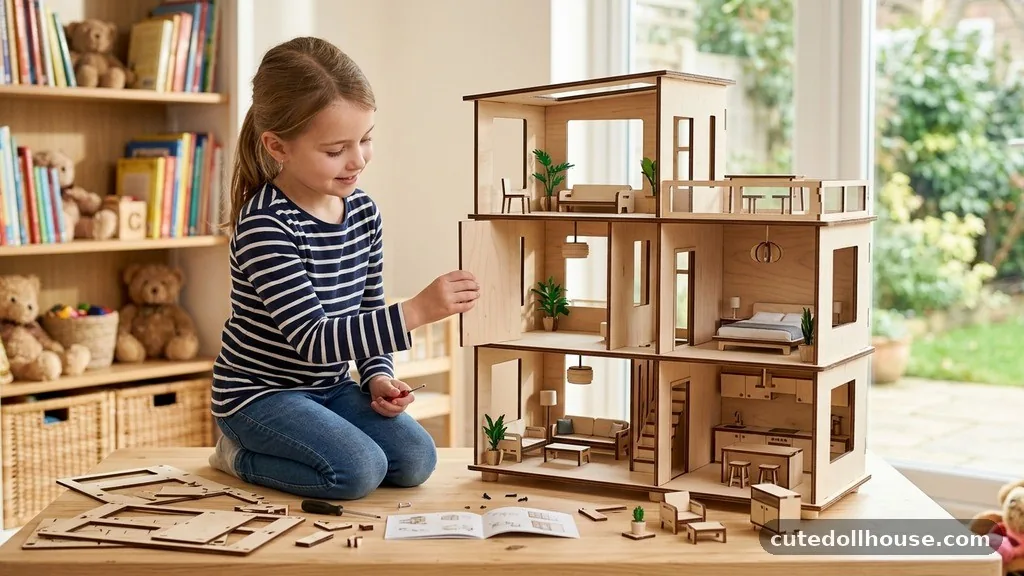
Material choice affects weight, appearance, cleaning, and expected longevity. Wooden and engineered-board houses can provide a solid, furniture-like feel, but the quality depends on panel thickness, fasteners, edge finishing, and how well the parts align. Plastic models may be lighter and easier to wipe clean, though flexibility, thin sections, or loose joints can affect the overall feel.
Look for clear information about the main structural materials rather than relying on words such as “premium” or “high quality.” Product photographs can help, but they do not always reveal whether a surface is painted wood, printed board, laminated material, or moulded plastic.
Check for:
- Smooth edges and securely attached parts.
- Stable walls, floors, balconies, and stair sections.
- Hardware that is appropriate for the house’s size and weight.
- Paint or finishes described clearly by the manufacturer.
- Replacement-part or customer-support information where available.
Design and Appearance
Modern dollhouses are often chosen partly for their appearance. Minimalist colours, large windows, open rooms, and simple furniture can make a house feel contemporary without limiting imaginative play. Still, appearance should support the child’s interests rather than replace practical features.
Ask whether the layout is easy to reach. A beautiful house with narrow rooms or deep corners may frustrate children who want to move furniture around. Open-backed designs can be easier for multiple children to access, while enclosed houses may look tidier but provide less visibility during play.
Neutral styling is not automatically better. Some children prefer bright colours, themed rooms, or a traditional cottage appearance. A modern dollhouse should match the intended user, not just the adult’s décor preferences.
Size, Scale, and Room Access
Size is one of the most important buying details. Measure the intended location, including the clearance needed to reach the sides and back. A house that fits on paper may be difficult to use if it is pushed against a wall.
Scale deserves equal attention. Dollhouses may be designed for different doll sizes, and “dollhouse furniture included” doesn’t necessarily mean the pieces will fit a child’s existing dolls. Before ordering, compare the listed dimensions with the height and width of the figures already at home.
Also consider storage. Furniture, dolls, clothing, and tiny accessories can quickly spread beyond the footprint of the house. A house with built-in shelves or open storage may be more practical than one with a larger decorative façade but nowhere to put loose pieces.
Features and Functionality
Useful features vary according to age and play style. Open rooms make rearranging easier.
Moveable furniture adds flexibility. Doors, windows, balconies, and staircases can create more storytelling opportunities, but they also introduce extra parts that may break or detach.
Lighting can be attractive, especially in display-oriented models, but buyers should check whether batteries, wiring, or installation are involved. Electronic features are not essential to good pretend play and may add maintenance requirements.
Prioritise features that the child will actually use:
- Accessible rooms rather than decorative spaces that are hard to reach.
- Furniture that can be moved and rearranged.
- Enough open floor area for the intended dolls.
- Stable platforms and railings if the design includes upper levels.
- Storage or a clear plan for keeping small accessories together.
Assembly and Ease of Use
Many full-size dollhouses arrive flat-packed. Assembly may involve multiple panels, screws, dowels, stickers, or decorative pieces. The time and tools required can differ by model, so buyers should look for an instruction manual, assembly video, or customer photographs before committing.
Don’t assume that a simple-looking house is quick to assemble. Open balconies, angled roofs, interior dividers, and small trim pieces can add complexity. If the child is likely to want immediate play, a partly assembled or portable design may be less frustrating.
After assembly, inspect the structure before handing it over. Confirm that all fixings are tight, the house sits level, and movable components work as intended. Keep packaging and instructions until the product has been checked fully.
Safety and Age Suitability
Age guidance should be treated as a starting point, not a substitute for supervision. Small furniture, miniature food, tiny handles, and detachable decorative pieces can present hazards for younger children. Read the manufacturer’s warnings and consider the child’s ability to keep small parts away from younger siblings or pets.
For general toy-safety information, the U.S. Consumer Product Safety Commission’s toy safety guidance offers practical advice for choosing and supervising toys. Buyers outside the United States should also check the safety information and product standards relevant to their region.
Durability and Maintenance
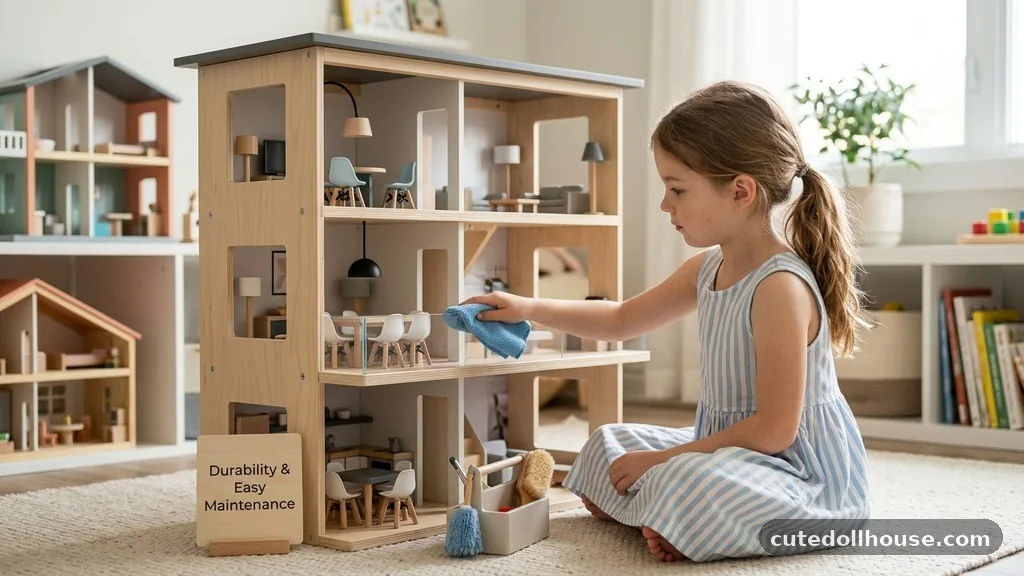
Durability is not only about whether the walls stay upright. Consider how well the finish may handle fingerprints, spills, repeated furniture changes, and occasional knocks. Painted surfaces may show wear differently from laminated board or moulded plastic.
Cleaning instructions should be clear. In many cases, a slightly damp cloth is preferable to soaking wooden or engineered-board components. Avoid assuming that a dollhouse is waterproof unless the manufacturer explicitly says so.
Customer feedback can help identify recurring concerns such as missing hardware, confusing instructions, fragile trim, or furniture that arrives damaged. One isolated complaint doesn’t establish a product-wide problem, but repeated reports deserve attention. Reviews should also be read in context because assembly ability, delivery handling, and expectations differ between households.
Choosing a Dollhouse for Different Buyers
For Beginners and Younger Players
Choose a design with accessible rooms, fewer delicate parts, and a stable base. A simple house with durable furniture may be more enjoyable than a detailed model that requires careful handling. Age guidance remains essential, particularly where miniature accessories are included.
For Experienced Dollhouse Players
Older or more involved players may appreciate a flexible layout, removable furnishings, and room for customisation. Look for compatible accessories and enough interior space to create different scenes. A plain contemporary shell can be a good choice if the child enjoys decorating or making miniature items.
For Appearance-Focused Buyers
If the dollhouse will remain visible in a bedroom or living area, pay attention to colour, proportions, finish, and cable or battery visibility. A display-friendly design should still be reachable and stable. A model that looks excellent but can’t withstand ordinary play may not be the right compromise.
For Value-Focused Buyers
Compare the complete setup rather than the house alone. A cheaper structure may require furniture, dolls, lighting, and storage to become usable. Conversely, a higher-priced package may include useful accessories, but only if those pieces match the child’s preferred scale and play style.
For Families with Limited Space
Measure first. Compact and foldable models can be sensible, but check whether the reduced dimensions make the interior too cramped. Wall or tabletop storage may help, although the house should remain safely supported and easy for the child to access.
Common Reasons Buyers Regret a Purchase
Most disappointment comes from a mismatch rather than a single defective feature. The listing may show a furnished scene, while the box contains only the structure. Or the house may be technically large enough but incompatible with the dolls the child already owns.
- Unexpected assembly: The buyer didn’t allow enough time or didn’t have suitable tools.
- Incorrect scale: Existing dolls or furniture don’t fit comfortably.
- Insufficient storage: Loose accessories become difficult to organise.
- Decorative over practical: Rooms look attractive but are hard to reach.
- Fragile details: Small balconies, railings, or trim pieces don’t suit rough play.
- Unclear contents: Promotional images include items not supplied with the product.
Reading the full contents list, dimensions, assembly information, and recent customer comments can prevent most of these problems. If those details are missing, treat the listing cautiously and verify them with the seller before buying.
Frequently Asked Questions
What are the best modern dollhouses for girls?
The best option depends on the child’s age, preferred dolls, available space, and tolerance for small accessories. Start with scale, stability, room access, and included contents rather than choosing by appearance alone. Modern designs can suit any child who enjoys imaginative play; the styling need not be limited by gender.
What is a good age to give a child a dollhouse?
There is no universal age because dollhouses differ in size, complexity, and accessory safety. Follow the manufacturer’s age guidance and consider whether the child can play safely around small detachable pieces. Simpler, larger-part designs are generally easier for younger children to manage under supervision.
Do modern dollhouses come with furniture?
Some do and some don’t. Even when furniture is included, the quantity, scale, and room coverage can vary. Check the exact contents list and product photographs carefully before assuming that dolls, bedding, kitchen items, or lighting are part of the package.
Are wooden or plastic dollhouses better?
Neither material is automatically better. Wood or engineered board may provide a more furniture-like appearance, while plastic can be lighter and easier to clean. Construction quality, stability, finish, and intended use matter more than the material label alone.
How do I know whether dollhouse furniture will fit?
Compare the dimensions of the dolls and furniture with the interior room measurements. Sellers may use different scales, so don’t rely only on a general label such as “standard size.” Look for exact measurements whenever possible.
Final Verdict
The best modern dollhouses for girls are worth buying when they match the child’s play style, available space, and existing accessories. A clean contemporary design can be attractive without sacrificing imaginative play, but appearance should never distract from scale, stability, assembly, and safety. Before ordering, verify what comes in the box, measure the intended location, and read customer feedback for recurring quality or assembly concerns.
There isn’t one universally correct model for every family. Choose a sturdy, accessible house for everyday play; a compact or foldable option for limited space; and a more decorative design only when display value is genuinely important.
If the specifications are vague, ask the seller for clarification before paying. That small step can make the difference between a useful long-term toy and an attractive but disappointing purchase.