
Choosing among the best wooden dollhouses for kids takes more thought than picking the prettiest design. Size, age suitability, assembly, materials, included furniture, and available play space all affect whether a dollhouse becomes a lasting toy or an awkward piece of furniture. Wooden models can offer a sturdy, attractive setting for imaginative play, but quality varies widely between brands and designs.
The right choice depends on the child’s age, how much room you have, whether adults are comfortable with assembly, and how much detail the child will actually use. This guide explains what to check before buying, where wooden dollhouses make sense, and when a lighter, simpler, or more affordable alternative may be a better fit.
What Is a Wooden Dollhouse?
A wooden dollhouse is a miniature house designed for children to furnish, decorate, and use in pretend play. It may include several rooms, floors, windows, doors, stairs, balconies, or built-in furniture. Some arrive ready to play with, while others require adult assembly and may include only the basic structure.
The purpose is simple: children use small figures, furniture, and household accessories to create stories and act out everyday situations. That open-ended format can support imaginative play, language development, social play, and fine-motor practice. The toy doesn’t need electronics or a fixed set of rules.
Before buying, understand that “wooden” doesn’t automatically mean large, premium, or especially durable. Construction methods, wood type, panel thickness, paint or finish, hardware, and design all differ. Product descriptions should be checked carefully, particularly if a listing uses a mix of wood, engineered board, plastic, fabric, or cardboard accessories.
Are Wooden Dollhouses Worth Buying?
For many families, yes. A well-designed wooden dollhouse can become a long-term pretend-play toy that works for one child or several children together. Its fixed structure gives children a setting for storytelling, while movable furniture and figures allow the play to change over time.
The main trade-off is space and complexity. A substantial dollhouse can take up more floor or shelf room than a plastic folding house, and some models need careful assembly. A detailed design may also be less suitable for a young child who is likely to pull, climb, or mouth small accessories.
A wooden dollhouse is usually a good choice when:
- The child enjoys pretend play, miniature figures, or arranging rooms.
- You have a stable location where the house can remain set up.
- An adult can assemble the product and inspect it before use.
- You want a toy that can be used with additional furniture or figures later.
- The child is old enough to play safely with the house and its accessories.
Consider another type of toy if storage space is limited, portability matters, or the child prefers fast-moving play rather than quiet role-play. A folding plastic dollhouse, fabric playhouse, open-ended building set, or simpler wooden structure may be more practical.
What to Check Before Buying a Wooden Dollhouse
Build and Material Quality
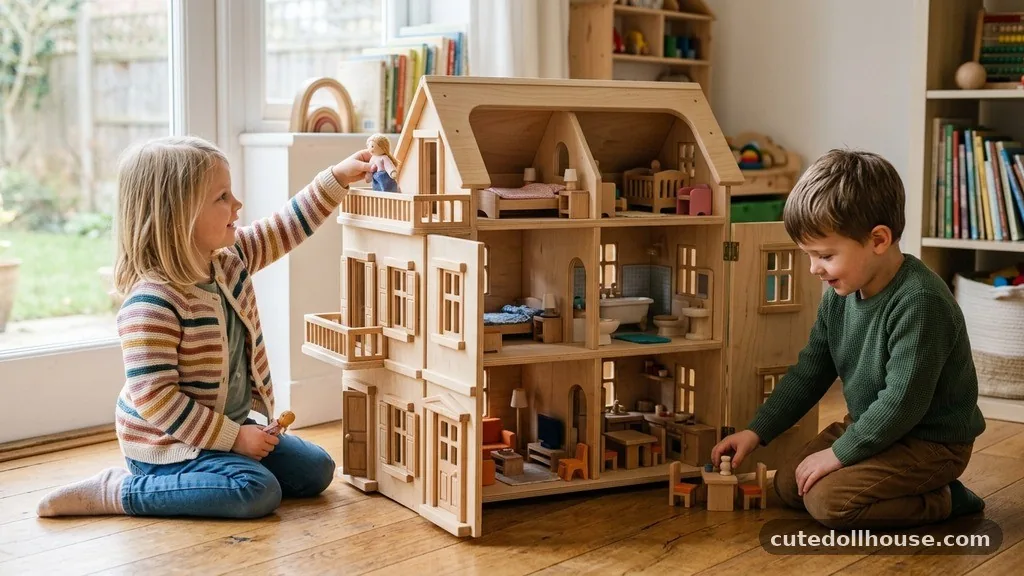
Look beyond the word “wooden.” The listing should make clear which parts are made from solid wood, plywood, medium-density fibreboard, or other materials. Engineered wood can be perfectly suitable for a dollhouse, but it may differ from solid wood in weight, edge finish, screw-holding ability, and resistance to moisture.
Inspect product photographs for exposed edges, thin panels, rough cutouts, and unsupported balconies or roofs. A sturdy base matters because a tall dollhouse can become unstable if children push against it or reach into upper rooms.
Paint and finish deserve attention too. Buyers should look for clear information about the finish and intended age range rather than assuming that a colourful surface is automatically child-safe. If the manufacturer does not explain the materials or finish, treat that lack of information as a reason to investigate further.
Design and Appearance
Appearance matters because a dollhouse often stays visible in a bedroom, playroom, or family living area. Some buyers prefer a traditional house with neutral colours, while others want bright walls, themed rooms, or a modern open-front design.
Good design is more than decoration. Wide openings make rooms easier to reach, open backs can improve visibility, and a sensible floor layout helps children play without knocking over everything below. Decorative roofs, narrow balconies, and small staircases may look appealing but can reduce usable play space.
Size and Fit
Check the assembled dimensions, not just the box size. Measure the intended location, including the height available under shelves or windows. Leave enough space for a child to stand or sit comfortably while reaching into the rooms.
Scale is also important. Dollhouses are not all designed for the same figures or furniture.
A house may have generous rooms but tiny doorways, or it may be compatible with a particular range of accessories without saying so clearly. Check room dimensions and opening sizes when the manufacturer provides them.
Features and Functionality
Useful features can include movable doors, opening windows, removable roofs, accessible backs, balconies, elevators, or built-in room divisions. None is essential, and more features can mean more assembly, more fragile parts, or less open space.
Prioritise features that support the child’s preferred style of play. A child who likes arranging furniture may value larger rooms.
A child who enjoys family stories may prefer a house with several distinct spaces. A visually detailed model may suit display and gentle play better than energetic everyday use.
Assembly and Difficulty
Assembly requirements vary substantially. Some houses involve attaching a few large panels; others require multiple screws, small fittings, decorative pieces, and careful alignment. The product page should state whether tools are included and whether furniture or accessories need separate assembly.
Read the instructions before starting, and assemble the house on a stable surface. Don’t hand the toy to a child immediately after construction. Check that screws are tight, panels are secure, doors move as intended, and no sharp edges or loose pieces remain.
Accessories and Compatibility
A house may include furniture, figures, pets, vehicles, or decorative items—or it may include only the building. An attractive photograph can therefore show more than what arrives in the box. Confirm the included contents in the written specification.
Accessories are useful, but they shouldn’t be the only reason to choose a model. Replacement or additional furniture can become expensive, and some highly detailed pieces may be unsuitable for younger children. A simpler house with flexible room space may offer better long-term play value.
Durability and Maintenance
Wooden dollhouses are generally intended for indoor use. Keep them away from damp areas, radiators, and direct exposure to strong sunlight, which can affect certain finishes. Dust can usually be removed with a soft, dry or lightly damp cloth, but care instructions should take priority.
Durability depends on more than the frame. Hinges, railings, staircases, balconies, and decorative trim may be more vulnerable than large wall panels. If the child plays roughly, an open, uncomplicated design may last better than a delicate model filled with small protruding parts.
Safety and Age Suitability
Always follow the manufacturer’s age guidance and warnings. Small furniture, figures, and accessories can create choking hazards for younger children. Tall dollhouses should sit on a stable surface where they cannot be easily pulled over.
For broader toy-safety information, parents can consult the U.S. Consumer Product Safety Commission’s toy-safety guidance. Product requirements can vary by country, so local guidance and the manufacturer’s instructions should also be considered.
Wooden Dollhouse Options Compared
Without a specific product list, the most useful comparison is between the main types of wooden dollhouses available. Exact materials, dimensions, accessories, and assembly requirements vary by model and seller, so verify the individual listing before ordering.
| Type | Best For | Typical Difficulty | Useful Feature | Main Drawback | Overall Value |
|---|---|---|---|---|---|
| Simple open-front house | Young or first-time dollhouse users | Low to moderate | Easy access to rooms | Usually offers less decorative detail | Strong when ease of play matters most |
| Multi-story traditional house | Children who enjoy room-based pretend play | Moderate | Several floors and play areas | Needs more space and careful assembly | Good for sustained play if the layout is practical |
| Detailed or themed house | Appearance-focused buyers and collectors | Moderate to high | Distinctive decoration and accessories | Small or fragile details may limit rough play | Best when design is as important as playability |
| Compact wooden house | Bedrooms, shelves, and smaller play areas | Low to moderate | Smaller footprint | Rooms may not fit standard accessories | Practical where storage is limited |
| Wooden dollhouse kit | Older children with adult support | Moderate to high | Construction and customisation | May require extra tools, time, or finishing | Good for a project, less suitable for immediate play |
Key Benefits of Wooden Dollhouses
Open-Ended Pretend Play
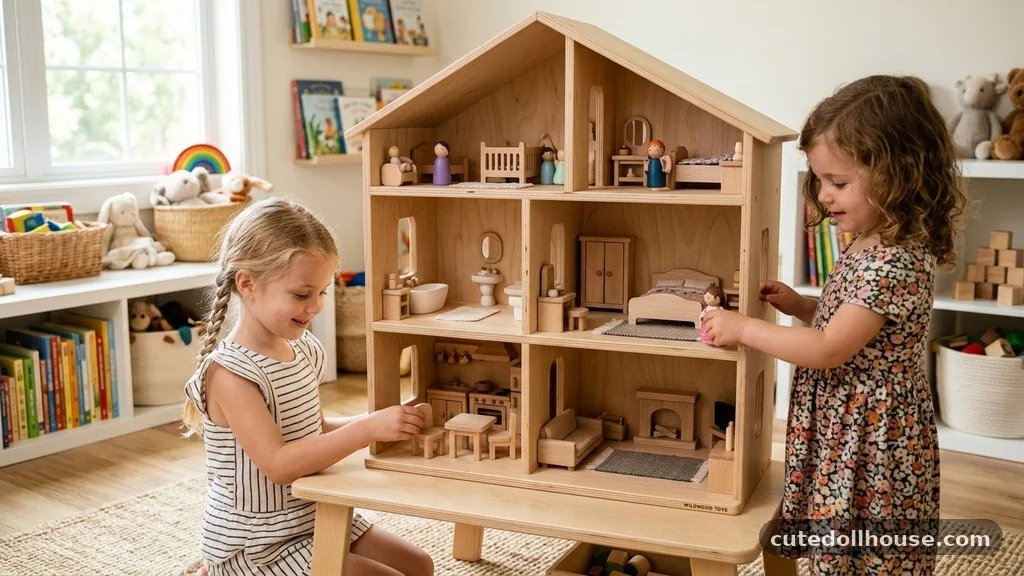
A dollhouse gives children a setting without dictating a single outcome. Rooms can become homes, shops, schools, offices, or anything else the child imagines. That flexibility is one reason these toys can remain interesting after the novelty of opening the box has passed.
Shared Play
Larger houses can support play between siblings, friends, parents, or carers. Children can assign characters, negotiate what happens next, and build longer stories together. A compact model may still work well for one child but feel crowded when several hands reach into the same room.
Visual and Tactile Appeal
Wood can give the toy a substantial feel and a furniture-like appearance. Many families prefer that look over brightly coloured plastic. The visual appeal may also make the dollhouse easier to keep in a shared room, although styling should never replace stability and safe construction.
Expandable Play
Furniture, figures, textiles, pets, and craft-made accessories can change the house over time. Before buying, check whether the rooms are large enough for additions and whether the layout leaves space for children to rearrange objects.
Potential Drawbacks to Consider
- Space requirements: Larger models can be difficult to move or store once assembled.
- Assembly time: Some products are projects rather than ready-to-play toys.
- Small parts: Furniture and accessories may not suit toddlers.
- Fixed layouts: Built-in walls and furniture can limit customisation.
- Maintenance: Painted surfaces and delicate trim may need careful handling.
- Unclear specifications: Some listings don’t clearly identify materials, scale, or included accessories.
- Weight: A sturdy wooden house may be harder for adults to relocate than a folding alternative.
How to Choose the Right Wooden Dollhouse
Match the House to the Child
Start with play habits, not the product photograph. Children who like arranging objects may need roomy floors and accessible rooms. Those who focus on characters may care more about doorways, furniture, and compatibility with existing figures.
Age guidance is only one factor. Consider patience, motor skills, supervision, and whether the child can understand that delicate pieces need gentle handling.
Measure the Play Area
Record the available width, depth, and height before browsing. Don’t forget to account for the space needed behind or beside the house if it has an open back, hinged panel, or movable feature.
Decide How Much Assembly Is Acceptable
If the goal is immediate play, choose a simpler structure and read the assembly description closely. If the child enjoys making things with an adult, a kit can offer a worthwhile project—but it may require more preparation than a standard toy.
Check What Is Actually Included
Look for a contents list and distinguish between included items and decorative photography. Confirm whether figures, furniture, paint, tools, batteries, or additional finishing materials are supplied.
Read Feedback Carefully
Customer feedback can reveal recurring concerns such as confusing instructions, missing hardware, damaged panels, poor alignment, unstable features, or smaller-than-expected rooms. One isolated complaint doesn’t establish a general problem, but repeated comments about the same issue deserve attention.
Feedback can also reflect different expectations. A buyer seeking a display-quality model may criticise features that another family considers perfectly adequate for everyday play. Look for comments that describe the child’s age, intended use, and assembly experience.
Who Should Buy a Wooden Dollhouse?
Wooden dollhouses are a strong fit for families who value imaginative play and have a stable place to keep the toy. They’re especially suitable for children who enjoy domestic role-play, storytelling, arranging miniature environments, or playing cooperatively.
Appearance-focused buyers may prefer a detailed or traditionally styled house that blends with the room. Value-focused buyers should concentrate on usable floor space, construction quality, and included essentials rather than paying extra for decorative details a child won’t use.
A beginner buyer is likely to have the easiest experience with an open-front model, clear instructions, accessible rooms, and a modest number of parts. More experienced hobbyists or older children may enjoy a kit that can be painted, decorated, or furnished gradually.
Who May Prefer an Alternative?
A plastic folding dollhouse may be better for families that need portability, quick storage, or easy cleaning. A fabric house can suit very young children when the structure is age-appropriate and supervised, though it won’t provide the same rigid rooms or furniture arrangement.
Children who prefer construction, vehicles, outdoor play, or fast-paced games may not use a dollhouse often enough to justify its space. In that situation, a smaller wooden room set or a flexible building toy could provide similar imaginative possibilities with less commitment.
Frequently Asked Questions
What are some good wooden dollhouses for kids?
Good choices usually have a stable structure, accessible rooms, clear age guidance, safe finishes, and a layout that matches the child’s play style. The best model isn’t necessarily the largest or most decorated. Check dimensions, materials, assembly requirements, and included accessories together.
At what age should a child get a dollhouse?
There isn’t one universal age because designs differ. Follow the manufacturer’s age recommendation and pay close attention to small-part warnings. Younger children need close supervision, while older children may be ready for more detailed furniture or a construction kit.
How do you choose the right wooden dollhouse?
Measure the available space, identify the child’s preferred type of pretend play, check the scale and room access, and confirm what arrives in the box. Then compare material information, stability, assembly difficulty, safety guidance, and recurring customer complaints.
Are wooden dollhouses safer than plastic dollhouses?
Material alone doesn’t determine safety. Both types should be checked for stability, sharp edges, loose parts, suitable age guidance, and the quality of the finish. A well-made plastic model may be safer for one use case than a poorly constructed wooden one.
Do wooden dollhouses come with furniture?
Some do and some don’t. Product photographs may include accessories that are sold separately, so read the stated contents carefully. If furniture is included, check whether it is suitable for the child’s age and compatible with the room sizes.
Is a dollhouse kit a good choice for children?
A kit can be enjoyable as a shared adult-child project, particularly for older children who like building and decorating. It may not be suitable if the child expects immediate play or if the instructions, tools, and finishing requirements are more involved than expected.
Final Verdict
The best wooden dollhouses for kids are the ones that fit the child, the room, and the family’s tolerance for assembly and maintenance. Prioritise stable construction, accessible rooms, honest material information, suitable age guidance, and a useful layout over decorative extras alone. A simpler house can offer more enjoyable play than a larger model filled with fragile details.
Wooden dollhouses are worth buying for children who enjoy imaginative, story-based play and have space for a permanent setup. Before ordering, measure carefully, confirm the included accessories, and check recent feedback for repeated assembly or durability concerns. With those checks in place, a well-chosen model can provide a flexible play setting for years rather than a short-lived novelty.