
Choosing among the best Traditional Wooden Dollhouses takes more thought than picking the prettiest miniature house on a shelf. A wooden dollhouse can become a long-lasting toy, a creative project, or a display piece, but size, scale, assembly, materials, and included furniture all affect whether it suits its owner. Children may need a simpler design with sturdy parts, while adults building a dollhouse kit often care more about architectural detail and customization.
The right choice depends on how the house will be used, where it will go, and how much time the buyer wants to spend assembling and maintaining it. This guide explains the practical differences so you can buy with clearer expectations.
What Is a Traditional Wooden Dollhouse?
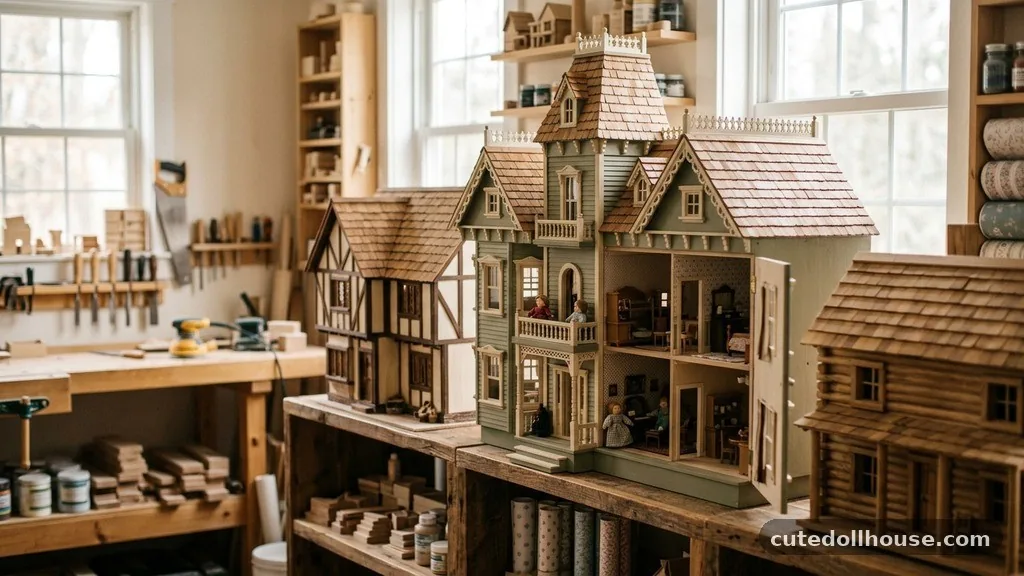
A traditional wooden dollhouse is a miniature model of a home, usually made from wood panels and designed for decorating, imaginative play, collecting, or display. Depending on the model, it may include several rooms, open-front access, windows, doors, stairs, trim, and space for miniature furniture.
Some arrive largely assembled. Others are sold as a dollhouse kit that requires cutting, gluing, painting, wallpapering, and fitting small components together. The phrase “traditional” usually refers to the familiar house-shaped design rather than a specific manufacturer, age group, or construction standard.
Scale matters. A 1:12 dollhouse, for example, is built so that one inch represents one foot in full-size measurements.
Not every wooden dollhouse uses the same scale, though, so furniture and accessories from one model may not fit another. Buyers should confirm the scale before ordering additional miniatures.
Are Traditional Wooden Dollhouses Worth Buying?
For the right household, yes. A well-designed wooden doll house can support imaginative play, storytelling, room decorating, and hands-on creativity over many years. Compared with some lightweight plastic alternatives, wood can also provide a more furniture-like appearance and a stronger foundation for customization.
That doesn’t make every model a good purchase. A traditional wooden dollhouse may require assembly, careful handling, and more storage space than a compact toy. Small decorative pieces can also be unsuitable for young children, especially if the house is intended for display rather than rough everyday play.
A wooden dollhouse is a good choice when:
- You want a durable-looking toy or display piece with a classic home design.
- The owner enjoys imaginative play, decorating, or creating miniature scenes.
- There is enough space for the house and its furniture.
- You are comfortable checking assembly requirements before buying.
- You want a project that can be painted, furnished, or updated over time.
Another option may be better when:
- The recipient needs a lightweight toy that can be moved frequently.
- There is very limited floor, shelf, or storage space.
- The buyer doesn’t want to assemble, paint, or repair small parts.
- The child is too young for small accessories or delicate components.
- You need a fully furnished setup and the listed product includes only the shell.
Important Buying Criteria
Build and material quality
Look for clear information about the wood or wood-based panels used, along with photographs of the interior and exterior. A good wooden dollhouse should have panels that appear consistently cut, joints that line up, and openings that don’t look easily warped. Product descriptions should also distinguish between solid wood, plywood, MDF, and composite board rather than simply saying “wooden.”
Material alone doesn’t determine quality. A carefully made MDF house may assemble more cleanly than a poorly cut solid-wood model. On the other hand, solid wood can offer a more natural appearance and may be easier to sand or refinish, depending on its construction.
Design and appearance
Traditional dollhouses range from simple cottages to larger multi-room town homes. Consider the roofline, window style, stair layout, room arrangement, and whether the house is open at the back or front. An open-back model may be easier to reach and decorate, while a more enclosed design can look attractive as a display piece.
Paint, trim, and wallpaper may be included, partially included, or absent. A plain unfinished kit isn’t necessarily a disadvantage; it gives experienced builders control over colour and style. It may frustrate a buyer who expects a finished toy straight from the box.
Size, scale, and fit
Measure the intended location before buying. Dollhouses can be deeper and taller than product photographs suggest, particularly once a roof, balcony, or side extension is included. Check the assembled dimensions, not only the package size.
Then confirm the scale. The common 1:12 format is useful because it has a broad range of compatible furniture and miniatures, but some houses use smaller or larger proportions. A tiny chair that looks suitable in a listing photo may be too large for the rooms in person.
Features and functionality
Useful features may include hinged doors, opening windows, removable roofs, accessible backs, balconies, room dividers, and built-in staircases. These features can make play and decorating easier, but they also add parts that may need careful alignment.
Don’t assume accessories are included. Some listings show furniture, lights, dolls, and decorations for illustration only. Read the contents list closely and check whether the product includes:
- Furniture or only the wooden house structure
- Paint, wallpaper, flooring, or other finishing materials
- Instructions and assembly hardware
- Lighting, wiring, or battery components
- Doors, windows, stairs, and trim pieces
- Dolls, pets, vehicles, or other figures
Assembly and difficulty
Assembly difficulty varies widely. A child-oriented toy may need simple joining and minimal decoration, while an adult dollhouse kit can involve glue, sanding, painting, wallpapering, and delicate trim. “Easy assembly” is not a universal technical standard, so buyers should look for an estimated assembly time, recommended tools, and photographs of the construction stages.
Before buying, check whether the kit requires wood glue, craft knives, clamps, paint, sandpaper, or other supplies. If the listing doesn’t say, contact the seller rather than assuming everything is in the box.
Durability and maintenance
Wooden dollhouses are not maintenance-free. Dust can collect on ledges and miniature furniture, while frequent moving can loosen trim or stress joints. A soft, dry cloth is generally safer for unfinished surfaces than a wet cleaner, but care instructions should come from the manufacturer when available.
Painted and sealed surfaces are usually easier to wipe than raw wood. Avoid placing the house in damp areas or direct, intense sunlight unless the maker specifically says the finish can tolerate those conditions. Humidity and temperature changes can affect wood-based materials.
Customer feedback and common complaints
Customer reviews can reveal practical issues that product photographs don’t show. Look for repeated comments about missing parts, unclear instructions, fragile trim, poor fit, misleading accessory photographs, or dimensions that differ from expectations. One isolated complaint may reflect shipping damage; a repeated pattern deserves more attention.
Feedback can also vary by seller, production batch, region, and packaging method. A listing with strong reviews is still worth checking for recent comments and the retailer’s return policy.
Traditional Wooden Dollhouse Types Compared
Since no individual product models were supplied for this article, the table below compares common formats rather than ranking specific brands or products. Treat it as a starting point for narrowing the type of house that fits your needs.
| Type | Best For | Typical Difficulty | Key Feature | Main Drawback | Overall Value Consideration |
|---|---|---|---|---|---|
| Ready-assembled wooden dollhouse | Families wanting quick setup | Low | Usable with little construction | Less opportunity for customization | Worth considering when convenience matters most |
| Basic wooden playhouse | Children’s imaginative play | Low to moderate | Simple rooms and accessible layout | May include few or no accessories | Good value when the structure is sturdy and appropriately sized |
| Unfinished dollhouse kit | Adults and experienced crafters | Moderate to high | Freedom to paint and decorate | Extra tools, supplies, and time are required | Best judged by construction quality, not box contents alone |
| Detailed traditional display house | Collectors and appearance-focused buyers | Moderate to high | Architectural trim and realistic proportions | May be too delicate for rough play | More suitable when presentation is a priority |
| Large multi-room dollhouse | Shared play and extensive furnishing | Moderate | More room for furniture and scenes | Needs considerable floor or shelf space | Value depends on available space and accessory compatibility |
What to Check Before Ordering
Dimensions and room access
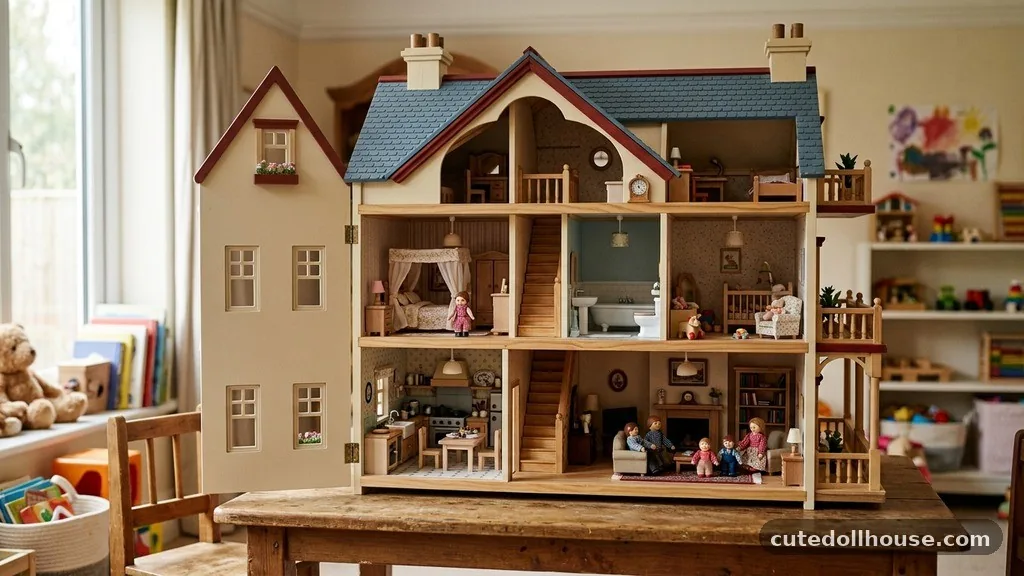
Confirm the full height, width, and depth. Look for the location of the access opening and ask whether the house can be turned or moved after assembly. A deep house may be difficult for a child to reach into, even if the overall height seems suitable.
Age guidance and small parts
Follow the manufacturer’s age guidance and inspect the accessory list. Small furniture, tiny decorations, and miniature figures can create a choking hazard for younger children. A dollhouse that works well for an older child or adult hobbyist may not be appropriate for a toddler.
For broader toy-safety context, buyers can consult the U.S. Consumer Product Safety Commission’s toy safety guidance. Local safety rules and age recommendations may differ by country.
Assembly contents
Product images often make a kit look more complete than it is. Identify what is included and what must be purchased separately. This is particularly important for lighting, flooring, wallpaper, curtains, furniture, and dolls.
Seller support and returns
Small wooden components can be damaged during shipping. Before ordering, check how the seller handles missing pieces, replacement parts, assembly questions, and returns. A lower price may not be good value if support is limited and replacement components are difficult to obtain.
Choosing by Buyer Type
For beginners
Choose a house with clear instructions, accessible rooms, modest trim, and limited finishing work. A smaller structure can be less intimidating and easier to complete. If the goal is immediate play, a ready-assembled or partly assembled option may be more practical than a full adult dollhouse kit.
For children
Prioritise stability, rounded or well-finished edges, durable doors and windows, and an interior that is easy to reach. Avoid selecting purely by appearance. A highly detailed house may be attractive but too fragile for everyday play.
For experienced builders
An unfinished kit with replaceable or customizable interior elements may offer more satisfaction. Check the construction diagrams, scale, wall thickness, and compatibility with 1:12 furniture or another stated format. Experienced builders should also verify whether the roof, stairs, and trim need substantial modification.
For appearance-focused buyers
Study close-up images of the exterior, roof, windows, and trim. A classic silhouette can look excellent on a shelf, but uneven paint or basic fittings may be noticeable at close range. Consider whether the house arrives finished or is intended to be decorated by the buyer.
For value-focused buyers
Compare the complete project cost rather than the listed price alone. A lower-priced house may need glue, paint, wallpaper, lighting, furniture, and tools. Another model may cost more initially but include more of the items needed for play or display.
For collectors and adult hobbyists
Scale consistency, finish quality, replacement-part availability, and long-term display space matter more than a low entry price. A carefully assembled house can become a substantial project, so confirm that the design matches the furniture and miniatures you plan to use.
Potential Advantages
- Classic appearance: Traditional house designs can work as both toys and decorative miniatures.
- Creative flexibility: Unfinished wood allows painting, wallpapering, flooring, and room-by-room customization.
- Imaginative play: Multiple rooms create opportunities for storytelling and role-play.
- Longer-term interest: Furniture and accessories can be added gradually rather than all at once.
- Display potential: A well-finished house may suit a bedroom, playroom, craft area, or collection.
Potential Drawbacks
- Assembly demands: Some kits are closer to craft projects than ready-to-use toys.
- Space requirements: Large dollhouses need stable storage and room for access.
- Accessory costs: Furniture and miniature decorations may not be included.
- Small components: Tiny parts may be unsuitable for younger children.
- Finish variation: Colour, fit, and surface quality may vary by seller or production batch.
- Limited portability: Once furnished, a wooden dollhouse can be awkward to move safely.
Traditional Wooden Dollhouses Versus Other Options
Plastic dollhouses are often lighter and easier to wipe clean. They may suit younger children or families who need a toy that can move from room to room. Their appearance and proportions vary, so compatibility with existing furniture should still be checked.
Cardboard and paper models can be inexpensive and enjoyable for short-term projects, but they generally need gentler handling. They are often better for crafting than active play.
Digital dollhouse games remove the need for physical storage and assembly, but they don’t provide the same hands-on experience. A traditional wooden house is a better fit for people who enjoy arranging real objects, decorating rooms, and building a miniature setting over time.
How to Get Better Results From a Wooden Dollhouse
- Measure the planned location before choosing a design.
- Confirm the scale and compare it with furniture you already own.
- Read the assembly instructions or product description before ordering.
- Separate included accessories from items shown only in photographs.
- Prepare a clean, well-lit work area if the house requires construction.
- Dry-fit panels before applying glue, especially around doors and windows.
- Allow painted or glued components to cure fully before adding furniture.
- Keep spare pieces, instructions, and purchase information for future repairs.
Frequently Asked Questions
What is the best scale for a traditional wooden dollhouse?
There is no single best scale. A 1:12 dollhouse is popular because many furniture and miniature accessories are available in that format, but the right choice depends on the available space and the size of the figures or furniture you want to use.
Are wooden dollhouses suitable for young children?
Some are, but suitability depends on the manufacturer’s age guidance, construction, and accessories. Small furniture and decorative pieces can be unsafe for toddlers, while a simpler, sturdy design may work better for older children.
Do traditional dollhouse kits include furniture?
Not always. Many kits include the wooden structure and assembly parts but leave furniture, lighting, paint, wallpaper, and figures to the buyer. Check the exact contents before purchasing.
Is a wooden dollhouse difficult to assemble?
Difficulty ranges from simple joining to an involved adult craft project. The main clues are the number of pieces, finishing requirements, instructions, required tools, and whether the house arrives partly assembled.
What wood is best for building a dollhouse?
The best material depends on the desired finish, strength, weight, and ease of cutting. Buyers should compare solid wood, plywood, MDF, and other wood-based panels rather than assuming one material is automatically superior.
How can I tell whether a dollhouse is good value?
Compare the total cost of the house, shipping, assembly supplies, paint, furniture, lighting, and accessories. Also consider construction quality, seller support, scale compatibility, and how long the house is likely to remain useful.
Final Verdict
The best Traditional Wooden Dollhouses are worth buying when you want a durable-looking miniature home that supports creative play, decorating, or collecting. The strongest choice isn’t necessarily the largest or most detailed model; it’s the one whose scale, size, construction, and difficulty match the intended user.
Before ordering, verify the assembled dimensions, material, accessories, age guidance, and assembly requirements. A ready-made house may suit families who want convenience, while an unfinished kit can be a rewarding project for adults and experienced crafters. Choose with those trade-offs in mind, and a traditional wooden dollhouse can offer far more lasting value than a decorative purchase made on appearance alone.