
Choosing among the best wooden dollhouses for girls involves more than picking the prettiest design. A good dollhouse needs to suit a child’s age, available play space, creative interests, and ability to manage assembly or small accessories. Wooden models can offer a solid, decorative play setting, but quality varies widely between designs, and product photos don’t always show how much building is required.
The right choice should be enjoyable to play with, stable enough for regular use, and practical for the adult who has to assemble, move, and maintain it. This guide explains the main styles, features, safety points, and buying trade-offs so you can make a more confident decision.
What Is a Wooden Dollhouse?
A wooden dollhouse is a miniature house designed for imaginative play. It usually includes several rooms, floors, or open spaces where children can arrange small furniture, dolls, animals, and other accessories. Some models arrive ready to play with, while others require partial or extensive assembly.
Most wooden dollhouses have an open front or one exposed side so children can reach the rooms. Larger designs may include staircases, balconies, working doors, windows, furniture, or decorative details. The exact contents vary by manufacturer and seller, so buyers should check the current product listing rather than relying only on photographs.
The phrase “for girls” is commonly used in product searches, but a dollhouse is not limited by gender. Children of any gender may enjoy role-play, interior design, storytelling, and miniature construction. The more important questions are whether the layout suits the child, whether the materials are appropriate, and whether the house fits the intended room.
Are Wooden Dollhouses Worth Buying?
Wooden dollhouses can be a worthwhile purchase for children who enjoy open-ended play and returning to the same toy over time. Unlike many single-purpose toys, a dollhouse can support different kinds of play: arranging rooms, acting out family scenes, creating stories, decorating spaces, and adding new accessories.
A wooden model may also be more visually appealing than a brightly colored plastic toy, particularly if it will remain in a bedroom or family room. Some designs have a neutral finish, while others use pastel colors, printed wallpaper, or decorative trim. Appearance is a personal choice, but it can affect whether the house feels like a long-term part of the room or something that is quickly outgrown.
However, a dollhouse is not automatically the right choice. A large wooden house can take up substantial floor or shelf space, and assembly may require time, tools, and careful attention to the instructions. Smaller children may also need supervision if the set includes miniature furniture or other small parts.
A Wooden Dollhouse Is Usually a Good Choice If:
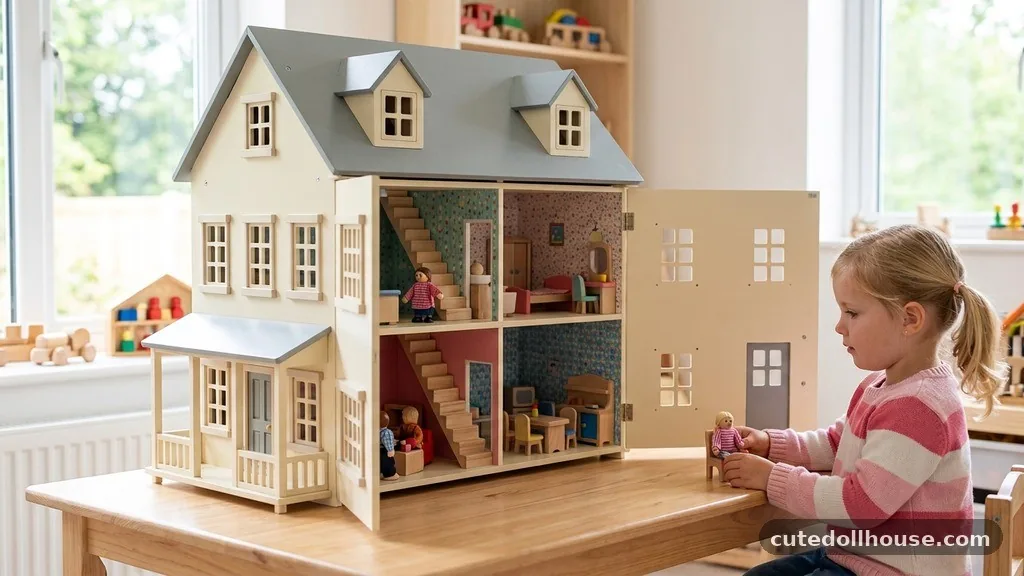
- The child enjoys pretend play, storytelling, decorating, or arranging miniature objects.
- There is a stable, accessible place to keep the house between play sessions.
- The adult buyer is comfortable checking assembly requirements and safety information.
- The selected design leaves enough room for the child to reach the interior spaces.
- The child is likely to use the house for several types of play rather than only display it.
Consider an Alternative If:
- Available space is limited and the house cannot remain safely assembled.
- The child prefers active toys, vehicles, construction sets, or outdoor play.
- The product requires complex assembly that the buyer cannot reasonably complete.
- The intended user is too young for the included accessories or small components.
- A portable fabric, plastic, or foldable playhouse would be easier to store.
Wooden Dollhouse Styles to Consider
There is no single best layout for every child. The right format depends on how the dollhouse will be used and where it will be placed.
| Style | Best For | Main Advantage | Possible Drawback |
|---|---|---|---|
| Open-front multi-level house | Children who enjoy room-by-room storytelling | Provides several play areas in one structure | Can require considerable floor or shelf space |
| Compact wooden dollhouse | Bedrooms, smaller playrooms, and limited spaces | Easier to position and store | May offer less room for furniture and figures |
| Portable or foldable design | Families who need flexible storage | Can be moved or put away more easily | May sacrifice interior size or structural solidity |
| Unfinished or lightly finished house | Creative children and craft-focused families | Can be painted or decorated for a personal look | Requires extra time and suitable finishing materials |
| Accessory-rich playset | Children who want to begin role-play immediately | May include furniture and decorative pieces | More loose parts can mean more sorting and supervision |
Important Buying Criteria
Build and Material Quality
Wooden dollhouses may be made from solid wood, engineered wood, plywood, fiberboard, or a combination of materials. A listing may describe the product as wooden without explaining which parts use which material. Buyers should check the detailed specification section, especially if material quality is a major priority.
Look for panels that appear properly joined, surfaces that are described as smooth, and edges that do not seem rough or unfinished. Hardware should be secure after assembly. If the product information is vague, it is sensible to treat construction quality as uncertain rather than assuming the house is made entirely from solid timber.
Paint and finish deserve attention too. Check whether the seller provides information about the finish and whether the product is intended for the child’s age group. Product claims can vary between regions and sellers, so safety statements should be verified on the current listing and packaging.
Stability and Structure
A dollhouse should stand securely on its intended surface. Tall or multi-level designs may need a wider base, a wall attachment, or careful placement away from areas where they could be pulled or knocked over. The manufacturer’s instructions should explain any recommended anchoring or positioning requirements.
Stability matters more than decorative detail. A house with elaborate balconies or roof features may look attractive, but those features should not make the structure difficult to reach or prone to tipping.
Design and Appearance
Appearance affects both the child’s interest and the adult’s willingness to keep the toy in a visible room. Some buyers prefer traditional house styling with pitched roofs and several rooms. Others may want a modern open-plan look, bright colors, or a more neutral wooden finish.
Consider whether the decoration is printed, painted, removable, or supplied as separate pieces. Printed details can make a house look complete without additional decorating, while an unfinished design can provide a craft project. Neither approach is automatically better; it depends on whether the child wants immediate play or creative customization.
Size and Fit
Check the external dimensions, not just the number of rooms. A dollhouse can be compact in photographs but surprisingly tall or deep in a real room. Measure the planned location, allowing extra space for children to sit or stand comfortably while playing.
Interior dimensions matter as well. Some small houses are suitable for miniature figures and simple furniture, while larger designs may be intended for bigger dolls or more substantial accessories. If a child already owns furniture or figures, compare their measurements with the dollhouse’s room openings and floor heights.
Also consider how the house will reach its final location. A large assembled structure may not fit through a narrow doorway, up a staircase, or onto a particular shelf.
Features and Functionality
Useful features can include opening doors, windows, removable roofs, balconies, staircases, movable furniture, and accessible room layouts. These details can add play value, but they can also increase the number of parts that need assembly or repair.
Prioritize features that support the way the child actually plays. A child who likes arranging rooms may value open access and broad floors more than a working door. A child who enjoys storytelling may prefer several distinct rooms and spaces for figures to move between.
Be cautious about treating every decorative feature as a practical benefit. Small railings, tiny shutters, and delicate accessories may look appealing but can be easier to lose or damage.
Assembly and Ease of Use
Assembly is one of the most important points to verify before purchase. Product listings may use terms such as “easy assembly,” but that phrase does not always explain the number of panels, fasteners, or steps involved. Look for an assembly time estimate, tool requirements, instruction format, and information about whether more than one adult is recommended.
Some houses are partly assembled and only require furniture or trim to be added. Others arrive as flat panels and require the frame, walls, roof, and interior features to be built. If assembly instructions are unclear or customer feedback frequently mentions missing hardware, buyers should consider that risk before ordering.
After assembly, check that every fastener is tight and that no panel or accessory is loose. Keep the instructions in case the house needs to be moved or repaired later.
Included Accessories
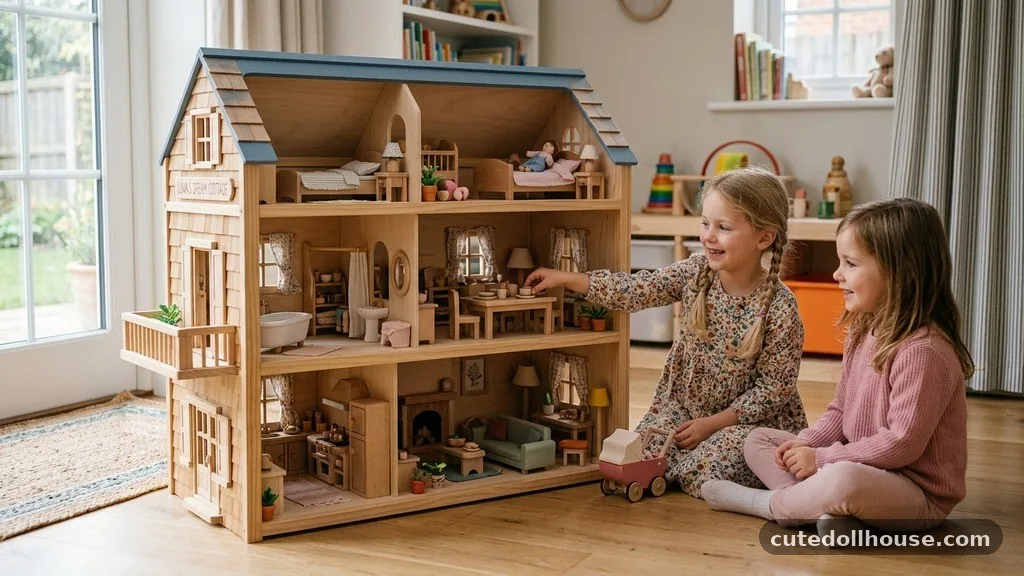
Some wooden dollhouses are sold as structures only. Others include furniture, lamps, kitchen pieces, beds, pets, or figures. The photographs may show additional items that are not included, so read the contents list carefully.
An accessory bundle can offer better immediate play value, but it is not necessarily the best option for every child. Extra pieces may create clutter, and a child who already owns miniature furniture may prefer to choose individual additions. Confirm whether accessories are wooden, plastic, fabric, or mixed-material items if that matters to you.
Durability and Maintenance
Wooden construction can make a dollhouse feel substantial, but durability depends on design, material, assembly, handling, and storage. A house with thin panels or delicate decorative parts may not withstand the same treatment as a simpler, sturdier model.
Keep the structure away from persistent moisture and direct heat. Dust can usually be removed with a dry or lightly damp cloth, but cleaning instructions should take the finish into account. Avoid using strong cleaners unless the manufacturer specifically permits them.
Loose accessories should be stored in a container so they are not stepped on, lost, or mixed with unsuitable items. If the house is passed down to another child, inspect it again for loose fasteners, splintered surfaces, damaged paint, or missing components.
Age Suitability and Safety
Age recommendations should be treated as an important starting point, not a suggestion to ignore. A dollhouse intended for older children may include small furniture, miniature figures, or detachable decorative parts that are unsuitable for younger users.
For toddlers and preschool-age children, choose a design with age-appropriate components, accessible rooms, and fewer fragile details. Adult supervision may still be needed, particularly during assembly and when loose accessories are present. Always follow the current manufacturer guidance and local safety information.
Children should also have enough space to play without pulling the house from a high shelf or climbing on furniture to reach it. A stable, low position is generally more practical than an attractive but inaccessible display location.
How Customer Feedback Can Help
Customer reviews can reveal practical issues that product descriptions leave out, such as confusing instructions, damaged packaging, inconsistent panel alignment, or accessories that are smaller than expected. They can also show whether buyers found the finished house attractive and whether children continued using it after the initial setup.
Reviews should be read for patterns rather than isolated complaints. One report of a missing screw may reflect a packing error, while repeated comments about weak panels or unclear instructions deserve more attention. Product feedback can also vary by seller, production batch, shipping region, and model revision.
Useful review questions include:
- Do several buyers mention the same assembly problem?
- Are complaints about the house itself or only about shipping damage?
- Do reviewers clearly distinguish included accessories from pictured extras?
- Are the dimensions consistent with the published specifications?
- Do buyers describe the house as suitable for the intended child’s age?
- Are replacement parts or seller support mentioned when something arrives damaged?
Photographs in reviews can be especially useful for judging scale. They may show how large the dollhouse looks beside a child, table, or standard piece of furniture, although individual rooms and backgrounds can make comparisons imperfect.
Choosing the Right Dollhouse for Different Buyers
For Beginners and Younger Children
Choose a compact design with an open front, simple room layout, rounded or well-finished surfaces, and limited loose accessories. Ease of access matters more than a large number of floors. A smaller structure can also reduce frustration during play and make supervision easier.
For Creative Children
An unfinished or lightly decorated wooden dollhouse may suit children who enjoy painting, crafting, and interior design. Verify which surfaces are ready for decoration and which materials or paints are appropriate. A customization project should be planned around the child’s age and adult supervision.
For Appearance-Focused Buyers
Pay attention to the finish, color palette, roof design, wallpaper details, and how the house will look from the front and sides. A neutral or traditionally styled house may blend more easily with home décor, while a brightly colored model can create a stronger visual focus.
For Families With Limited Space
Measure first. A compact or portable model may be more practical than a tall multi-level house, even if it offers fewer rooms. Consider how the dollhouse will be stored when not in use and whether it can be moved without being dismantled.
For Children With Existing Dollhouse Furniture
Check scale compatibility before buying. Furniture that is too large can block doorways and leave little room for play, while furniture that is too small may look out of proportion. The product listing should provide interior dimensions or at least enough information to make a reasonable comparison.
For Buyers Who Want Long-Term Use
Favor a sturdy, adaptable layout over a highly themed design that may appeal only for a short period. Neutral rooms, removable furniture, and enough interior space can make it easier to refresh the house as the child’s interests change.
Common Mistakes to Avoid
- Buying from photographs alone: Always check measurements and the included-parts list.
- Ignoring assembly requirements: Confirm whether tools, extra time, or a second adult may be needed.
- Assuming all wood is the same: Look for the specific materials used in the frame, panels, and accessories.
- Choosing too many tiny accessories: More pieces can add play value but may create safety and storage concerns.
- Forgetting access space: A large house needs room in front and beside it, not just a footprint on paper.
- Overlooking compatibility: Existing dolls and furniture may not fit the rooms or doorways.
- Failing to inspect after assembly: Check for loose screws, rough edges, unstable sections, or damaged components.
Alternatives to Wooden Dollhouses
A plastic dollhouse may be easier to clean and may offer bright molded details, but it can have a different look and feel from a wooden structure. Plastic models may also be lighter or more portable, depending on their design.
Fabric playhouses and foldable dollhouses can be useful where storage is limited. They are often easier to put away, though they may not provide the same firm surfaces for arranging miniature furniture.
A dollhouse kit made from cardboard or lightweight board may suit craft-focused families or occasional play. These options can be less demanding to store, but their resistance to rough handling and moisture may differ from that of a solidly constructed wooden model.
For very young children, large-scale pretend-play furniture with fewer small components may be more suitable than a detailed miniature house. The safest alternative depends on the child’s age, abilities, play habits, and the specific product’s design.
Frequently Asked Questions
What is the best dollhouse for girls?
The best choice is the one that matches the child’s age, available space, preferred style of play, and existing accessories. Look for a stable structure, accessible rooms, suitable materials, and clear information about assembly and included parts rather than choosing by appearance alone.
What are good wooden dollhouses for kids?
Good wooden dollhouses generally have a stable base, smooth or properly finished surfaces, clear assembly instructions, appropriately sized rooms, and an accessory list that matches the product photographs. The ideal size and layout depend on the child and the intended play space.
What age is a wooden dollhouse suitable for?
Age suitability varies by model. A simple house with large components may suit younger children, while detailed designs with miniature accessories are usually more appropriate for older users. Always follow the manufacturer’s age recommendation and supervise children around small parts.
How do you choose the right wooden dollhouse?
Measure the available space, compare the dollhouse dimensions with the child’s existing figures, check the materials and finish, review the assembly requirements, and confirm what is included. Customer feedback can help identify recurring issues that are not obvious in the product description.
Are wooden dollhouses difficult to assemble?
Some need only light assembly, while others require the frame, floors, walls, roof, and accessories to be fitted together. The difficulty depends on the design and the quality of the instructions. Check the listing for tools, estimated time, and whether additional help is recommended.
Do wooden dollhouses include dolls and furniture?
Not always. Some are sold as empty houses, while others include furniture, figures, or decorative accessories. Read the current contents list carefully, because product images may show items that are sold separately.
Final Verdict
The best wooden dollhouses for girls can be worth buying when a child enjoys imaginative play and the family has enough space for a stable, accessible structure. The strongest choice is not necessarily the largest or most decorated model. It is the one with suitable dimensions, dependable construction information, manageable assembly, and a layout that supports the child’s preferred way to play.
Before ordering, verify the materials, age guidance, included accessories, measurements, and seller-specific return or support information. If space, portability, or minimal maintenance matters most, a compact plastic or foldable alternative may serve you better. Take those practical details seriously, and a wooden dollhouse can become a flexible creative toy rather than a short-lived decoration.