
Choosing among the best interactive dollhouses for kids is less about finding the biggest set and more about matching play features to a child’s age, space, and interests. These dollhouses combine imaginative role-play with extras such as opening doors, working lights, sounds, moving parts, furniture, or app-connected functions, depending on the model. That variety is useful, but it also makes comparisons harder: a feature-rich house may be too complex for a toddler, while a simple wooden design may feel limited to an older child.
The right choice should be safe, sturdy, manageable to
assemble, and engaging without relying on gimmicks. This guide explains what to look for, where interactive designs can disappoint, and which type of dollhouse makes sense for different families.
What Is an Interactive Dollhouse?
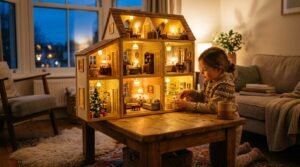
An interactive dollhouse is a miniature play environment designed to respond to a child’s actions. Some models use simple physical features, such as doors that open, elevators that move, shutters that swing, or furniture that can be rearranged. Others add electronic elements, including lights, sounds, music, talking characters, or touch-activated controls.
The term covers a wide range of products. A wooden dollhouse with movable parts may be described as interactive, while another model may depend on batteries and electronic effects. Because there is no single standard definition, parents should read the product description carefully instead of assuming that “interactive” means the same thing from one listing to another.
Most dollhouses are intended for open-ended pretend play. Children can create stories, arrange rooms, act out everyday routines, and play with figures or accessories.
The house itself is only one part of the experience. Included furniture, character compatibility, storage, and available floor space can matter just as much as lights or sounds.
Are Interactive Dollhouses Worth Buying?
For many children, an interactive dollhouse is worth considering because it offers more ways to play than a static display model. A working door can support simple cause-and-effect play, while a lift, light, or sound effect may encourage children to invent longer stories. The best designs add something useful without taking control away from the child.
That distinction matters. Interactive features can attract attention, but they don’t automatically create better play.
A house with noisy electronic functions may become irritating in a shared living space, and battery-dependent parts can eventually need replacement. A well-designed basic dollhouse may provide more lasting value if it is sturdy, easy to access, and compatible with toys the child already owns.
An interactive model is often a good choice when:
- The child enjoys pretend play, role-play, and arranging miniature objects.
- Adults want physical play that doesn’t depend entirely on a screen.
- The available features are age-appropriate and easy to understand.
- There is enough room for the house and its accessories to remain accessible.
- The product uses durable materials and has clearly explained safety information.
Another type of dollhouse may be more suitable when a child is very young, loses interest quickly in electronic toys, or prefers construction and open-ended activities. Parents with limited space may also prefer a compact house, foldable design, or portable dollhouse rather than a large interactive setup.
Important Buying Criteria
Build and Material Quality
Materials influence the feel, stability, and expected lifespan of a dollhouse. Wood-based houses often have a substantial feel and can work well for long-term pretend play, but quality depends on the thickness of the panels, finish, joints, and assembly. Plastic models may be lighter, easier to clean, and less vulnerable to minor spills, although thin plastic parts can be more prone to bending or breaking.
Look for smooth edges, securely attached components, stable floors, and a base that doesn’t wobble easily. For electronic models, inspect how wires, battery compartments, switches, and sound openings are protected. Product photographs can help, but they don’t always show how solid the construction is, so customer images and detailed reviews may provide useful additional context.
Design and Appearance
Appearance is subjective, but it affects whether the dollhouse fits naturally into a child’s room or shared family space. Some buyers prefer colorful plastic designs with character-themed details. Others want a neutral wooden house that blends with existing furniture and leaves more room for a child’s imagination.
Consider whether the design is open enough for small hands to reach the rooms. A beautiful facade is less useful if the interior is difficult to access. Wide openings, sensible room layouts, and visible floors can make a greater difference to playability than decorative details on the outside.
Size and Fit
Check the assembled dimensions rather than relying only on product photographs. A dollhouse may be much taller or wider than expected, particularly when it includes a roof, balcony, elevator, or extended side section.
Also think about the size of the figures and furniture. A child may already own dolls or animals that won’t fit comfortably inside a particular house. If compatibility matters, verify the scale using the manufacturer’s measurements and review photographs rather than assuming that all dollhouse accessories are interchangeable.
Before buying, measure:
- The shelf, table, or floor area where the house will be used.
- The clearance needed for doors, roofs, balconies, and moving parts.
- The storage space required for furniture, figures, and spare accessories
-
- .
- The height that allows the child to reach the upper rooms safely.
Features and Functionality
Interactive features should be judged by how they support play, not by how many are listed on the box. A working lift may be more useful than several prerecorded sounds if it invites children to move figures between floors. Similarly, a light that can be turned on and off may encourage pretend routines without overwhelming the room with noise.
Useful questions include:
- Does the feature respond to a clear physical action?
-
- Can children use it independently after learning how it works?
- Can sounds be muted or switched off?
- Does the feature require batteries, a cable, or an app?
- Are batteries included, and is that detail clearly stated?
-
- Can the house still be used if the electronics stop working?
Electronic functions vary by model and production batch, so buyers should verify the current listing before ordering. Manufacturer descriptions generally explain intended functions, while customer feed
back may reveal practical concerns such as difficult switches, short battery life, or parts that are easy to misplace.
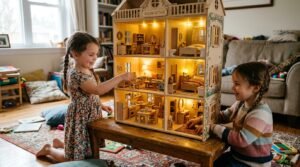
Ease of Use and Assembly
Many dollhouses arrive flat-packed or partially assembled. Assembly can involve attaching floors, walls, railings, furniture, and electronic components. The number of pieces alone doesn’t tell you how difficult the process will be; unclear instructions, tight fittings, or poorly labeled hardware can make a smaller house more frustrating than a larger one.
Check whether the listing states an assembly requirement and whether tools are needed. A child should not be expected to assemble the house unless the manufacturer specifically designs it for supervised construction. Adults should inspect every connection before play, especially on tall structures or models with balconies and moving sections.
Portable or foldable houses may be easier to store but can sacrifice interior space or structural stability. Larger fixed houses usually provide more room for play, but they need a permanent location and may be harder to move once assembled.
Safety and Age Suitability
Age guidance should be treated as a starting point, not a substitute for supervision. Small furniture, tiny figures, detachable knobs, and battery compartments may present risks for younger children. Check the product’s stated age range, warnings, and recommended supervision requirements.
For toddlers, simple houses with large, securely attached components are generally easier to manage than intricate electronic sets. Preschoolers may enjoy doors, lifts, and lights, while older children may appreciate more detailed room layouts and accessory systems. The right difficulty level should stretch a child’s imagination without making basic play frustrating.
Included Accessories
A house may look fully furnished in promotional images even when only a limited selection of accessories is included. Read the contents list carefully. Check whether figures, beds, tables, chairs, kitchen items, lighting components, and batteries come in the box.
Accessories affect the initial play experience and the ongoing cost. A less expensive house may require several separate purchases before it feels complete. On the other hand, a sparsely furnished model can be a good choice for children who enjoy making their own furniture or combining the house with toys they already have.
Customer Feedback and Common Complaints
Reviews are most useful when they identify recurring patterns rather than isolated disappointments. Look for comments about assembly, stability, missing parts, electronic reliability, accessibility, and whether the actual size matches expectations.
Feedback can vary by seller, region, production batch, and individual experience. A review describing a damaged delivery may say more about packaging or fulfillment than the dollhouse itself.
Likewise, a complaint about size may reflect a buyer’s expectations rather than an inaccurate specification. Use reviews alongside the manufacturer’s measurements and current return information.
Value for Money
Value isn’t determined by the number of features. A durable, repairable, well-sized dollhouse may offer better long-term value than a larger set filled with fragile extras. Consider the complete ownership cost, including batteries, additional figures, replacement furniture, and storage solutions.
Buyers should also consider how the house will be used. A child who plays every day may benefit from stronger construction and easy access. For occasional play or a shared bedroom, a compact and simpler model may be the more sensible purchase.
Interactive Dollhouse Types Compared
Because specific products were not supplied for this category, the table below compares common types rather than ranking named models. Features, materials, and assembly requirements can differ considerably between individual products, so verify the current listing before buying.
| Type | Best For | Typical Interactive Elements | Difficulty | Main Advantage | Potential Drawback |
|---|---|---|---|---|---|
| Basic wooden dollhouse | Open-ended pretend play | Opening doors, movable furniture, room access | Low to moderate assembly | Simple, screen-free play with a timeless design | May include few accessories or electronic features |
| Electronic dollhouse | Children who enjoy lights and sounds | Buttons, lights, music, voices, or sound effects | Varies by model | Immediate sensory feedback | Needs batteries and may be noisy or less durable |
| Large multi-level house | Shared play and several figures | Elevators, stairs, opening rooms, balconies | Moderate to high assembly | More room for stories and accessories | Requires substantial floor or storage space |
| Compact or portable house | Small rooms and travel | Folding panels, handles, simple moving parts | Low to moderate | Easier to store and move | Limited interior space and smaller accessory capacity |
| Character-themed playset | Fans of a particular toy or story world | Character-specific rooms, sounds, or accessories | Varies | Strong connection to familiar pretend-play themes | May be less flexible with unrelated figures |
How to Choose the Right Style for Different Children
For Beginners
A beginner usually benefits from a house with an uncomplicated layout, accessible rooms, and a manageable number of accessories. Too many tiny pieces or electronic controls can distract from the basic play pattern. A model that works without batteries is often easier to introduce and maintain.
For Children Who Love Lights and Sounds
An electronic dollhouse may suit children who enjoy pressing buttons and seeing an immediate response. Prioritize adjustable volume or an off switch if the house will be used around other family members. Confirm whether the interactive features can be used independently and whether the house remains playable when the batteries are removed.
For Shared Sibling Play
Look for generous floor space, multiple accessible rooms, and enough included or compatible accessories for more than one child. A narrow house with a single front opening may create unnecessary crowding. Stability is particularly important when children will reach into different areas at the same time.
For Appearance-Focused Buyers
Choose a design that fits the room, but don’t let exterior styling hide poor play access. A neutral finish may age well, while a bright character design can create stronger initial appeal. Check photographs of the interior and the assembled dimensions before placing the house in a visible living area.
For Value-Focused Buyers
Compare what is included, not just the advertised feature count. A simpler house with durable construction and compatible accessories may be more economical than an electronic model that needs batteries and add-ons. Checking replacement-part availability and return terms can also protect the purchase.
For Buyers Seeking a Premium Feel
Focus on finish quality, stable construction, smooth moving parts, and thoughtful proportions. Premium pricing should correspond to materials, design, and long-term usability rather than decorative extras alone. Since quality claims differ between manufacturers, inspect detailed specifications and current customer feedback carefully.
Maintenance and Long-Term Use
Dollhouses collect dust in corners, balconies, and miniature furniture, so a design with accessible rooms is easier to maintain. Wipe surfaces according to the manufacturer’s care instructions and keep electronic components away from moisture. Avoid using harsh cleaners unless the material guidance specifically permits them.
Battery-powered models deserve extra attention. Remove batteries if the house will be stored for a long period, and keep spare batteries away from young children. Check battery compartments periodically for damage or corrosion.
Loose furniture and small accessories are easy to lose. A labeled storage box or divided container can preserve the playset and make tidying less difficult. If the house includes fabric, paper, or unfinished wood elements, keep them in a dry area and follow any care instructions supplied with the product.
Common Reasons Buyers Regret a Dollhouse Purchase
Many disappointments come from a mismatch between expectations and the actual product rather than from one universal design flaw. Buyers may underestimate the assembled size, assume accessories are included, or expect electronics to be more sophisticated than they are.
- The dollhouse is too large for the intended room.
- The interior is difficult for small hands to reach.
- Figures or furniture do not fit the available rooms.
- Assembly takes longer or requires more tools than expected.
- Interactive functions are loud, limited, or dependent on batteries.
- Small accessories create a safety or storage concern.
- The product listing shows extras that are sold separately.
- Replacement parts or customer support information is unclear.
These risks are manageable. Read the dimensions, contents list, age guidance, and warranty or return information before buying. If a specification is missing, treat that as a reason to verify—not as permission to assume.
Frequently Asked Questions
Which type of interactive dollhouse is best for a young child?
A simple, stable design with large, securely attached components is usually easier for a young child than a highly detailed electronic house. Always follow the manufacturer’s age guidance and inspect for small detachable parts.
Do interactive dollhouses need batteries?
Some do and some don’t. Lights, sounds, talking features, and motorized parts commonly require batteries, while doors, shutters, stairs, and elevators may work mechanically. Check the current product listing for battery type, quantity, and whether batteries are included.
Are wooden or plastic dollhouses better?
Neither material is automatically better. Wooden houses may offer a substantial feel and a classic appearance, while plastic models can be lighter and easier to wipe clean. Construction quality, safety, stability, and access often matter more than the material alone.
What age is appropriate for a dollhouse?
Appropriate age depends on the design, accessory size, and the child’s developmental stage. Toddlers need especially careful supervision around small pieces and batteries. Use the manufacturer’s age range as a baseline and consider the child’s ability to follow safety instructions.
How much space does an interactive dollhouse need?
Measure the assembled width, height, and depth, then allow extra clearance for doors, balconies, roof sections, and children standing or sitting around it. Product photographs can make a house appear smaller than it is, so rely on listed dimensions.
What should I check before ordering online?
Confirm the current dimensions, material, included accessories, assembly requirements, age guidance, battery needs, seller details, and return policy. Read recent reviews for recurring concerns, but remember that experiences can vary by seller and production batch.
Final Verdict
The best interactive dollhouses for kids are not necessarily the largest or most electronic. A worthwhile choice has a stable build, accessible rooms, age-appropriate parts, useful interactive functions, and enough flexibility to support imaginative play after the novelty fades. Families should measure their space, check what comes in the box, and confirm whether existing figures will fit.
Choose a simpler wooden or compact house for accessible, low-maintenance play; consider an electronic model when lights and sounds genuinely match the child’s interests; and reserve larger multi-level designs for homes with room to keep them set up. With those checks in place, an interactive dollhouse can be a worthwhile screen-free toy—but the specific listing still deserves careful verification before purchase.