
Finding the best large wooden dollhouses with furniture means balancing appearance, play value, available space, and the amount of assembly you’re willing to handle. A larger wooden house can create room for imaginative play, display, or a detailed miniature interior, but size alone doesn’t guarantee good construction or useful accessories. Furniture may be included, sold separately, or limited to a few basic pieces, depending on the model and seller.
This guide explains what to check before buying, how to compare large wooden dollhouse kits, and when a furnished model makes more sense than an unfurnished house. Because product specifications and included accessories can change, treat each listing as a starting point and verify the current details before placing an order.
What Is a Large Wooden Dollhouse with Furniture?
A large wooden dollhouse is a miniature house made primarily from wood or engineered wood panels. It usually has several rooms, open-front access, multiple levels, or a wider floor plan than a compact dollhouse. Some arrive partly assembled, while others are flat-packed kits that require construction.
A furnished version includes some miniature household items, such as beds, tables, chairs, kitchen pieces, bathroom fixtures, or decorative accessories. The amount of furniture varies considerably. One model may include enough pieces to suggest a complete home, while another may contain only a small starter set.
These dollhouses are used for several purposes:
- Children’s imaginative play: A larger layout gives children more space to arrange rooms and act out stories.
- Adult miniature hobbies: A wooden dollhouse kit can provide a foundation for decorating, painting, and furnishing a scale interior.
- Display: Some buyers want a decorative miniature home rather than a toy that is frequently moved or handled.
- Shared play: A wider house can make it easier for more than one child to play at the same time, provided the structure is stable and accessible.
There is no universal definition of “large.” Sellers may use the word for a tall multi-level house, a wide house with several rooms, or simply a model that is bigger than their standard range. Check the assembled height, width, depth, room dimensions, and access points rather than relying on the product title.
Are Large Wooden Dollhouses Worth Buying?
For the right household, a large wooden dollhouse can be a worthwhile purchase. It offers more room for furniture and accessories than many compact plastic models, and wood construction often gives the house a more substantial, furniture-like appearance. The open design can also make rooms easier to reach and rearrange.
However, these products require more commitment. They need floor or tabletop space, may take significant time to assemble, and can be difficult to relocate once furnished. A large dollhouse may also cost more than a smaller house before you add extra furniture, figures, lighting, or decorative materials.
A large furnished dollhouse is a good choice when:
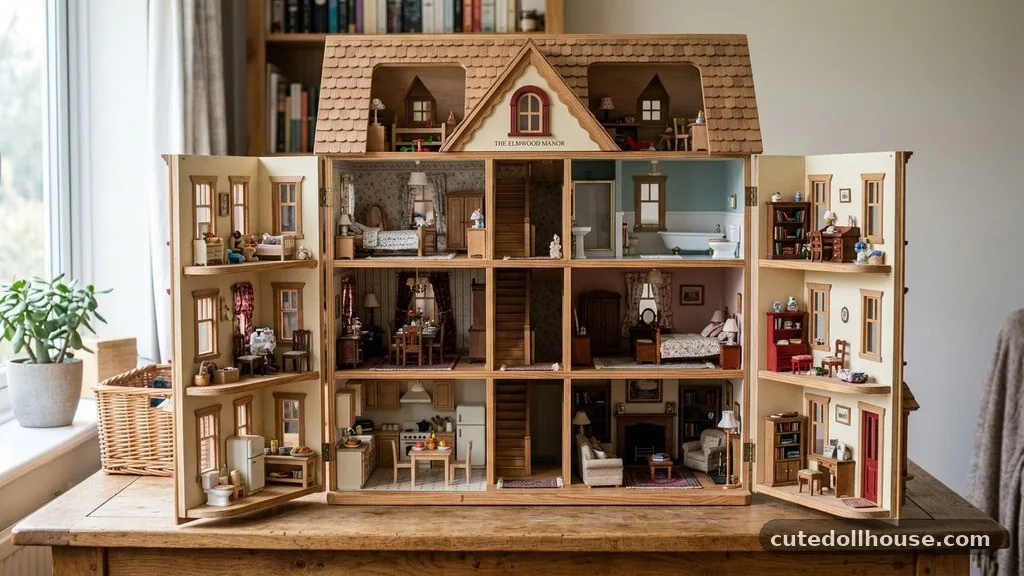
- You have a permanent area where the house can remain set up.
- You want several rooms for imaginative play or detailed miniature scenes.
- You value the appearance and structure of wood over lightweight plastic.
- You want a project that can be expanded with additional dollhouse furniture.
- You’re comfortable checking assembly instructions and completing minor finishing work.
Another option may be better when:
- Storage space is limited or the dollhouse must be packed away after each use.
- The intended user is very young and may handle small accessories unsafely.
- You want a ready-to-play house with no construction or finishing work.
- You need exact scale compatibility for existing miniature furniture.
- Your priority is portability rather than room count or visual detail.
A smaller wooden house, a plastic dollhouse, a foldable playset, or an unfurnished dollhouse kit may be more practical in those situations. The best choice depends less on the word “large” and more on how the house will be used each day.
Important Buying Criteria
Build and material quality
Look at the materials listed by the manufacturer or seller. “Wooden” can refer to solid wood components, plywood, medium-density fibreboard, particleboard, or a mixture of wood-based panels and plastic parts. These materials can all serve different purposes, but the description should be clear enough for you to understand what you’re buying.
Pay attention to the edges, wall joints, base, roof, staircases, and balcony sections. Large structures place more demand on their frame than small dollhouses do. A weak base or poorly supported upper level can affect stability, particularly if children will move furniture around inside.
Photos can help, but they don’t show everything. If the listing does not explain the main materials, hardware, or structural support, consider contacting the seller before purchase.
Design and appearance
Large wooden dollhouses are available in many styles, including traditional homes, modern open-plan designs, townhouses, farmhouses, and multi-storey layouts. Choose a design that suits the intended use rather than selecting solely by appearance.
For play, wide openings and accessible rooms are often more useful than intricate exterior details. For display or adult miniature work, features such as windows, railings, stairs, trim, and paintable surfaces may matter more.
Also check whether the displayed furniture, dolls, lamps, plants, and decorations are included. Product photography often shows a fully styled scene even when the purchase includes only the house and a limited selection of accessories.
Size and fit
Measure the area where the dollhouse will stand, then allow extra clearance for children or adults to reach the rooms. A house may fit on paper but still be awkward to use if it is placed too close to a wall or under a low shelf.
Check these measurements before ordering:
- Assembled height, including roof details and any removable top pieces
- Overall width and depth
- Room height and floor dimensions
- Door and window access
- Weight, if the house may need to be moved
- Package dimensions, especially if it must pass through narrow doorways
Scale matters too. A 1:12 dollhouse kit is not automatically compatible with every piece of furniture or every doll. Some listings use approximate scale language, so verify dimensions when you already own accessories.
Features and functionality
Useful features may include open-back access, removable panels, working doors, staircases, balconies, adjustable room layouts, windows, lighting, or storage areas. More features are not always better. A detailed staircase can look attractive but reduce usable floor space, while a removable wall may simplify access and cleaning.
For children, broad rooms and sturdy surfaces tend to be more practical than fragile decorative components. For adult hobbyists, a simpler structure may be preferable if it offers more freedom to paint, wallpaper, wire lights, or install custom furniture.
Included furniture and accessories
Furniture is one of the main reasons shoppers search for a furnished dollhouse, but inclusion lists deserve careful attention. Look for a specific count or itemized description instead of relying on phrases such as “accessories included” or “complete set.”
Confirm whether the package includes:
- Beds, seating, tables, and storage pieces
- Kitchen and bathroom furniture
- Decorative accessories such as rugs, plants, or lamps
- Figures or dolls
- Stairs, railings, and fixed house fittings
- Lighting, batteries, wiring, or power components
Furniture may arrive unassembled, and some pieces may be made from thin wood, cardboard, resin, or plastic. That isn’t necessarily a problem, but it affects durability, appearance, and compatibility with the rest of the house.
Assembly and difficulty
A large wooden dollhouse kit can involve more than attaching a few panels. Some require sorting many parts, identifying hardware, applying adhesive, aligning floors, and allowing time for sections to dry. The difficulty depends on the design, instructions, tools, and the buyer’s experience.
Before purchasing, look for:
- Clear assembly instructions with labeled parts
- Images or diagrams for each construction stage
- Information about required tools and adhesive
- A stated assembly time, if the manufacturer provides one
- Replacement-part or customer-support information
- Warnings about adult assembly or small parts
Do not treat an estimated assembly time as a guarantee. Production batches, missing hardware, unclear diagrams, and optional decorating can all change how long the project takes. If the house is for a child, assemble and inspect it before giving it to them.
Durability and maintenance
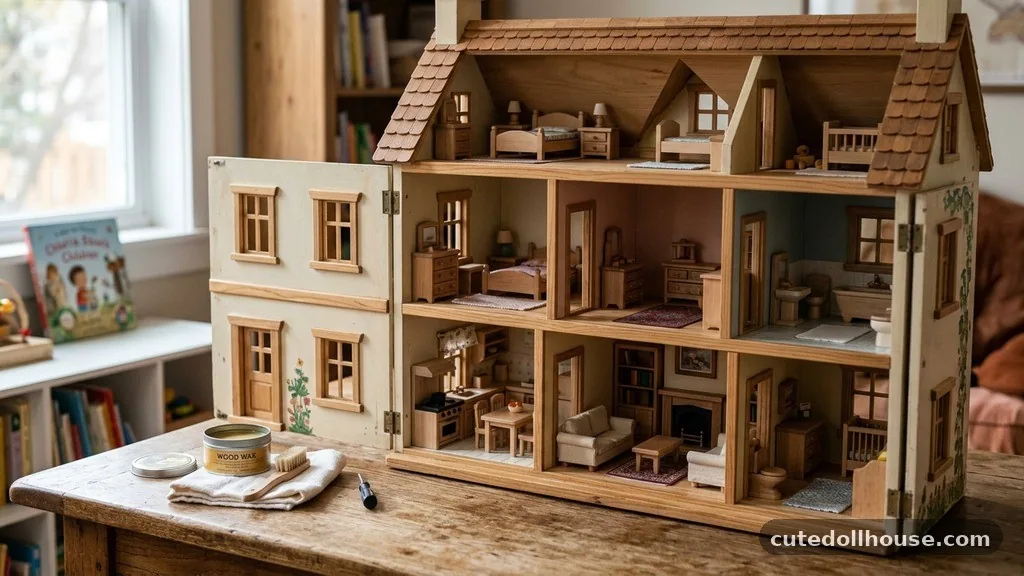
Wooden dollhouses are not maintenance-free. Dust can collect on ledges and inside rooms, while moisture can affect wood-based panels or finishes. Keep the house away from damp areas, direct heat, and locations where it may be knocked over.
Inspect the house periodically for loose railings, sharp edges, cracked furniture, unstable stairs, and detached small parts. For general product-safety information, parents and caregivers can consult the U.S. Consumer Product Safety Commission’s toy safety guidance.
Durability also depends on use. A display-focused model may remain in good condition for years with careful handling, while a children’s playhouse may experience more movement, rearranging, and accidental impact.
Customer feedback and common complaints
Reviews can reveal practical details that product listings leave out, but they should be read critically. Focus on repeated patterns rather than a single unusually positive or negative comment. Useful themes include missing hardware, unclear instructions, fragile accessories, inaccurate dimensions, paint quality, and whether the finished house feels stable.
Common complaints in this category may include:
- Furniture that is smaller or less substantial than expected
- Photos showing accessories that are not included
- Panels that need extra alignment during assembly
- Instructions that assume prior building experience
- Limited room access in tall or deep designs
- Minor cosmetic differences between batches or sellers
These issues are not guaranteed to affect every example. Seller, model revision, production batch, and user expectations can all influence the experience. Read the current listing and recent reviews for the exact version you intend to buy.
Comparison of Large Wooden Dollhouse Types
When no single model specification is available or consistent across sellers, comparing design types can be more useful than assigning unsupported scores. The table below shows what each format generally suits and what to examine carefully.
| Type | Best For | Difficulty | Key Feature | Main Drawback | Overall Value Consideration |
|---|---|---|---|---|---|
| Ready-assembled wooden house | Buyers who want immediate use | Low to moderate | Less construction work | May be harder to transport or store | Useful if convenience matters more than customization |
| Flat-pack furnished kit | Families and hobbyists comfortable with assembly | Moderate to high | House and starter furniture in one package | Accessories may be basic or require assembly | Compare the included items against the cost of buying them separately |
| Unfurnished wooden dollhouse | Creative projects and existing furniture collections | Moderate | Freedom to choose the interior | Furniture and decoration add extra expense | Can be better value for buyers who already own compatible pieces |
| Tall multi-level house | Display and multiple-room play | Moderate to high | Many rooms within a relatively narrow footprint | Upper rooms may be difficult to reach | Prioritize access and stability over room count |
| Wide open-front house | Shared play and easy rearranging | Low to moderate | Broad, accessible rooms | Needs more horizontal space | Often practical when playability is the main goal |
How to Compare Listings Without Overlooking Details
Start with the exact contents of the box. A cheaper-looking listing may exclude furniture, lighting, stairs, or decorative finishes that another seller includes. Conversely, a house marketed as furnished may contain only a few basic pieces.
Next, compare usable space rather than the exterior dimensions alone. A tall roof, thick side panels, or decorative balconies can make a dollhouse appear large without providing much additional room inside. Look for room measurements and photographs taken from several angles.
Finally, review delivery and return conditions. Large dollhouses can be awkward to return, especially after assembly. Verify whether the seller handles missing parts, damaged panels, or shipping-related problems before buying.
Recommendations by Buyer Type
For beginners
Choose a model with clearly labeled parts, illustrated instructions, and a modest number of decorative components. A furnished starter kit can reduce the need to source every item separately, but confirm exactly what the term “furnished” means.
For experienced hobbyists
An unfurnished or lightly furnished wooden dollhouse may offer greater creative control. Look for accessible rooms, paintable surfaces, compatible scale, and enough structural strength for custom wallpaper, flooring, lighting, and handmade furniture.
For children’s imaginative play
Prioritize stability, accessible rooms, rounded or finished edges, and furniture that can withstand regular handling. Avoid choosing solely by the number of rooms. A smaller house with better reach may provide more enjoyable play than a taller model with cramped upper floors.
For appearance-focused buyers
Examine the exterior finish, trim, window design, roofline, and visible hardware. Ask whether the shown decorations are included and whether the supplied house arrives painted, unfinished, or partially finished.
For value-focused buyers
Calculate the total project cost, not just the listed price. Include furniture, figures, paint, adhesive, tools, lighting, and replacement parts if needed. A less expensive unfurnished house may not remain the lower-cost option once the interior is completed.
For buyers wanting a premium display piece
Focus on material transparency, finish quality, structural stability, room access, and the consistency of the included furniture. A premium-looking display should also be practical to dust and inspect; intricate details are less useful if they make the interior inaccessible.
Safety and Age Considerations
Large dollhouses are not automatically suitable for every age group. Small furniture, miniature decorations, magnets, batteries, and detachable components can create hazards for young children. Follow the manufacturer’s age guidance and inspect the exact accessory set before purchase.
Adult assembly may be necessary even when the product is marketed as a children’s toy. Use the recommended tools and adhesive, keep small parts away from children during construction, and check that the completed structure is stable before use.
If the dollhouse is tall, consider where it will be placed and whether it could be pulled or tipped. The correct precautions depend on the individual design, so use the supplied instructions rather than assuming every large wooden house has the same safety requirements.
Frequently Asked Questions
What should be included with a furnished wooden dollhouse?
There is no standard furniture package. Depending on the model, it may include beds, seating, tables, kitchen pieces, bathroom items, decorative accessories, or figures. Read the itemized contents and check whether the furniture shown in the photographs is included.
How large should a dollhouse be?
Choose a size that fits both the available space and the intended users. Measure the assembled height, width, and depth, then allow room to reach the interior. Room dimensions and access are usually more useful than the marketing label “large.”
Are large wooden dollhouses difficult to assemble?
Some are straightforward, while others require careful alignment, adhesive, and considerable construction time. The difficulty depends on the design and instructions. Look for labeled parts, diagrams, tool requirements, and recent buyer feedback before ordering.
Is a 1:12 dollhouse compatible with all dollhouse furniture?
No. The 1:12 scale is common, but furniture dimensions and manufacturer interpretations can still vary. Measure existing pieces and compare them with the house’s room dimensions, doorways, and ceiling height.
What is better for children: a tall or wide dollhouse?
A wide, open-front design is often easier for children to reach and share, while a tall house can provide more rooms in less floor space. Stability, access, and age suitability matter more than the number of levels.
Can an unfurnished dollhouse be a better buy?
Yes, particularly if you already own compatible furniture or want to create a custom interior. It can also be a better choice for adult hobbyists who prefer selecting the scale, style, and quality of each accessory.
Final Verdict
The best large wooden dollhouses with furniture are worthwhile for buyers who have the space, patience, and intended use for a substantial miniature house. The strongest choice is not necessarily the tallest or the one with the most rooms; it’s the model with clear dimensions, dependable access, suitable materials, and an honest list of included furniture.
Before buying, verify the assembled size, scale, construction requirements, accessory list, age guidance, and return policy. If convenience matters, choose a ready-to-use furnished design.
If customization matters more, an unfurnished wooden dollhouse kit may offer better long-term value. A careful comparison will help you choose a house that looks good, works for its intended users, and earns its space in your home.