
Finding the best miniature house kits for adults means balancing design, building difficulty, materials, scale, and the amount of patience a project demands. These DIY miniature kits can become decorative room boxes, relaxing creative hobbies, or detailed gifts, but they aren’t all alike. Some focus on pre-cut wooden parts and realistic interiors, while others expect more painting, gluing, wiring, or improvisation.
The right choice depends on how much time you want to spend, where the finished model will sit, and whether you prefer a guided craft or a demanding miniature-building project. The advice below explains what to inspect before buying, where common complaints arise, and how to judge whether a miniature house kit offers good value without relying on unverified product claims.
What Are Miniature House Kits for Adults?
A miniature house kit is a scale model-building project containing some or most of the materials needed to create a small room, shop, home, greenhouse, or similar scene. Kits commonly include wooden panels, paper decorations, furniture pieces, fabric, lighting parts, adhesive, and an instruction booklet, although the exact contents vary considerably.
The builder usually assembles the structure, decorates the interior, adds small accessories, and may connect battery-powered or USB-powered lights. Some kits arrive with pieces that are already cut and printed. Others require more trimming, painting, sanding, or careful fitting.
That difference matters. A kit described as “DIY” may be a relatively accessible assembly project, or it may involve dozens of tiny parts and instructions that require close attention. Product photos also tend to show a completed scene, so buyers should check whether the displayed furniture, plants, figures, tools, and lighting are actually included.
Are Miniature House Kits Worth Buying?
For the right person, miniature house kits can offer hours of focused creative work and a finished display piece that feels more personal than ready-made decor. They can suit adults who enjoy crafts, model making, dollhouse interiors, scrapbooking, painting, or slow weekend projects.
They may be less suitable if you want a quick activity, dislike repetitive detail work, or have limited eyesight or hand mobility. Small parts can be frustrating, and a kit may require extra glue, paint, batteries, tweezers, a craft knife, or better lighting than expected.
The category is worth considering when the project itself is part of the appeal. If your priority is an instantly finished miniature room, a pre-assembled model or display cabinet may be a better fit. Buyers should also consider the safety of small components around young children and pets.
The U.S. Consumer Product Safety Commission’s toy safety guidance provides useful general information, although it isn’t a substitute for checking the specific product’s warnings.
What to Check Before Buying
Build and Material Quality
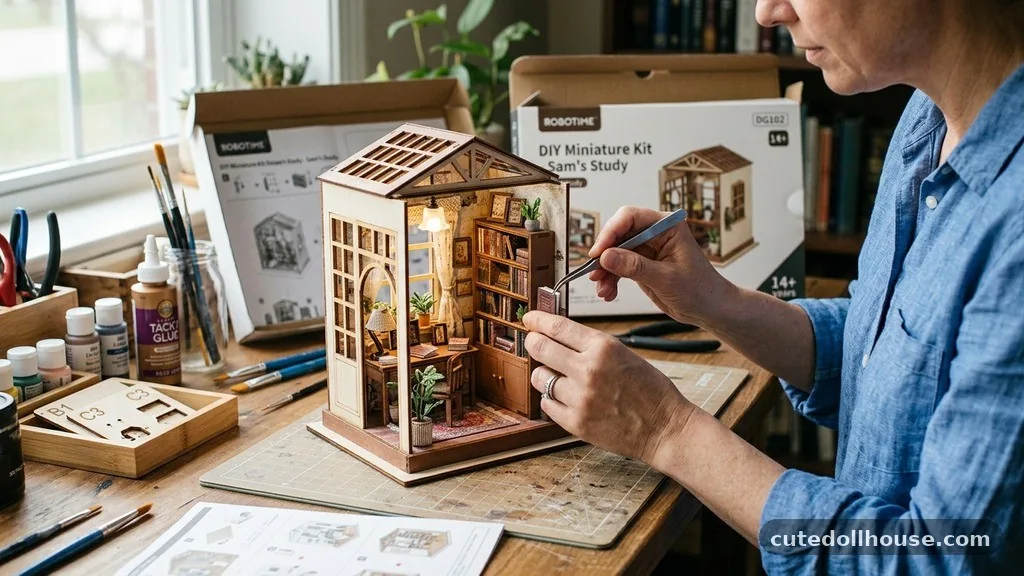
Look for clear information about the main materials. Wood, plywood, card, plastic, fabric, wire, resin, and foam each behave differently during assembly.
Thin wood can be easy to cut but may bend or split. Cardboard parts can look good when printed but may not tolerate excess glue or moisture.
Useful listing details include the thickness of panels, whether parts are pre-cut, and whether surfaces arrive painted, printed, or unfinished. If a seller doesn’t explain the materials, buyers should avoid assuming that every visible part is made from wood or that the structure will be especially durable.
- Check whether structural panels are pre-cut and labeled.
- Look for clean edges and consistent printing in product photographs.
- Confirm whether adhesive, paint, batteries, and tools are included.
- Check if delicate accessories are supplied as finished pieces or require construction.
- Read the care advice before placing the model in a bright, damp, or dusty area.
Design and Appearance
Choose a visual style you’ll still enjoy after the novelty fades. Popular themes include bookshops, cafés, bedrooms, gardens, studios, music rooms, bakeries, and traditional homes. Some designs are realistic; others use bright colors, fantasy details, or a deliberately whimsical look.
Pay attention to the finished photographs from several angles. A scene may look detailed from the front but have a plain or open rear. That isn’t necessarily a flaw, especially if the model will sit against a wall, but it affects where you can display it.
Size and Display Space
Finished dimensions are more useful than the package size. Measure the shelf, cabinet, desk, or bookcase where the model will live, and leave space for access if the kit includes lighting or a removable back panel.
Small scale doesn’t always mean easy. A compact kit can contain extremely tiny pieces, while a larger model may offer more room to work but take up considerably more display space. Check both the finished width and depth, not just the height.
Features and Functionality
Lighting is a common selling point, but buyers should look beyond the word “LED.” Confirm how the lights are powered, where the battery compartment sits, whether the switch remains accessible, and whether wiring must be installed during construction.
Other features may include opening doors, removable roofs, transparent windows, rotating parts, layered scenery, or a protective case. These can increase display appeal, but moving parts and transparent panels may also add complexity.
Ease of Assembly
Instructions are one of the most important parts of a miniature house kit. Clear diagrams, numbered pieces, sensible construction stages, and readable text make a major difference. Customer photos can sometimes reveal whether a finished model closely resembles the listing images, but feedback varies by seller and production batch.
Before ordering, check whether the kit is marketed for beginners, intermediate builders, or experienced crafters. Treat those labels as approximate. A beginner-friendly structure may still include challenging decorative work.
Included Accessories
Compare the contents list with the product images. Some kits include a complete interior, while others show optional accessories or styling pieces that aren’t supplied. A “house kit” may provide the building shell but leave furniture, flowers, books, and room decor for the buyer to make.
Also check whether basic supplies are included. Many buyers reasonably expect glue, paint, scissors, tweezers, or batteries to be supplied, but these items are often excluded. The product description should settle the question before purchase.
Durability and Maintenance
Miniature displays are decorative rather than rugged. Dust, direct sunlight, humidity, and frequent handling can damage paper, fabric, paint, and small accessories. A case can help, but it adds cost and may not fit every design.
Finished models are usually easiest to maintain with gentle dusting and careful placement. Avoid assuming that a model is suitable for outdoor use or damp rooms unless the manufacturer specifically says so.
Customer Feedback and Common Complaints
Reviews are most useful when they describe a specific issue rather than simply praising or criticizing the kit. Look for repeated comments about missing parts, unclear instructions, weak adhesive, inaccurate dimensions, fragile accessories, or lighting that is difficult to install.
A single complaint may reflect shipping damage or an unusual production issue. Repeated reports deserve more weight, particularly when several buyers mention the same missing component or assembly problem.
Miniature House Kit Comparison
Because no specific product models or verified specifications were supplied for this roundup, the table below compares the main kit types rather than inventing rankings or product scores. Use it to narrow the style that fits your experience and display plans.
| Kit Type | Best For | Typical Difficulty | Main Feature | Main Drawback | Value Consideration |
|---|---|---|---|---|---|
| Pre-cut wooden room kit | Beginners who want a structured project | Beginner to intermediate | Defined walls, floors, and room layout | May still require detailed decorating | Good if the kit includes most construction materials |
| Lighted miniature house | Display-focused buyers | Intermediate | Illuminated interior | Wiring and batteries add complexity | Check whether lighting parts and power source are included |
| Open-back room box | Collectors and shelf displays | Beginner to intermediate | Easy viewing from the front | Less enclosed and potentially more dust-prone | Useful when display access matters more than realism |
| Detailed multi-room house | Experienced hobbyists | Intermediate to advanced | More scenes and decorating opportunities | Longer build time and more small components | Better suited to buyers who enjoy the process, not a quick project |
| Paper-heavy miniature scene | Budget-conscious crafters and decorators | Beginner to intermediate | Printed textures and lightweight details | Can be more sensitive to glue and moisture | Check whether the visual finish matches your expectations |
Important Product Categories to Consider
Wooden Miniature House Kits
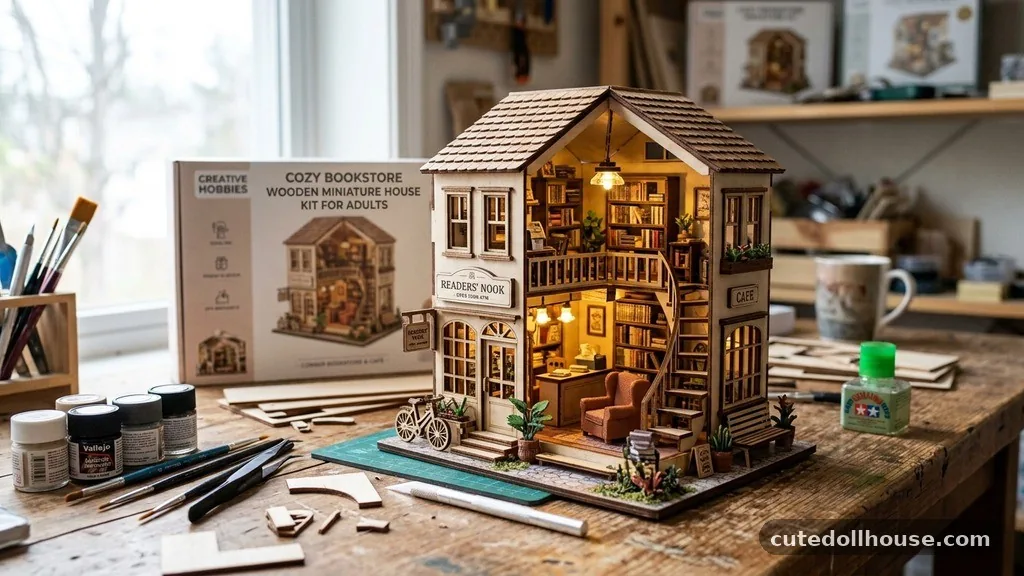
Wooden kits are often attractive to buyers who want a more substantial structure and a traditional model-making feel. Pre-cut wood can create convincing floors, walls, shelves, and frames, but the quality depends on how accurately the pieces are cut and how well they fit.
Wood also needs careful handling. Parts may require light sanding, and excessive moisture from glue or paint can cause warping. Buyers should confirm whether the kit includes unfinished wood, printed panels, or a mixture of materials.
Lighted DIY Miniature Houses
Built-in lighting can make a finished scene more noticeable in the evening and can add depth to windows, shops, and interior rooms. It also creates another stage of assembly, particularly if wires must be routed behind walls or through the floor.
Check the power system before buying. Battery operation may be convenient for a shelf, while a USB connection may suit a desk near a power source. A listing that shows glowing lights but doesn’t explain the power requirements deserves caution.
Miniature House Kits With Cement or Masonry Details
Some miniature building kits use cement-like materials, plaster, brick pieces, or masonry effects to create walls, paths, fireplaces, and garden features. These can appeal to builders who want a more realistic construction process rather than a purely decorative paper scene.
They may be messier and less forgiving than a simple wooden kit. Read the instructions for drying times, mixing requirements, ventilation, and cleanup. Unless the listing gives clear information, don’t assume that cement, tools, or protective equipment are included.
Decorative Room Boxes
Room boxes focus on one interior rather than a complete house. They can be easier to display and may suit buyers who want a themed scene such as a reading nook, craft room, café, or plant shop.
Their smaller scope doesn’t guarantee a simple build. A single room can still contain intricate furniture, books, wall art, flooring, and lighting. Look at the piece count and instruction style rather than relying only on the room’s size.
How Difficult Are Miniature House Kits?
Difficulty is shaped by more than the number of parts. A kit with clear pre-cut pieces may be manageable for a beginner, while a smaller scene with hand-built furniture and delicate decorations may be much harder.
Expect the process to involve several types of work:
- Sorting and identifying small parts.
- Reading diagrams and following the construction order.
- Applying glue precisely without marking visible surfaces.
- Folding, trimming, painting, or sanding selected components.
- Assembling furniture and arranging decorative details.
- Installing or hiding lighting wires when the kit includes them.
Beginners should favor a manageable theme, strong instructions, pre-cut components, and fewer electrical elements. Experienced builders may prefer a larger scene with more customization, but they should still inspect the contents list and replacement-part policy.
Tools and Supplies You May Need
Even a kit advertised as complete may not include every tool. A small work area with good lighting can make delicate assembly considerably more comfortable.
- Precision tweezers for small accessories.
- Craft scissors and, where appropriate, a craft knife.
- Suitable glue for wood, paper, fabric, or plastic.
- A small ruler for checking alignment.
- Fine sandpaper for unfinished wooden edges.
- Paintbrushes and paint if the kit contains unfinished parts.
- Small containers for sorting parts during assembly.
- Replacement batteries if the lighting system requires them.
Use cutting tools carefully and work on a stable surface. Keep adhesives, blades, and tiny components away from children and pets. If instructions conflict with the seller’s listing, follow the documentation supplied with the specific kit and contact the seller before modifying parts.
Who Should Buy a Miniature House Kit?
Best for Beginners
New builders should look for a single-room or small open-back design with pre-cut parts, straightforward diagrams, and limited wiring. A kit with a clearly stated contents list is preferable to one that relies on attractive photographs but gives little practical information.
Best for Experienced Crafters
Experienced hobbyists may appreciate multi-room layouts, unfinished surfaces, more realistic construction materials, and opportunities to repaint or rearrange the interior. They should focus less on the “beginner” label and more on customization, replacement parts, and the quality of the instructions.
Best for Appearance-Focused Buyers
If the finished display is the priority, inspect photographs from different angles and verify the final dimensions. Lighting, a coherent color palette, and a protective case can matter more than the raw number of included pieces.
Best for Gift Buyers
A miniature house kit can be a thoughtful gift for someone who already enjoys crafts or model making. It is a riskier choice for a recipient who expects an instant decorative object, has limited patience for fine motor work, or lacks a suitable workspace.
Who May Prefer an Alternative?
Consider a ready-made miniature display if you want decor without assembly. A dollhouse furniture set may be better if you already own a shell and want to furnish it. A larger model-building kit could be more satisfying for someone interested in architecture, while a simple craft kit may be more appropriate for a short, low-commitment activity.
Buyers with limited workspace should measure carefully before ordering. The build area often needs to be larger than the final model because parts, tools, glue, and instructions must remain within reach.
Common Buying Mistakes to Avoid
- Assuming every object shown in the listing photos is included.
- Ignoring finished dimensions and measuring only the box.
- Choosing a highly detailed kit without checking the difficulty level.
- Expecting glue, paint, tools, or batteries to come in the package.
- Overlooking the lighting power source and switch location.
- Buying from a listing with vague material information.
- Placing a paper-heavy finished scene in a humid or sunny location.
- Treating one unusually positive or negative review as conclusive.
How to Judge Value for Money
Price alone doesn’t show whether a miniature kit is good value. Compare the amount of included material, the quality of the instructions, the complexity of the finished scene, and the time you expect to spend building it.
A cheaper kit may become less economical if it requires extra adhesive, tools, paint, replacement parts, or a display case. A more expensive kit may be worthwhile if it provides a better-documented build and a finished design you genuinely want to keep, but higher cost doesn’t automatically prove higher quality.
Read the full contents list and return terms. Verify delivery damage procedures, especially for kits containing fragile panels or small accessories. Specifications can vary by seller, region, edition, and production batch, so the listing for the exact model should remain the final reference.
Frequently Asked Questions
What are the best miniature house kits for adults?
The best choice depends on your experience and priorities. Beginners usually benefit from pre-cut parts and clear instructions, while experienced builders may prefer detailed multi-room designs or kits that allow more customization.
Are miniature house kits difficult to build?
Some are accessible to beginners, but detailed kits can involve tiny parts, repeated gluing, painting, and lighting installation. Check the stated difficulty, piece count, and instruction samples before buying.
Do these kits usually include glue and tools?
Not always. Contents vary by model and seller. Confirm whether adhesive, paint, batteries, tweezers, scissors, and cutting tools are included instead of relying on the product photographs.
Are miniature house kits suitable for children?
Many adult-oriented kits contain small parts, sharp tools, adhesives, or electrical components. Check the manufacturer’s age guidance and supervise any younger user. They aren’t automatically suitable just because the finished model is small.
How should a finished miniature house be maintained?
Keep it away from excess moisture, direct sunlight, and heavy handling. Dust gently and consider a suitable display case if the model contains paper, fabric, or fragile accessories.
Can I customize a miniature house kit?
Often, yes. Builders may repaint surfaces, replace furniture, add plants, change lighting, or rearrange accessories. However, modifications can affect fit and may void a seller’s return options, so plan changes before cutting or gluing parts.
Final Verdict
The best miniature house kits for adults are worth buying when you want a hands-on creative project as much as a finished display. Prioritize accurate dimensions, clear instructions, reliable material information, and an honest contents list over dramatic product photography. Beginners should start with a smaller pre-cut design, while experienced makers can choose a more involved scene with lighting or masonry details.
Before ordering, confirm the tools and supplies you’ll need, inspect recent feedback for repeated complaints, and make sure the finished model suits your available space. If you want instant decor or dislike delicate assembly, a ready-made miniature display will likely be the better purchase.