
Choosing the best durable dollhouse furniture for kids means looking beyond tiny tables and attractive colours. Children handle miniature pieces repeatedly, rearrange rooms, and sometimes mix them with dolls, vehicles, and other toys, so construction quality matters as much as appearance. The right furniture should fit the dollhouse, suit the child’s age, and offer enough play value without creating avoidable safety or storage problems.
This guide explains what to check before buying dollhouse furniture, from materials and scale to moving parts, accessories, cleaning, and likely wear. Because individual sets vary by seller and model, the most useful approach is to compare construction and usability rather than rely on a product photo alone.
What Dollhouse Furniture Is Designed to Do
Dollhouse furniture consists of miniature household items made for pretend play. Typical pieces include beds, sofas, tables, chairs, kitchen units, bathroom fixtures, lamps, wardrobes, and decorative accessories. Some sets are sold as complete room collections, while others contain only a few matching items.
The furniture gives children a way to create stories, organise spaces, and practise everyday routines through imaginative play. A child might arrange a bedroom, prepare a pretend meal, or move figures between rooms. The play is open-ended, but the furniture still needs to be practical: pieces should stand securely, fit the available space, and tolerate repeated handling.
Buyers should also understand that “dollhouse furniture” doesn’t describe one universal size. Dollhouses and miniature figures come in different scales. A piece that looks suitable in an online photograph may be too large, too small, or awkwardly proportioned for a particular house.
Is Durable Dollhouse Furniture Worth Buying?
Durable dollhouse furniture can be a worthwhile purchase for children who enjoy pretend play and already have a compatible dollhouse or miniature room set. Better-made pieces may remain useful for longer, especially when children frequently rearrange furniture or play with several figures at once.
However, durability isn’t the only consideration. A carefully made wooden set may be less suitable for a very young child than a larger, simpler plastic piece with fewer detachable parts. Likewise, a detailed accessory pack may offer good value to an experienced miniature enthusiast but frustrate a beginner who needs easy-to-handle items.
It’s usually a good choice when:
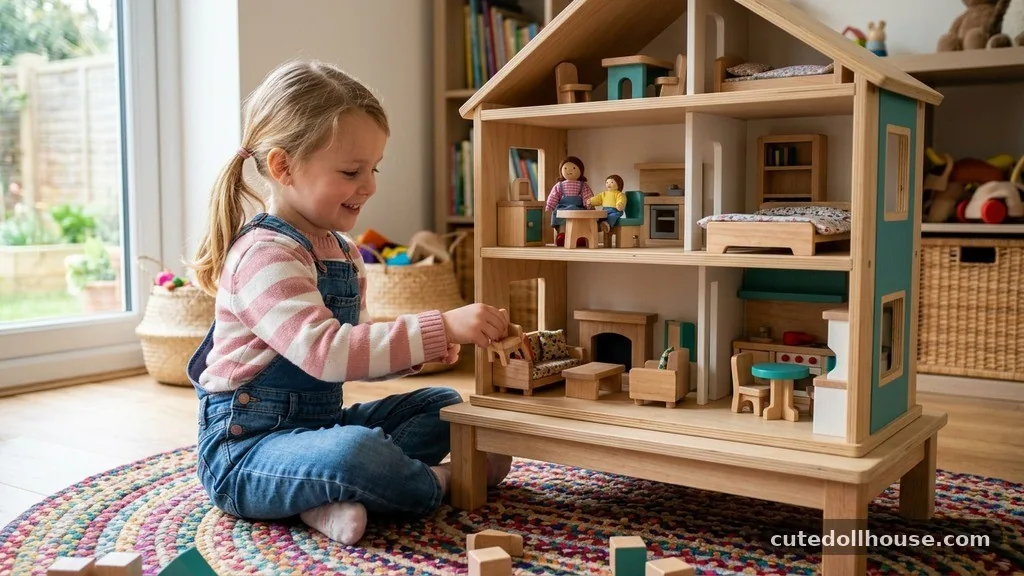
- The child enjoys imaginative household or family role-play.
- The furniture matches the dollhouse scale and available room dimensions.
- The pieces have sturdy construction and no obvious loose components.
- The intended play area allows small items to be stored safely.
- The child is old enough to use miniature accessories responsibly.
An alternative may be better when:
- The child is still likely to mouth or swallow small parts.
- The dollhouse has an unusual scale that standard sets won’t fit.
- The playroom needs large, easy-clean toys rather than miniatures.
- The child prefers vehicles, building toys, or larger role-play accessories.
- The furniture is mainly being bought for display instead of active play.
For younger children, read the age guidance carefully and consider the size of every loose accessory, not just the main furniture pieces. The U.S. Consumer Product Safety Commission toy safety guidance is a useful general reference, although local requirements and each manufacturer’s instructions should also be checked.
What to Check Before Buying
Build and material quality
Material alone doesn’t determine whether dollhouse furniture will last. Wood can be sturdy, but thin or poorly joined wooden pieces may still chip or loosen. Plastic can be practical and easy to clean, yet lightweight parts may bend or crack if they are handled roughly.
Look for construction details rather than relying on broad labels such as “premium” or “heavy duty.” Useful signs include stable legs, smooth edges, secure joints, evenly fitted components, and finishes that don’t appear likely to peel. If product photographs don’t show these details, the listing may not provide enough information for a confident durability assessment.
Common material choices include:
- Wood: Often chosen for a traditional appearance and solid feel, though quality varies according to thickness, joints, finish, and manufacturing.
- Plastic: Usually easy to wipe clean and available in colourful designs, but flexibility and long-term resistance to cracking can differ substantially.
- Metal: Sometimes used for frames, handles, or decorative details. It can add visual realism, but sharp edges and loose components need careful inspection.
- Fabric or foam: Common in miniature bedding, cushions, and upholstery. These details add realism but can collect dust and may be less convenient to wash.
- Mixed materials: Can create attractive, detailed sets, although more materials also mean more points to inspect and maintain.
Design and appearance
Appearance matters because dollhouse play is partly about creating a setting. Some children prefer bright colours and playful shapes; others want miniature furniture that resembles a real home. Neither approach is inherently better.
Choose a style that supports the way the child plays. Highly realistic furniture may suit storytelling and room design, while bold, simple pieces may be easier for younger children to recognise and handle.
Avoid judging quality by decorative detail alone. Painted patterns and tiny accessories can make a set look impressive while contributing little to structural strength.
Size, scale, and fit
Scale is one of the easiest details to overlook. Before ordering, measure the dollhouse doors, floor height, room width, and any existing furniture. Check whether the new items need to fit through narrow openings or sit beneath low ceilings.
Also compare the furniture with the figures the child already owns. A sofa that fits the house may be too small for the dolls, while a bed may leave insufficient room for a figure to lie down. Product descriptions may use scale terms, dimensions, or photographs, but these details are not always presented consistently across sellers.
Verify:
- Overall length, width, and height of larger pieces.
- Scale compatibility with the dollhouse and figures.
- Whether doors, drawers, or cupboards need clearance to open.
- Whether furniture blocks windows, stairs, or room entrances.
- Whether the set includes accessories that are disproportionately small.
Features and functionality
Some furniture is purely decorative, while other pieces include working features such as opening doors, drawers, movable chairs, fold-out beds, or removable cushions. Functional details can make role-play more engaging, but they also introduce hinges, handles, and smaller detachable parts.
For younger children, simple pieces with fewer moving mechanisms may be easier to use and less likely to be damaged. Older children may appreciate cupboards that open or beds that convert, provided those mechanisms are made well and don’t require excessive force.
Ask whether each feature adds meaningful play value. A moving part is useful when a child can operate it repeatedly without frustration. It is less useful if it is stiff, fragile, or too small to handle comfortably.
Included accessories
A furniture set may include only the main items, or it may come with miniature dishes, bedding, food, books, lamps, rugs, and other decorative pieces. More accessories can make a room feel complete, but a high piece count doesn’t automatically mean better value.
Check exactly what is included. Product photographs sometimes show additional dolls, buildings, or decorations that are sold separately, depending on the listing. A concise inventory is more useful than a staged image with unclear contents.
Consider storage, too. Small accessories are easy to scatter and difficult to replace individually. A set with fewer, sturdier pieces may be more practical for everyday play than a larger collection filled with tiny decorations.
Ease of use and assembly
Many dollhouse furniture pieces arrive ready to use, but some require assembly or have separate handles, legs, cushions, or decorative parts. Assembly instructions should be clear, and the process shouldn’t require a child to handle tools or small hardware.
For a child’s gift, consider whether an adult will need to prepare the set first. Check the product description for assembly requirements, and inspect the completed item before giving it to a child. Any loose fastener, rough edge, or unstable joint should be addressed rather than ignored.
Durability and maintenance
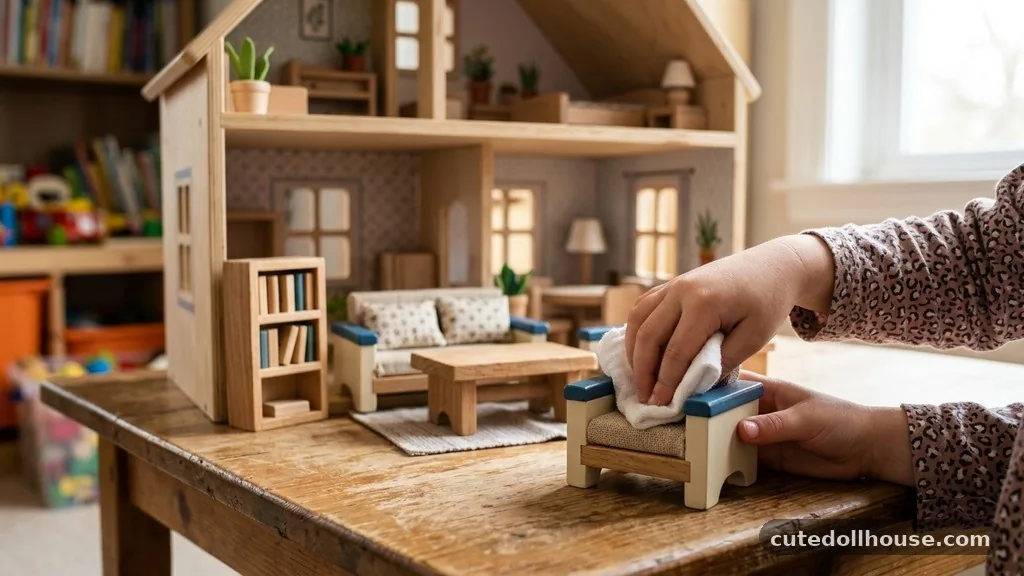
Durability includes more than surviving a single drop. A well-suited set should cope with repeated picking up, moving, rearranging, and storage. Furniture that is permanently displayed may need different qualities from furniture that travels between rooms or play sessions.
Maintenance is usually straightforward, but materials matter. Smooth plastic and sealed surfaces are often easier to wipe than textured fabric or unfinished wood. Follow the manufacturer’s cleaning directions, and avoid soaking materials that may absorb water or weaken glued joints.
Before buying, look for information about:
- Surface finish and whether painted areas may rub off.
- Cleaning instructions for fabric, wood, and mixed materials.
- Whether parts are glued, screwed, clipped, or designed to move.
- Replacement availability for lost or damaged pieces.
- Storage recommendations and any warnings about heat or moisture.
Customer feedback and common complaints
Customer reviews can reveal practical issues that product photographs don’t show, but they need to be read carefully. Pay attention to repeated comments about scale, fragile parts, missing pieces, unpleasant odours, difficult assembly, or colours that differ from the listing.
A single complaint may reflect a damaged shipment or an unusual experience. Several similar comments are more useful, especially when they identify a specific component or recurring mismatch between the product description and the delivered set.
Reviews may also vary by seller, production batch, region, or packaging version. Confirm that feedback applies to the exact model and seller being considered rather than assuming all similarly named sets are identical.
Comparison by Furniture Type
When there are no confirmed product specifications to compare, the most honest comparison is by furniture style and intended use. The table below highlights the trade-offs buyers should consider before choosing a set.
| Furniture Type | Best For | Typical Strength | Potential Drawback | Value Consideration |
|---|---|---|---|---|
| Basic room set | Beginners and everyday play | Provides several essential pieces in one purchase | May include fewer decorative details | Useful when the child needs a complete starting point |
| Wooden furniture set | Traditional styling and repeated handling | Can feel solid and visually substantial | Quality depends heavily on joints, finish, and thickness | Worth comparing construction rather than material alone |
| Plastic room set | Easy cleaning and colourful play | Often lightweight and simple to maintain | Some pieces may feel less substantial or flex under pressure | Can be practical when low-maintenance play is the priority |
| Accessory-heavy set | Older children who enjoy detailed scenes | Encourages elaborate storytelling and room decoration | More small parts to lose or supervise | Good value only if the child will use the added pieces |
| Single-room expansion | Existing dollhouses with one unfinished area | Lets buyers add only what is missing | May not match the style or scale of current furniture | Can prevent unnecessary duplicate purchases |
Best Choices for Different Buyers
For beginners
A simple room set is usually the easiest starting point. Look for a small collection containing the essentials for one room rather than a large box of tiny accessories. This approach makes it easier to check scale, learn how the child plays, and expand gradually.
Beginners should prioritise clear dimensions and straightforward construction. A set that fits the dollhouse well is more useful than one with a larger advertised piece count.
For younger children
Choose larger, easy-to-grip furniture with minimal detachable decoration, while following the stated age guidance. Simple shapes can be more practical than realistic miniatures with thin legs, tiny handles, or removable dishes.
Supervision may still be appropriate, particularly if the set contains small accessories. Age labels are important, but caregivers should also consider the individual child’s play habits.
For children who enjoy detailed storytelling
An accessory-rich set may be worthwhile for children who create elaborate scenes and regularly reorganise rooms. Items such as bedding, food, books, or kitchen tools can add narrative possibilities.
The trade-off is management. More pieces require more storage and make lost accessories more likely. A divided container or labelled storage box can help keep the set together.
For appearance-focused buyers
Buyers who care about a coordinated miniature interior should compare colour, scale, and design language across the whole dollhouse. Mixing styles can work well, but mismatched proportions may make rooms look crowded or awkward.
Photographs can be misleading because lighting and staging affect colour. Check written descriptions and, where possible, multiple images before deciding.
For value-focused buyers
Value comes from usable pieces, not simply the number of items in the package. A smaller set with strong construction and good scale may provide more satisfying play than a larger set containing fragile or redundant accessories.
Buying individual replacement or expansion pieces can also be sensible if the existing dollhouse already has some furniture. This avoids paying for duplicate beds, tables, or chairs.
For experienced miniature enthusiasts
Experienced users may care more about proportion, finish, realism, and compatibility with an established collection. They should pay close attention to exact measurements, material descriptions, and the relationship between furniture height and figure size.
At this level, visual consistency becomes more important. A beautifully detailed item still may not be a good purchase if it cannot fit through the house or match the existing room layout.
Potential Drawbacks to Keep in Mind
Even the best durable dollhouse furniture for kids has limitations. Miniature products are inherently easier to misplace than full-size toys, and delicate details may not suit children who play roughly. A set can also become frustrating when furniture doesn’t fit through the dollhouse entrance or leaves no space for figures to move.
Other possible disadvantages include:
- Scale uncertainty: Different manufacturers may use similar terms for different proportions.
- Limited replacement options: A missing accessory may be difficult or impossible to buy separately.
- Maintenance needs: Fabric, unfinished surfaces, and intricate details can require more care.
- Storage demands: Small pieces need a reliable home between play sessions.
- Decorative fragility: Thin legs, handles, and hinges may be vulnerable to rough handling.
- Misleading presentation: Photos may show a complete room while the purchase includes only selected items.
These aren’t reasons to avoid miniature furniture altogether. They are reminders to match the set with the child, the dollhouse, and the intended style of play.
How to Inspect a Set After Delivery
Before giving the furniture to a child, compare the contents with the listed inventory. Look for cracked surfaces, loose components, rough edges, unstable legs, and parts that detach without reasonable pressure. If the product arrives damaged or incomplete, contact the seller promptly and keep the packaging until the issue is resolved.
Place the furniture inside the dollhouse before removing labels or discarding the box. Check that rooms remain accessible and that figures can sit, stand, or lie down as intended. This simple step can reveal a scale problem that wasn’t obvious in the product images.
For furniture with moving parts, open and close each feature gently. It shouldn’t require excessive force, and a mechanism that feels unusually loose deserves attention. Don’t modify a product in a way that could create sharp edges or small loose pieces.
Care and Storage Tips
Good storage can extend the useful life of dollhouse furniture. Keep pieces in a lidded container or divided organiser, especially when the set includes small dishes, bedding, or decorative accessories. A dedicated storage space also makes it easier for children to set up and tidy away scenes.
- Dust smooth surfaces with a soft, dry or lightly damp cloth as appropriate.
- Follow the manufacturer’s instructions before using cleaning products.
- Keep fabric pieces dry and allow them to air out if they become damp.
- Avoid forcing drawers, doors, hinges, or folding features.
- Store painted or wooden pieces away from prolonged moisture and heat.
- Check furniture periodically for loose parts, splinters, cracks, or peeling finishes.
Children can help with sorting and storing when the pieces are large enough to handle safely. That routine reduces lost parts and teaches care without turning playtime into a chore.
Frequently Asked Questions
What is the best material for dollhouse furniture?
There isn’t one best material for every child. Wood may appeal to buyers who want a traditional, substantial feel, while plastic is often practical for easy cleaning and colourful everyday play. Construction quality, edge finish, scale, and suitability for the child matter more than the material label alone.
How do I know whether furniture will fit my dollhouse?
Measure the rooms, doorways, ceilings, and existing figures before buying. Compare those measurements with the product dimensions, and check whether furniture needs to pass through narrow openings or leave space for doors and stairs.
Is miniature furniture suitable for toddlers?
Some larger, simpler pieces may be suitable for younger children, but many dollhouse accessories are small and require supervision. Follow the manufacturer’s age guidance and consider whether the child still mouths objects or tends to break delicate parts.
What makes dollhouse furniture durable?
Secure joints, stable bases, smooth edges, well-fitted components, and a finish that resists ordinary handling all contribute to durability. A higher piece count or realistic appearance doesn’t necessarily indicate stronger construction.
Should I buy a complete set or individual pieces?
A complete set is convenient when starting from an empty dollhouse or furnishing a new room. Individual pieces are often better when the child already has furniture and only needs a replacement, expansion, or style match.
Where can I find high-quality dollhouse furniture?
Start with retailers and manufacturers that provide exact dimensions, a complete contents list, material information, age guidance, and clear return policies. Read reviews for the exact model and seller, then verify that the furniture matches your dollhouse scale before ordering.
Final Verdict
The best durable dollhouse furniture for kids is the furniture that matches the child’s age, play style, dollhouse scale, and tolerance for small parts. Buyers should prioritise secure construction, usable proportions, manageable accessories, and clear product information over decorative detail or an impressive piece count.
For most families, a straightforward room set is the safest starting point, while experienced miniature players may prefer detailed expansions or coordinated individual pieces. Measure first, inspect the contents on arrival, and choose materials that suit the way the furniture will be handled. With those checks in place, dollhouse furniture can be a worthwhile addition to imaginative play without requiring an expensive or overly complicated setup.