
The best modern dollhouses with realistic details feel less like simple toys and more like miniature design projects. They may include open-plan layouts, contemporary windows, realistic kitchens, staircases, lighting, or furniture that makes each room feel lived in. That appeal reaches beyond children: adults, collectors, hobbyists, and families often want a dollhouse that looks attractive on display and remains enjoyable to customize.
Choosing one can be difficult because product photos may not show the true scale, assembly effort, material quality, or what comes in the box. This guide explains what to look for, which compromises matter, and when a modern dollhouse kit is a better choice than a ready-made model.
A modern dollhouse with realistic detailing is a miniature home designed around contemporary architecture and interior styling. Instead of relying on ornate Victorian features, these models often use clean lines, large windows, simple façades, open rooms, neutral finishes, and furniture inspired by real homes.
Some arrive partly assembled or ready to display, while others are sold as dollhouse kits that require construction, painting, decorating, and furnishing. The phrase “realistic details” can refer to anything from individual roof tiles and working doors to miniature appliances, lighting systems, flooring, wallpaper, and carefully proportioned furniture. Those details vary widely, so buyers should inspect the actual contents rather than relying on the product title alone.
Are Modern Dollhouses with Realistic Details Worth Buying?
They can be, particularly for buyers who value visual design, creative projects, or long-term customization. A well-designed contemporary dollhouse can serve as a display piece, a role-play setting, or a hands-on hobby. It may also be more appealing to older children and adults than a brightly colored plastic playset.
The main trade-off is that realistic detailing often increases the time, skill, and cost involved. A kit with unfinished wood may offer more freedom but require painting and careful assembly. A completed model may look polished immediately, yet provide fewer opportunities for personalization and can be harder to repair if a delicate component is damaged.
A modern dollhouse may not be the right choice if the intended user needs a durable, low-maintenance toy for rough everyday play. In that situation, a molded plastic dollhouse with fewer small parts may be more practical. Buyers with limited space should also consider compact room boxes, foldable designs, or a smaller 1:12 modern dollhouse kit rather than a large multi-room house.
What to Know Before Buying
Scale and compatibility
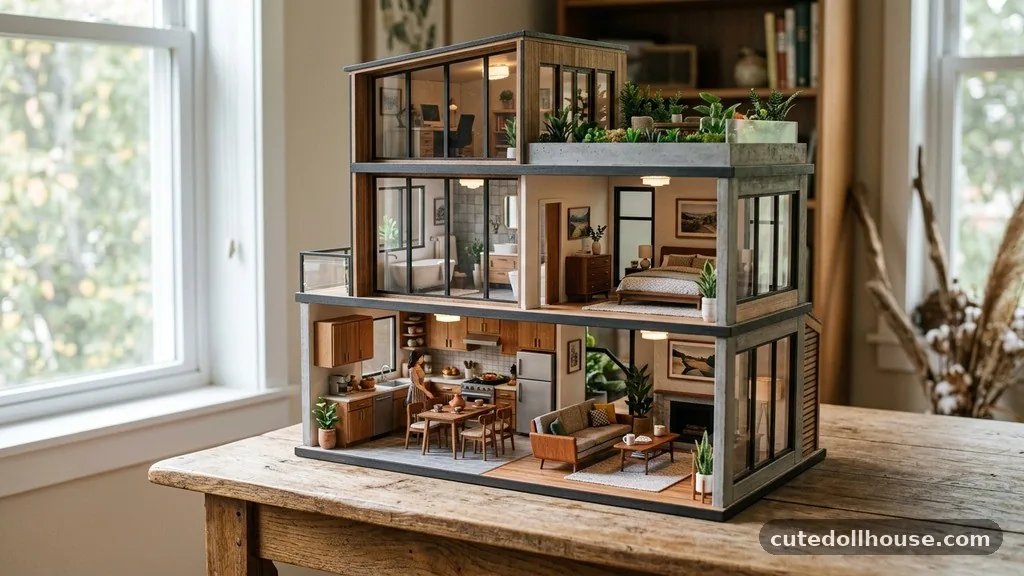
Scale is one of the most important specifications. A 1:12 dollhouse is traditionally designed around dolls and furniture that are one-twelfth the size of their real-world equivalents. Other scales are smaller, and accessories from one scale may look awkward or fail to fit in another.
Check the stated scale before buying furniture, lighting, dolls, flooring, or replacement parts. Product photographs can be misleading because wide-angle images and close-up shots make rooms appear larger than they are.
Also measure the finished footprint, not just the shipping box. A model may fit on a shelf while under construction but require more depth once the roof, side wings, or open-back display position are considered.
Materials and construction
Wood-based kits are common among hobbyists because they can be painted, sanded, wallpapered, and modified. Thickness and finish matter, though.
Thin panels may keep weight down but can be more prone to warping or damage during assembly. The listing should identify the main materials instead of using vague phrases such as “premium quality.”
Plastic models are often easier to clean and may tolerate more active play. Their molded surfaces can also make architectural details consistent. The compromise is that repainting, cutting, or remodeling plastic may be more difficult than working with unfinished wood.
Look for:
- Panels that appear straight and accurately cut.
- Doors and windows that align with the walls.
- Clear information about adhesives, tools, and finishing supplies.
- Sturdy floors that do not flex excessively under accessories.
- Parts packaged and labeled in a way that supports assembly.
- Replacement-part guidance from the manufacturer or seller.
Design and appearance
“Modern” can describe several different looks. Some dollhouses resemble minimalist city apartments, while others borrow from Scandinavian interiors, mid-century homes, contemporary villas, or compact open-plan houses. Choose the architectural style first, then consider the decorative details.
Realistic appearance usually comes from proportion and consistency rather than the number of tiny accessories. A house with believable window placement, suitable ceiling height, convincing flooring, and furniture that fits the room can look more authentic than a crowded model filled with unrelated pieces.
Pay attention to product photography. If rooms are shown furnished but the listing does not clearly state that furniture is included, assume those items may be decorative props used for illustration only. Confirm the contents with the seller before ordering.
Features and functionality
Useful features depend on the intended user. For display and collecting, removable walls, open backs, clear viewing angles, and built-in lighting can be valuable. For children’s play, accessible rooms, rounded edges, durable components, and simple doors may matter more than tiny decorative elements.
Potential features include:
- Working doors, windows, drawers, or cabinets.
- Removable roofs or opening walls for easier access.
- Electrical lighting or space for a battery-powered system.
- Stairs, balconies, porches, and realistic architectural trim.
- Interchangeable room layouts.
- Included flooring, wallpaper, curtains, or miniature fixtures.
More features are not automatically better. Tiny hinges, wires, and fragile decorations can add realism while also increasing the chance of breakage or making the model unsuitable for younger children.
Assembly difficulty
Assembly ranges from basic snap-together construction to a detailed craft project that may take substantial patience. A kit may require gluing, sanding, painting, cutting paper or fabric, installing lighting, and interpreting diagrams. The seller’s stated difficulty rating is useful, but it should not replace a review of the instructions and materials list.
Beginners should look for clear diagrams, pre-cut pieces, labeled parts, and a manageable room count. More experienced hobbyists may prefer an unfinished kit that leaves room for custom flooring, built-in storage, electrical work, or architectural changes.
Before purchasing, confirm:
- Whether glue, paint, tools, batteries, and lights are included.
- Whether the furniture arrives assembled or requires separate construction.
- How much trimming or sanding is expected.
- Whether instructions are available in a language the builder understands.
- Whether mistakes can be corrected without damaging the main structure.
Maintenance and long-term durability
Miniature houses collect dust, especially when they contain fabric, open shelving, textured flooring, or many small accessories. An open-back display model is easier to reach but may need regular cleaning. Glass or acrylic covers can help protect a finished scene, though they may add cost and limit access.
Wooden models should be kept away from damp conditions and major temperature changes. Paper wallpaper, fabric curtains, and printed flooring can fade in direct sunlight. Lighting systems need additional care because wires, switches, and battery compartments may be difficult to replace once installed.
Customer feedback can reveal recurring issues such as missing pieces, unclear instructions, brittle accessories, poor fit between panels, or differences between the advertised image and the delivered contents. A single complaint does not prove a product is defective, but repeated reports deserve attention. Since manufacturing can change by batch and listings can vary by seller, check recent reviews and the current parts list.
Comparison of Modern Dollhouse Types
| Type | Best For | Typical Difficulty | Key Feature | Main Drawback | Overall Value |
|---|---|---|---|---|---|
| Finished modern dollhouse | Display buyers and gift recipients | Low to moderate | Ready-made appearance | Less customization and possible shipping damage | Strong when convenience matters most |
| Unfinished wooden kit | Hobbyists and creative builders | Moderate to high | Freedom to paint and remodel | May require extra supplies and time | Good for hands-on projects |
| Plastic contemporary playhouse | Younger children and active play | Low | Easy cleaning and everyday durability | Less realistic miniature detailing | Practical for regular play |
| Compact room box | Small spaces and focused scenes | Moderate | Detailed single-room display | Limited room for play or expansion | Efficient for collectors |
| Lighting-ready collector model | Experienced adult builders | Moderate to high | Atmospheric presentation | Wiring and maintenance add complexity | Worth considering for display-focused buyers |
How to Judge a Product Listing
A strong listing should answer basic questions without forcing the buyer to guess. If the description emphasizes realism but omits dimensions, scale, materials, or included accessories, proceed carefully.
Check the dimensions in context
Record the external width, height, and depth, then compare them with the intended display location. Measure doorways, shelving, and storage areas too. A large dollhouse may be visually impressive but difficult to move once furnished.
Separate included items from pictured items
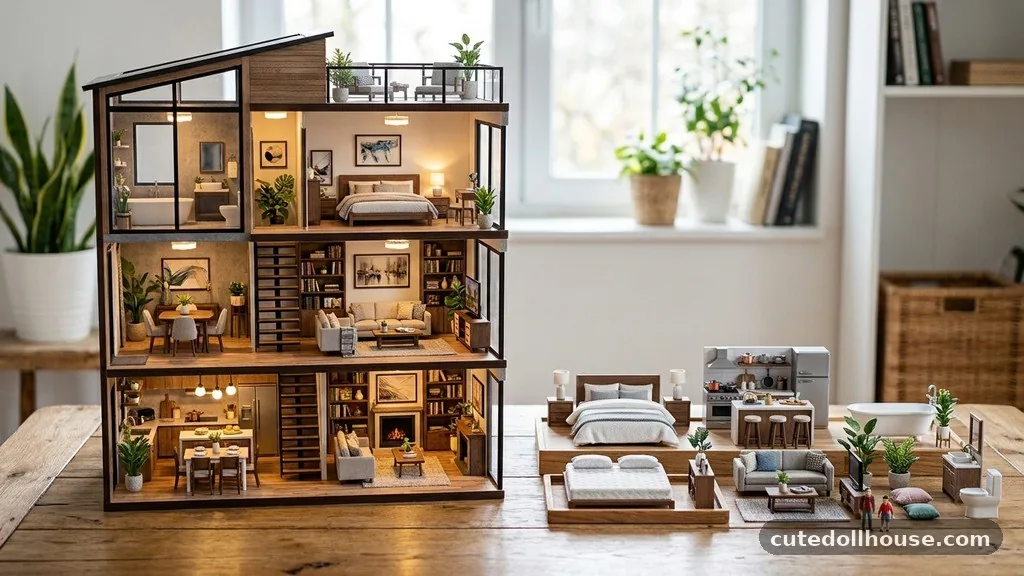
Look for phrases such as “accessories shown are not included” or “decorations may vary.” Some listings offer several packages with different combinations of furniture, lighting, and structural pieces. The same product image may be used for all of them.
Review the return and replacement policy
Miniature parts can be lost or damaged during shipping. Before buying, determine how the seller handles missing components, cracked panels, defective lights, and returns after assembly has started. Policies may differ by seller and region.
Read reviews for patterns, not isolated reactions
Customer feedback is most useful when several people mention the same practical issue. Search within reviews for terms such as “instructions,” “missing,” “scale,” “assembly,” “lighting,” “sturdy,” and “furniture.” Positive comments about appearance are helpful, but they do not necessarily confirm ease of construction or long-term durability.
Modern Dollhouse Furniture and Accessories
Furniture can determine whether a contemporary dollhouse looks convincing. Modern miniature interiors often use simple sofas, low tables, open shelving, kitchen islands, pendant lights, neutral rugs, and clean-lined beds. However, furniture should match the house’s scale and proportions.
Do not buy a large accessory bundle before confirming the room dimensions. A sofa that technically fits may block a doorway or make the room look crowded. For realistic scenes, fewer well-proportioned pieces are often more effective than a large collection of mismatched items.
Accessories also affect the level of maintenance. Fabric, woven baskets, tiny books, plants, and textured surfaces create visual interest but collect dust and may be difficult to clean. Display-focused buyers should think about accessibility before filling every shelf.
Safety and Age Considerations
Many realistic dollhouses are better suited to older children, teens, or adults because they include small parts, sharp craft tools, glue, wires, and delicate furnishings. The recommended age should be treated as a starting point, not a substitute for supervision and judgment.
For a younger child, inspect the model for loose accessories, detachable windows, exposed wires, unstable furniture, and small decorative components. A simpler structure with larger pieces may be safer and more enjoyable than an intricate collector’s kit.
For guidance on evaluating toy-related hazards and recalls, buyers can consult the U.S. Consumer Product Safety Commission recall database. Product safety requirements and labeling can vary by country, so regional guidance may also apply.
Which Option Fits Different Buyers?
For beginners
Choose a smaller kit with pre-cut parts, clear instructions, and a limited number of rooms. Avoid a model that requires advanced wiring or extensive structural modification unless you are comfortable learning those skills. A basic modern design can still look convincing if the proportions and finish are handled well.
For experienced hobbyists
An unfinished wooden kit may be the most rewarding option. It provides a foundation for custom paint, flooring, cabinetry, lighting, and furniture. Verify that the panels can be modified without weakening the structure and that replacement materials are easy to source.
For appearance-focused buyers
Prioritize architectural proportions, window design, room layout, and finish quality. A finished contemporary house or a lighting-ready display model may suit you better than a bare kit. Ask whether the photographed furniture and lighting are part of the package.
For families seeking everyday play
Look for accessible rooms, sturdier components, easy-clean materials, and fewer delicate accessories. A plastic modern playhouse may provide better practical value than a highly detailed wooden collector model, even if it is less realistic.
For small homes or apartments
Consider a compact room box, a narrow townhouse design, or a model with removable sections. Measure the intended location first. Storage is just as important as display space because miniature furniture and unfinished projects can quickly spread beyond the house itself.
Common Reasons Buyers Feel Disappointed
- The finished model is much smaller than expected because the scale was overlooked.
- Furniture and lighting shown in photographs are not included.
- The assembly takes more skill than the listing suggested.
- Instructions are incomplete, poorly translated, or difficult to follow.
- Wood panels require more sanding, fitting, or finishing than anticipated.
- Delicate accessories are unsuitable for active children’s play.
- The model looks attractive from one angle but is awkward to access or furnish.
- Replacement parts are difficult to obtain after a missing or damaged component is discovered.
None of these issues automatically makes a dollhouse a poor purchase. They show why intended use matters. A hobbyist may welcome unfinished surfaces, while a gift buyer expecting immediate play may find them frustrating.
What to Verify Before Ordering
Use the following checklist before committing to a modern dollhouse kit or completed model:
- Finished dimensions and available display space.
- Scale and compatibility with existing dolls and furniture.
- Primary materials and panel thickness, if stated.
- Whether furniture, lights, flooring, wallpaper, and accessories are included.
- Required tools, adhesives, batteries, and finishing supplies.
- Estimated difficulty and expected assembly steps.
- Age guidance and the presence of small or fragile parts.
- Cleaning, storage, and sunlight considerations.
- Current customer feedback about missing parts and assembly quality.
- Return, replacement, and seller-support policies.
If several of these details are missing, contact the seller before purchasing. A clear answer is more useful than trying to infer specifications from photographs.
Frequently Asked Questions
What is the best modern dollhouse style for adults?
That depends on whether the priority is building, decorating, or displaying. Adult hobbyists often prefer unfinished wood kits because they allow customization, while display buyers may prefer a completed contemporary house or a detailed room box.
Are realistic dollhouses suitable for children?
Some are, but detailed models often contain small parts, fragile furnishings, glue, wires, or sharp tools. Check the manufacturer’s age guidance and choose a sturdier, simpler design for younger children or active play.
What does 1:12 scale mean in a dollhouse?
It means the miniature is approximately one-twelfth the size of a comparable real-world object. Furniture and accessories made for other scales may not fit properly, so confirm scale before buying additions.
Do modern dollhouse kits include furniture?
Not always. Some kits include structural parts only, while others add furniture, lighting, flooring, or decorative accessories. Read the package contents carefully and verify whether items pictured are included.
How difficult are contemporary dollhouse kits to assemble?
Difficulty varies from simple construction to advanced miniature woodworking and electrical work. Pre-cut parts and clear instructions make a kit more approachable, while custom finishes, lighting, and extensive furnishing increase the workload.
How can a finished miniature house be protected from dust?
Regular gentle cleaning, careful storage, and protection from direct sunlight help. A suitable display case can reduce dust, but it must provide enough clearance and access for the house and any lighting system.
Final Verdict
The best modern dollhouses with realistic details are worth buying when their scale, materials, contents, and difficulty match the buyer’s expectations. They can be rewarding display pieces and creative projects, but realism often brings more assembly, maintenance, and delicate parts. Before ordering, confirm the finished size, included accessories, construction requirements, and replacement policy rather than judging from photographs alone.
For beginners and families, a smaller or sturdier model is usually the safer starting point. Experienced hobbyists may get more value from an unfinished kit they can personalize, while appearance-focused buyers should look for strong proportions and a complete, well-documented package. Choose the design that fits how the house will actually be used, and it is far more likely to remain enjoyable after the initial excitement fades.