The best DIY dollhouses for hobbyists balance creative freedom with a building process that feels manageable, not frustrating. Some kits are designed as detailed weekend projects, while others demand careful cutting, finishing, wiring, furnishing, and patience over many sessions. The right choice depends on more than the finished appearance: scale, materials, instructions, difficulty, room layout, and the availability of replacement parts all matter.
A beginner may need a forgiving unfinished kit, while an experienced miniaturist may prefer a larger shell with room for custom architecture. This article explains how dollhouse kits work, which buying factors deserve attention, and how to decide whether a particular project suits your space, skill level, and creative goals.
What DIY Dollhouse Kits Are
A DIY dollhouse is a miniature building project that usually arrives as a collection of unfinished or partly finished panels, trim pieces, windows, doors, and assembly materials. Depending on the kit, you may need to cut, sand, glue, paint, wallpaper, wire, furnish, and decorate the house yourself.
Most kits are sold as a building shell rather than a ready-to-display home. Interior furniture, lighting, paint, flooring, wallpaper, landscaping, and miniature residents may be optional purchases or separate projects. Product listings don’t always use consistent terms, so check exactly what the box includes before comparing models.
Scale is another important point. A 1:12 dollhouse is built at one inch to one foot and generally offers more room for furniture and detail.
Smaller scales can save space, but their components may be harder to handle. A large dollhouse kit for adults may look impressive, yet it also requires a suitable work area and somewhere to display the finished model.
For historical context, the Victoria and Albert Museum’s overview of dollhouses shows how these miniature homes have served as decorative objects, educational tools, and detailed reflections of domestic life. Modern hobby kits continue that tradition while giving builders far more freedom to personalize the result.
Are DIY Dollhouses Worth Buying?
DIY dollhouses are worth considering if you enjoy slow, hands-on creative work and want a project that can evolve over time. They can provide a stronger sense of ownership than a finished model because every surface, room, and design decision reflects the builder’s choices.
They aren’t the right fit for everyone. Assembly can involve repetitive sanding, delicate parts, uncertain instructions, and extra spending on supplies. A completed house may require many more hours of work than the product photos suggest, particularly if you plan to add realistic lighting, custom cabinetry, or detailed landscaping.
A kit is usually a good choice when you:
- Enjoy crafts, painting, woodworking, interior design, or miniature collecting.
- Have a stable work surface where parts can remain undisturbed.
- Want to customize the layout, finishes, furnishings, or exterior.
- Are comfortable buying some tools and materials separately.
- Can treat the project as a long-term hobby rather than a quick activity.
Consider a pre-built dollhouse, modular room box, or ready-to-decorate miniature scene instead if you want immediate display value, have limited space, or don’t enjoy construction. Room boxes are particularly useful for hobbyists who want detailed interiors without committing to an entire multi-room house.
What to Check Before Buying
Build and Material Quality
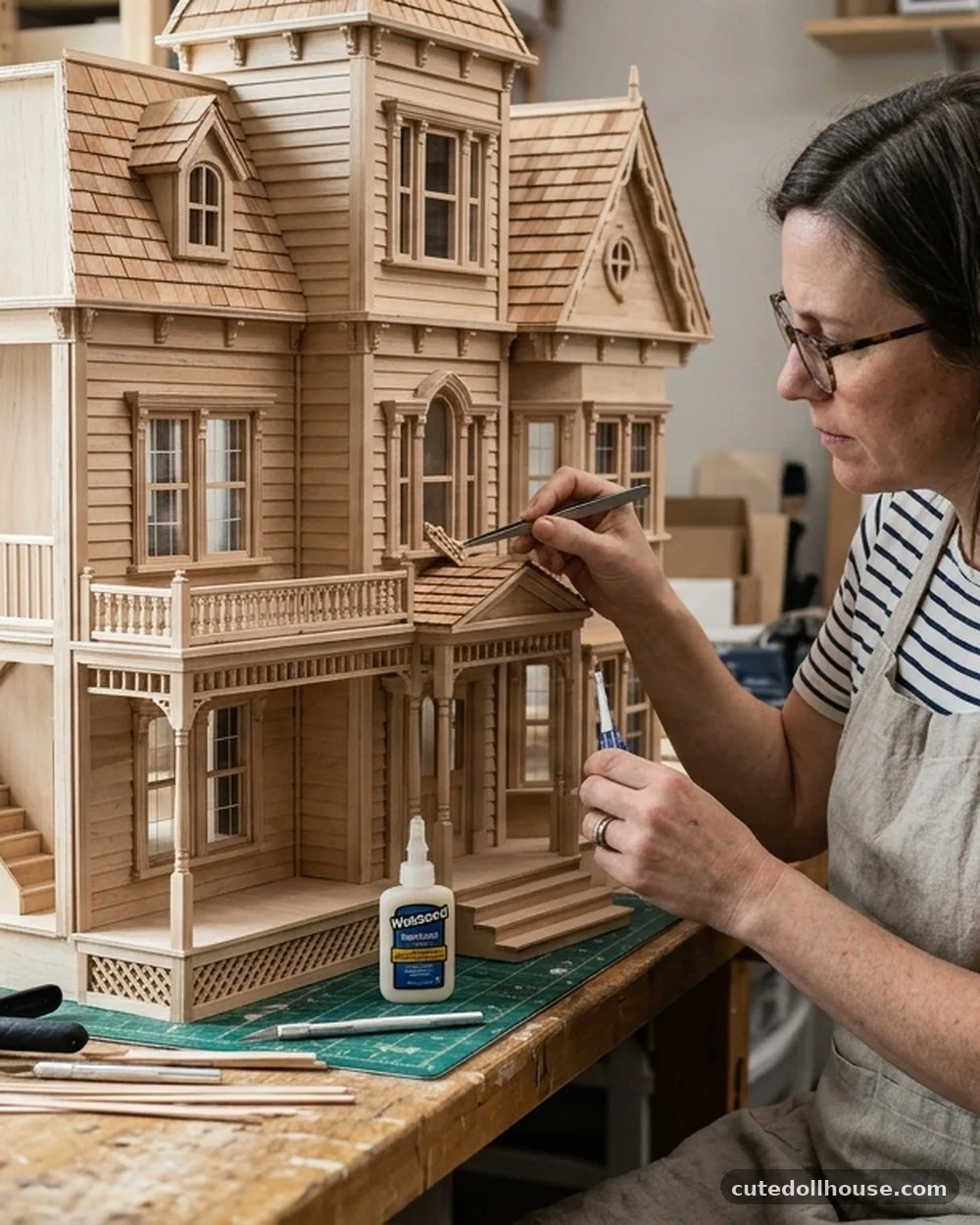
Look for clear information about the primary construction material. MDF, plywood, and other wood-based panels can each produce a solid model, but thickness, cut accuracy, edge quality, and resistance to warping matter just as much as the material name.
Inspect product photos closely for clean openings, evenly aligned panels, and trim that appears proportionate. A low-cost kit may still be enjoyable, but uneven cuts or fragile decorative pieces can increase the amount of corrective work.
Also check whether the manufacturer identifies the contents as unfinished wood, pre-painted components, plastic parts, or a mixture. Those differences affect which adhesives, primers, paints, and finishing techniques are appropriate.
Design and Appearance
Choose the architectural style that matches the project you want to build, not just the image that first attracts you. Victorian, cottage, townhouse, farmhouse, and contemporary designs create different opportunities for furnishing and decoration.
Pay attention to rooflines, window placement, ceiling height, room depth, and the amount of open wall space. A striking exterior may conceal shallow rooms or awkward corners that limit furniture choices. Conversely, a simple shell can become more distinctive with thoughtful paint, trim, flooring, and lighting.
Scale, Size, and Display Space
Scale determines both the look of the house and the ease of decorating it. A 1:12 dollhouse is often the most practical scale for beginners because furnishings and accessories are widely available, but the finished structure can take up considerable room.
Before ordering, measure:
- The intended display surface.
- Doorways, stairs, and other routes into the room.
- Vertical clearance beneath shelves or cabinets.
- Extra space needed to work on the back and sides.
- Storage room for tools, furniture, paint, and unfinished parts.
Don’t rely only on the listed width and height. Roof overhangs, balconies, bay windows, and landscaping can make the practical footprint larger than the main measurements imply.
Difficulty Level and Assembly
Manufacturers don’t always describe difficulty in the same way. One seller’s “beginner” kit may be suitable for a first-time builder, while another may use the label for a model that still requires careful fitting and finishing.
Read the assembly description for clues. Terms such as unfinished kit, precision cutting required, advanced trim work, electrical components not included, or tools required signal that the project may need more preparation than a simple glue-and-paint craft.
Good instructions should identify parts clearly and show the order of construction. If the listing doesn’t provide sample pages or enough information about the instructions, treat that uncertainty as part of the buying decision.
Included Accessories and Supplies
“Complete kit” can mean different things. Some packages contain only the structural panels. Others may include windows, doors, shingles, trim, stairs, or basic hardware, but not paint, glue, furnishings, or lighting.
Before purchasing, look for an itemized contents list that answers these questions:
- Are all structural pieces included?
- Are windows and doors supplied?
- Are roofing materials included?
- Does the kit contain glue, paint, or tools?
- Are electrical parts or lighting included?
- Are furniture and decorative accessories separate?
- Can missing or damaged components be replaced?
Durability and Maintenance
A finished dollhouse is still a delicate display object. Thin trim, small railings, open stairs, and miniature glass or plastic elements need careful handling during construction and cleaning.
Dust can be removed with a soft brush or gentle air blower. Avoid assuming that every paint, adhesive, or cleaning product is safe for every surface. If the house will sit in direct sunlight, near a heater, or in a damp room, consider how those conditions may affect wood, paper wallpaper, fabric, and glue joints.
Customer Feedback and Common Complaints
Reviews can reveal practical issues that product photos don’t show, such as unclear instructions, missing components, warped panels, delicate trim, or a mismatch between the advertised and actual difficulty. They should be read with some caution, since assembly quality depends partly on the builder’s tools and experience.
Look for repeated patterns rather than a single dramatic complaint. Feedback can also vary by seller, production batch, region, and model revision. If several buyers mention the same missing part or fit problem, verify whether the current listing describes an updated version before ordering.
Comparison: Which DIY Dollhouse Approach Fits?
| Option | Best For | Difficulty | Key Feature | Main Drawback | Overall Value |
|---|---|---|---|---|---|
| Unfinished wooden dollhouse kit | Builders who want maximum customization | Varies from beginner to advanced | Freedom to paint, modify, and decorate | Usually requires extra tools and supplies | Strong when the builder values creative control |
| Large dollhouse kit for adults | Experienced hobbyists with dedicated space | Often moderate to advanced | More room for detailed interiors | Large footprint and longer build time | Good for long-term projects if space is available |
| 1:12 dollhouse kit | Builders who want accessible furnishings and detail | Depends on the specific kit | Broad accessory and furniture compatibility | Finished models may need substantial display space | Practical for many adult hobbyists |
| Room box or miniature scene | Detail-focused builders with limited space | Often easier to manage | Concentrates effort on one room or setting | Doesn’t provide a complete house | Efficient for focused decorating projects |
| Ready-made or partly finished dollhouse | Collectors who want faster display results | Low to moderate | Less structural assembly | Less freedom to alter the architecture | Worth considering when construction isn’t the priority |
Types of DIY Dollhouses to Consider
1. Unfinished Wooden Dollhouse Kits
Unfinished kits are the traditional choice for hobbyists who want to make the model their own. The exterior can be painted, stained, or weathered, while the interior can receive wallpaper, wood flooring, tile, custom trim, and built-in furniture.
The advantage is flexibility. You aren’t locked into the colors or decorative style shown in the listing. The trade-off is that the basic kit may be only the beginning, and a polished result can require substantial preparation.
Best for: Creative builders who enjoy planning finishes and modifying standard designs.
Check carefully: Panel thickness, contents, instructions, scale, and whether doors or windows are functional or decorative.
2. Large Dollhouse Kits for Adults
Larger houses create space for full rooms, staircases, kitchens, bathrooms, and elaborate furniture layouts. They are appealing to experienced miniaturists who want a centerpiece project rather than a small decorative model.
Size comes with practical consequences. A larger build can be heavier, harder to move, and more demanding to protect while unfinished. It may also need a dedicated table or permanent display area.
Best for: Hobbyists who have room for a long-term project and want to explore multiple interior scenes.
Consider an alternative if: You need portability, have limited storage, or prefer finishing one compact scene at a time.
3. 1:12 Dollhouse Kits
1:12 kits are popular because the scale is easy to understand and compatible accessories are commonly marketed for it. The larger proportions can make painting, wallpapering, furnishing, and photographing the model more approachable than very small-scale work.
That doesn’t make every 1:12 kit easy. A detailed house with multiple rooms may still involve complex construction, and large pieces can expose alignment errors more clearly. Check the stated dimensions rather than assuming every 1:12 model has the same footprint.
Best for: Beginners and experienced builders who want broad access to furniture, lighting, and decorative supplies.
4. Cottage and Small-House Kits
Compact cottages can be a sensible starting point for hobbyists who want a complete exterior without taking on a large mansion-style build. Their smaller footprint is easier to store, and the reduced number of rooms can make it simpler to create a coherent design.
The limitation is interior capacity. Small rooms may restrict furniture placement, and some compact layouts have less space for wiring or removable access panels. Read the internal measurements if furnishing is a major priority.
Best for: First-time builders, apartment dwellers, and anyone who prefers a focused project.
5. Dollhouse Room Boxes
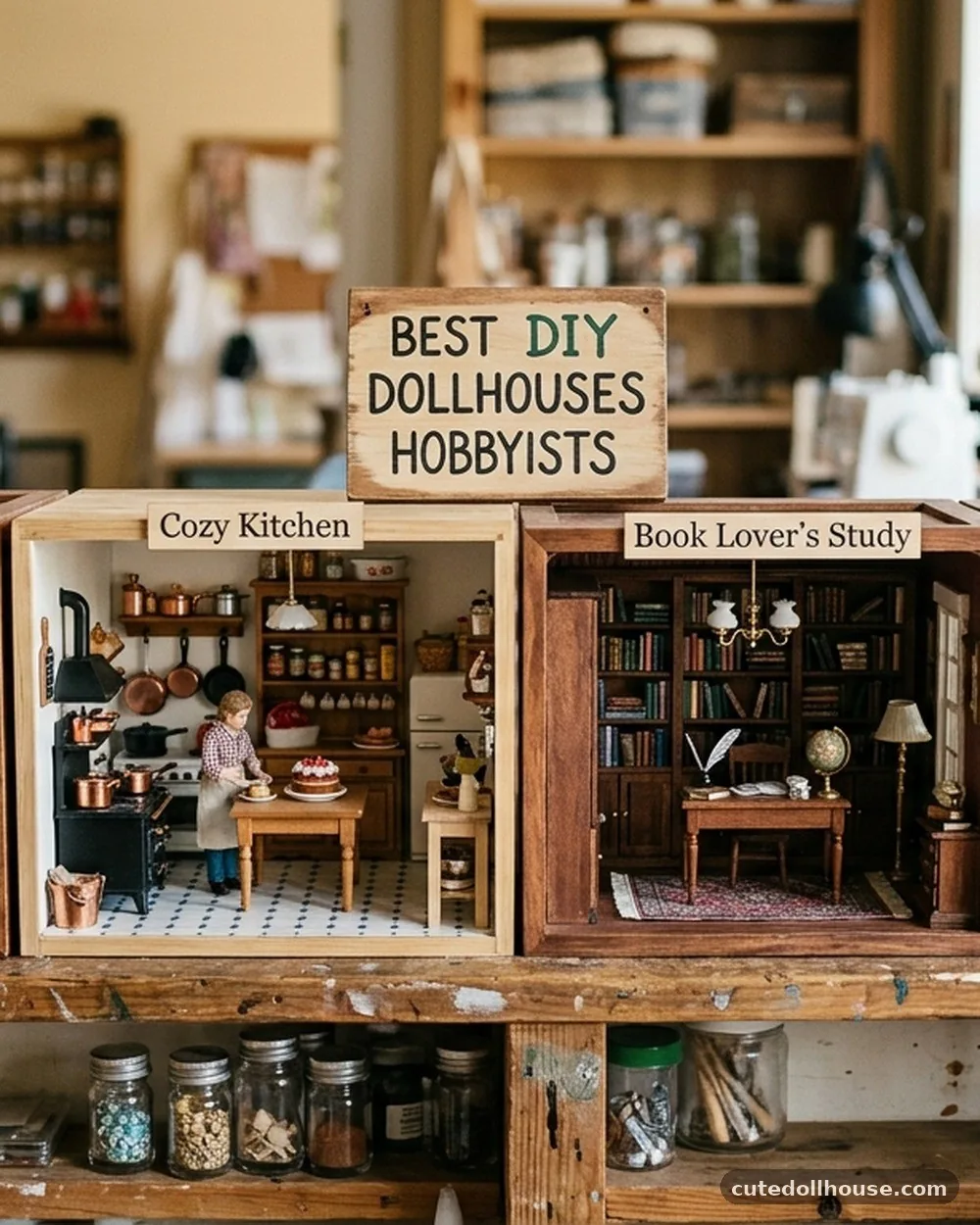
A room box is a miniature interior built within a shallow enclosure or open-front case. It isn’t a full dollhouse, but it can deliver much of the creative satisfaction with fewer structural decisions.
These projects work well for a bakery, bedroom, library, workshop, or seasonal display. They also make it easier to concentrate on realistic lighting, furniture arrangement, textures, and small storytelling details.
Best for: Appearance-focused hobbyists who care more about interior realism than building an entire house.
How to Make a DIY Dollhouse Easier to Build
Preparation prevents many avoidable problems. Read the instructions before applying glue, dry-fit major pieces, and label parts as soon as the kit is opened. A simple inventory can help identify missing components before assembly begins.
- Confirm the scale and measurements. Make sure the furniture and accessories you want will fit.
- Inventory the package. Photograph and label parts before removing them from their packaging.
- Dry-fit the structure. Check how panels meet before committing to adhesive.
- Prepare surfaces. Sand rough edges carefully and use suitable primer where needed.
- Plan wiring early. Lighting routes are much harder to add after walls and floors are fixed.
- Finish difficult areas first. Wallpaper, flooring, and ceiling treatments can be harder after furniture is installed.
- Protect unfinished work. Store the project away from dust, moisture, pets, and accidental knocks.
Keep adhesives and cutting tools appropriate to the material. If you are unsure about a tool, paint, or electrical component, follow the manufacturer’s instructions and use suitable safety precautions. A miniature project still involves sharp blades, fumes, dust, and small parts.
Common DIY Dollhouse Problems
Unclear or Incomplete Instructions
Some kits assume prior experience. Diagrams may not show every step, and part numbers may be difficult to match with the supplied pieces. Searching for an instruction preview, assembly video, or current manual can help, but don’t assume an online tutorial applies perfectly to every production version.
Warped or Poorly Fitting Pieces
Wood-based panels can be affected by storage and moisture. Minor gaps may be manageable with careful fitting and finishing, but significant warping can make a project much more difficult. Check the seller’s policy for damaged or missing parts before buying.
Hidden Extra Costs
The kit price rarely represents the entire project cost. You may need adhesive, sandpaper, primer, paint, wallpaper, flooring, lighting, furniture, tools, protective finishes, and display furniture.
Make a short supply list before ordering. This gives you a more realistic sense of value and prevents an attractive-looking kit from becoming an unexpectedly expensive project.
Scale Mismatch
Furniture listed as “miniature” isn’t automatically compatible. Confirm the scale and compare actual dimensions, particularly for beds, kitchen units, chairs, and staircases. A few mismatched pieces can make a carefully built interior look awkward.
Overambitious First Projects
A large house with multiple rooms may be inspiring, but it can also become unfinished if the construction feels repetitive or the instructions are too demanding. A smaller kit is not necessarily less creative. It may give a beginner a better chance to complete the build and learn useful techniques.
Recommendations by Buyer Type
For Beginners
Start with a compact unfinished kit or a straightforward 1:12 model with clear assembly information. Favor manageable dimensions, simple rooflines, and accessible rooms over elaborate exterior ornament.
For Experienced Miniaturists
A large dollhouse kit for adults may be more rewarding if you already know how to finish wood, install miniature lighting, and solve fit problems. Look for a structure that leaves room for customization rather than one whose appeal depends entirely on a fixed decorative scheme.
For Appearance-Focused Buyers
A room box or shallow-fronted scene may be the better purchase. It concentrates the budget and effort on visible details, allowing more attention to flooring, wallpaper, lighting, furniture, and styling.
For Space-Conscious Buyers
Measure first. Compact cottages, room boxes, and smaller-scale projects are easier to display than full-size 1:12 houses. Remember to allow access around the model for cleaning and occasional repairs.
For Value-Focused Buyers
Compare what is included, not just the listed price. A slightly more expensive kit may offer better-cut pieces or more structural components, while a cheaper shell may require many additional purchases. Seller support and replacement-part availability also affect practical value.
Questions to Ask Before Ordering
- What exactly is included in the box?
- Is the model unfinished, partly finished, or ready to display?
- What tools and adhesives are required?
- Does the stated size include balconies, roof extensions, or landscaping?
- Will standard furniture and accessories fit the stated scale?
- Can the seller help with missing, damaged, or replacement parts?
- Are current instructions available before purchase?
- Does the finished project have to remain in one place?
FAQ About the Best DIY Dollhouses for Hobbyists
What is the best dollhouse kit for beginners?
The best starting point is usually a compact kit with clearly stated dimensions, manageable assembly, accessible rooms, and straightforward instructions. A smaller unfinished wooden model can be more approachable than a highly ornate house with many delicate parts.
What is the best material for a dollhouse?
Wood-based panels such as plywood or MDF are common, but quality depends on thickness, cut accuracy, stability, and finishing requirements. The material should be judged alongside the construction quality and the type of project you want to build.
Is a 1:12 dollhouse suitable for adults?
Yes. The 1:12 scale is widely used for adult miniature projects because furniture and accessories are generally easy to find. The main consideration is size: a finished house can require more display space than expected.
Do DIY dollhouse kits include furniture?
Not always. Many kits include the structural shell and some exterior components but exclude furniture, lighting, paint, wallpaper, and tools. Read the contents list rather than relying on staged product images.
What can I make for a dollhouse besides furniture?
You can create miniature books, artwork, plants, rugs, food, curtains, signs, storage boxes, wall shelves, and lighting details. Everyday objects often make a scene feel more convincing than expensive statement pieces.
Are dollhouse kits difficult to assemble?
Difficulty ranges widely. A small kit may be suitable for a first project, while a detailed multi-room model can involve extensive sanding, fitting, finishing, and wiring. Product descriptions and instruction previews are useful indicators, but seller descriptions may not use consistent difficulty standards.
Final Verdict
The best DIY dollhouses for hobbyists aren’t defined by size or ornament alone. A worthwhile kit has a suitable scale, reliable construction, understandable instructions, and enough flexibility for the builder’s preferred level of detail. Beginners should favor manageable projects, while experienced miniaturists may value a larger shell that supports custom rooms, lighting, and architectural changes.
Before buying, verify the contents, dimensions, materials, accessory compatibility, and replacement-part policy. If construction sounds more appealing than display, choose an unfinished kit; if interior detail matters most, consider a room box. The right project is one you’ll realistically enjoy finishing, not simply the most elaborate model in the listing.