
Choosing among the best wooden DIY dollhouse kits is less about finding the most elaborate design and more about matching the project to your patience, space, tools, and intended display. These kits turn flat wooden pieces and small accessories into a miniature home, but the experience can range from a relaxed craft project to a demanding multi-session build. Materials, scale, instructions, lighting, furniture, and finishing requirements all affect the result.
A kit that suits an experienced hobbyist may frustrate a first-time builder, while a simpler model may feel limiting to someone who wants a detailed miniature room. This article explains how wooden dollhouse kits work, which features deserve close attention, where common complaints arise, and how to decide whether one belongs on your workbench.
What Are Wooden DIY Dollhouse Kits?
A wooden DIY dollhouse kit is a miniature-building project supplied with some combination of pre-cut wood panels, decorative parts, instructions, and accessories. Depending on the design, the box may include wallpaper, flooring, furniture, fabric, wiring, lighting components, or small decorative items. The exact contents vary considerably between manufacturers and sellers.
Most kits require assembly rather than simple snap-together construction. Builders may need to separate pieces from sheets, sand edges, apply glue, paint surfaces, fit wallpaper, assemble furniture, and install small electrical parts. Some kits are designed around a recognised dollhouse scale, such as 1:12, while others use a smaller or less clearly stated scale.
That distinction matters. A scale model with consistent dimensions is easier to furnish and expand, whereas a visually attractive kit with unusual proportions may be harder to match with replacement furniture or accessories. Before ordering, check the finished measurements, scale, contents, and recommended skill level instead of relying on photos alone.
Are Wooden DIY Dollhouse Kits Worth Buying?
For the right buyer, a wooden dollhouse kit can offer a rewarding creative project and a display piece that feels more personal than a ready-made miniature house. It can also be a useful way to practise careful measuring, painting, paper crafting, furniture assembly, and basic model-making.
The trade-off is time. Even a compact kit may involve repetitive work, delicate components, and decisions about finishes that aren’t fully explained in the instructions. Some projects include only the structural shell, while others require additional glue, paint, tools, batteries, or decorative materials.
A kit is usually a good choice if you:
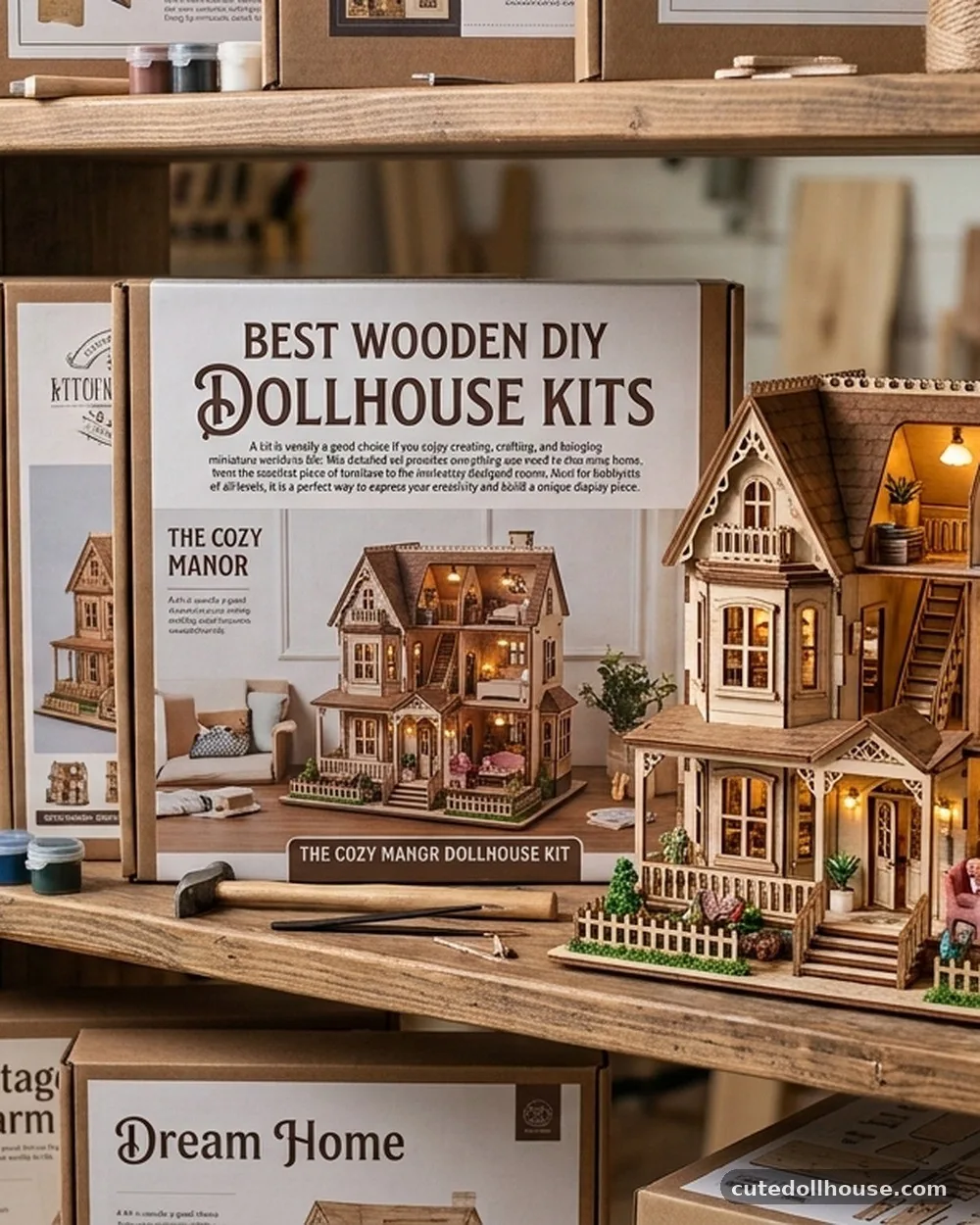
- Enjoy slow, hands-on crafts rather than quick assembly.
- Have a clean, well-lit workspace where small parts can stay organised.
- Want to customise colours, flooring, wallpaper, furniture, or lighting.
- Are comfortable checking measurements and adapting instructions when necessary.
- Understand that the finished appearance depends partly on your own finishing work.
Consider an alternative if you:
- Need a toy that can be used immediately after opening the box.
- Don’t have room to store a part-built project.
- Would find tiny furniture, wiring, or repeated gluing frustrating.
- Want a highly durable playhouse for young children rather than a display model.
- Need a guaranteed list of included accessories and replacement parts.
A pre-assembled dollhouse, larger wooden playhouse, plastic dollhouse, or miniature room box may be more suitable depending on the intended use. Wooden DIY kits are generally best understood as craft projects first and toys second, unless the manufacturer specifically states otherwise.
What to Check Before Buying a Wooden Dollhouse Kit
1. Material quality and construction
Wooden parts should be described clearly, but product listings don’t always provide enough information to judge quality from photographs. Look for details about the type or composition of the wood, panel thickness where supplied, pre-cut accuracy, and whether edges are smooth or require substantial preparation.
Thin sheets can be practical for lightweight miniature buildings, yet they may warp if exposed to moisture or excessive glue. Very delicate pieces can also split during removal from a frame.
This isn’t automatically a defect; miniature kits often use small components. It does mean the builder needs to work slowly and support fragile parts while cutting or sanding.
Check whether structural walls are designed to be glued, slotted, or both. A slot-and-tab system can make alignment easier, but loose or poorly labelled parts may still require careful dry fitting before adhesive is applied.
2. Design and appearance
Visual appeal is often the main reason people choose one kit over another. Consider the building’s exterior style, roof shape, number of rooms, window design, balcony or porch details, and whether the interior layout leaves enough space for furniture.
Photographs can be misleading if they show extensive decoration that isn’t included. Sellers may stage a completed kit with extra plants, figures, rugs, lighting, paintwork, or furniture. Read the contents list carefully and treat styled images as an example of what may be possible, not necessarily what arrives in the box.
For a more flexible project, choose a design with neutral walls and open rooms. A highly themed kit may look distinctive, but its colours and accessories can limit later changes.
3. Finished size and available space
Measure the intended display area before buying. A dollhouse needs more than its footprint: you may need access to the rear, roof, or open side while assembling and decorating it. A project that fits a shelf after completion might still require a larger table during construction.
Also check the height of each room and the width of doors and stairs. Those measurements affect which furniture, dolls, and accessories will fit. If the listing doesn’t state a scale or internal dimensions, contact the seller before purchase rather than guessing from the product photographs.
4. Difficulty and time commitment
Difficulty labels are not consistent across brands. One seller’s “beginner” kit may be suitable for a first-time builder, while another may use the same label for a project involving tiny wiring, fabric work, and extensive decoration.
Look for clues in the contents and instructions:
- Lower-complexity projects: fewer rooms, larger parts, simpler furniture, and limited decorative work.
- Intermediate projects: multiple rooms, wallpaper or flooring, small furniture, and more detailed trim.
- Advanced projects: intricate miniature accessories, tight-fitting components, lighting, wiring, and extensive finishing.
When a listing doesn’t provide a realistic time estimate, assume the project could take several sessions rather than an afternoon. The exact duration depends on experience, glue-drying time, paint layers, and how much customisation you add.
5. Instructions and customer support
Instructions can make or break a miniature kit. Useful documentation normally identifies pieces clearly, shows assembly order, explains orientation, and separates structural work from decoration. Blurry diagrams, inconsistent labels, or missing steps create unnecessary difficulty.
Before purchasing, look for photographs of the instruction booklet or reviews that mention it specifically. If the seller provides digital instructions, confirm the format and language.
Also check how missing or damaged parts are handled. Policies may vary by seller, region, and production batch.
6. Included accessories
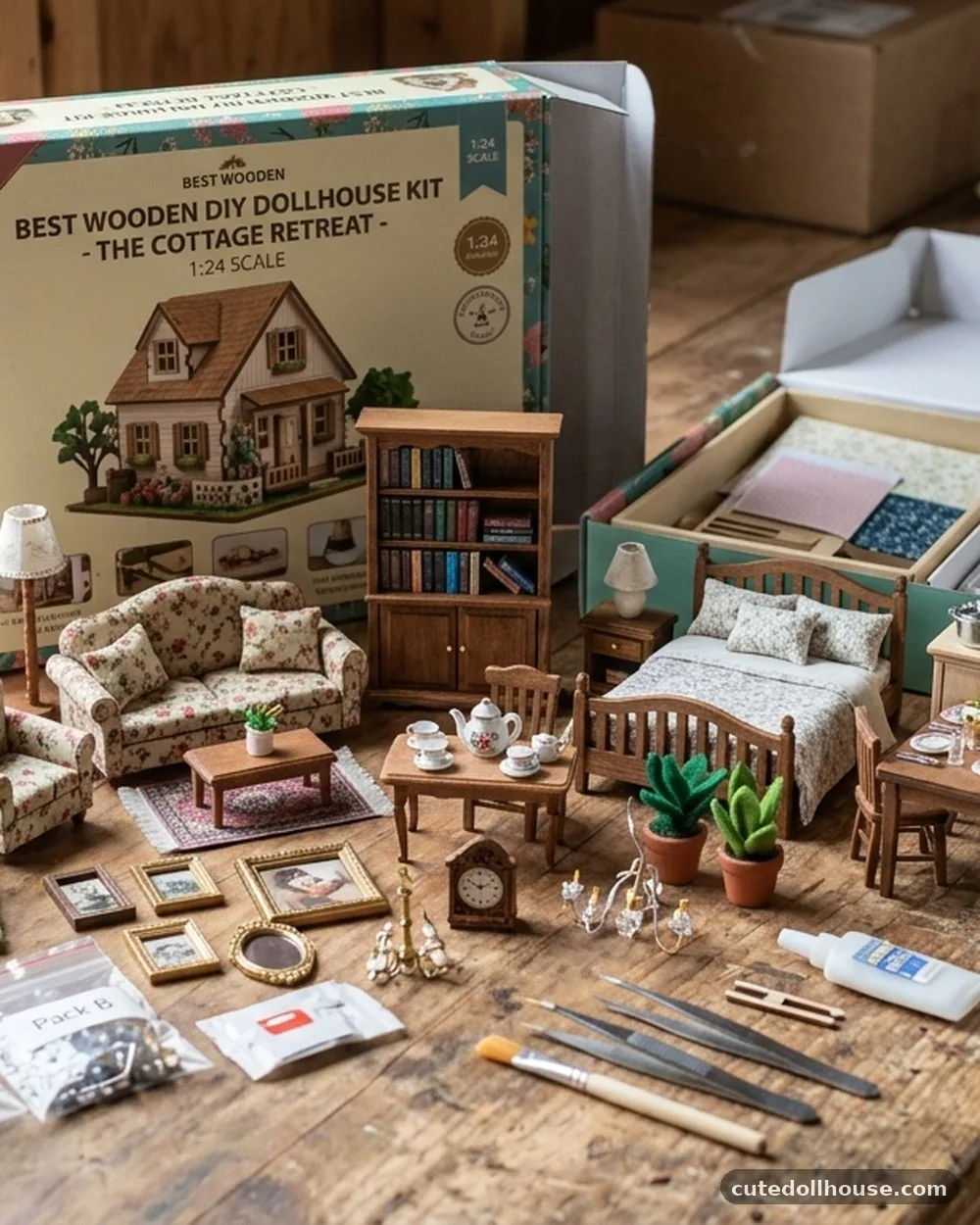
Don’t assume that a furnished photograph represents the complete package. Determine whether the box includes:
- Structural wooden panels and trim.
- Windows, doors, stairs, and roofing pieces.
- Furniture and miniature household objects.
- Wallpaper, flooring, fabric, and decorative paper.
- Lighting components, wiring, switches, or battery holders.
- Glue, paint, brushes, tools, and batteries.
Many kits require at least some extra supplies. Common additions include craft glue, a precision knife, fine sandpaper, tweezers, a small ruler, paint, cutting protection, and storage containers for tiny parts. Never cut or sand without appropriate care, particularly when children are involved.
7. Safety and intended user
Small parts, sharp tools, adhesives, paint, and electrical components can make a detailed kit unsuitable for young children without close adult supervision. Age guidance should be treated as a starting point, not a substitute for assessing the particular child and project.
For general toy-safety information, consult the U.S. Consumer Product Safety Commission’s toy safety guidance. Buyers outside the United States should also check applicable local requirements and the seller’s safety information.
8. Feedback and common complaints
Customer feedback is most useful when it identifies a recurring practical issue rather than simply praising or criticising the appearance. Look for comments about warped pieces, missing parts, unclear directions, inaccurate measurements, weak adhesive, difficult wiring, and whether the finished house matches the listing photographs.
Reviews should still be interpreted carefully. A damaged parcel may reflect shipping rather than the kit itself, and complaints about difficulty may come from buyers expecting a ready-to-display product. Give more weight to repeated, specific comments across multiple listings or batches, while remembering that designs and packaging can change.
Comparison: Which Type of Kit Fits Your Project?
No individual products were supplied for this review, so a product-by-product ranking would require invented specifications. The table below compares common wooden DIY dollhouse kit formats instead. Use it as a screening tool, then verify the actual listing before ordering.
| Kit type | Best for | Typical difficulty | Useful feature | Main drawback | Overall value consideration |
|---|---|---|---|---|---|
| Small single-room kit | Beginners and short craft projects | Lower to moderate | Compact footprint and fewer structural parts | Limited display space and fewer customisation options | Good if you want to learn miniature techniques before committing to a house |
| Multi-room wooden house | Hobbyists who want a larger display | Moderate to advanced | Multiple rooms for themed decoration | Longer build and greater demand for workspace | More creative scope, but check the accessory list carefully |
| Lighting-equipped kit | Builders who want an illuminated display | Moderate to advanced | Electrical details add atmosphere | Wiring and troubleshooting may increase complexity | Worth considering only if the lighting components and instructions are clear |
| Furniture-focused kit | Miniature decorators and detail-oriented crafters | Moderate | Emphasis on small furnishings and room styling | Tiny parts can be fiddly and easy to lose | Strong choice when interior detail matters more than building size |
| Large-scale or open-back kit | Display builders who want easier interior access | Moderate to advanced | More room to decorate and view | Needs considerable shelf or table space | Useful for detailed scenes, provided the finished dimensions are suitable |
How to Assemble a Wooden Dollhouse Kit More Reliably
Preparation saves more frustration than rushing through the first few steps. Read the complete instructions before opening glue, identify the pieces, and compare the contents with the parts list. Keep similar components together, but don’t remove everything from its packaging if the labels help with identification.
- Confirm the workspace. Use a flat, well-lit surface with enough room to leave the project undisturbed while adhesive or paint dries.
- Inspect the parts. Check for visible damage, warped panels, missing pieces, and unclear labels before assembly.
- Dry fit first. Place parts together without glue to check orientation and alignment.
- Prepare edges carefully. Remove rough tabs and lightly sand where necessary, avoiding excessive material removal.
- Build in stages. Complete the structural shell before adding fragile decoration unless the instructions specify otherwise.
- Test lighting early. If the kit includes wiring, confirm the route and access points before closing walls or floors.
- Protect small pieces. Use labelled containers or a divided tray for furniture, trim, and decorative items.
- Finish patiently. Allow glue and paint to dry fully before moving or loading the structure.
Glue choice matters. A suitable craft or wood adhesive may be appropriate for the supplied materials, but the product instructions should take priority. Applying too much adhesive can stain thin wood, wrinkle paper, or prevent parts from sitting flush.
Quality, Durability, and Maintenance
A completed miniature house is only as durable as its joints, finishes, and storage conditions. Clean alignment, well-supported corners, and fully cured adhesive help, but no small wooden model should be treated like a full-size child’s playhouse.
Keep the finished piece away from damp areas, direct sunlight, heaters, and places where it can be knocked from a shelf. Dust can be removed gently with a soft brush or low-pressure air, taking care around loose accessories and wiring. If a kit includes fabric or paper elements, avoid wet cleaning unless the manufacturer provides specific instructions.
Wood can respond to changes in humidity. Excess moisture may affect panels, paper, glue, and paint, while very dry conditions can make some components brittle. A stable indoor display environment is generally the safer choice, but the seller’s care instructions should be checked where available.
Recommendations by Buyer Type
Best for beginners
Start with a smaller project that has clear diagrams, fewer rooms, larger components, and no complicated electrical system. A modest kit gives you a chance to learn cutting, sanding, gluing, painting, and miniature placement without committing to a large unfinished structure.
Best for experienced builders
More advanced hobbyists may prefer multi-room layouts, intricate trim, furniture-heavy interiors, or lighting. The important question isn’t simply how many parts the kit contains. Check whether the instructions are detailed enough to support the extra complexity.
Best for appearance-focused buyers
Prioritise the architecture, room proportions, window style, and finishable surfaces. A photogenic exterior can’t compensate for cramped interiors or accessories that don’t match the advertised theme. Look for completed-project images from reviewers where available, while remembering that custom paintwork may not be included.
Best for value-conscious buyers
Compare the total project cost rather than the box price alone. A cheaper kit may require more tools, paint, glue, furniture, or replacement parts. A slightly more expensive package may offer better value if it includes the structural components and accessories you actually want.
Best for gift buyers
Confirm that the recipient enjoys detailed craft work and has somewhere to build and display the model. A dollhouse kit is not an ideal surprise if the person expects a ready-made toy. Include the intended age guidance, required tools, and approximate project complexity in your decision.
Potential Drawbacks to Keep in Mind
Wooden DIY dollhouse kits reward patience, but they aren’t effortless. The most common sources of disappointment are expectations rather than the concept itself: buyers may not realise that decorative photos show optional additions, that assembly involves many tiny pieces, or that “complete kit” doesn’t always mean every tool and finishing supply is included.
- Instructions may be difficult to follow or poorly translated.
- Small parts can be fragile, repetitive, or easy to misplace.
- Additional glue, paint, tools, batteries, and furnishings may be necessary.
- Finished colours and textures may differ from product photographs.
- Lighting systems can add complexity and may need troubleshooting.
- Replacement-part policies may vary between sellers.
- Large models need more workspace and a stable display location.
These limitations don’t make the category a poor purchase. They simply make product-page checking and realistic expectations essential.
Frequently Asked Questions
What is the best wood for a dollhouse kit?
There isn’t one universally best material for every miniature project. The useful questions are whether the panels are straight, accurately cut, strong enough for the design, and suitable for the adhesive and finish recommended by the manufacturer. Check the material description rather than assuming all wooden kits use the same wood.
Are wooden DIY dollhouse kits suitable for adults?
Many are marketed toward adult hobbyists because they involve detailed assembly, miniature decoration, and tools. However, suitability depends on the specific kit’s age guidance, part size, wiring, and difficulty. An adult beginner may still be better served by a simple single-room model.
Do dollhouse kits include furniture?
Some do, while others include only the building shell or a limited selection of furnishings. Review the exact contents list and inspect whether the staged photographs show optional pieces. If the scale isn’t clearly stated, furniture bought separately may not fit.
What scale should a first-time buyer choose?
A clearly stated, commonly supported scale can make it easier to find compatible furniture and accessories. 1:12 is widely recognised, but the best choice also depends on available space and the type of scene you want to build. Confirm the scale and internal measurements before ordering.
How long does it take to build a wooden dollhouse?
There is no reliable single timeframe. Size, number of parts, instruction quality, drying time, lighting, and custom decoration all affect the project. Treat a detailed kit as a multi-session craft project rather than assuming it can be completed in one sitting.
What should I do if a kit arrives with missing or damaged parts?
Document the issue with photographs and contact the seller promptly, keeping the packaging and order details. Ask specifically about replacement components and return procedures. The available remedy can differ by seller, region, and production batch.
Final Verdict
The best wooden DIY dollhouse kits are worthwhile for buyers who want a patient, creative project and understand that the finished result depends on assembly and finishing work. The strongest choices are the ones with clear scale information, realistic photographs, accurate contents lists, usable instructions, and a difficulty level that matches the builder’s experience.
Before buying, measure your space, budget for any missing tools or materials, and decide whether you want a simple learning project or a detailed long-term display. If you need immediate play value, a pre-assembled or sturdier alternative may make more sense. For hobbyists who enjoy miniature work, though, the right wooden kit can be a satisfying way to build something personal from the ground up.