
Choosing among the best customizable dollhouse kits is less about finding the most elaborate model and more about matching the kit to your space, patience, tools, and creative plans. Some are designed as flexible wooden shells for experienced builders, while others provide a friendlier starting point for beginners who want to paint, decorate, and furnish a miniature home without designing every component from scratch. Scale, construction method, included parts, and the amount of finishing work can vary widely.
This guide explains how customizable dollhouse kits work, which features deserve close attention, where the common drawbacks appear, and what to verify before ordering. The goal is a realistic buying decision—not a generic list of kits that may not suit the same kind of builder.
Because no specific manufacturer or model has been supplied for individual testing, the advice below focuses on the category as a whole and on details buyers can confirm from each product listing.
What Are Customizable Dollhouse Kits?
A customizable dollhouse kit usually provides the main structure of a miniature house, such as wall panels, floors, roof pieces, windows, and sometimes doors or basic trim. The buyer then assembles, finishes, paints, wallpapers, furnishes, and adapts the interior to create a particular look.
Customization can mean several different things. A kit may have an open-back design that makes room decoration easier, removable partitions, unfinished wood ready for paint, or a layout that leaves room for handmade changes. Other kits are technically customizable only because the builder chooses the colors, flooring, furniture, lighting, and accessories.
That distinction matters. A kit with a blank interior gives you creative freedom, but it may also require more planning and extra purchases. A partially finished kit can be quicker to complete, yet it may offer fewer opportunities to change the layout.
Dollhouse scale is another key consideration. The common 1:12 scale is often associated with traditional dollhouses, but other scales are available and accessories are not interchangeable across them. Before buying, check the stated scale and compare it with the furniture, dolls, lighting, and miniature building materials you already own or plan to purchase.
For background on how dollhouses developed as miniature representations of domestic life, the Encyclopaedia Britannica overview of dollhouses provides useful historical context.
Are Customizable Dollhouse Kits Worth Buying?
They can be, particularly for adults and older children who enjoy detailed creative projects rather than a quick decorative activity. The strongest reason to choose one is control: you can decide how the rooms look, whether the house represents a real home or a fantasy setting, and how much detail to add over time.
A customizable kit is also a sensible choice for someone who wants a long-term hobby. The build can be divided into manageable stages, and the finished house can continue evolving as new furniture, lighting, artwork, plants, and handmade details are added.
The category is less suitable for buyers who want a finished display piece straight from the box. It may also disappoint people who underestimate the need for glue, paint, tools, careful measuring, and patience. A kit described as customizable does not necessarily include the materials needed for every decoration shown in its product photos.
When a Customizable Kit Makes Sense
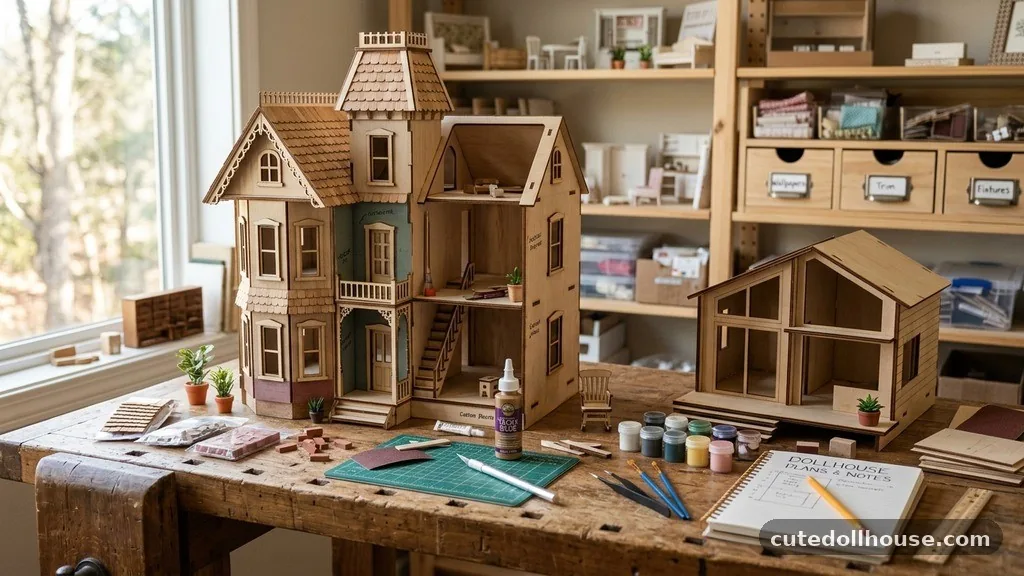
- You enjoy painting, crafting, miniature design, or model building.
- You want to create a particular interior style instead of accepting a fixed design.
- You have space to work on a project that may take time to finish.
- You want to add lighting, furniture, wallpaper, flooring, or handmade accessories gradually.
- You value creative control more than the fastest possible assembly.
When Another Option May Be Better
- You need a ready-made dollhouse with little or no construction work.
- You want a simple child-focused toy that can tolerate rough everyday play.
- You do not have room for a large model or a safe place to store unfinished work.
- You prefer a complete furniture and accessory set rather than a basic structural shell.
- You are not comfortable checking scale compatibility before buying add-ons.
Important Buying Criteria
Build and Material Quality
Wood-based kits are often chosen because they can be painted, sanded, repaired, and modified more easily than some thin plastic alternatives. However, the material label alone does not tell you how well the parts will fit. Look for clear information about the panels, thickness, surface finish, and whether the pieces arrive unfinished or pre-painted.
Inspect product photographs carefully. Edges should appear reasonably clean, and the design should show how walls, floors, and roof sections connect. If the listing does not explain the construction materials or provide enough close-up images, treat that as a reason to investigate before ordering.
Thin components can reduce weight but may be more vulnerable to warping or damage during assembly. Heavier construction may feel more substantial, though it can make the completed house harder to move. Neither choice is automatically superior; the right balance depends on whether the house is intended for display, supervised play, or frequent repositioning.
Design and Appearance
The best customizable dollhouse kits leave room for personal decisions without requiring the buyer to redesign the whole building. Consider whether you prefer a traditional cottage, a modern home, a shop, a townhouse, or an open-ended structure that can support different themes.
Pay attention to the roofline, number of rooms, window placement, stair design, and back opening. These features affect both the appearance and the decorating experience. A beautiful exterior may be frustrating if the rooms are difficult to reach, while a plain shell may be ideal for someone who wants to create a highly individual project.
Photos can be misleading because they may show paint, furniture, landscaping, lighting, or accessories sold separately. Read the included-items list rather than assuming that every visible detail comes in the box.
Size, Scale, and Available Space
Measure the intended display or work area before purchasing. A dollhouse can be deeper or taller than expected, particularly once a roof, balcony, porch, or landscaping is added. Leave enough clearance to reach the back and top of the model if you plan to decorate or maintain it there.
Scale affects more than furniture. Doors, windows, kitchen fittings, bedding, artwork, people, and even light fixtures need to look proportionate. If a seller provides exterior dimensions but not room dimensions, ask for clarification or compare the measurements with a familiar object.
Buyers searching for a dollhouse kit for adults often focus on detail and size, but a larger model is not automatically more enjoyable. It may provide more room for decoration while also demanding more workspace, more materials, and more storage.
Features and Customization Potential
Useful customization features may include removable floors, accessible rear openings, unfinished surfaces, flexible room dividers, and enough wall depth for wallpaper or trim. Some designs may accommodate wiring for miniature lights, but buyers should confirm this rather than assuming it.
Think about the kind of customization you actually want:
- Cosmetic changes: paint, wallpaper, flooring, curtains, trim, and exterior finishes.
- Interior changes: partitions, room functions, stair placement, and built-in furniture.
- Technical changes: lighting, switches, wiring channels, and battery access.
- Structural changes: windows, doors, balconies, extensions, or roof modifications.
Cosmetic customization is generally the least demanding. Structural alterations require better tools, accurate measurements, and a willingness to accept that the final result may differ from the original instructions.
Ease of Assembly and Difficulty Level
Difficulty depends on more than the number of pieces. A smaller kit with unclear instructions can be harder than a larger kit with labeled parts and an organized assembly sequence. Check whether the seller identifies the recommended skill level and whether reviews commonly mention missing labels, confusing diagrams, poor-fitting parts, or excessive sanding.
Most customizable kits require some combination of wood glue, craft knives, sandpaper, clamps, paint, brushes, and measuring tools. These supplies may not be included. If the product description is vague, assume that finishing materials and decorative accessories will need to be purchased separately until confirmed.
Beginners should favor a design with straightforward access to the rooms and a clear parts list. Experienced builders may prefer an unfinished shell that allows extensive modification, even if the instructions are less prescriptive.
Included Accessories
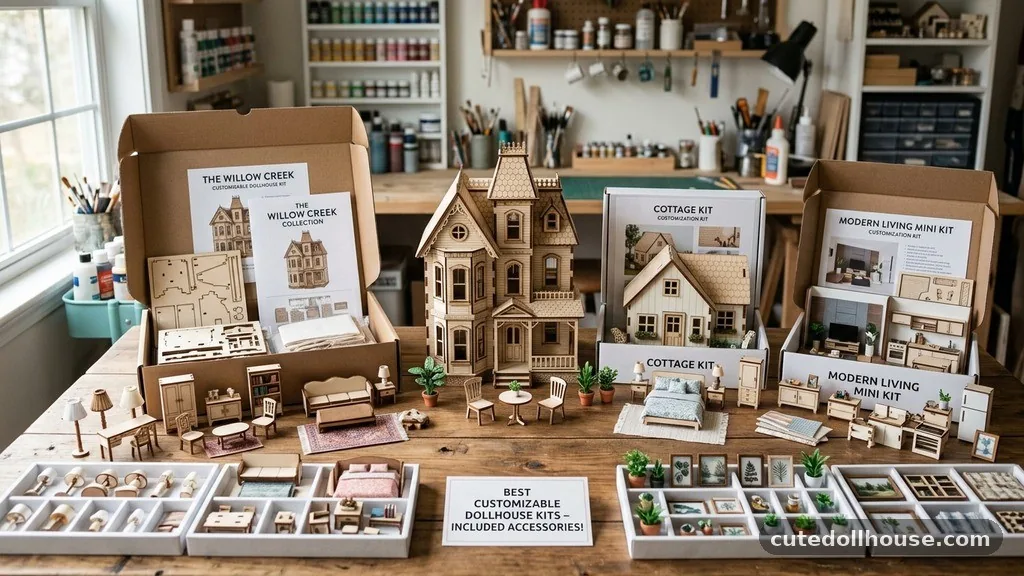
Separate the structural contents from the decorative contents. A kit may include the house frame but exclude furniture, lights, dolls, plants, textiles, paint, or adhesive. Another may include a small starter selection while still requiring additional purchases for the room shown in its photographs.
Before buying, look for a written list covering:
- Structural panels and trim
- Windows, doors, and hardware
- Roof, stairs, and flooring components
- Furniture and decorative pieces
- Electrical or lighting components
- Glue, paint, tools, and finishing supplies
- Printed instructions or digital assembly guidance
Durability and Maintenance
A well-finished dollhouse can remain attractive for years, but miniature buildings are still vulnerable to dust, sunlight, moisture, and accidental knocks. Unsealed wood may absorb paint unevenly or react to changes in humidity. Delicate accessories can also be difficult to replace if they are damaged.
For a display model, consider a location away from direct sunlight and damp areas. Dusting should be gentle, especially around small furniture and wiring. If children will handle the house, check for small parts, fragile components, sharp edges, and age guidance supplied by the manufacturer.
Customer Feedback and Common Complaints
Customer reviews can reveal practical problems that product descriptions leave out, but they should be interpreted carefully. A complaint about difficulty may reflect an inexperienced builder, while repeated reports of warped panels, missing parts, or inconsistent sizing deserve more attention.
Look for patterns rather than isolated comments. Useful review details include:
- Whether parts were labeled and easy to identify
- How clearly the instructions explained each stage
- Whether pieces aligned without extensive modification
- Which tools and materials buyers had to source separately
- Whether the completed size matched the listing
- How responsive the seller was when parts were missing
Feedback can vary by seller, production batch, region, and model revision. A listing with inconsistent reviews should be checked for updated photographs, a current parts list, and a clear replacement policy before purchase.
Comparison of Common Customizable Dollhouse Kit Types
Since no individual products were provided for comparison, the table below compares the main kit styles a buyer is likely to encounter. Difficulty is a general expectation, not a manufacturer rating.
| Kit Type | Best For | Typical Difficulty | Key Feature | Main Drawback | Overall Value |
|---|---|---|---|---|---|
| Basic unfinished shell | Experienced decorators and model builders | Moderate to advanced | Maximum freedom over paint, layout, and finish | Often requires many extra materials | Strong for creative control if you already own tools |
| Partially finished wooden kit | Beginners who want a guided project | Beginner to moderate | A more defined structure with room for decoration | Less flexible than a bare shell | Good balance between guidance and customization |
| Room-box or modular kit | Small spaces and staged projects | Beginner to moderate | Can be completed one room at a time | Limited whole-house layout options | Practical for buyers with limited workspace |
| Large multi-room kit | Dedicated hobbyists and display projects | Moderate to advanced | More space for detailed interiors | Needs substantial workspace and storage | Potentially rewarding, but demands more time and materials |
| Decorative miniature kit | Display-focused crafters | Moderate | Emphasis on visual detail and styling | May be less suitable for frequent handling | Best when appearance matters more than play durability |
How to Choose the Right Option for Your Project
For Beginners
Start with an accessible design rather than the largest house available. A labeled parts list, clear instructions, open access to the interior, and a manageable number of rooms will reduce frustration. A partially finished kit may offer the best introduction because it provides structure while still leaving room for paint and decoration.
Before ordering, confirm the required glue, tools, and finishing materials. A kit that appears affordable may need a noticeably larger supply list than expected.
For Experienced Builders
Experienced hobbyists may prefer unfinished wooden shells, unusual layouts, or kits that can accept structural changes. Look for enough information about panel dimensions and construction so you can judge whether the design can support your planned modifications.
Do not assume that a blank shell is automatically a premium product. Its value depends on accurate cutting, sound construction, accessible interiors, and the quality of the instructions.
For Appearance-Focused Buyers
Study the exterior carefully, then examine the interior access. A striking façade matters, but decorating becomes difficult if walls block your reach or the roof cannot be removed. Check whether the finished look in the photographs depends on extensive work that isn’t included.
For Value-Focused Buyers
Compare the total project cost, not just the box price. Include adhesive, paint, flooring, furniture, lights, tools, shipping, and replacement parts where relevant. A simpler kit with widely available accessories may provide better practical value than a highly detailed kit with expensive or difficult-to-find additions.
For Display Projects
Prioritize stability, access, scale consistency, and protection from dust. If the house will stay in one location, a larger design may be worthwhile. If it must be moved, look for a manageable footprint and a construction method that does not leave fragile sections unsupported.
Common Mistakes to Avoid
- Buying by photo alone: Product images often include decorations that are not part of the kit.
- Ignoring scale: Furniture from another scale may look obviously oversized or too small.
- Skipping measurements: A house that fits a shelf may not leave enough room to decorate.
- Underestimating finishing work: Painting, sanding, wallpapering, and sealing can take longer than assembly.
- Assuming accessories are included: Read the package contents carefully.
- Choosing maximum size too soon: More rooms also mean more cost, storage, and maintenance.
- Overlooking replacement support: Confirm how missing or damaged parts are handled before ordering.
Frequently Asked Questions
What makes a dollhouse kit customizable?
Customization usually comes from unfinished surfaces, flexible room layouts, open access, removable components, or the ability to add lighting and accessories. The amount of freedom varies, so buyers should check whether the kit supports cosmetic changes only or also allows structural modifications.
Are customizable dollhouse kits suitable for adults?
Yes. Many are designed as detailed craft or display projects, although difficulty varies considerably. Adults should check the tools, time, scale, workspace, and finishing materials required before buying.
What does 1:12 scale mean in a dollhouse?
It generally means that one unit in the miniature represents twelve units in a full-size object. A 1:12 house needs accessories made for the same scale to maintain believable proportions. Always follow the scale stated for the specific kit.
Do dollhouse kits usually include furniture and paint?
Not necessarily. Some include structural parts only, while others add selected furniture or decorative pieces. Paint, glue, tools, lighting, and the accessories shown in promotional photographs may be sold separately.
How long does it take to assemble a customizable dollhouse?
There is no reliable universal timeframe. The duration depends on the kit’s size, construction method, experience level, painting, wallpapering, wiring, and the amount of handmade detail. A simple shell may be assembled relatively quickly but still require substantial finishing work.
What should I check before buying a large dollhouse kit?
Check the full assembled dimensions, scale, room access, weight, required tools, included components, storage needs, and whether furniture or lighting is extra. Also review the seller’s policy for missing or damaged parts.
Final Verdict
The best customizable dollhouse kits are worth buying when you want a creative, adjustable project rather than a finished toy. They offer meaningful control over color, layout, furnishings, and detail, but that freedom comes with planning, tools, extra materials, and time. A partially finished kit is usually the safer starting point for beginners, while an unfinished shell suits experienced builders who want to shape the project themselves.
Before choosing, confirm the scale, measurements, package contents, difficulty, and likely total cost. If those details match your space and patience, a customizable dollhouse can become a rewarding long-term display; if not, a ready-made or simpler kit may be the more sensible purchase.