
Choosing among the best DIY dollhouses with detailed instructions is less about finding the largest kit and more about matching the build to your patience, tools, space, and experience. A well-planned dollhouse project can become a creative hobby, a display piece, or a thoughtful family activity, but kits vary widely in scale, materials, instructions, and finishing requirements. Some are designed for first-time builders, while others assume comfort with painting, gluing, trimming, wiring, or custom decorating.
This guide explains what to check before buying, how to compare common kit types, and which compromises matter most. Because specific contents can change by seller, model, or production batch, always verify the current product listing before ordering.
What DIY Dollhouse Kits Are
A DIY dollhouse kit is a partly prepared miniature-building project. Depending on the model, it may include cut panels, windows, doors, flooring, furniture, lighting components, decorative materials, and printed or digital instructions. The buyer typically assembles the structure, then paints, wallpapers, furnishes, and finishes it.
“Detailed instructions” can mean different things. One kit may provide numbered steps with diagrams, while another offers only a brief assembly sheet and expects the builder to interpret the parts. A careful buyer should look for information about the instruction format, language, photographs or diagrams, required tools, and whether decorating guidance is included.
These kits are usually intended for adults, older children working with supervision, or hobbyists who enjoy miniature crafts. Small parts, adhesives, sharp tools, paint, and delicate components can make them unsuitable for young children unless the manufacturer specifically says otherwise.
Are DIY Dollhouses with Detailed Instructions Worth Buying?
They can be a good purchase for someone who wants a hands-on project rather than an instant toy. The building process offers room for painting, interior design, woodworking-style assembly, and miniature collecting. A kit with clear instructions can also reduce the guesswork that makes some dollhouse projects frustrating.
The value depends on what you expect. A beginner-friendly kit may save time compared with designing a house from raw materials, but it still requires patience and careful work. Instructions won’t eliminate fitting issues, delicate materials, or the need to make decisions about finishing and decoration.
A DIY kit is likely a good choice if you:
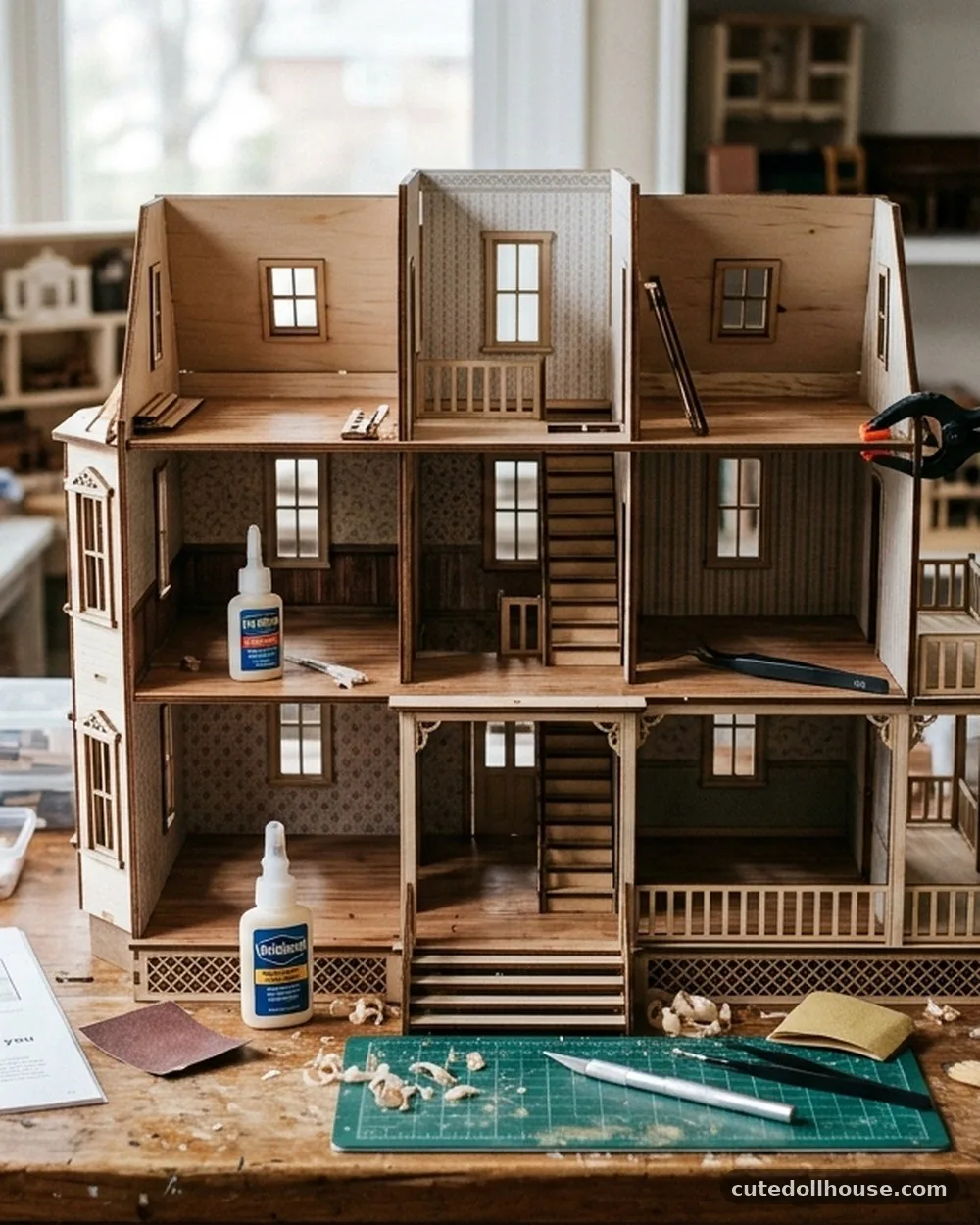
- Enjoy detailed craft projects and don’t mind working in stages.
- Want a structured alternative to drawing plans and cutting every part yourself.
- Have a clean, well-lit workspace where small pieces can remain undisturbed.
- Are comfortable checking measurements and adapting instructions when necessary.
- Want to personalise paint, wallpaper, furniture, lighting, or room layouts.
Consider an alternative if you:
- Need a finished dollhouse immediately.
- Prefer a durable children’s toy rather than a display-oriented craft.
- Don’t have time for painting, curing glue, decorating, or troubleshooting.
- Want complete control over dimensions and layout from the beginning.
- Find tiny parts difficult to handle or store safely.
For a ready-to-play option, a preassembled dollhouse may be more practical. For maximum control, free wooden dollhouse plans or a scratch-built design may suit experienced makers better. Buyers exploring wood construction can also consult reputable woodworking guidance before choosing tools or materials.
What to Check Before Buying
1. Instruction quality
Instructions are the central feature for this search category. Look for step-by-step diagrams, labelled parts, clear assembly order, and warnings about fragile components. Photos of the instruction booklet are especially useful because product descriptions often use “easy to follow” without explaining what that means.
Check whether the instructions cover the whole project or only the structural assembly. A kit may explain how to join the walls but provide little help with wiring, wallpaper, flooring, curtains, or furniture. If the listing is unclear, treat accessories and finishing guidance as unconfirmed.
2. Difficulty level
Difficulty isn’t determined only by the number of pieces. A small house with lighting, fabric work, and intricate trim may take more effort than a larger, simpler shell. Look for manufacturer guidance such as beginner, intermediate, or advanced, but read the parts list as well.
Common difficulty indicators include:
- Number of structural panels and trim pieces.
- Need for cutting, sanding, drilling, or fitting.
- Electrical wiring or battery-powered lighting.
- Miniature furniture that requires separate assembly.
- Fabric curtains, tiny hardware, or detailed decorative work.
- Whether paint, glue, tools, and finishing materials are included.
3. Materials and construction
Wood-based panels, engineered board, paperboard, plastic, fabric, and metal may all appear in the same kit. The material affects appearance, weight, ease of modification, and resistance to accidental damage.
Wood or wood-based construction can provide a more substantial base for painting and customisation, but parts may still need sanding or careful alignment. Paperboard components can be lighter and easier to decorate, though they may require more protection from moisture and rough handling. Plastic elements can be useful for windows or furniture but may need a compatible adhesive and suitable paint.
Don’t judge quality from photographs alone. Product images may show a completed scene with extra furniture, paint, lighting, or decorations that aren’t included. Read the contents list carefully.
4. Scale and available space
Scale determines whether furniture, figures, doors, and accessories will work together. A listing should identify the scale or provide dimensions. If it doesn’t, buyers should ask the seller before purchasing rather than assume that standard miniature accessories will fit.
Measure more than the shelf. Allow room to assemble the house, turn it around, reach into rooms, and store loose pieces. A kit with a removable roof or open back may be easier to decorate than one that must stay against a wall, but that depends on the design.
5. Included accessories
Some kits focus on the building shell. Others include furniture, lamps, plants, textiles, dishes, artwork, or decorative materials. “Complete kit” isn’t a universal term, so verify each item individually.
Pay particular attention to whether the following are included:
- Glue or adhesive.
- Paint, brushes, and finishing supplies.
- Lighting, wiring, switches, or batteries.
- Furniture and miniature household items.
- Flooring, wallpaper, fabric, and trim.
- Tools such as tweezers, craft knives, files, or clamps.
Missing supplies don’t necessarily make a kit poor value, but they change the real project cost and preparation required.
6. Design and appearance
Choose the design before focusing on the decoration shown in marketing images. A traditional house, shop, greenhouse, room box, or modern apartment may suit different display spaces and creative goals.
Consider the structure’s openings, roof access, room depth, window placement, and ceiling height. A beautiful exterior can still be awkward to decorate if the interior is difficult to reach. Buyers who care most about realism should inspect close-up photographs for trim, windows, flooring, and roof details rather than relying on a staged final image.
7. Assembly and finishing requirements
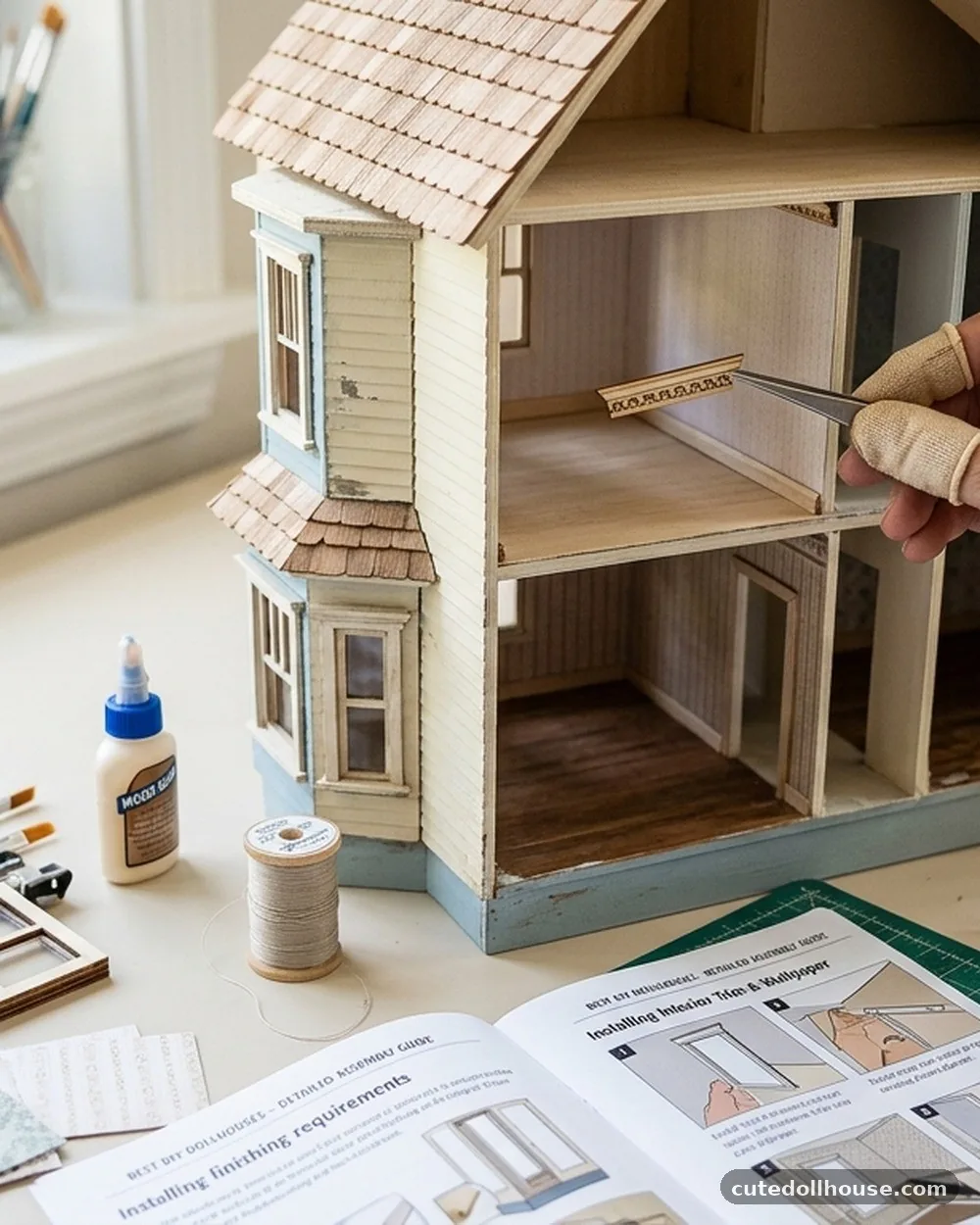
Many dollhouse kits are not ready straight from the box. Even a well-organised kit may need parts to be separated, checked, glued, painted, and allowed to dry between stages. Some projects are enjoyable precisely because of that process; others may find it burdensome.
Before buying, establish whether the kit requires:
- Permanent glue assembly or primarily snap-fit construction.
- Painting before or after the structure is assembled.
- Cutting or trimming of supplied materials.
- Sanding to improve joints or fit.
- Electrical work or miniature lighting installation.
- Additional sealant for surfaces exposed to dust or humidity.
8. Durability and maintenance
A finished dollhouse is still a delicate miniature display. Dust, direct sunlight, humidity, pets, and frequent handling can affect paper, fabric, paint, and wood-based parts. A display case or protected shelf may help, but the best solution depends on the kit’s materials and final size.
Look for strong-looking joints, well-supported floors, properly aligned walls, and replacement information for delicate parts. If the manufacturer doesn’t describe spare components or support, don’t assume replacements will be available.
9. Customer feedback and common complaints
Reviews can reveal issues that product descriptions omit, such as unclear diagrams, missing parts, fragile components, poor translations, or scale confusion. They should be read critically, because assembly skill, modifications, and expectations differ from one buyer to another.
Pay attention to repeated themes rather than one unusually positive or negative comment. A complaint about missing glue matters less if glue is clearly excluded; a repeated complaint about incorrect parts or unusable instructions deserves more weight.
Comparing Common DIY Dollhouse Kit Types
Without named products or verified specifications, it would be misleading to rank individual kits. The table below compares the main formats buyers are likely to encounter. Use it as a screening tool, then confirm the current listing for the specific model.
| Kit type | Best for | Typical difficulty | Key feature to check | Main drawback | Overall value |
|---|---|---|---|---|---|
| Beginner-focused house kit | First-time builders | Lower to moderate | Numbered diagrams and limited cutting | May offer less customisation | Good when clear guidance matters most |
| Detailed wooden house kit | Hobbyists who want a substantial project | Moderate to advanced | Panel fit, scale, and finishing requirements | Often needs more tools and time | Strong for customisation if materials are suitable |
| Miniature room or room-box kit | Limited spaces or shorter projects | Moderate | Interior access and included furnishings | Not a full multi-room house | Practical for focused decorating |
| Lighting-focused miniature kit | Display builders who want illuminated scenes | Moderate to advanced | Wiring method and power requirements | Electrical work adds complexity | Worthwhile only if lighting is important |
| Scratch-build plan or unfinished shell | Experienced makers | Advanced | Accurate plans and material list | More decisions and extra purchases | Best for control rather than convenience |
Recommended Choice by Buyer Type
For beginners
Prioritise a kit with numbered parts, illustrated instructions, a clearly stated difficulty level, and minimal specialist tools. A smaller project may be a better first purchase than an ambitious mansion-style kit. Confirm whether the instructions cover decoration as well as assembly.
For experienced builders
Look beyond the instruction booklet. Material quality, structural access, scale compatibility, and the ability to modify rooms may matter more than simplified directions. An unfinished wooden shell or reliable set of DIY dollhouse plans can provide greater creative freedom.
For appearance-focused buyers
Study the finished design, trim, windows, roofline, and room access. Remember that the pictured decoration may not be supplied. A simpler kit with good proportions can produce a better display than a busy design with awkward interior access.
For buyers with limited space
Consider a room box or compact house, but check depth as well as width and height. Storage for paints, tools, spare materials, and unfinished sections can require nearly as much thought as the final display location.
For families
Choose based on supervision needs, not just the age shown in a listing. Small parts, adhesives, and cutting tools may make an adult-led project more appropriate. A sturdier, simpler kit may be a better shared activity than a highly intricate collector-oriented model.
For value-focused buyers
Compare the full contents rather than the box price. A kit that excludes glue, paint, lighting, furniture, and tools may require several additional purchases. Conversely, buying a smaller shell can be sensible if you already own supplies and want to design the interior yourself.
Common Mistakes to Avoid
- Assuming every pictured item is included: staged photographs often show optional or separately purchased decorations.
- Ignoring the scale: furniture and figures may not fit even when the house looks suitable.
- Underestimating finishing time: painting, wallpapering, and drying can take longer than basic assembly.
- Buying without checking dimensions: a kit can be too deep for a shelf even when its width seems manageable.
- Choosing by appearance alone: limited interior access can make a beautiful design frustrating to decorate.
- Overlooking replacement support: ask how missing or damaged parts are handled before ordering.
How to Assess Instructions Before Ordering
If the seller provides sample pages, inspect them for part numbers, clear orientation, glue points, and warnings about fragile pieces. Good instructions should make it reasonably clear what happens next without forcing the builder to guess which surface faces outward.
Check for a parts inventory at the beginning. It lets you identify missing pieces before assembly and makes it easier to organise a large kit. Digital instructions can be convenient, but buyers should verify that the file is accessible and readable on their device.
Language is another practical concern. A translated booklet may still be usable when diagrams are strong, but vague translations can create confusion around wiring, adhesives, or assembly order. If the listing doesn’t identify the instruction language, contact the seller before purchase.
Care and Storage After Assembly
Keep the finished dollhouse away from direct sunlight, damp areas, and locations where it can be knocked. Dust can be removed with a soft brush or gentle air, but avoid applying moisture to paper, fabric, unsealed wood, or delicate electrical components.
Store leftover parts, paint references, and instruction pages together. They may help with future repairs or decorating changes. If the kit includes lighting, follow the manufacturer’s power and battery guidance rather than improvising connections.
Frequently Asked Questions
What is the best dollhouse kit for beginners?
The best starting point is usually a smaller or beginner-labelled kit with numbered parts, clear diagrams, limited cutting, and a transparent list of included supplies. Difficulty labels vary, so check the actual assembly requirements before ordering.
Do DIY dollhouse kits include everything needed?
Not always. Some include the structure and decorations, while others exclude glue, paint, tools, furniture, lighting, or batteries. Read the contents list and look for a separate “required supplies” section.
How long does it take to build a dollhouse kit?
There is no reliable universal time. The size, number of parts, painting, decoration, lighting, drying time, and builder experience all affect the schedule. Treat a detailed kit as a project rather than a quick assembly task.
Are dollhouse kits suitable for children?
Some may be suitable for older children with close adult supervision, but many contain tiny parts, adhesives, paint, or tools. Follow the manufacturer’s age guidance and consider whether the finished house is intended for play or display.
Can I use standard dollhouse furniture in a DIY kit?
Only if the scale and room dimensions are compatible. Verify the kit’s stated scale and compare furniture measurements before buying additional pieces.
What should I do if the instructions or parts are missing?
Pause assembly, photograph the contents, and contact the seller or manufacturer using the order and model information. Don’t discard packaging until you’ve confirmed that the kit is complete.
Final Verdict
The best DIY dollhouses with detailed instructions are worth buying when you want a structured creative project and are prepared for assembly, finishing, and careful handling. Clear diagrams, a complete contents list, sensible scale information, and realistic difficulty guidance matter more than an impressive product photograph.
Before ordering, confirm what the kit includes, how much space it needs, which tools and supplies are extra, and whether the instructions cover the parts you care about most. Beginners should favour clarity and manageable scope; experienced builders may prefer a flexible wooden shell or plans that allow more custom work. Choose on that basis, and a dollhouse kit can be a rewarding long-term hobby rather than an unexpectedly difficult craft purchase.