
Finding the best dollhouse furniture with accessories is less about filling every room and more about choosing pieces that fit the house, suit the builder’s age, and hold up to regular play or display. A convincing miniature room can be created with a small, well-matched set, while the wrong scale or fragile accessories can make an otherwise lovely dollhouse frustrating to use.
Buyers also need to weigh appearance, material quality, assembly, safety, and the number of useful pieces included. This guide explains how dollhouse furniture sets work, what to check before buying, which styles suit different users, and when a basic accessory bundle may be a better choice than a larger collection.
What Dollhouse Furniture with Accessories Includes
Dollhouse furniture with accessories usually refers to miniature furnishings sold as a coordinated set or collection. Depending on the product, this may include larger items such as beds, sofas, tables, chairs, cupboards, kitchen units, or bathroom pieces, along with smaller decorative objects such as lamps, dishes, books, plants, rugs, clocks, or ornaments.
The purpose is simple: furnish one or more rooms without requiring the buyer to source every item separately. Some sets are designed mainly for imaginative play. Others are aimed at adult collectors, interior-style displays, craft projects, or dollhouse restoration.
Not every set is universal. The most important detail is scale.
A set may be intended for a 1:12 dollhouse, a smaller 1:24 model, or another miniature format. Furniture that looks attractive in a product photograph may be too large, too small, or proportioned incorrectly for the house it is meant to furnish.
For background on how dollhouses developed as miniature domestic spaces, the Encyclopaedia Britannica overview of dollhouses provides useful historical context.
Are Dollhouse Furniture Sets Worth Buying?
For many buyers, a furniture-and-accessories bundle is a practical starting point. It can create a consistent look more quickly than buying individual pieces, and coordinated sets often make it easier to furnish several rooms with matching colours or materials.
That convenience does come with trade-offs. A bundle may include several small decorative items that aren’t useful for the room being designed. Some sets also prioritise quantity over detail, while others may contain delicate pieces that are better suited to display than energetic children’s play.
A set is usually a good choice when:
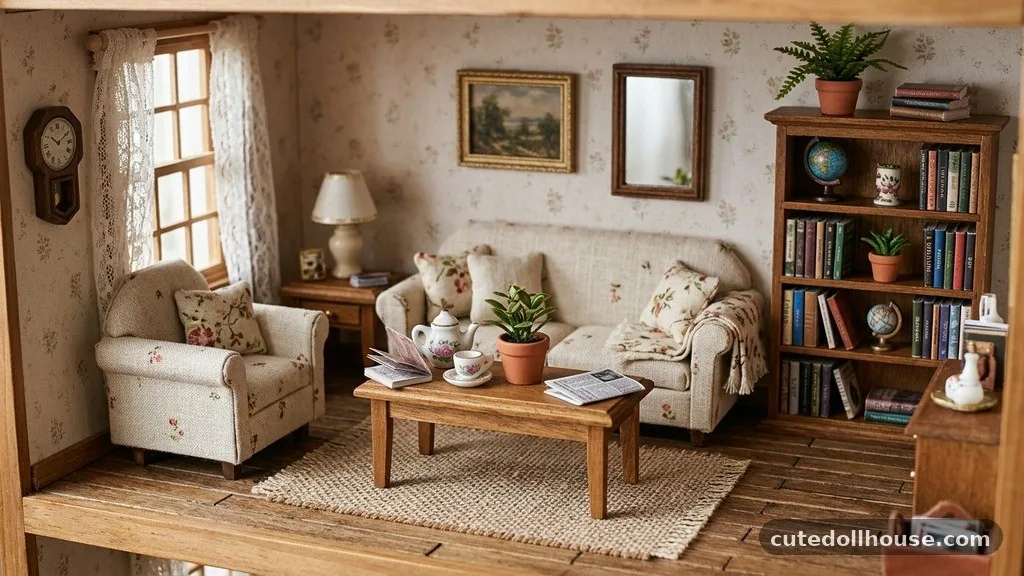
- You want to furnish a dollhouse quickly with a coordinated theme.
- You need multiple room types rather than one statement piece.
- You are buying a starter collection for a child or beginner hobbyist.
- You prefer predictable scale and matching proportions across the set.
- You want accessories included rather than purchasing every small item separately.
Another option may be better when:
- You already own furniture and only need a few replacement pieces.
- You are building a historically accurate or highly customised room.
- You need premium miniature craftsmanship for a display model.
- The intended user is very young and the set contains many tiny parts.
- The listing does not clearly state the scale, materials, or included items.
In short, dollhouse furniture bundles are often worth considering for convenience and room planning. They are less suitable when exact proportions, specialist detail, or a very specific interior style matter more than having a broad selection.
What to Check Before Buying
Scale and fit
Scale should be checked before colour, theme, or accessory count. A common dollhouse scale is 1:12, but it isn’t the only format available. A 1:12 model treats one inch as roughly one foot in the imagined full-size world, while smaller houses may use other ratios.
Check the furniture dimensions against the room dimensions, not just the outside measurements of the house. A sofa may fit through the front opening but leave too little space for a table, or a bed may technically fit in a bedroom while blocking doors and windows.
Pay attention to height as well. Chairs, kitchen counters, beds, and tables should look proportionate beside the dolls or figures used in the house. If the product page doesn’t provide measurements, buyers should contact the seller before ordering rather than relying on photographs.
Materials and construction
Miniature furniture may be made from wood, engineered wood, plastic, resin, metal, fabric, or a mixture of materials. The material alone doesn’t determine quality. Construction details matter just as much.
- Wood and wood-based pieces: Often appealing for traditional or collector-style houses, but edges, joints, paint, and surface finishing should be inspected.
- Plastic furniture: Usually easier to wipe clean and may suit children’s play, though moulded details can vary considerably.
- Resin or cast pieces: Can offer decorative shapes and fine surface detail, but thin parts may be vulnerable to impact.
- Fabric accessories: Add realism to bedding, curtains, cushions, and rugs, but may collect dust and require gentle cleaning.
- Metal components: Can add visual detail, although small legs, handles, and wire elements may bend or detach.
Look for clean joins, stable legs, securely attached handles, even paint, and furniture that sits level on a flat surface. Product photographs can hide rough edges or small finishing imperfections, so close-up images are helpful.
Design and appearance
The best-looking set is not necessarily the one with the greatest number of pieces. A smaller collection with consistent colours and proportions can make a room feel more realistic than a crowded assortment of unrelated objects.
Choose a design that matches the house. Traditional wooden furniture may suit a period-style model, while bright plastic pieces can be more appropriate for a contemporary playhouse. Neutral furniture is easier to combine with later purchases, whereas themed sets create a stronger visual identity but may be harder to expand.
Included accessories
Accessory counts can be misleading. A listing may advertise a large number of pieces, but many could be very small decorative objects rather than functional furniture. Read the full contents list and identify what is actually included.
Useful accessories may include:
- Room-specific items such as cookware, bathroom fixtures, bedding, or dining pieces.
- Soft furnishings that help define a room without taking up much space.
- Storage items such as cabinets, baskets, shelves, or drawers.
- Decorative details that fit the set’s scale and style.
- Replacement or duplicate small parts, where stated by the seller.
Be cautious if a product photograph shows more objects than the written description confirms. Displays are sometimes styled with additional items that are not part of the purchase.
Ease of use and assembly
Some dollhouse furniture arrives ready to place. Other products require assembly, painting, gluing, or fabric fitting. Neither approach is automatically better, but the right choice depends on the buyer’s age, patience, tools, and expectations.
Ready-made furniture is convenient for a child or beginner. Flat-pack or unfinished pieces may be more appealing to experienced hobbyists who enjoy customising colours and finishes.
If assembly is required, check whether glue, paint, batteries, or tools are included. Don’t assume they are.
Durability and maintenance
Furniture intended for display can include delicate legs, tiny handles, miniature glass-like components, or loose decorations. These details may look attractive but can be vulnerable to rough handling. Play-oriented furniture generally benefits from fewer detachable parts and surfaces that can be wiped clean.
Dust is a routine issue for open dollhouses. A soft brush, gentle cloth, or low-powered air blower can help remove dust without putting pressure on fragile details. Avoid soaking wood, fabric, paper, or painted pieces unless the manufacturer specifically says they can be washed.
Safety and age suitability
Small accessories can present a choking risk. Buyers should follow the age guidance supplied with the product and consider how the set will be used, particularly if younger children or pets have access to the pieces.
Age labels can vary by seller or region, so check the current listing and packaging. A set intended for adult collectors may include delicate parts that aren’t suitable for regular children’s play, even if the furniture itself appears sturdy.
Comparison: Which Type of Set Fits Your Needs?
Because no individual product specifications were supplied, the table below compares common dollhouse furniture categories rather than inventing product rankings or unsupported prices.
| Furniture Set Type | Best For | Typical Difficulty | Key Strength | Main Drawback | Overall Value Consideration |
|---|---|---|---|---|---|
| Ready-made play set | Beginners and supervised children’s play | Low | Quick to use | May have simpler detail | Good when convenience matters most |
| Room-specific bundle | Buyers furnishing one area | Low to moderate | Focused contents | Limited usefulness outside that room | Strong if the listed pieces are genuinely needed |
| Multi-room furniture collection | New dollhouse owners | Low to moderate | Broad coverage | May include unwanted items | Compare useful pieces, not just total count |
| Unfinished or customisable set | Craft hobbyists and experienced builders | Moderate to high | Personalisation | Needs extra time and supplies | Worthwhile if custom work is part of the hobby |
| Collector-style miniature set | Display-focused adults | Moderate | More emphasis on detail | May be fragile or less suitable for play | Value depends on finish, scale accuracy, and craftsmanship |
Common Buying Mistakes to Avoid
Choosing by piece count alone
A high piece count can sound attractive, but tiny plates, books, and ornaments won’t replace essential furniture. First confirm that the set contains the pieces needed to make the room functional. Then assess whether the extra accessories add useful detail.
Ignoring the scale
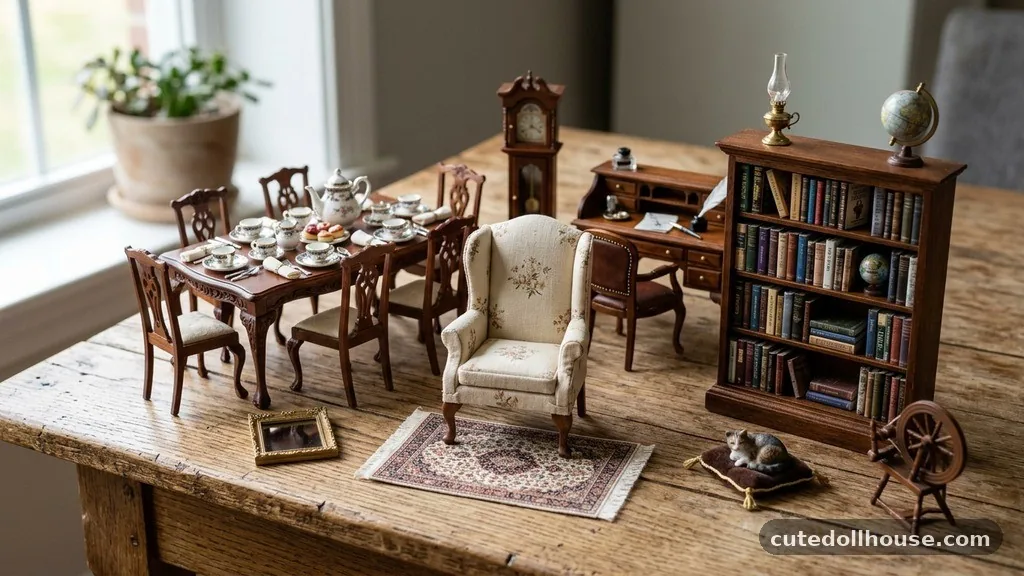
This is one of the easiest mistakes to make. A set can be well made and still be unsuitable if it doesn’t match the dollhouse. Always compare stated measurements with the house’s floor plan and the size of its figures.
Assuming the display photograph shows the full package
Styled photographs may include dolls, plants, rugs, lighting, or other furniture sold separately. Treat the written inventory as the deciding information. If the listing is vague, ask the seller for a complete contents list.
Buying delicate pieces for rough play
Thin chair legs, tiny handles, loose accessories, and fragile decorative parts may be appropriate for a collector’s shelf but frustrating for a child who wants to rearrange rooms frequently. Match the construction to the intended use.
Overfilling the dollhouse
Furniture needs space around it. Crowding every room can make it difficult to move figures, open doors, or appreciate individual pieces. A smaller number of well-positioned items often produces a more convincing result.
How Customer Feedback Can Help
Customer reviews are useful for identifying issues that product photographs don’t reveal, but they should be read with context. A complaint about size may indicate a genuine scale mismatch, or it may reflect a buyer who expected a larger item than the listing described.
Pay particular attention to repeated comments about:
- Measurements differing from the buyer’s expectations.
- Missing accessories or unclear package contents.
- Parts arriving loose, bent, cracked, or poorly finished.
- Furniture that doesn’t stand level or fit together securely.
- Assembly instructions that are incomplete or difficult to follow.
- Colours or materials appearing different from the product images.
- Accessories that are too small for the intended child’s age or figures.
Recent reviews are generally more useful when listings change over time. Also check whether comments refer to the exact model, size, colour, or seller variation being considered. Marketplace pages can group several versions under one listing, so feedback may not apply equally to every option.
Recommendations by Buyer Type
For beginners
A ready-made, clearly labelled set is usually the least complicated starting point. Prioritise stated scale, essential furniture, and straightforward care instructions over a very large accessory count.
For children’s play
Choose sturdy pieces with fewer fragile or detachable elements, and follow the stated age guidance. A washable or wipe-clean finish may be more useful than highly intricate decoration. Keep small accessories stored safely when the house isn’t being supervised.
For adult collectors
Collectors may prefer better-finished materials, more accurate proportions, and pieces that complement a particular architectural period or interior style. Display-focused furniture should be judged on detail and consistency rather than play durability.
For craft hobbyists
Unfinished or customisable furniture can be a better fit if painting, distressing, upholstery, or miniature construction is part of the enjoyment. Check what preparation the pieces need before assuming they’re ready for immediate display.
For value-focused buyers
Compare the number of genuinely useful items, not the headline piece count. A smaller room bundle may offer better value than a large mixed set if it avoids duplicate or unsuitable accessories.
For appearance-focused buyers
Look for consistent scale, matching finishes, and a coherent colour palette. A coordinated collection is often easier to style than a group of individually attractive pieces bought without a room plan.
How to Plan a Dollhouse Interior
Start with the rooms that matter most. A living room, bedroom, kitchen, or nursery each needs a different group of functional pieces, so buying one room at a time can prevent unnecessary duplicates.
- Measure the room, doorways, windows, and available floor space.
- Confirm the furniture scale and compare individual dimensions.
- Choose essential pieces before decorative accessories.
- Leave enough space for figures, doors, and movement.
- Add soft furnishings and small details after the main layout works.
- Store unused accessories in labelled containers to prevent loss.
This approach is especially helpful with larger dollhouses. It keeps the design usable and makes it easier to identify which pieces are actually missing.
Questions to Ask Before Ordering
- What exact scale is the set designed for?
- Are the measurements provided for each major item?
- Is every item shown in the main product image included?
- Does the set arrive assembled, unfinished, or requiring glue?
- Are the accessories suitable for the intended age group?
- What materials are used for the furniture and soft furnishings?
- Can replacement pieces be obtained if a small item is lost?
- Do customer reviews refer to the same model and seller?
- Is the furniture intended for play, display, or both?
FAQ About Dollhouse Furniture with Accessories
What is the most important feature in dollhouse furniture?
Scale is the most important starting point. Furniture should match the house, figures, and available room space. After fit, assess construction, finish, safety, and whether the included accessories are useful.
Is 1:12 scale dollhouse furniture suitable for every dollhouse?
No. Many traditional dollhouses use 1:12 scale, but other houses use smaller or different proportions. Check the house’s stated scale and compare product measurements before buying.
Is dollhouse furniture with accessories suitable for toddlers?
Not automatically. Small furniture and decorative accessories may pose a choking risk, and some pieces are too fragile for rough handling. Follow the manufacturer’s age guidance and supervise use where appropriate.
Should I buy a complete furniture set or individual pieces?
A complete set is convenient for furnishing several rooms and creating a consistent style. Individual pieces are usually better when you need exact items, premium detail, replacement furniture, or a customised interior.
How can I tell whether a set is good quality?
Look for clear measurements, close-up photographs, stable construction, clean finishes, and a complete contents list. Reviews that repeatedly mention loose joints, missing parts, or poor finishing deserve attention.
Are dollhouse accessories included in product photographs?
Not always. Some sellers use styled displays containing extra items. Confirm the written package contents and ask the seller if the listing doesn’t clearly distinguish included pieces from display props.
Final Verdict
The best dollhouse furniture with accessories is the set that fits the house, matches its intended use, and includes pieces you’ll actually use. Ready-made bundles are convenient for beginners and multi-room projects, while customisable or collector-style furniture may suit adults who care more about finish, historical style, or miniature detail.
Before buying, verify the scale, measurements, materials, age guidance, assembly requirements, and complete contents list. A modest, well-matched collection can offer better value than a crowded bundle with fragile or unsuitable extras. If the listing leaves those basics unclear, keep comparing rather than relying on attractive photographs alone.